Give the reader something to see
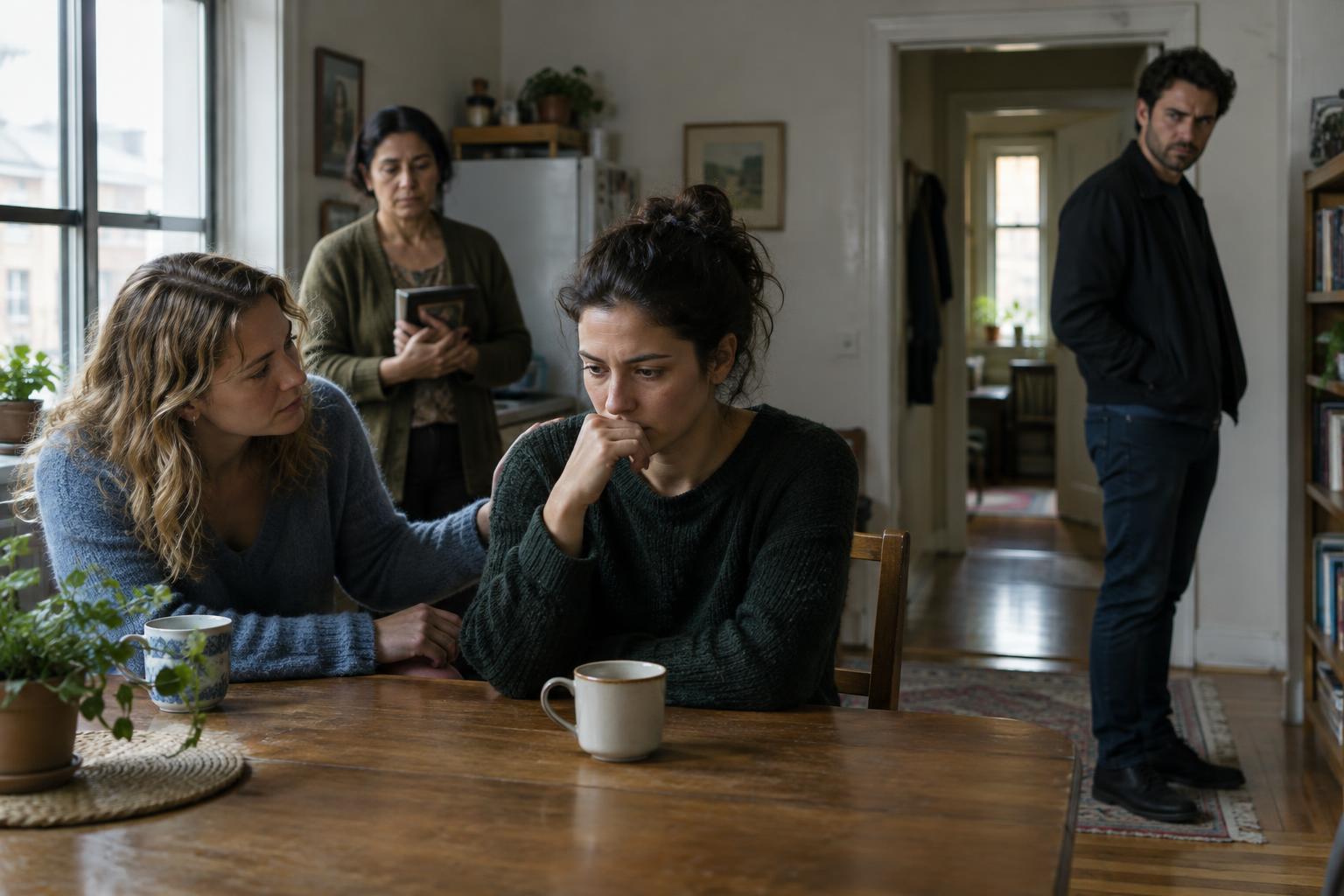
Action lines describe what happens in a scene outside dialogue. Their first job is orientation: the reader needs to know where attention belongs, what changes and why the change matters. A useful test is to ask whether a person watching the finished scene could perceive what you have written. “Mara feels betrayed” names an emotion, but it gives an actor and director little to work with. “Mara folds the letter and slides it back across the table” offers a visible response that can suggest betrayal in context.
This does not mean every feeling must become a gesture. A screenplay can use a brief impression to establish tone, especially when the surrounding action makes that impression playable. But when an emotional label carries a crucial turn, look for an observable choice instead. What does the character stop doing? What do they touch, hide, leave behind or refuse to look at? Behavior lets the audience participate in interpreting the moment.
Write in the order the scene unfolds
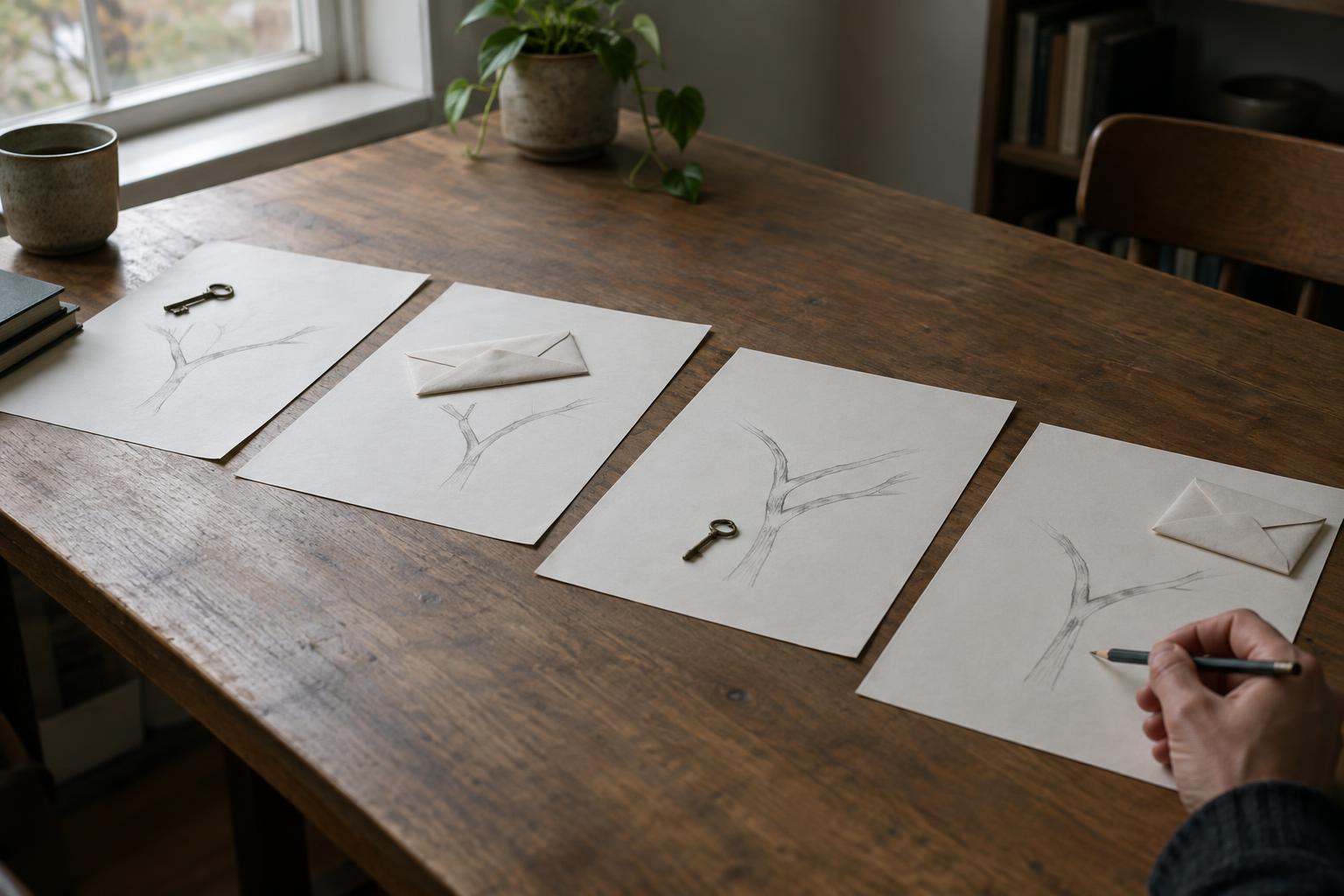
Clear action follows a sequence the reader can picture. Establish the relevant space, introduce an action, then show its consequence. If a character reaches for a key, another person blocks the drawer and the key falls to the floor, each beat should arrive in that order. Rearranging those facts into a dense sentence can make the reader stop to reconstruct the scene.
Paragraph breaks can mark meaningful shifts of attention. A new paragraph might move from a character entering a room to the object they notice, or from a quiet exchange to a sudden interruption. Keep related actions together, though: breaking every movement onto its own line can make an ordinary scene feel artificially urgent. The goal is not a particular number of lines per page. It is to make the path through the scene feel effortless.
Choose details that do more than decorate
A strong detail can establish a location, sharpen a conflict or reveal how a character sees the world. “A crowded kitchen” provides a general picture. “Three unwashed mugs surround a carefully iced birthday cake” creates a more particular one and raises questions the scene may answer. Specificity is useful when it changes what the reader understands; an inventory of every surface and prop usually does not.
Apply the same selectivity to movement. Readers rarely need the mechanics of standing, crossing a room and opening a door unless those steps create tension or reveal a choice. If the point is that someone leaves before hearing an answer, write that turn clearly and move on. Save extra beats for moments in which timing, obstacles or physical relationships affect the drama.
Use vivid language without taking over the shot
Action lines can have rhythm and voice. Short sentences may suit a quick reversal; a longer sentence can let an uneasy observation linger. Sound belongs here too when it changes the scene: a refrigerator clicks off, leaving two characters in an uncomfortable silence. These choices help a reader experience the moment without requiring a technical plan for filming it.
Camera directions are sometimes useful, but they are not the only way to control attention on the page. Instead of specifying a close-up of a phone, you might write, “On the screen: a message from the person she said was dead.” That gives the image dramatic importance while leaving room for collaborators to decide how to frame it. Use technical language when a particular visual relationship is essential to the story, not as a substitute for describing what matters.
Revise for comprehension before style
On a revision pass, read each action paragraph and ask three questions: What can I picture? What has changed by its end? Could I remove a detail without losing character, atmosphere or cause and effect? If two characters occupy the same space, check that pronouns and positions stay unambiguous. If an object becomes important later, make sure its first appearance is noticeable without announcing its future role.
Finally, read the scene at a natural pace. Notice where you have to reread a sentence to understand who acts or what happens next. Those pauses are opportunities to simplify. Good action lines need not be sparse or flashy; they need to carry the reader through the scene with enough clarity that the dramatic choices remain in focus.