Start with what the audience expects
A comic moment usually needs a clear expectation before it can break one. The setup tells the audience what a character wants, what normally happens in this situation, or what everyone in the room believes to be true. If that information is muddy, a surprising action may register as random rather than funny. Before rehearsing a scene, identify the ordinary version of the moment: What is supposed to happen, and who is trying to keep it that way?
Give actors playable objectives instead of asking them to perform a joke. A host determined to appear gracious while hiding a ruined dinner has something concrete to do. Their efforts can create comedy even if they never acknowledge the absurdity. Decide which details the audience must notice early, such as a stain, an unstable chair or a guest’s mistaken assumption. Direct attention to those details without insisting on them; a setup often works best when it feels like part of the scene.
Let blocking carry the setup
Where performers stand, look and move can establish a joke before anyone speaks. A character may confidently cross a room while the audience can see an obstacle in their path. Another may arrange a display with great care, unaware that someone behind them is undoing the work. These choices give viewers a useful advantage: they know enough to anticipate trouble, but not exactly how it will arrive.
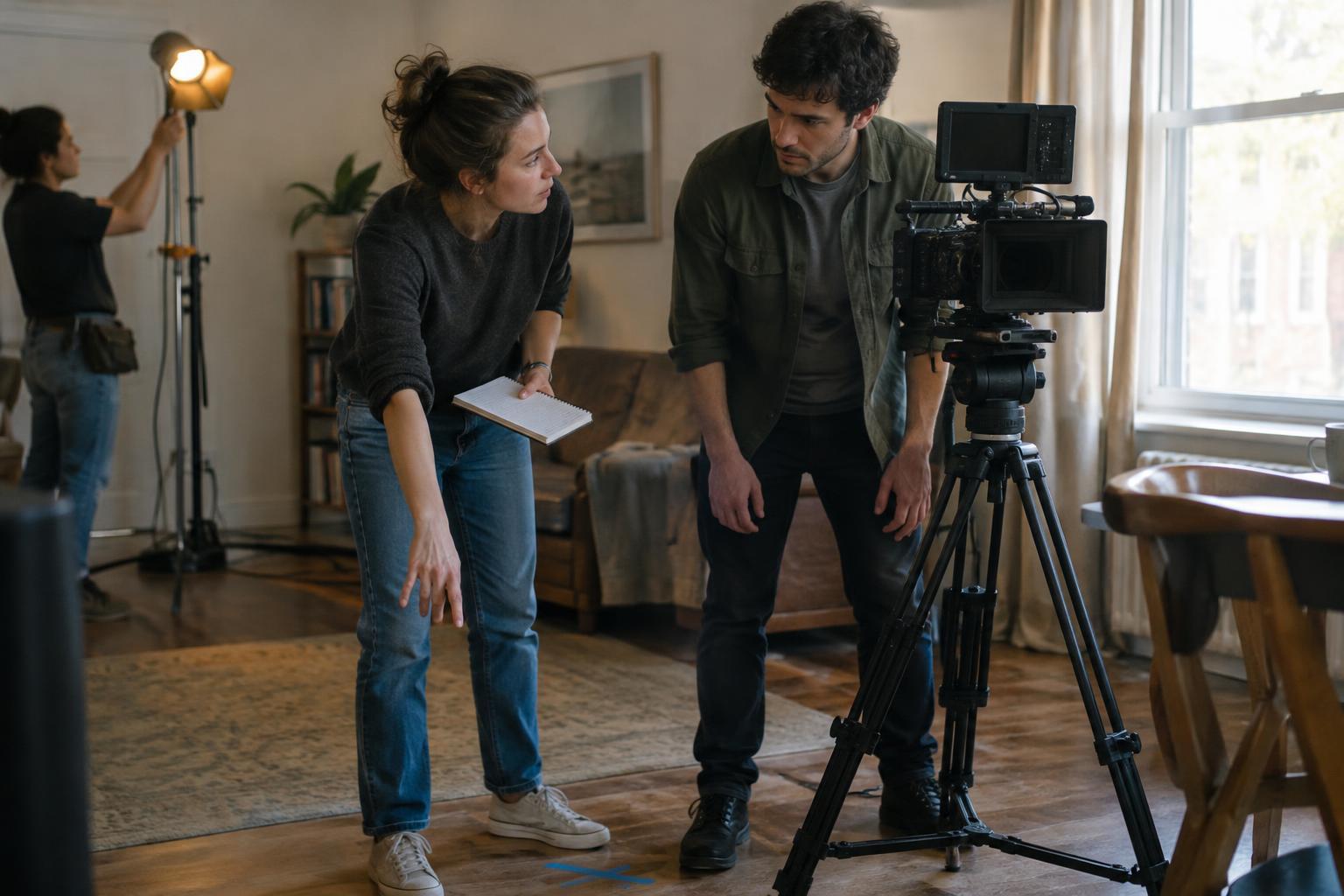
Blocking also determines whether the payoff will be readable. If a character must discover an embarrassing detail, establish its location and their relationship to it. Rehearse the route from setup to discovery so that movements appear motivated rather than engineered for the punch line. The camera can help by holding the relevant characters and objects in one frame, or by delaying a reveal until the audience needs it. Neither approach is automatically funnier; choose according to what viewers should know at each beat.
Treat reactions as actions
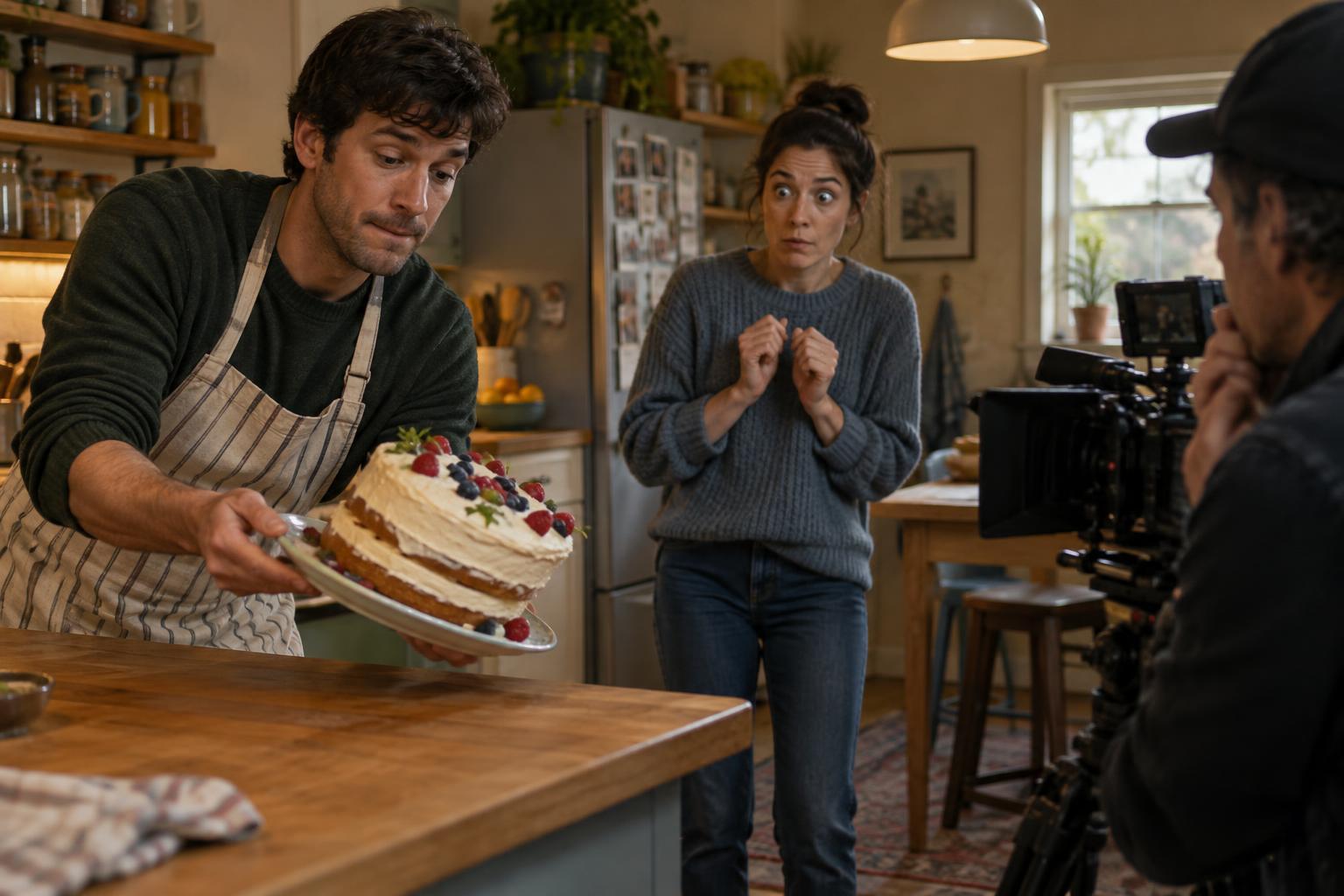
The event that causes a laugh is not always the funniest part. A reaction shows what that event costs a character: pride, control, patience or the ability to maintain a polite expression. Ask each performer what their character understands at that instant and what they choose to do with the knowledge. One person may try to conceal panic; another may mistake it for approval. Those different interpretations can sustain a scene beyond its first surprise.
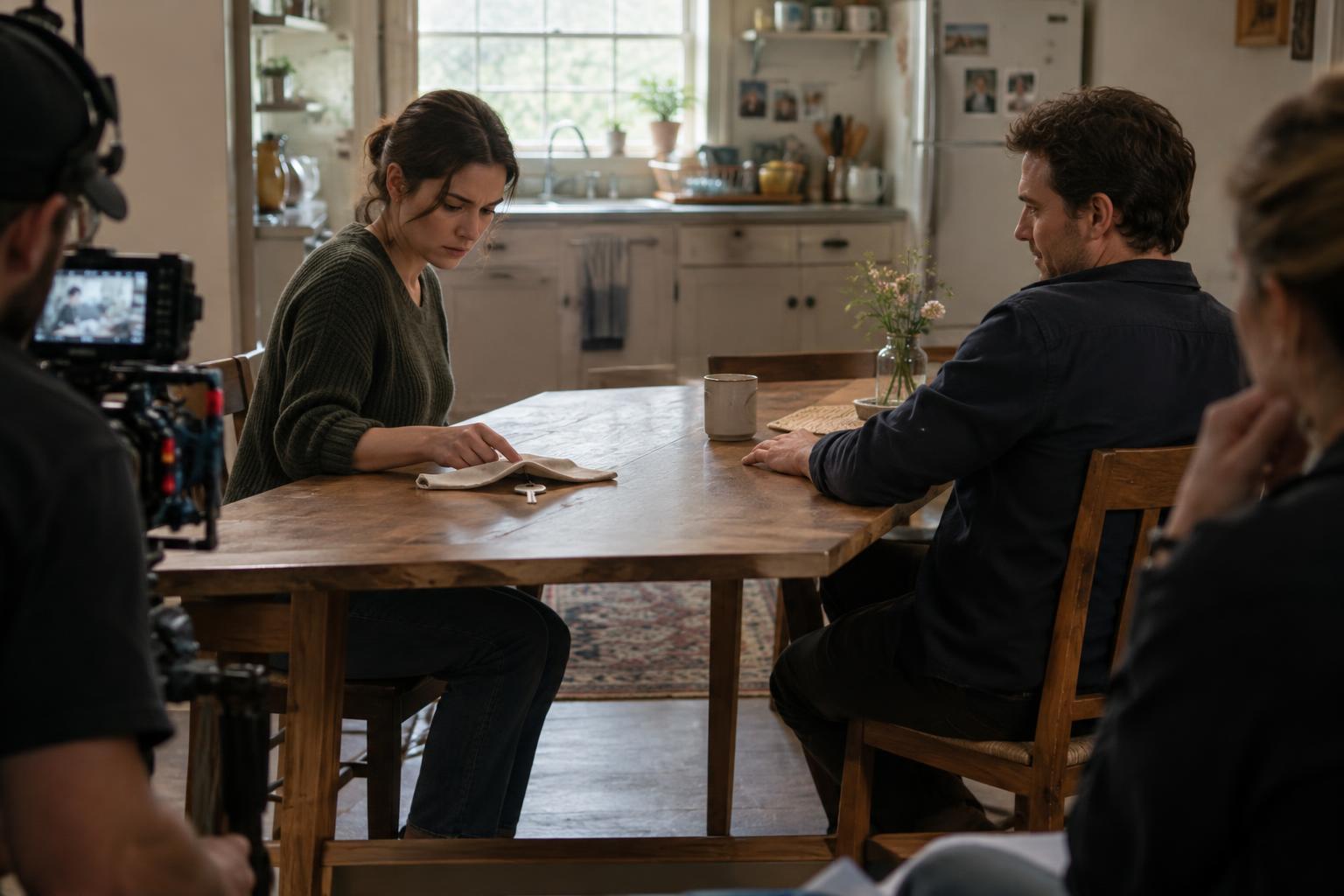
A reaction needs enough time to be seen, but not so much that it explains itself. In rehearsal, try the beat with a quick glance, a held silence and a physical response. Notice which version reveals the character most clearly. Avoid directing every actor to signal the joke at once. If one performer stays committed to the practical problem while another notices its absurdity, their contrast gives the audience a place to look and a reason to keep watching.
Build a rhythm of change
Comedy benefits from variation, not a constant rush toward punch lines. A pause can create anticipation; an interruption can deny a character the chance to recover. Try mapping the scene as a sequence of changes: a confident plan meets a small obstacle, a repair creates a larger problem, and a final choice exposes what the character has been trying to hide. Each beat should alter the situation rather than merely repeat it at greater volume.
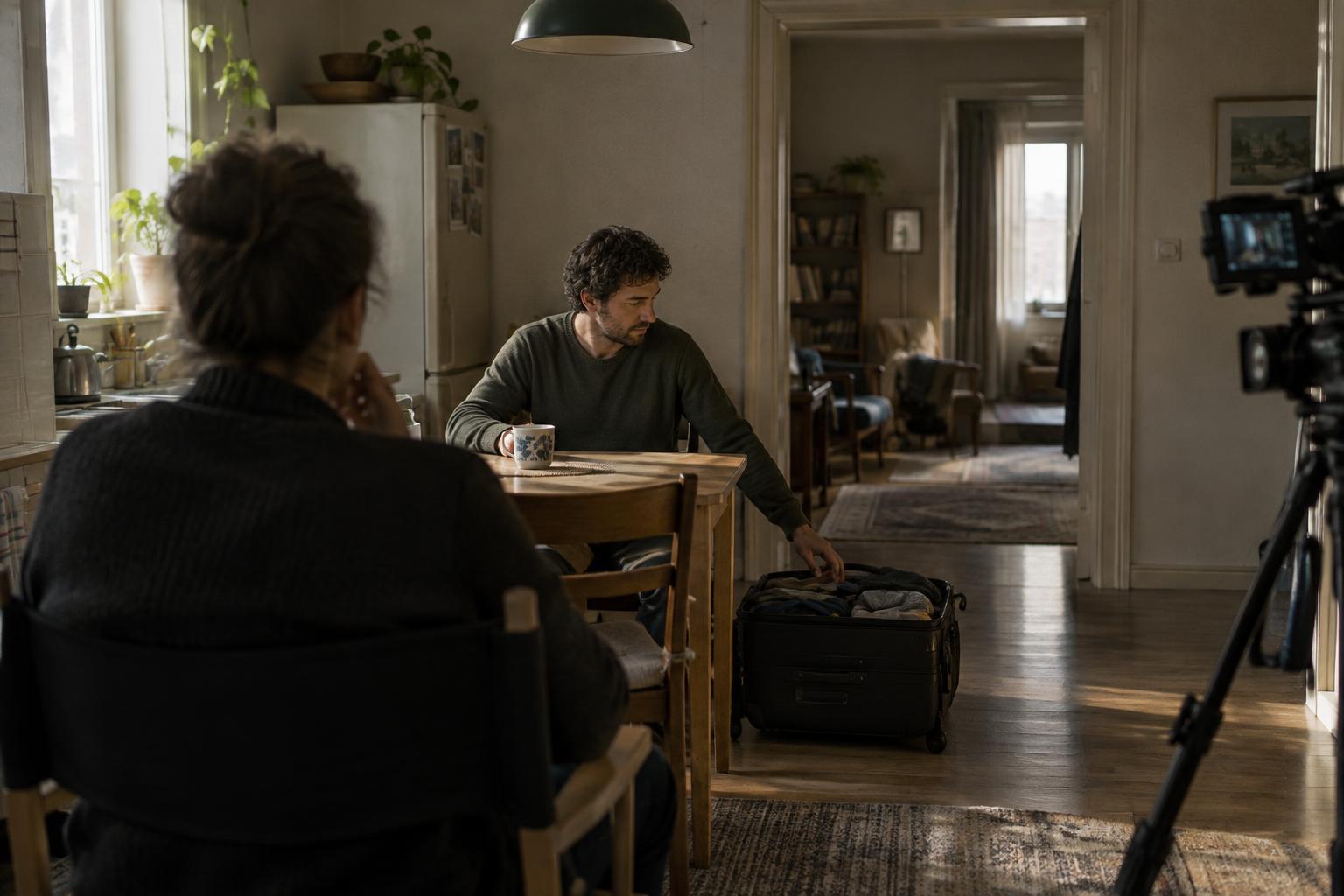
When working with performers, distinguish timing from speed. Fast delivery can blur an important setup, while a deliberate pause can feel empty if the actor has nothing to think or do. Give each silence a purpose, such as waiting for an answer, checking whether a deception worked or deciding whether to confess. If improvisation produces a useful surprise, test whether it still fits the scene’s logic. A spontaneous line is worth keeping only if the next beat can respond to it.
Earn the payoff, then know when to leave
A payoff feels satisfying when it changes the meaning of something planted earlier. The unstable chair finally collapses, perhaps, but only after the character who warned everyone about it sits down. The audience recognizes the connection while still encountering an unexpected turn. Look for payoffs that follow from a character’s choices rather than arriving as accidents unrelated to the scene.
On set, capture the performance in a way that preserves that connection. A wider take can show cause and effect together; closer coverage can reveal a crucial attempt to hide a reaction. Record enough of the moments before and after the apparent punch line to leave room for pacing in the edit. Then resist the urge to underline a successful beat with an extra look or line. Once the audience has understood the reversal, moving on can be the sharpest directing choice.