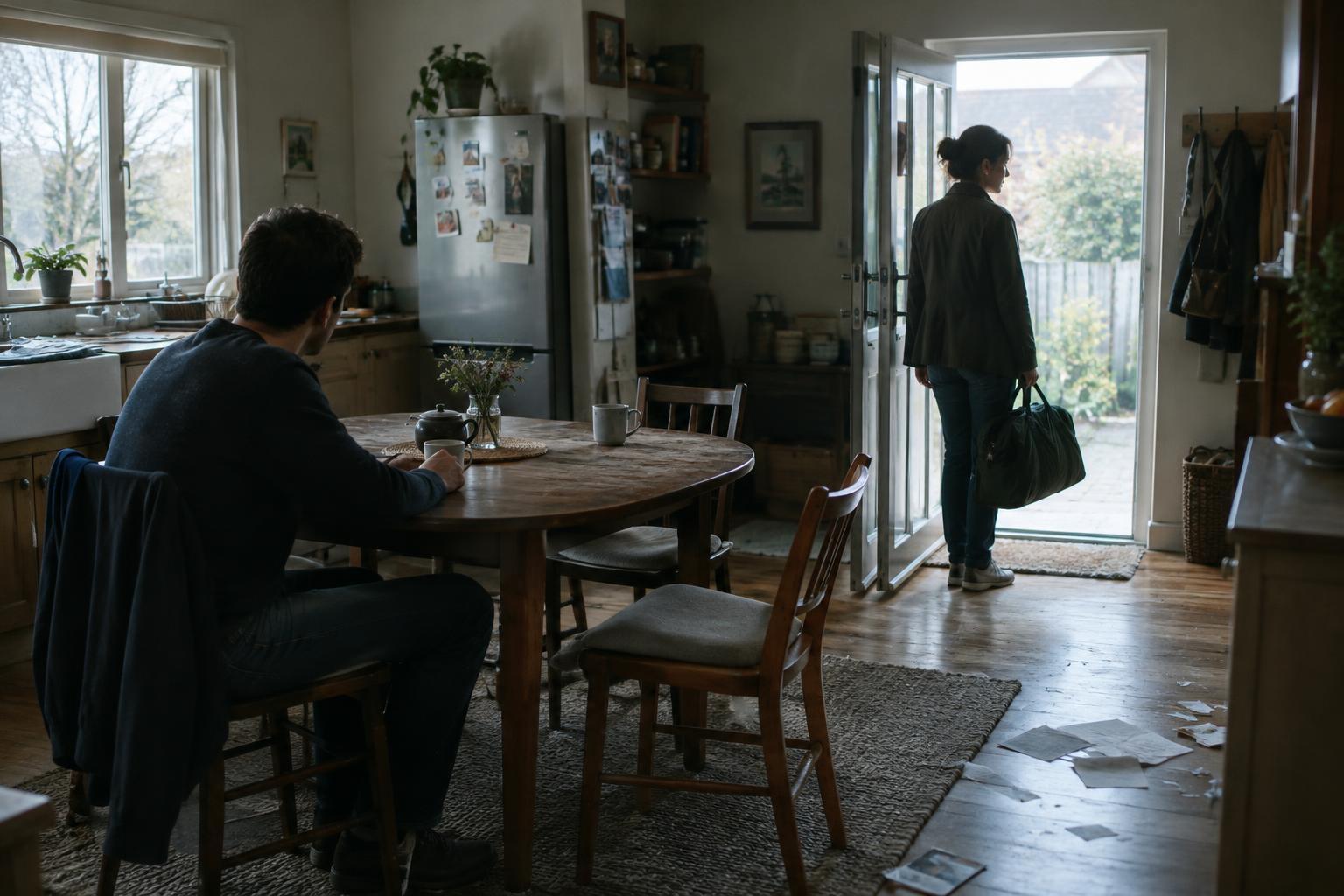
Find the story beneath the events
Before outlining scenes, write a short description of what the source story is about emotionally, not just what happens. A plot summary might say that a daughter returns home to sell her childhood house. A dramatic description might say that she must decide whether protecting her independence matters more than repairing a difficult relationship. The second version gives you a way to judge changes: does a scene make that conflict sharper, more complicated or more revealing?
Separate the source’s defining elements from its inventory of incidents. A particular relationship, reversal or ending may be essential to the experience of the story, while a memorable conversation may serve a purpose that another scene could serve better on screen. Make a list of the moments you would miss if they vanished, then ask what each one does. Does it establish a promise, change a character’s choices or alter our understanding? Keep the function in view even when the original form needs to change.
Keep what creates a visible dramatic chain
Film can linger on thought, but a screenplay usually needs to give that thought a form an audience can perceive. Look for moments in which a character wants something, meets resistance and makes a choice with consequences. These are often stronger candidates for direct adaptation than passages whose main value lies in explanation. A quiet scene can still carry drama if a gesture, withheld answer or decision changes what happens next.
Preserve details that make the story distinctive, too. A recurring object, a shared ritual or a setting can communicate character without requiring a speech about the past. The test is not whether a detail is famous or beautifully written; it is whether it does useful work in this version. If the childhood house matters because the daughter cannot let go of her history, showing her repair a broken door before placing a sale sign may express more than a page of background dialogue.
Cut repetition without cutting the progression
A source may have room for several encounters that explore a relationship from similar angles. On screen, repeating the same emotional beat can make the story feel stalled. Mark every scene in a draft with its main change: new information, a shifted alliance, a harder choice or a failed strategy. When two scenes accomplish nearly the same change, consider removing one or combining their strongest elements.
Combining is not simply a way to save time. It can intensify conflict by making one event serve several purposes. A family dinner might introduce a sibling’s objection to the house sale, expose an old grievance and force the daughter to make a public decision. Be careful, though, not to compress every turning point into a single crowded exchange. Viewers need enough space to register a discovery before the next consequence arrives. Cut repetition, but retain the steps that make a character’s change believable.
Reimagine what the original medium does best
Some material cannot move intact from one medium to another. A novel may reveal a character’s private reasoning over many pages; a short story may build its effect through the order in which facts are disclosed. Instead of translating those passages into explanatory dialogue, ask what experience they create for the reader. Uncertainty, intimacy or dread can be rebuilt through action, framing, sound, scene order and what the screenplay chooses to withhold.
Suppose the source lets us read the daughter’s mixed feelings about selling the house. A film might show her confidently arranging a viewing, then hiding a box of family photographs before the visitors arrive. Neither action announces her feelings, but together they invite the audience to notice a contradiction. That is a reimagining, not a rejection, of the source. The goal is to find a screen event that produces a comparable insight without requiring the audience to hear every thought.
Test the adaptation as its own story
After a draft, read it without consulting the source. Can a viewer understand what the protagonist wants, why the obstacles matter and how each major decision leads to the next? If a scene depends on knowledge available only in the original, the screenplay needs to supply that understanding through its own means. Conversely, if a favorite source scene interrupts the film’s momentum, its familiarity alone is not a reason to keep it.
A useful final pass is to compare the opening and ending. What question does the opening invite, and does the ending answer or meaningfully transform it? Then check whether the choices between them make that outcome feel earned. Adaptation asks for two kinds of loyalty: attention to what makes the source worth telling, and honesty about what this new version needs to work. Keeping, cutting and reimagining are all ways to serve that same purpose.