Give the aftermath a dramatic job
A major event does not automatically make the scene after it compelling. Once the argument, discovery or accident is over, the immediate question for a director is: what can no longer happen as it did before? An aftermath scene should make at least one answer visible. A character may no longer trust a familiar ally, feel comfortable in a shared room or be willing to repeat an old routine. The scene has a purpose when the audience can notice that change without needing a character to announce it.
Start by identifying the smallest action that would have been ordinary before the event. Perhaps two colleagues usually walk home together, or a parent routinely asks a child about their day. Then decide whether that action now fails, changes hands or takes unexpected effort. This gives the scene something to play rather than a general mood to sustain. Grief, relief and shock can all be present, but they become more specific when they affect what a person attempts to do.
Let familiar behavior meet new resistance
Consider a scene after one friend has revealed a long-kept secret. Instead of beginning with a speech about betrayal, the friends might try to complete a familiar task: packing up after a shared meal. One reaches for the plates as usual; the other takes them away. The task remains simple, but the division of labor has changed. The director can ask the actors to pursue practical aims—finish cleaning, avoid being alone together, keep the evening looking normal—rather than asking them to demonstrate hurt.
Resistance can come from the setting as well as another person. A character returning to an empty home may find that making two cups of tea is still automatic. The useful moment is not necessarily the mistake itself, but the choice that follows: put one cup away, leave it untouched or carry both into the next room. Each action suggests a different relationship to the loss. Choose the one that serves the story instead of collecting several gestures that express the same idea.
Direct the space as a record of the event
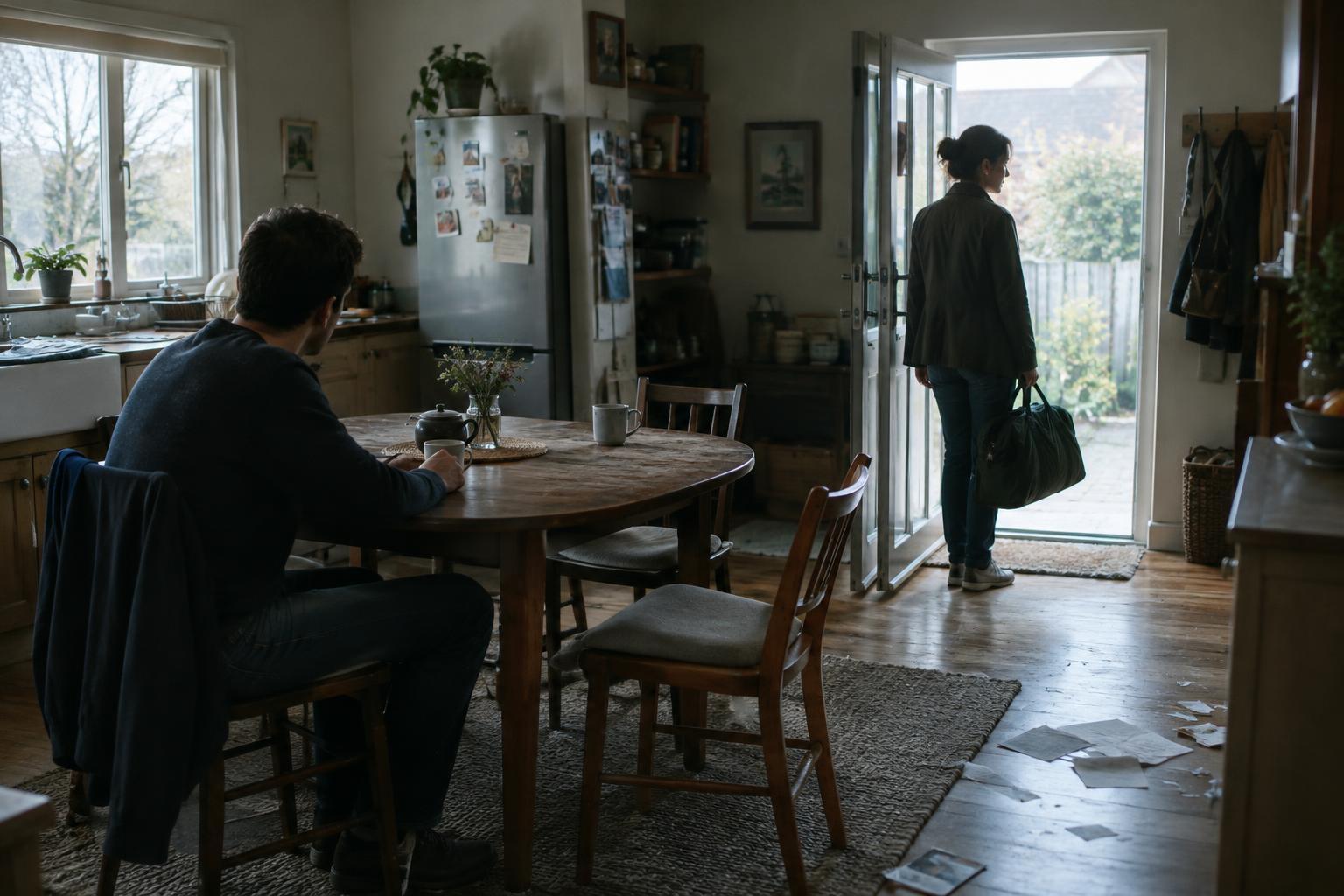
An aftermath scene often takes place somewhere the audience has seen before. That familiarity gives blocking particular force. If characters previously sat close at a kitchen table, placing one of them in the doorway can make the altered relationship legible. A director need not rearrange the whole room; a changed route through it may be enough. Who crosses the space freely? Who waits for permission? Who avoids an object or occupies a place that used to belong to someone else?
Work with the production design and camera plan to keep the change readable without turning every detail into a symbol. A broken object matters most if someone must decide whether to repair it, move it or live around it. Likewise, an empty chair has more dramatic value when a character's behavior draws attention to its absence. Before choosing a close-up, consider whether the audience needs to see a person and the surrounding space together to understand what has changed. A wider view may let hesitation or distance do the work.
Build toward a choice, not a recap
Aftermath scenes can become repetitive when characters recount an event the audience has just watched. If they need to discuss it, give that conversation a present-tense conflict. One person wants to call for help; another wants to wait. One wants to keep an object; another wants it gone. Their differing plans reveal how each understands the event while moving the story forward. Information then emerges because the characters need something from each other, not because the audience needs a summary.
The final beat need not be a large decision. It could be an invitation declined, a door left open or a task finally handed over. What matters is that the beat points beyond the scene. When planning coverage, protect the action and reaction that make this choice clear; a silent response may be as important as the line that prompts it. In rehearsal, test whether the actors can identify what each character wants now, not merely what each character feels about what happened.
A useful final check is to imagine removing the preceding event from the film. Would this scene still play in much the same way? If so, its behavior may be too general. An effective aftermath scene carries the event forward by changing what people do with one another. It gives the audience time to absorb the consequences while allowing the story to take its next step.