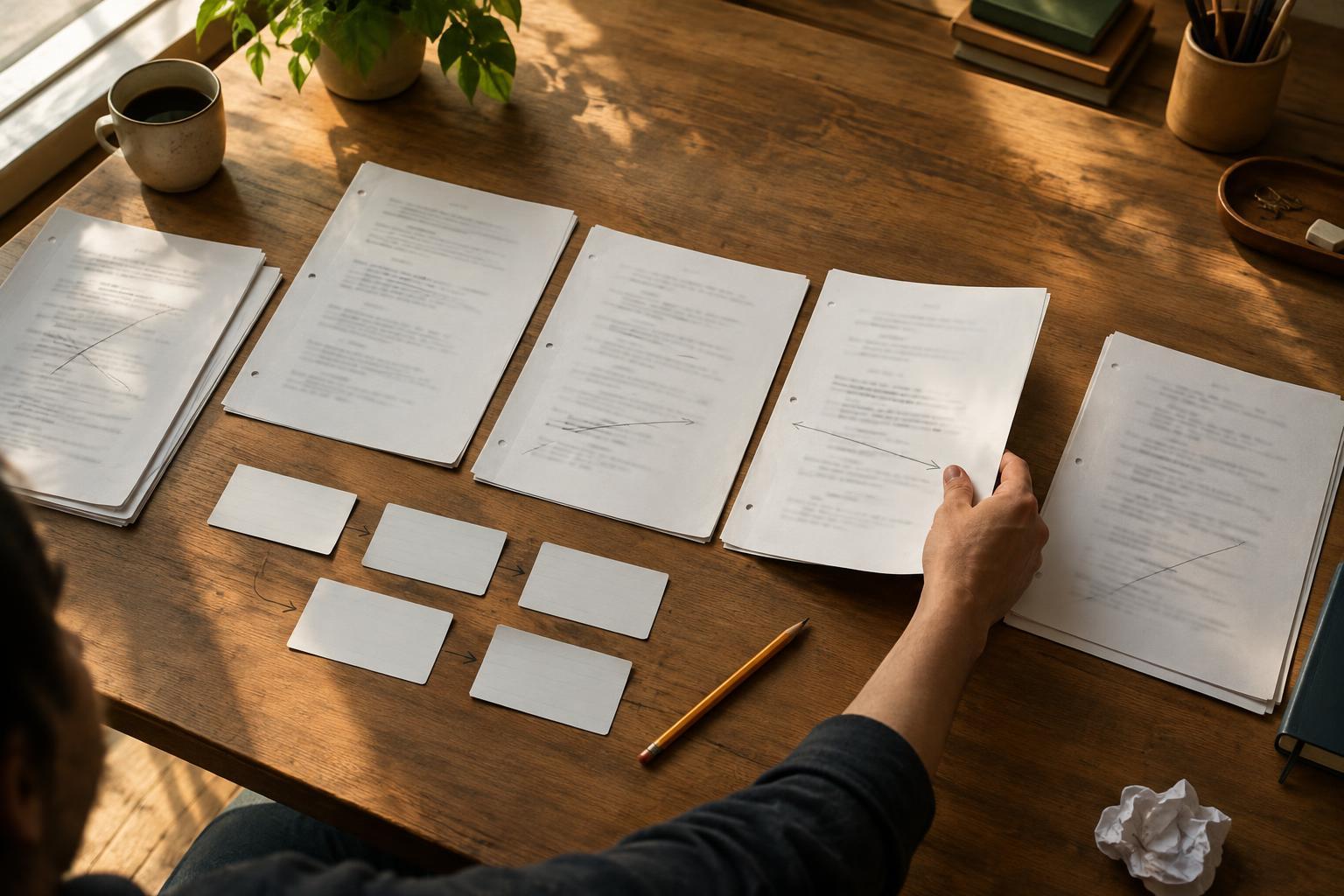
Start with the experience behind the note
Receiving feedback can make a screenplay feel like a collection of defects. One reader wants a faster opening; another wants more time with the protagonist. If you try to satisfy both immediately, you may change scenes without knowing what either reader struggled with. Before revising, separate the experience a reader reports from the solution they propose.
Suppose a reader says, “Add a scene where the sisters explain their history.” The useful information may be that their present conflict lacks emotional context. An explanatory scene is one possible response, but a choice made under pressure, a withheld answer, or a familiar gesture could also reveal their history. Write down the underlying question: “Why doesn’t this conflict feel personal yet?” That question gives you room to find a solution that belongs in your script.
Sort notes by what they affect
After reading all the comments, group them instead of tackling them in order. Look first for notes about the story’s foundation: what the protagonist wants, why events escalate, and whether the ending follows from earlier choices. Then consider scene-level concerns, such as unclear motivations or repetitive confrontations. Leave dialogue polish and small formatting preferences until the larger questions are settled. There is little value in perfecting an exchange you may remove.
Pay particular attention to patterns without treating a vote count as a verdict. If several readers lose track of a character’s goal at the midpoint, investigate that stretch. If one reader objects to an intentionally ambiguous ending, consider whether the ambiguity creates the question you intended. Readers can disagree because they expect different kinds of stories. Your job is to understand the reaction and decide whether the script has prepared them for the experience you want to give.
Use your story’s intention as a filter
Write a brief statement for yourself before making changes: whose story is this, what pressure tests them, and what should the audience be wondering about? This is not a pitch or a rule you can never break. It is a reference point for judging whether a proposed change strengthens the film you are writing or pulls it toward a different one.
Imagine a restrained mystery about a daughter deciding whether to trust her father. A note to reveal his secret in the first act might make the plot easier to follow, but it could remove the uncertainty that gives their scenes tension. The more useful question is whether viewers understand what the daughter stands to lose by trusting him. You might clarify the stakes while preserving the secret. Rejecting a proposed fix does not mean dismissing the concern beneath it.
Test one revision at a time
Turn a promising note into a specific revision hypothesis. For example: “If the protagonist makes a visible choice before the first major reversal, the audience will better understand what she is pursuing.” Identify the scenes affected, revise them, and reread the surrounding pages. Does her choice now change what another character does? Does the reversal still carry a cost? A revision is more likely to help when it improves the cause-and-effect chain, not merely the scene where the note appeared.
Keep an earlier draft and a short record of substantial changes. Note which concern you were addressing and what you changed; you do not need to document every line. If a revision solves one problem but weakens a later scene, you can adjust or undo it without relying on memory. When seeking another read, ask focused questions such as “When did you understand her reason for staying?” rather than asking whether the new version is better.
Know when to set a note aside
Some notes reflect a reader’s taste, an expectation the script deliberately resists, or a solution that creates more problems than it solves. You can set those aside while remaining curious about the response that prompted them. A helpful test is to explain, in a sentence, why you are not applying a note. “This reveal would answer the central question too early” is a reason. “They just didn’t get it” may be a sign that you should look again.
Feedback is a tool for seeing where the intended story and the story on the page diverge. It is not a set of instructions that every draft must obey. If you can name the concern, choose a revision that serves the whole screenplay, and check its effects beyond the immediate scene, you are using the note—even when you decline its suggested fix.