Start with a history, not a distressed surface
Aging a set is not the same as making everything dirty. A room can be decades old and meticulously maintained; a newer room can already show hard use. Before marking a surface, decide who uses the space, what they value and what they can afford to replace. These answers give wear a cause. They also help distinguish one location from another when a film contains several rooms built from similar materials.
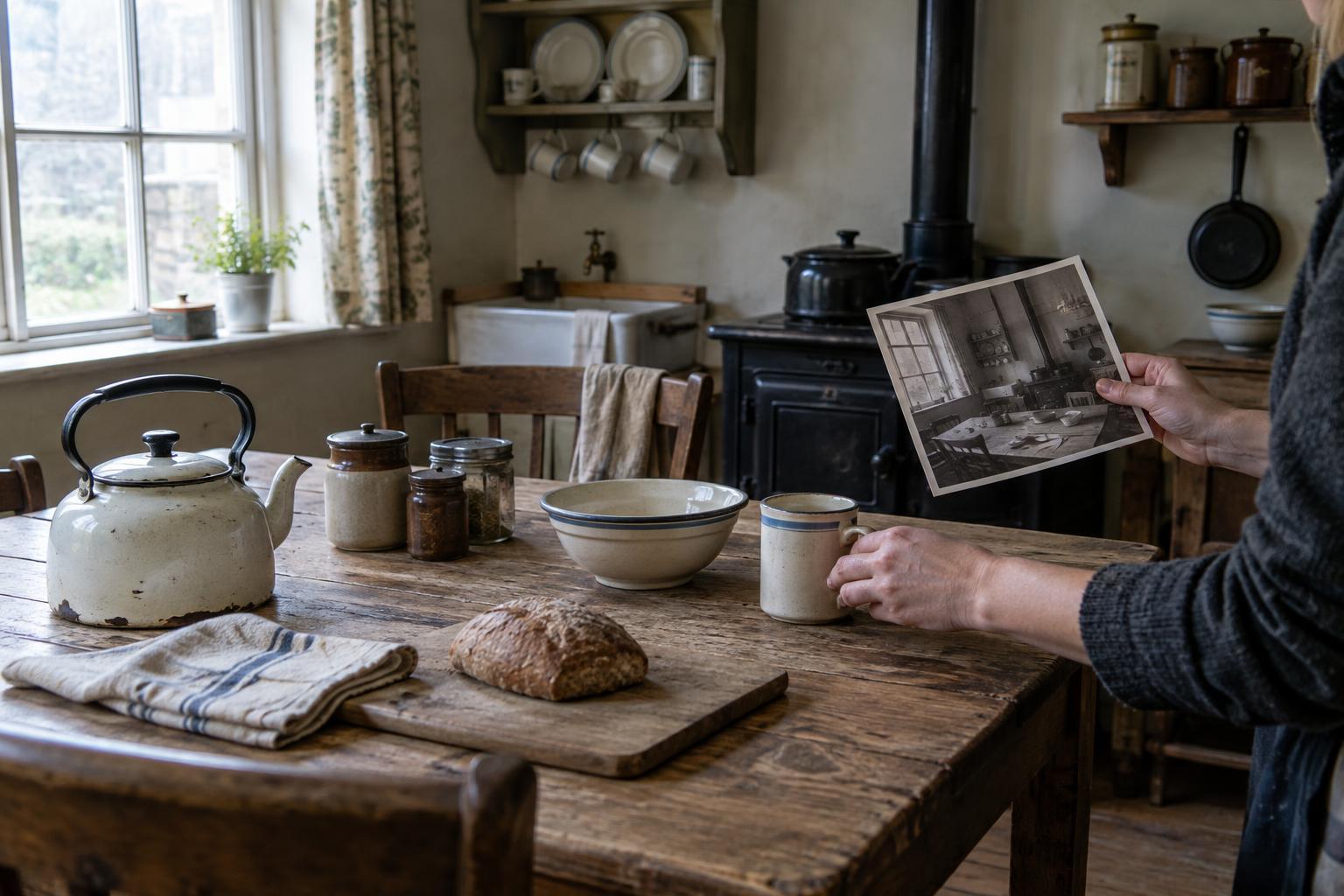
Imagine a family kitchen that has passed between generations. The table might have rounded corners from years of contact, while its top has been freshly refinished for guests. A cupboard door could have a newer handle because the old one broke, but the surrounding handles remain mismatched. Those choices suggest both time and care. If every edge receives the same scuffs, the kitchen loses that particular history and begins to look uniformly treated.
Let use determine where marks appear
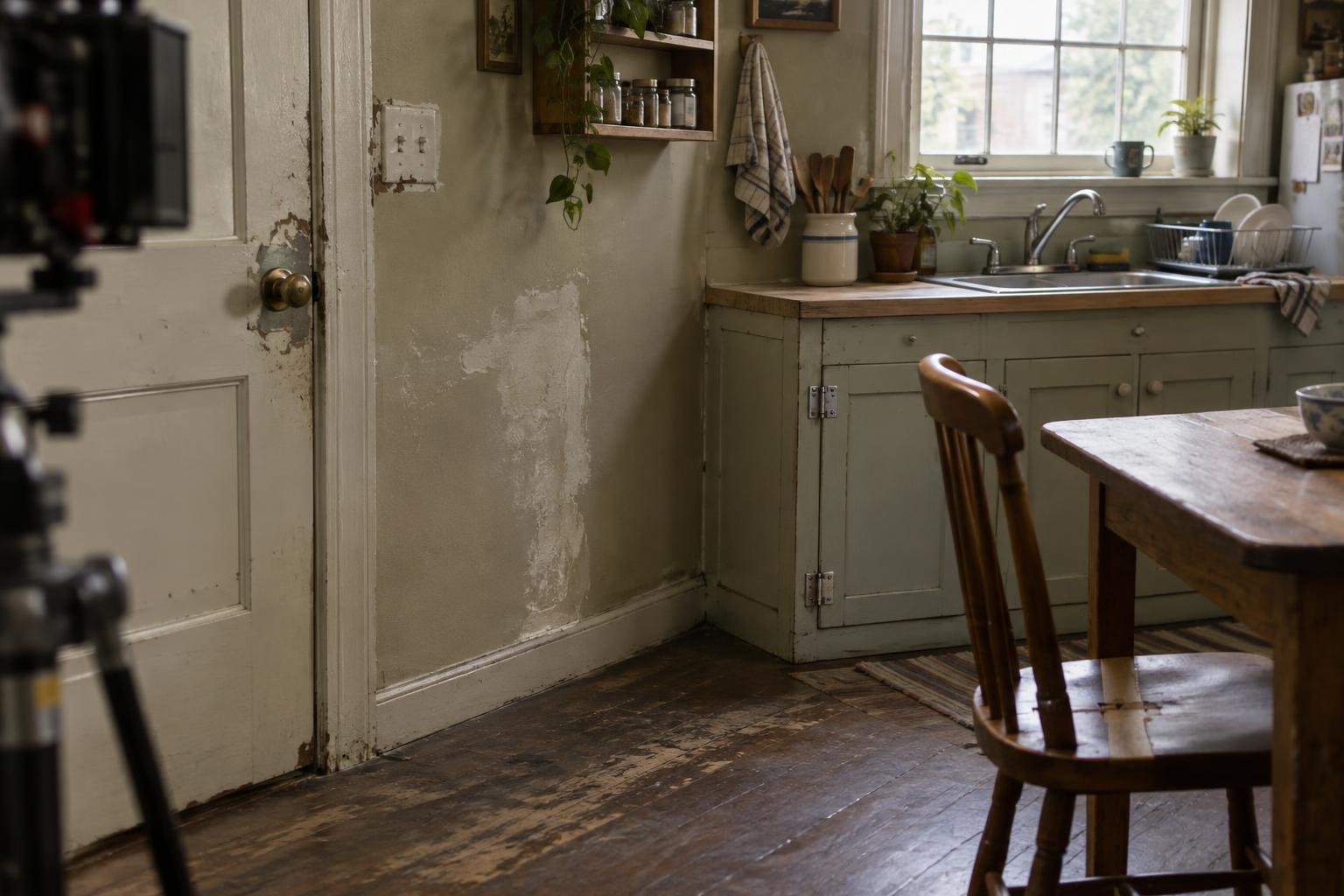
People leave patterns rather than evenly distributed damage. A doorway collects marks where bags brush the frame. A frequently opened drawer may show wear around its pull. The floor between a counter and a sink can look different from the floor beneath an unused chair. Mapping a character’s regular movement through the set helps place detail where a viewer might expect it, even if they never consciously notice it.
The kind of mark matters as much as its location. A shallow scratch suggests a different event from a dent, a stain or a faded patch. Repetition can imply habit: several small nicks beside a lock may suggest someone routinely misses the keyhole. One conspicuous gouge suggests a more singular event, but it need not be explained. Leave room for the audience to infer a past without turning every imperfection into a clue.
Use repairs to show decisions
A repair carries two stories: what failed and how someone responded. Matching paint and careful joinery may suggest a person trying to preserve a room’s original appearance. An exposed patch or improvised replacement may suggest urgency, limited resources or simple indifference to a polished finish. None of these meanings is automatic. A neat repair can come from pride or necessity, so its context should agree with the characters and the rest of the space.
Repairs can also make time visible in layers. A wall might have an older painted area, a newer square where a fixture was removed and a clean strip hidden until recently by a shelf. Those layers are more useful than a single blanket treatment because they imply changes in how the room was arranged. Restraint helps: one well-placed patch near an actor’s eyeline may communicate more than an entire wall covered in competing details.
Design for the frame and the action
A set’s history has to survive the way it will be filmed. Wide shots establish the general condition of a space; close shots make individual materials and repairs legible. Discuss likely camera positions and blocking before investing effort in a tiny mark that will never be seen. Equally, avoid placing a high-contrast patch behind a face if it draws attention away from a crucial performance.
Physical interaction can make aging feel specific. If an actor repeatedly opens a stubborn cabinet, the worn edge and replacement hinge may become part of the scene rather than background decoration. Coordinate such details with the people responsible for props, lighting, camera and set construction. A textured surface may read differently under side light, and anything the actor touches must be suitable for the planned action. The goal is not maximum visibility but a consistent world across shots.
Keep a visual logic across the set
A useful final check is to walk through the space as though you lived there. Which marks would you notice? Which problems would you fix immediately, and which would you learn to work around? Compare adjoining surfaces and objects: a badly worn desk beside an untouched chair may be plausible, but it should reflect a reason, such as the chair being a recent addition. Photographing the set during preparation can help track these relationships and preserve continuity if pieces move or change.
The strongest aging choices give viewers enough evidence to sense a life beyond the scene. Wear shows repeated contact; repair shows an attempt to keep going; untouched areas show what has been protected, avoided or replaced. When each detail follows the same underlying history, the set can suggest years of use without a character needing to explain any of them.