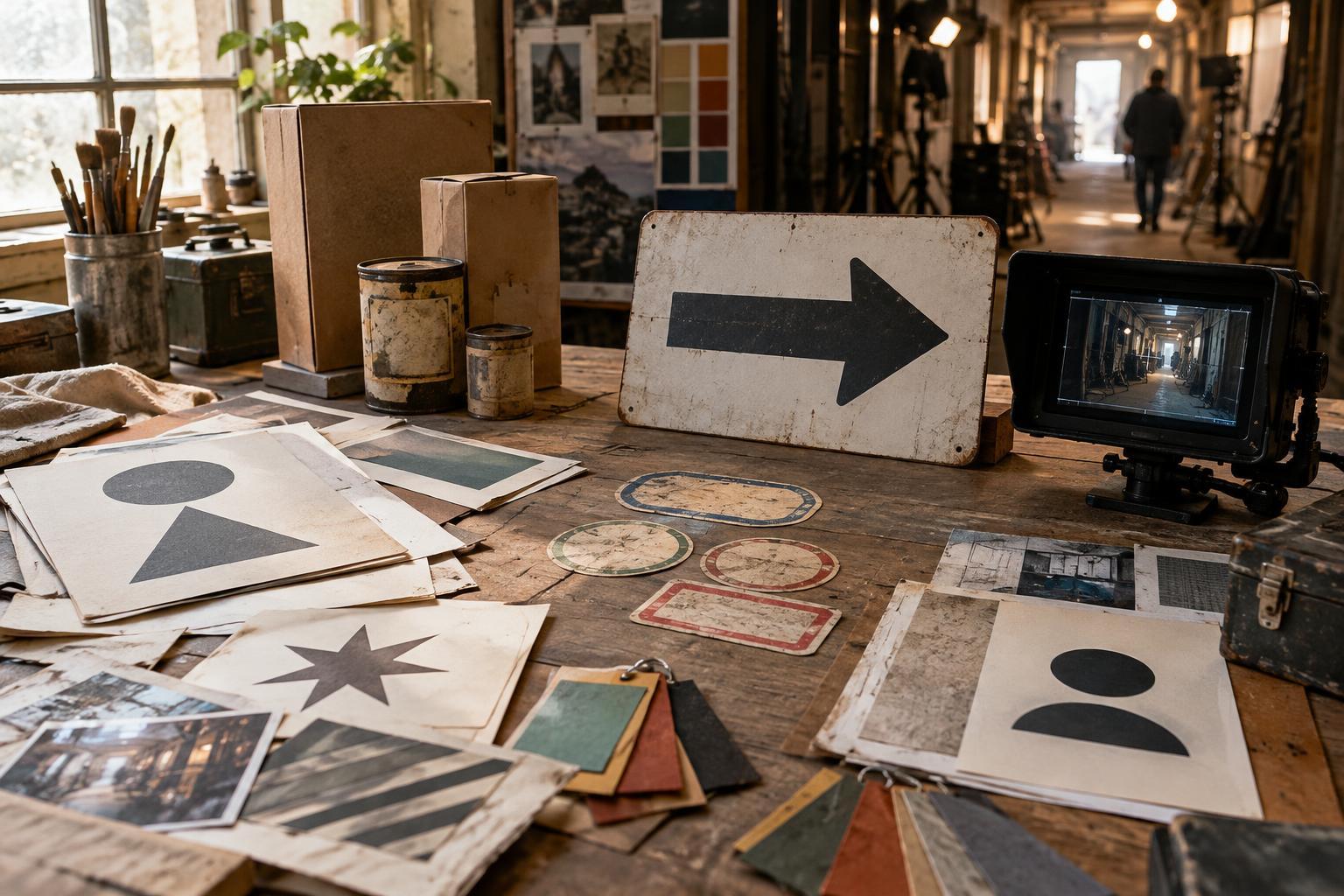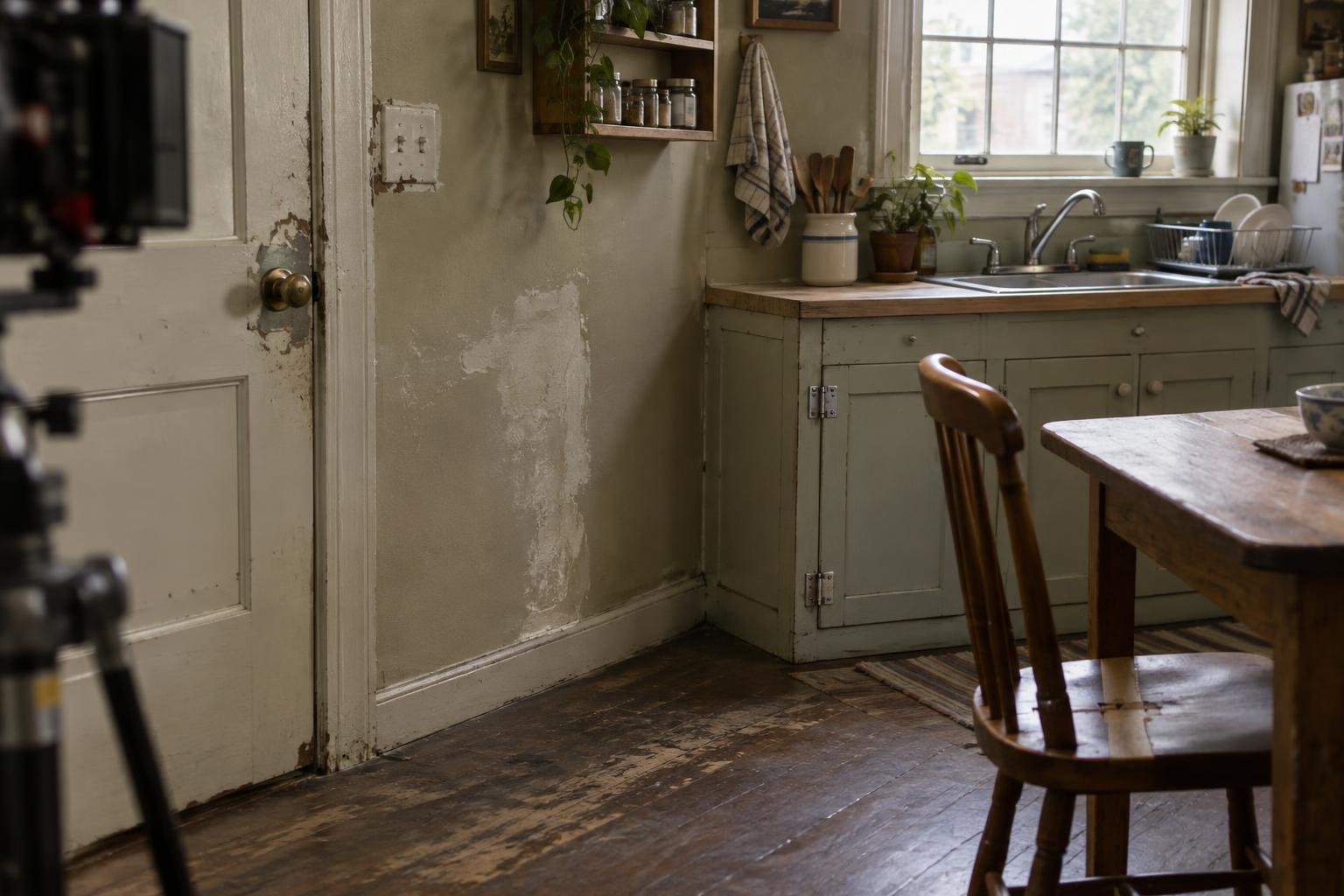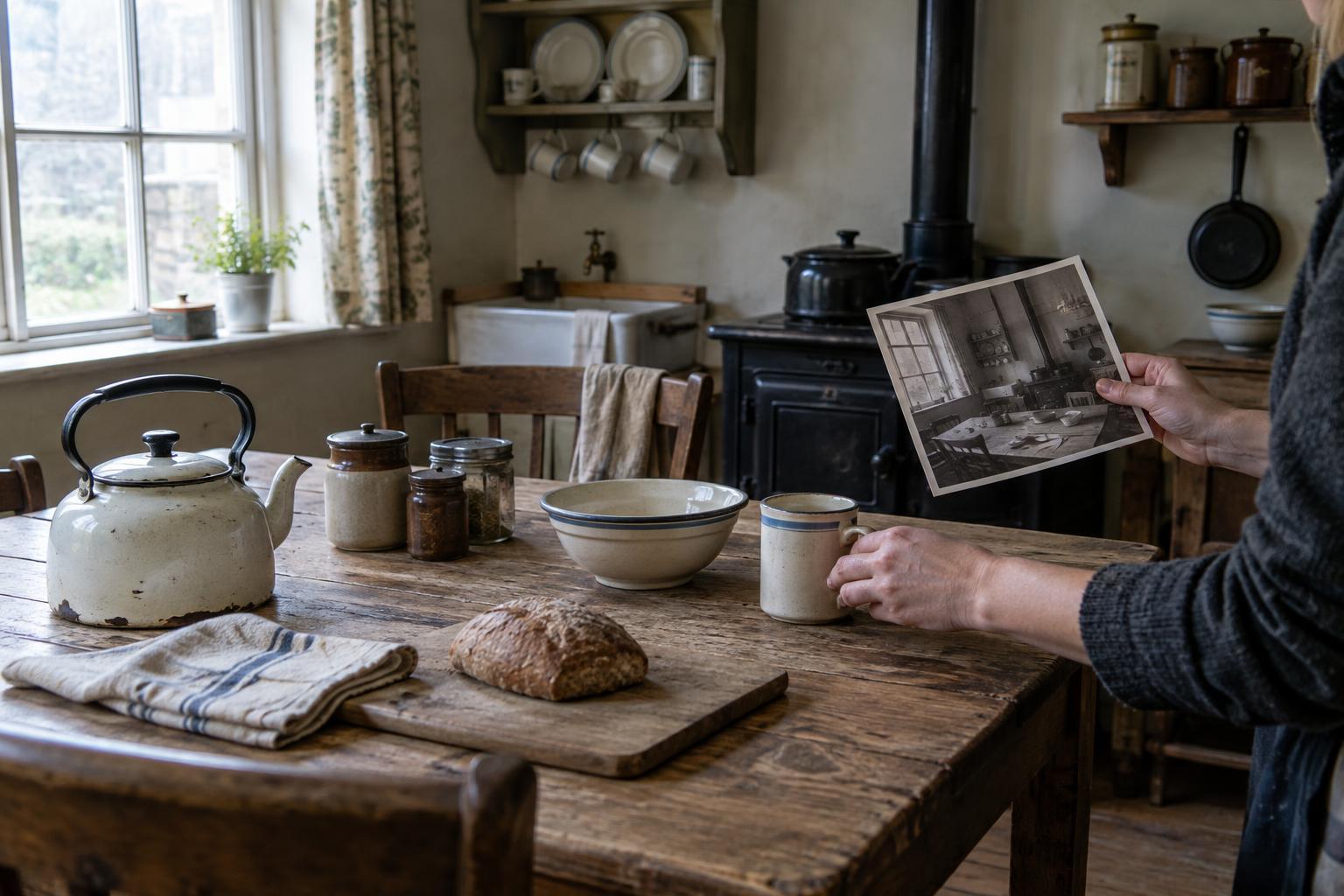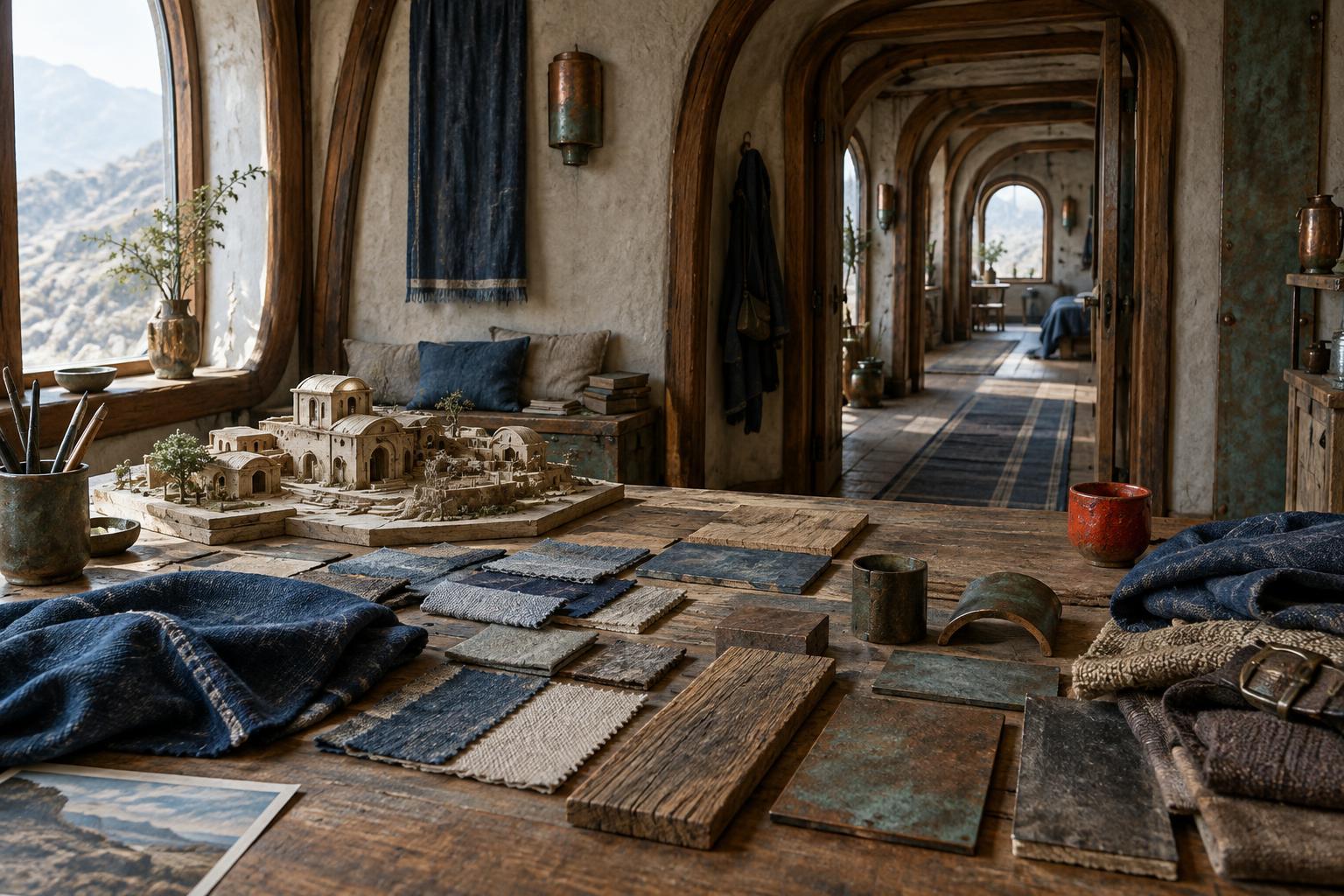
Start with the world’s pressures
Production design becomes easier to navigate when its choices grow from the conditions characters live under. Before choosing a palette or collecting reference images, ask what people in this world need, what they lack and what they value. A coastal settlement exposed to frequent storms might favor repairable furniture and places to dry clothing. A society that prizes public ceremony might devote its finest materials to shared spaces while keeping private rooms plain. These are not prescriptions for how such places must look; they are starting points for choices that can be developed into a distinct world.
Write a few sentences about the pressures that affect daily life, then turn each into a visible design rule. If objects are difficult to replace, repairs should be common and legible. If privacy is scarce, people might mark small personal territories with portable belongings. A rule works best when it can guide several departments, from sets and props to costume and lighting, without requiring every object to look alike.
Choose a visual grammar, not a uniform look
A coherent world can contain contrast. Its wealthier and poorer districts, older and newer buildings, or public and private rooms may differ sharply while still sharing underlying design logic. Define a handful of recurring decisions: which materials are readily available, what shapes are associated with authority, which colors carry meaning, and how people maintain or alter what they own. The goal is a grammar that helps the audience sense connections, not a checklist that makes every frame repeat the same motif.
For example, imagine a city where official spaces favor smooth, uninterrupted surfaces. A government hallway might conceal doors within its walls; a clerk’s desk might hide its tools in closed compartments. In a resident’s apartment, visible hinges and patched containers could suggest a different relationship to the same culture of concealment. The contrast tells us who can afford to make mess disappear. It also gives directors and cinematographers useful questions: what should a character be able to see, touch or hide in this space?
Let the rules operate at different scales
Test each rule across locations, costumes and hand props. A rule about scarcity should affect more than a wall texture. It might appear in a jacket with replaced buttons, a chair adapted for a new purpose and a carefully stored household tool. Those details need not receive close-ups. When they agree with one another, they make a room feel as though it existed before the scene began.
Think about how a character uses the environment, too. Where do they put a wet coat? Can they cross a room without asking someone to move? What can they reach while seated? These questions connect production design to blocking and performance. A beautiful set may be less useful than one that gives a character a meaningful action, such as covering a stain before a guest enters or taking a key from a hiding place worn smooth by use.
Create a short design guide that distinguishes fixed rules from flexible ones. It might state that working tools are repaired rather than discarded, while allowing each neighborhood its own methods of repair. That leaves room for variation and helps collaborators make new choices without waiting for approval on every small detail.
Use exceptions to reveal character and change
Consistency does not mean that every rule is obeyed. An exception can become a storytelling tool when viewers have had time to understand the pattern it interrupts. In a world where public rooms conceal personal possessions, a desk covered with family photographs may suggest confidence, defiance or carelessness. Which interpretation fits depends on the scene and the person who owns it.
Plan exceptions deliberately. Ask who can break a rule without consequence, who breaks it in private, and who cannot afford to follow it at all. Also consider whether the world changes over the course of the story. A pristine set might gradually accumulate improvised fixes as a household loses control, or a character might begin carrying an object once kept hidden. Such changes are strongest when they arise from action rather than appearing solely to signal a theme. Track them across scenes so the design has a legible progression.
Check the world from the audience’s point of view
A design guide is useful behind the scenes, but the finished film has to communicate through images. Review the spaces and objects that the camera will actually show. Does an important distinction register in a wide shot, or does it depend on a detail the film never holds long enough to see? Can an actor interact naturally with the prop meant to reveal their habits? If the audience needs an explanation before a design choice makes sense, consider whether that choice is doing enough work on screen.
Finally, separate consistency from perfection. A believable world has wear, local customs, personal taste and uneven access to resources. Its rules should help explain those differences, not erase them. Keep the guide compact enough to remember, test it against scenes rather than isolated concept images, and revise it when a stronger story choice emerges. The result is a world that supports the drama instead of competing for attention.