What a seamless cut does
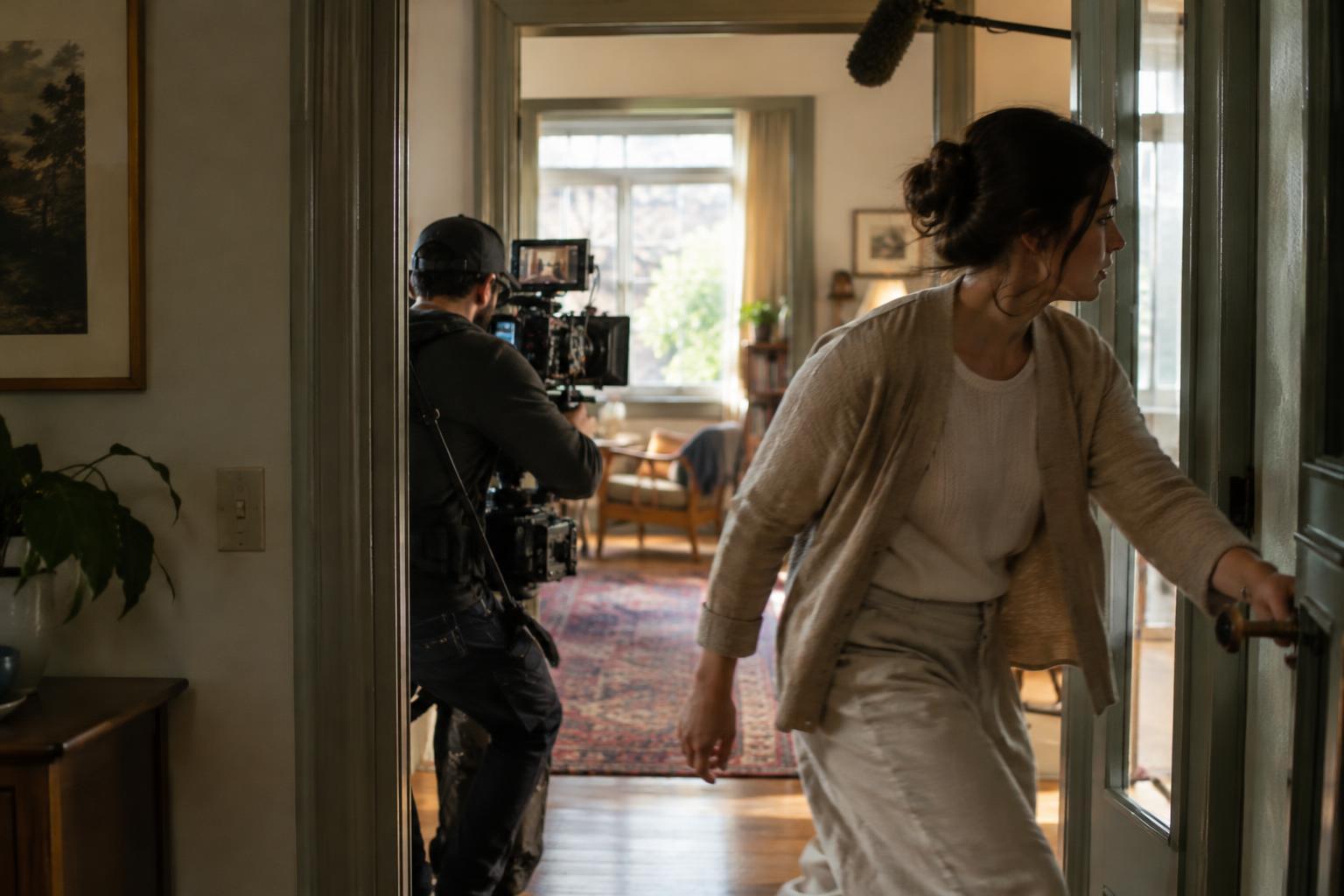
Continuity editing gives viewers a reliable sense of where people are, what they are doing and how one moment leads to the next. A character reaches for a door in a wide shot; a closer shot completes the movement. Matching the action across the cut helps the gesture feel uninterrupted. Consistent eyelines and screen direction help viewers understand who is looking at whom and where someone is headed.
These choices do more than hide the edit. By reducing the effort needed to reconstruct a scene, they leave room for viewers to notice a hesitation, a change in expression or a line of dialogue. Continuity is especially useful when the details of an action matter: an object changes hands, someone notices an exit, or a decision depends on seeing who heard what. The cut can remain unobtrusive while the story advances.
What a visible break can reveal
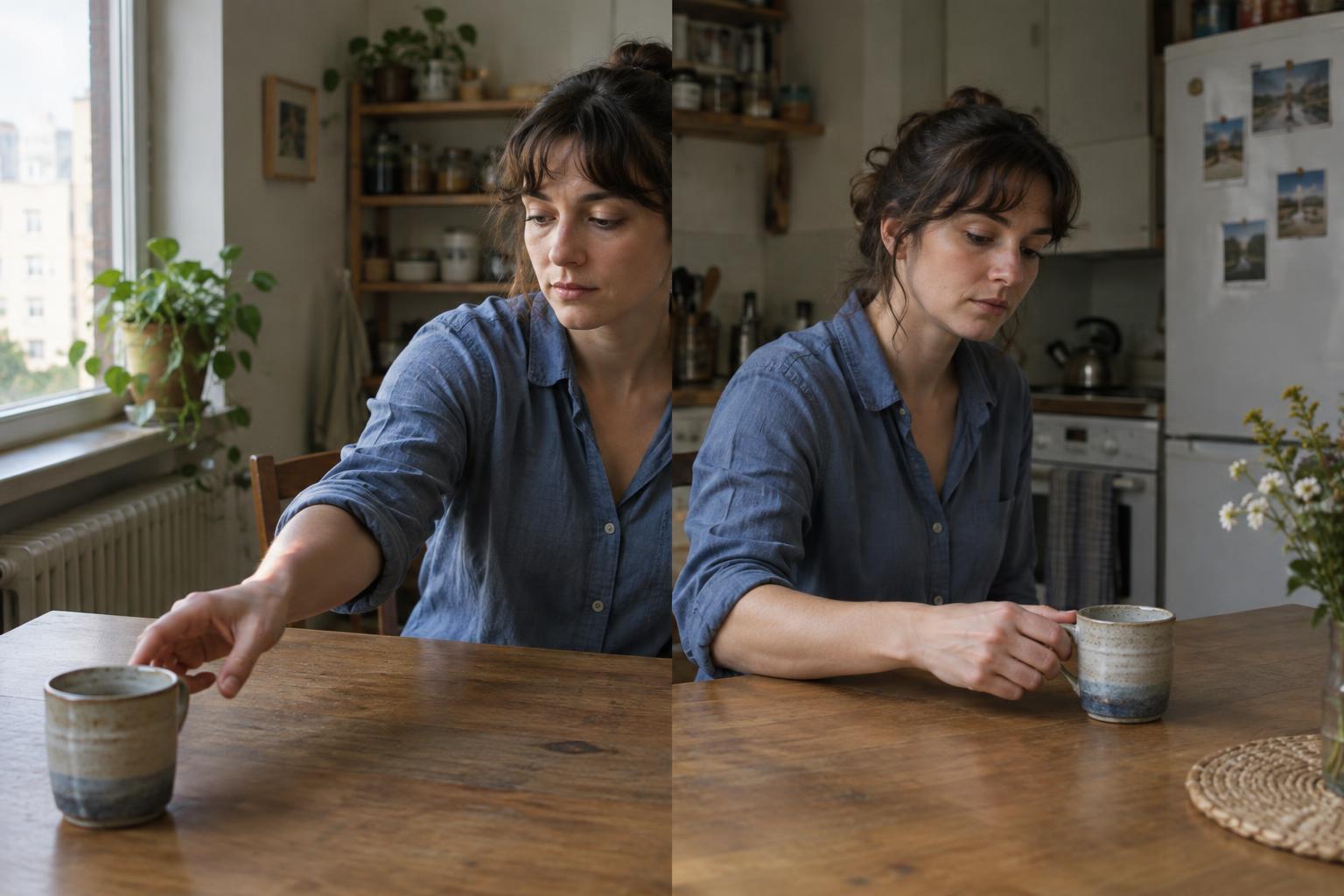
Discontinuity editing allows a cut to interrupt that easy flow. A jump cut might remove part of a character’s movement while keeping the framing nearly the same. A scene might leap from a quiet room to a crowded street without showing the journey. An abrupt change in angle or screen direction may briefly unsettle the viewer. These breaks draw attention to missing time, a contrast between images or a shift in perspective.
A conspicuous cut is not automatically confusing, and a confusing cut is not automatically expressive. The difference often lies in what the viewer can still grasp. If the audience understands that a character is waiting but feels time skip forward in uneven bursts, jump cuts can make impatience tangible. If the audience cannot tell whether the character has left the room, met someone new or entered a memory, the same technique may obscure a story point that needs to be clear.
Choose the cut according to the scene’s question
Before choosing between smooth and disruptive edits, ask what viewers should be tracking. In a scene about whether a character can conceal a letter, clear geography and continuous action may build suspense: we need to know where the letter is and who might see it. In a scene about that character’s dread after sending it, an ellipsis might be stronger. Cuts between isolated moments can make the wait feel fractured without documenting every minute.
The two approaches can also work together. Establish a room and its occupants with conventional coverage, then break the pattern at a turning point. Suppose a conversation has alternated predictably between two faces. After an accusation, holding on the listener longer than expected—or cutting past their reply to an empty chair—can make the omission noticeable. Because the scene first taught viewers its rhythm, the departure from that rhythm carries meaning.
Sound can bridge or sharpen the break
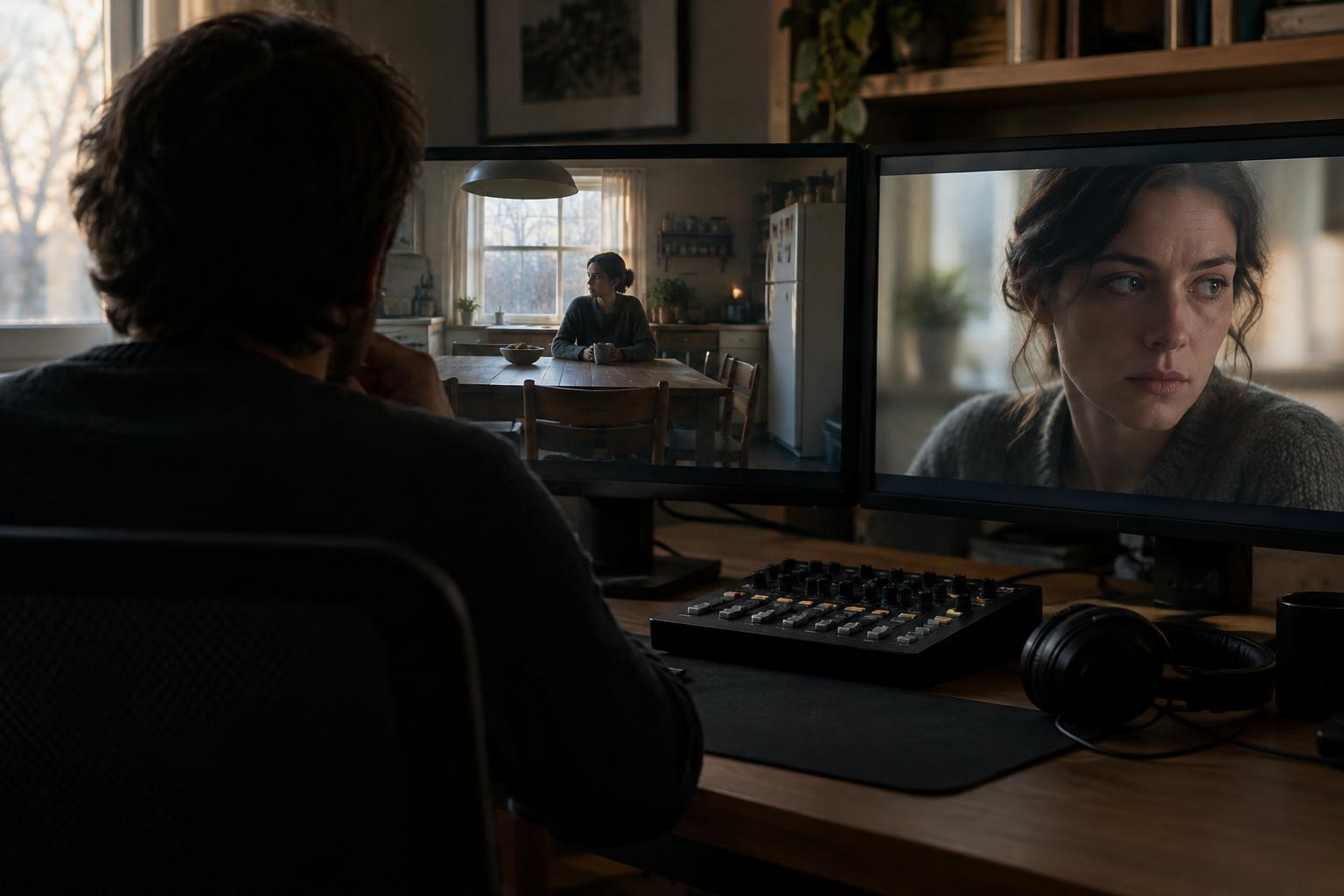
Picture is only part of continuity. Dialogue that carries across a change of shot, steady room tone and a consistent background sound can make separate images feel like one space. Sound can also lead viewers into a new location before the image changes: the noise of a train begins over a character’s face, then the cut reveals the platform. Such a bridge prepares the transition even when time or place has changed.
To emphasize a rupture, an editor might do the opposite. Cutting a recurring sound short can make an image change feel sudden; carrying an unrelated sound into a new scene can make the connection feel uneasy. Silence can be just as deliberate, provided it suits the scene rather than resembling a missing track. Listen to transitions without watching the picture, then watch without sound. Each pass can expose an assumption that the other track was quietly supporting.
Make disruption legible enough to matter
A useful test is to ask a viewer what happened after a cut and what felt different. They need not describe the editing technique. If they understand the basic event but feel a jolt, pause or gap you intended, the cut is doing expressive work. If they misunderstand a necessary action, consider adding an anchor: a recognizable location, a repeated object, a sound cue or one continuous gesture before the next break.
Discontinuity does not require constant intensity. Too many equally emphatic cuts can make none of them stand out. Try a version that preserves time and space, then remove or rearrange only the moments that change how the scene feels. The aim is not to prove that an edit is visible. It is to decide when an uninterrupted flow serves the story—and when a break lets viewers experience something that seamless coverage would smooth away.