Why movement can hide a cut
Cutting on action means changing shots while a movement is underway. A character reaches for a door in a wide shot; the edit lands on a close-up as their hand takes the handle. The viewer follows the action across the cut rather than stopping to compare the two camera views. It is a way to make a change in framing feel like part of one continuous event.
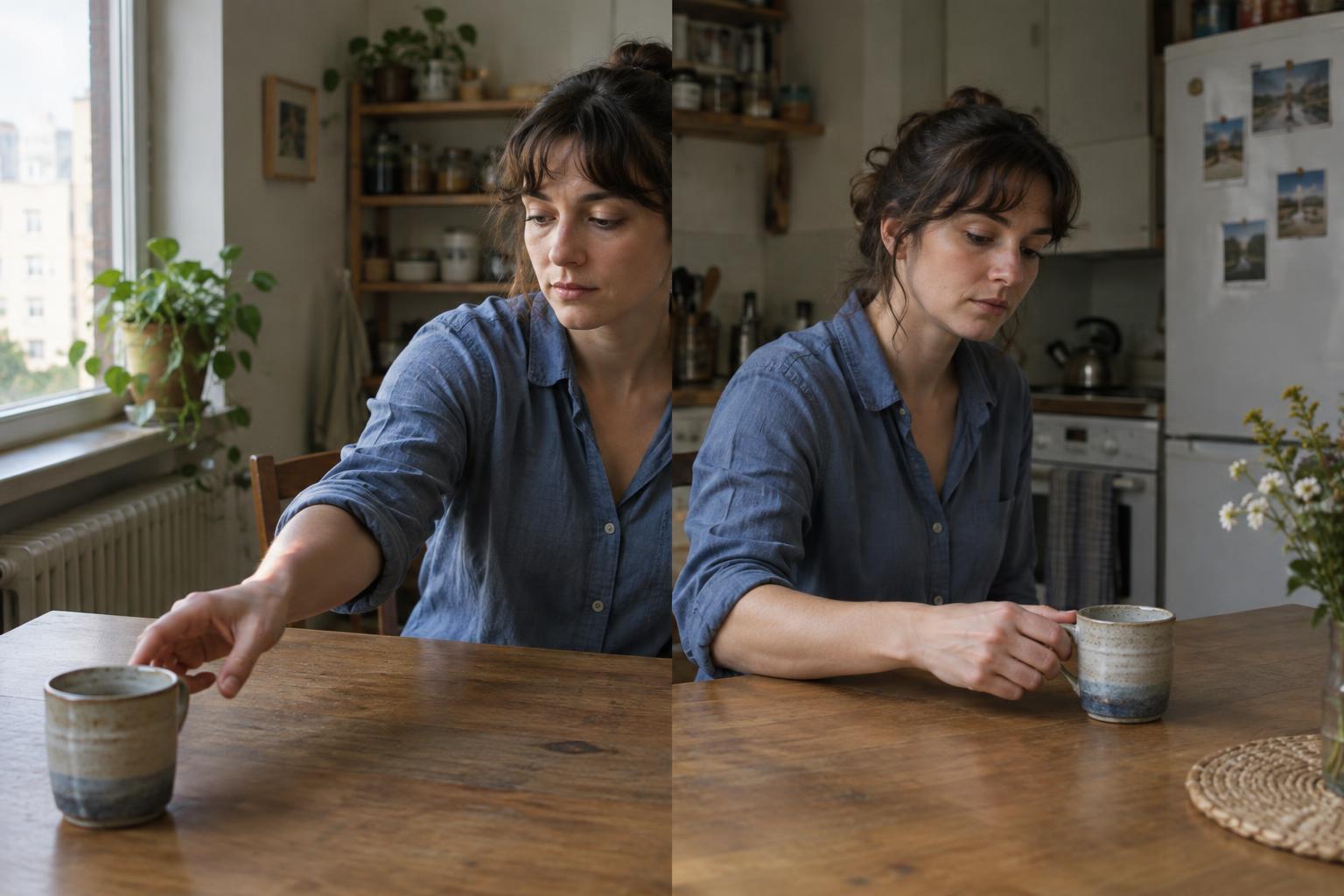
The movement does not have to be dramatic. Sitting down, turning toward a voice or placing a glass on a table can all provide a clear point of connection. What matters is that the second shot advances the same action. If the character begins to sit before the cut but is already settled in the next shot, the missing movement may feel like a jump. If they repeat too much of the descent, the action can feel oddly slow.
Find the action that carries the story
Before choosing a cut point, ask what the viewer needs to notice. A wide shot may establish that someone is crossing a room, while a closer shot reveals their hesitation as they pick up a letter. Cutting during the reach directs attention from the larger space to the meaningful detail. The action provides a bridge, but the reason for crossing it is storytelling.
A useful action has a readable beginning, middle and end. Mark those phases in both shots, then try several cut points. A cut near the start of a gesture may emphasize intention; one near its completion may emphasize the result. There is no universal frame on which to cut. The best point is usually the one that keeps the viewer oriented while giving the next shot enough time to deliver its information.
Match direction, position and pace
Movement should appear to continue across the edit. If a hand travels from left to right in one shot, a sudden reversal in the next can make the gesture look disconnected. Watch where the moving subject sits in each frame, too. A cut from a face near the right edge to the same face near the far left may force the eye to search, even when the physical action matches.
Timing deserves equal attention. Editors often trim a few frames from one side of a cut or allow a little overlap to make the movement feel natural. The exact adjustment depends on the speed of the gesture and the difference between camera angles. Test the cut at normal playback speed rather than judging it only one frame at a time. A match that looks exact while paused can still feel awkward in motion.
Not every difference is a problem. A closer shot may make a small movement appear faster or larger. The goal is perceptual continuity, not a rigid duplication of every limb position. If the viewer understands where the action came from and where it is going, a modest mismatch may pass unnoticed.
Let sound carry the moment
Sound can connect shots even when their images differ. A continuous room tone, a line of dialogue or the sound of footsteps can hold a scene together as the camera angle changes. Rather than cutting every sound at the same instant as the picture, listen for a transition that feels motivated. A door latch might begin in the wide shot and finish over the close-up, reinforcing that both views belong to one action.
Be careful with distinctive sounds tied to a visible event. If a cup touches a table after the sound of impact, the mismatch may draw attention to the edit. Decide which visible frame should feel like the contact, then place the sound accordingly. When recorded sound is uneven between takes, consistent ambience can help keep the shift in perspective from sounding like a change of location.
Use continuity deliberately, not automatically
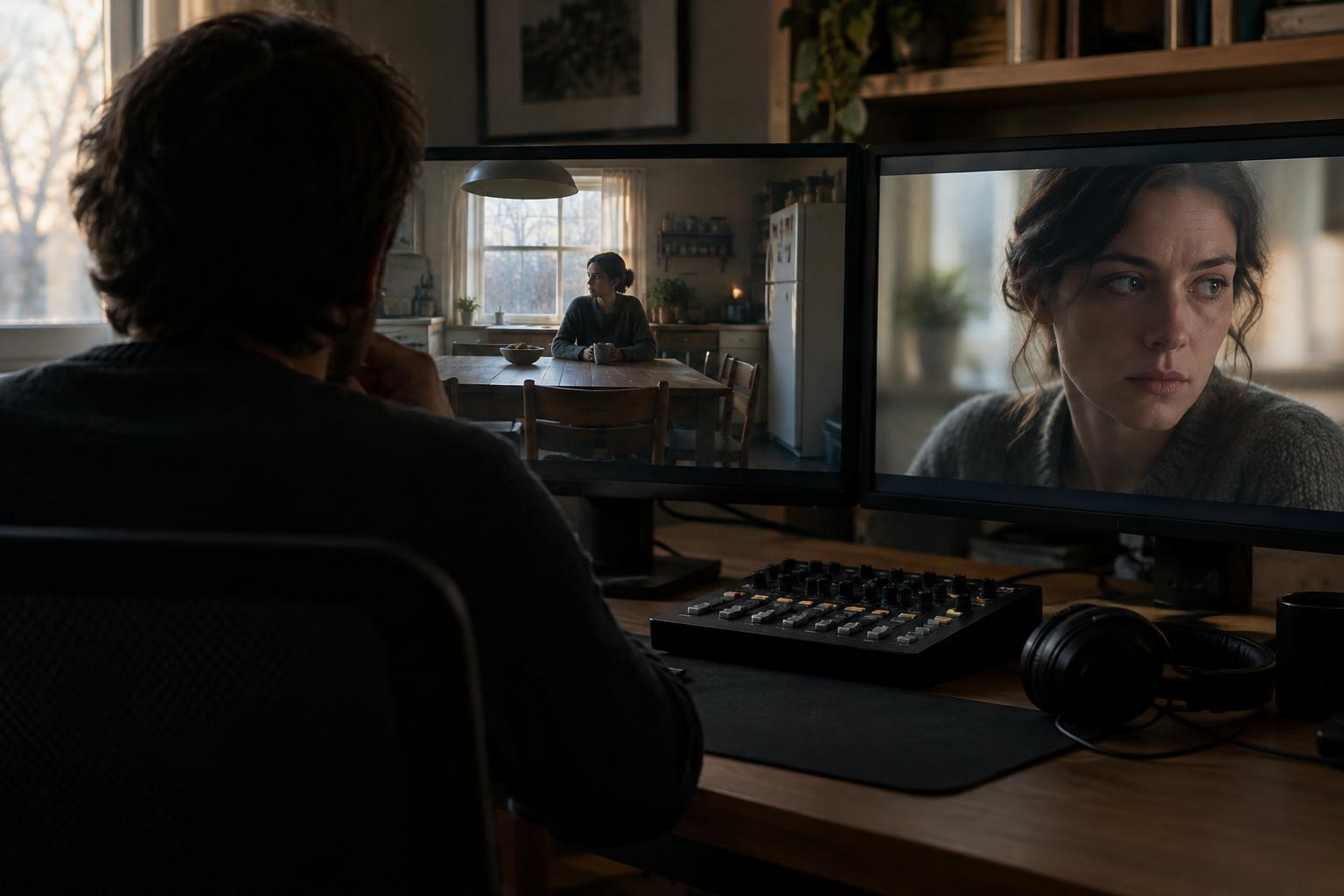
A simple editing pass can begin with the action alone. Lay down the two shots, find the point of movement that links them, and play the sequence without stopping. Then check screen direction, body position, timing and sound in turn. Finally, watch the whole scene. A cut that works in isolation may arrive too early or too late for the scene’s emotional rhythm.
A visible break can also be a valid choice. Repeating an action may make a character’s effort feel heavy; skipping part of it may create urgency. Such choices work best when they serve a clear effect rather than result from an unnoticed mismatch. Cutting on action is not a rule that every movement must obey. It is a tool for guiding attention while letting the audience experience separate shots as one unfolding moment.