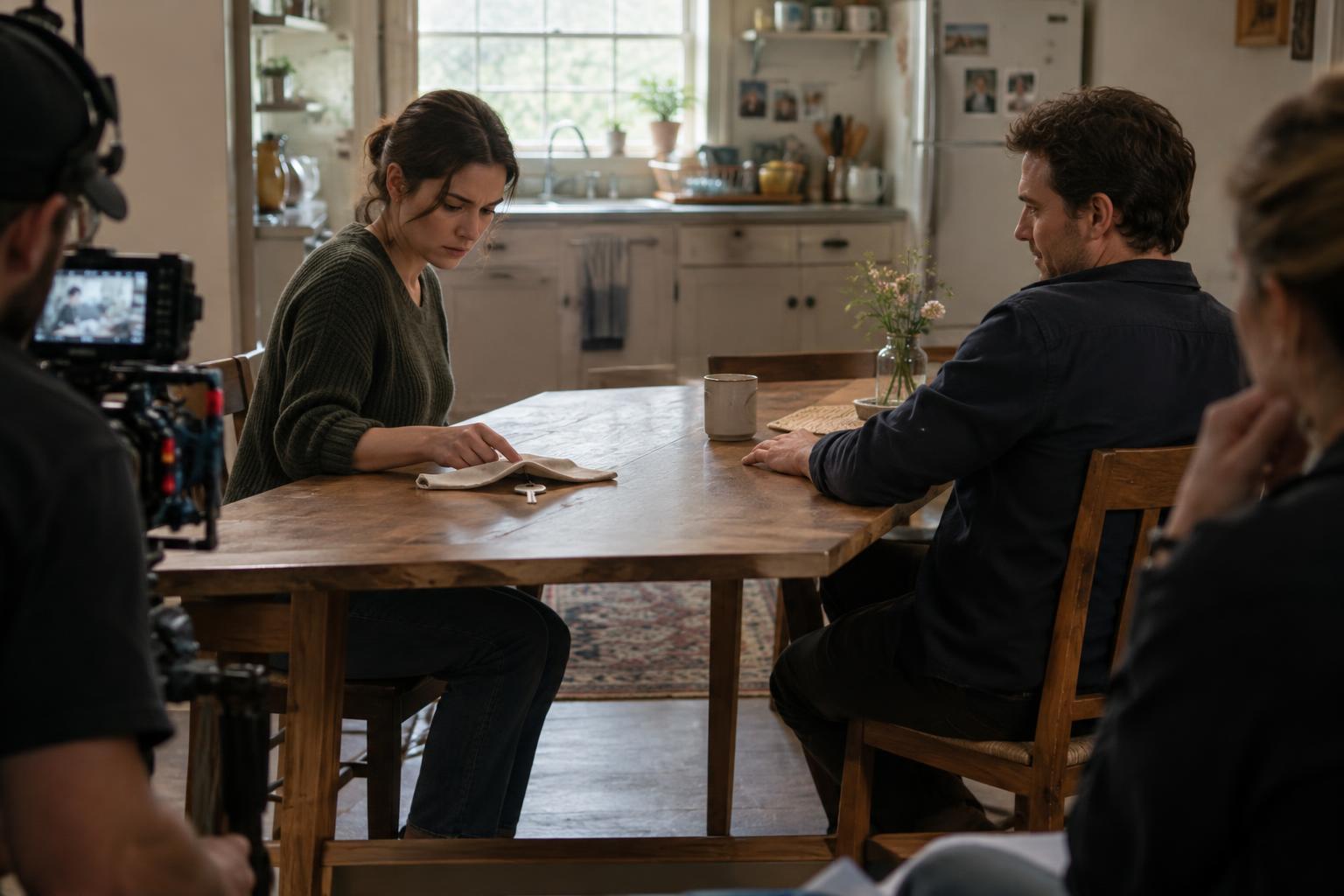
Give the character something to do
An introduction often carries too much explanatory weight. A scene may try to establish a character’s job, relationships, wound, and ambition before the audience has a reason to care. Behavior offers a simpler starting point. Put the character in a situation that asks for a choice, then let viewers see how they make it. They might return a lost wallet, check inside it first, or leave it where it lies. Each action creates an impression without claiming to tell the whole story.
The choice need not be dramatic. A person entering a crowded room must decide where to stand, whom to acknowledge, and whether to interrupt. Those small decisions can suggest confidence, caution, impatience, or care. Give the actor a playable objective rather than an abstract instruction such as “seem mysterious.” A concrete aim, like reaching an empty chair without attracting attention, produces behavior that the camera can observe.
Build a situation that reveals a pattern
A useful first scene gives the character a small obstacle. If everything goes according to plan, viewers may learn only what the character intends to present. An obstacle exposes a response: do they adapt, blame someone, ask for help, or pretend nothing happened? Imagine a host whose guests arrive before the table is ready. The missing plates matter less than whether the host welcomes the guests, hides the problem, or sends someone else to fix it.
Direct the surrounding characters as carefully as the newcomer. Their reactions help define the stakes of a gesture. If the host’s friend quietly starts setting out plates, the two may share an established rhythm; if the friend waits for permission, the relationship feels different. Avoid making every response confirm one trait. A generous action followed by a controlling one can make a character more specific than a scene built solely to prove they are generous.
Let blocking show how the character relates to others
Blocking is more than moving actors into position for a clear shot. Distance, orientation, and who yields space can make a relationship legible before anyone names it. A character who stops at a doorway rather than entering may be waiting for an invitation, resisting a conversation, or assessing the room. The scene around that pause determines which reading feels plausible. Give the actor a reason for the movement so it belongs to the moment rather than announcing a theme.
Consider what changes during the introduction. Someone who begins at the edge of a group might step toward its center to defend another person, then retreat when attention turns to them. That shift is more revealing than a fixed pose. Rehearsal can help identify the movement that makes the scene readable, but leave room for natural timing: the instant a character decides to cross a space can be as important as where they end up.
Choose a camera position with a point of view
Framing determines what the audience can judge. A wide shot may show a character helping while others remain unaware; a closer shot may hold on the hesitation before they act. Neither is automatically more revealing. Choose according to the question the introduction should raise. If viewers need to notice that the character watches the exits, include enough of the room to make those glances meaningful. If the important detail is a suppressed reaction, give the face time without insisting that every feeling be explained.
An entrance need not be treated as an event. Following a character through a door can make the audience share their uncertainty; holding on the people already inside can make the character’s arrival register through its effect on others. Sound offers similar choices. A character’s voice heard before they appear creates one expectation, which their visible behavior can meet or complicate. Use these tools to direct attention, not to substitute style for a decision the character actually makes.
Save explanation for when it changes what we have seen
Backstory can deepen an introduction, but it does not have to accompany it. If viewers first see someone methodically repairing a broken sign, a later detail about why the place matters may give that action new weight. The earlier scene still needs to work on its own: the task should be clear, and the character’s approach to it should be worth watching. Mystery is useful when there is something concrete to be curious about, not when basic action is withheld.
When reviewing a first scene, try setting aside dialogue that explains the character. Can you identify what they want right now, what gets in the way, and what they do in response? Then ask what a viewer might reasonably infer—and where the scene leaves room for revision. A strong introduction does not deliver a final verdict on a person. It establishes a recognizable way of behaving that later scenes can test, challenge, or overturn.