Give everyone a reason to be in the room
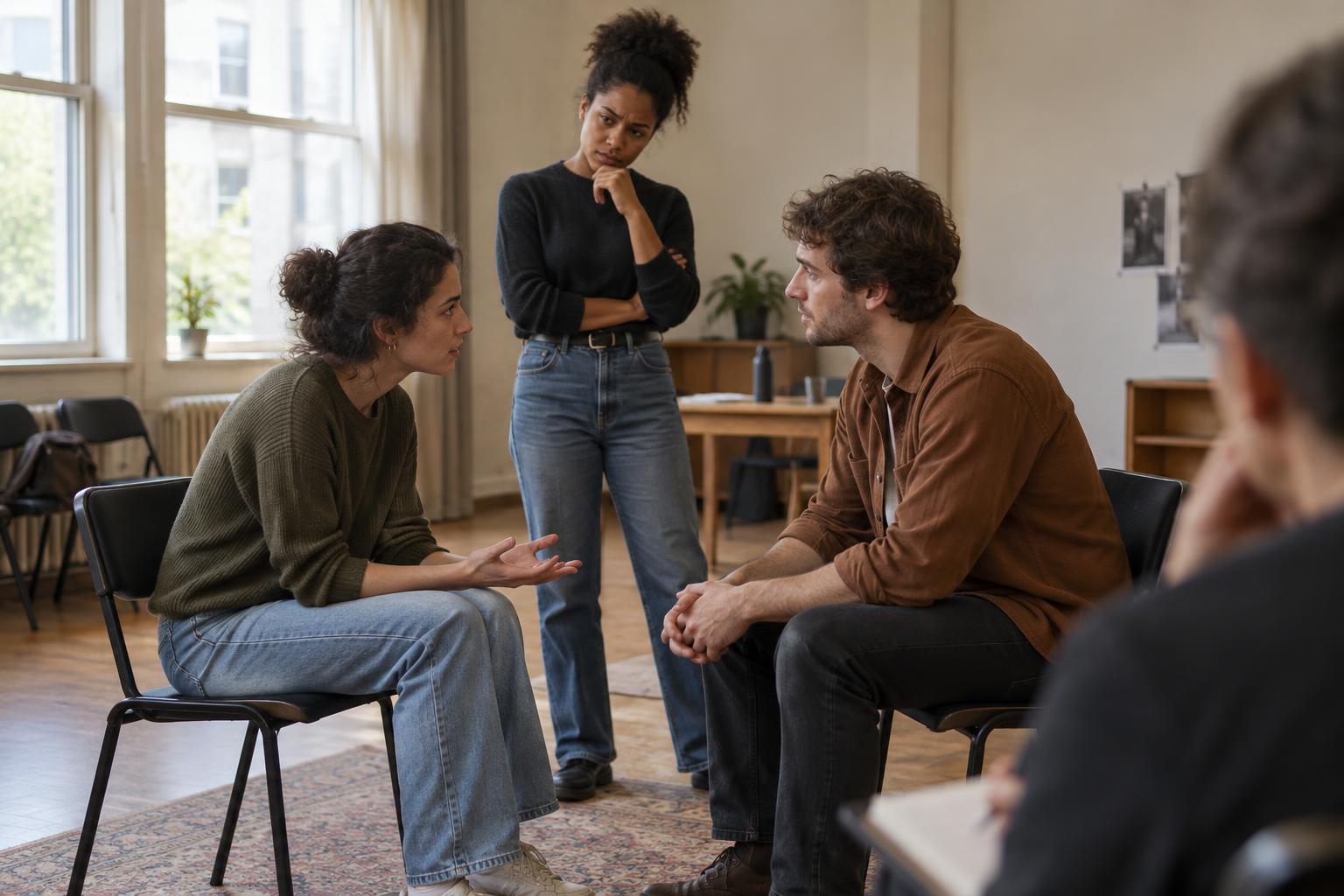
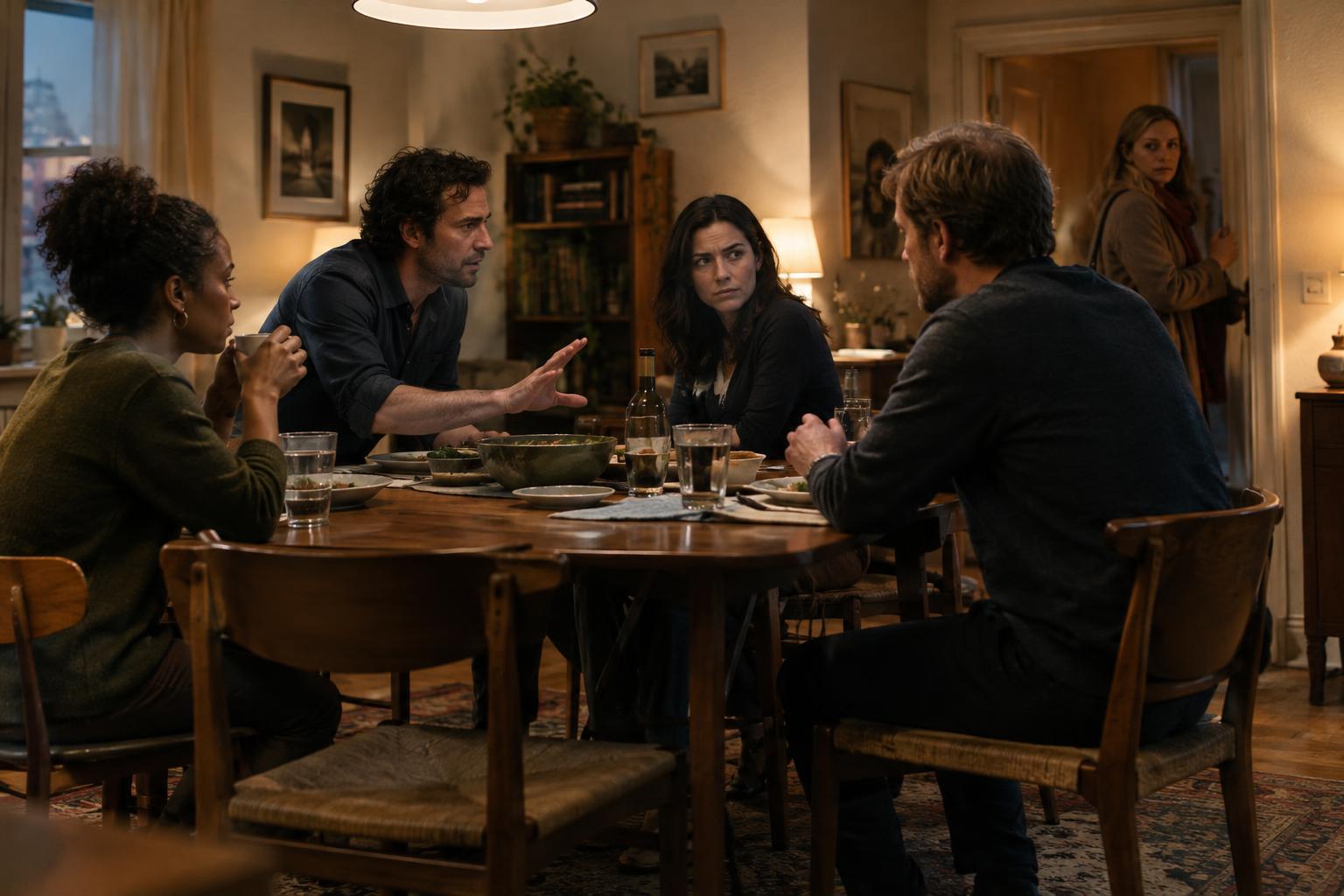
A crowded scene is not necessarily an ensemble scene. If five characters sit around a table while one delivers information, the others can start to feel like scenery. Before deciding where anyone stands, identify what each person wants from the encounter. One might need a decision, another might hope to delay it, and a third might be watching for a chance to change sides. These aims need not be spoken aloud, but they give each actor something to pursue.
Try describing each character’s task with an active verb: persuade, conceal, test, protect, interrupt. Then ask what changes during the scene. A character who begins by protecting a friend may decide to challenge them after hearing a particular detail. That shift creates action even if the character has only two lines. If someone has no reason to attend, consider whether their presence can create useful pressure or whether the scene would be stronger without them.
Block relationships, not just positions
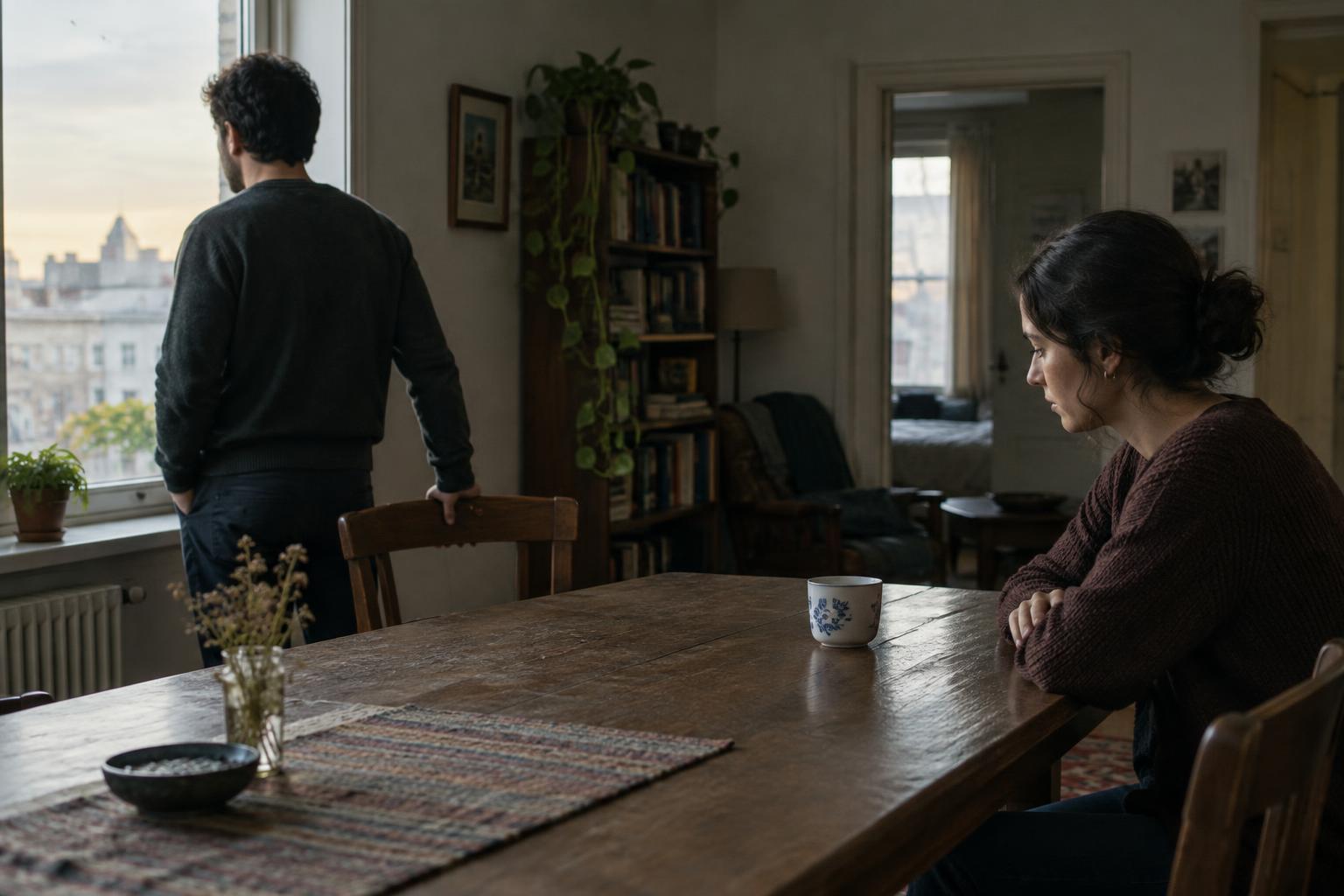
Blocking helps an audience understand who holds influence and who feels excluded. In a family discussion, for example, a character who stays by the doorway may seem ready to leave, while someone who moves between two arguing relatives may be trying to keep the conversation together. These choices are most effective when they arise from a character’s objective rather than from a need to fill empty space in the frame.
Start with a simple map of the room. Mark entrances, exits, useful objects and places where characters can hear or see one another. Then track how the relationships change. Who chooses to sit beside whom? Who must cross the room to speak privately? A movement can become a turning point when it alters access: the person who steps away from the group may force everyone else to decide whether to follow, call them back or let them go.
Not everyone needs to move. Stillness can be a strong choice when other people are restless, especially if the audience understands what the still character is waiting for. Avoid giving actors incidental business merely to keep their hands occupied. Handling a cup or sorting papers is useful when the action reveals attention, avoidance or control.
Make listening part of the action
In an ensemble scene, a line often matters because of how someone else receives it. A joke may fail with one person, reassure another and alert a third to a hidden conflict. Directing those different responses gives the scene texture without adding dialogue. Ask actors what they notice, what they misunderstand and what they choose not to show. Their answers can shape a glance, a pause or a decision to keep working while others talk.
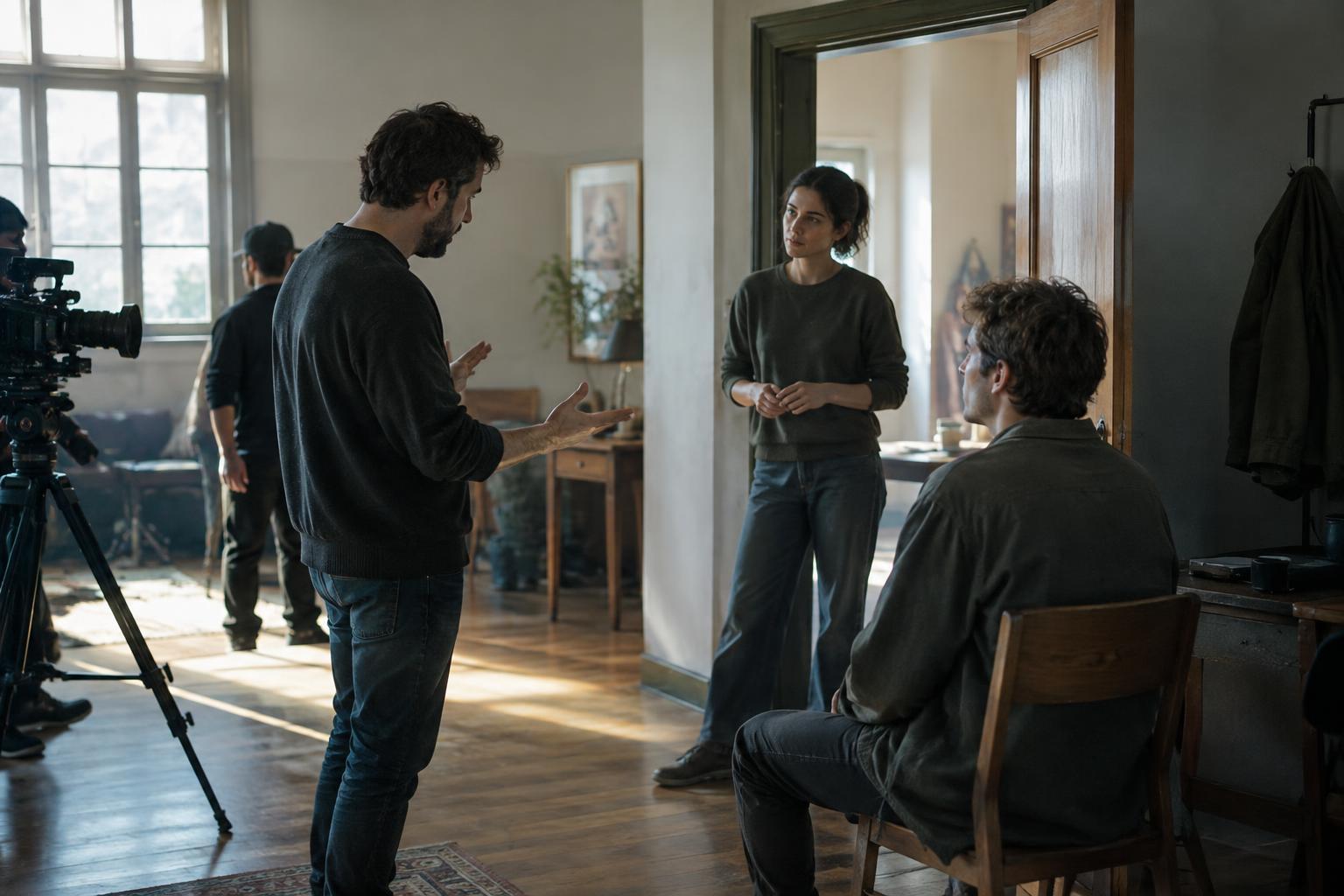
Rehearsal can begin without a fixed camera plan. Let the actors play the full exchange and observe where attention naturally goes. When does someone try to enter the conversation but fail? Which line makes a quiet character look up? Resist asking every actor for a visible reaction to every beat. A person who seems absorbed in another task may make their eventual response more meaningful, provided that task fits the scene.
Use the camera to guide attention without narrowing the scene
Coverage should reflect the relationships you want the audience to track. A wider shot can show alliances and separations at once; a closer shot can reveal a decision that others in the room miss. Before choosing either, ask whose understanding of the scene is most important at that moment. If the balance of power changes when one person notices another’s silence, a frame that includes both may communicate more than two isolated close-ups.
Think about what remains visible around the speaker. Placing a listener in the foreground can make their response part of the line being delivered. Allowing a character to drift toward the edge of the frame can suggest withdrawal, though the effect depends on the established visual pattern. Camera movement is most useful when it follows a change in attention or space, not simply because several people are present. Give viewers enough visual continuity to know where characters are before relying on tighter images.
Protect the scene’s rhythm in the edit
An editor can select the most expressive reaction only if it was captured, but more reaction shots do not automatically make a scene livelier. Sometimes staying on the speaker lets a difficult statement land; sometimes cutting to the person who must answer reveals the real consequence. Plan coverage for both possibilities. Record moments before and after key lines so that a look or hesitation has room to develop.
Sound can also keep the group present. A chair shifting, a half-finished attempt to speak or a sudden quiet can remind us that others remain engaged outside the frame. These details should support the central exchange rather than compete with it. On a final viewing, follow one non-speaking character through the entire scene. Can you tell what they want, what affects them and why they act when they do? Repeat the test with the others. If their behavior forms a legible path, the ensemble is doing more than waiting for its next line.