Give the silence a purpose
A character who says nothing is not necessarily doing nothing. They may be deciding whether to leave, concealing disappointment or waiting for someone else to speak first. Before directing a nonverbal scene, identify what the character wants and what prevents them from getting it. That tension gives the actor something to play and gives the audience a reason to watch. Silence becomes dramatic when a choice is at stake.
Consider a person arriving home to find an unfamiliar coat by the door. The scene could turn on whether they call out, inspect the coat or quietly put down their keys. Each option expresses a different response. Rather than asking the actor to “look suspicious,” a director can define the immediate task: find out who is here without revealing that you are worried. The feeling may emerge through the attempt to complete that task.
Direct actions, not a fixed facial expression
Broad emotional instructions can produce a performance that announces its meaning too early. Playable actions leave room for discovery. An actor might try to keep a visitor from noticing a damaged photograph, or hold someone’s attention while avoiding a question. The audience can then read a conflict between what the character intends and what slips through. That conflict often carries more interest than an unmistakable expression of sadness or anger.
Physical details help when they arise from the character’s goal. A hand pauses over a light switch because turning it on would reveal something. A person straightens a tablecloth to delay looking up. These actions should not become a catalogue of meaningful gestures. Choose a few that affect the scene, and allow ordinary movement to remain ordinary. A useful rehearsal question is: what changes if the character completes this action, abandons it or is interrupted?
Use blocking to reveal relationships
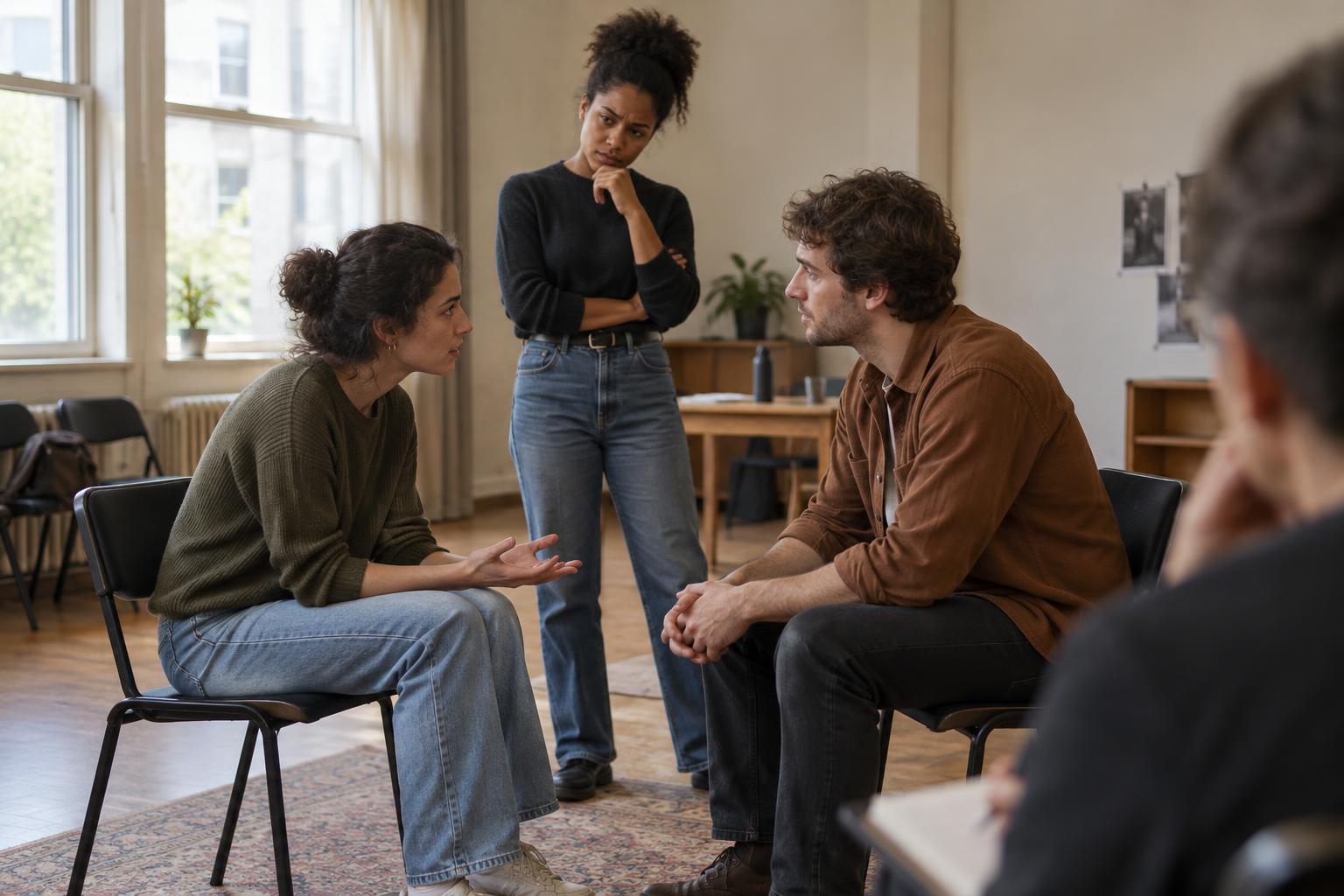
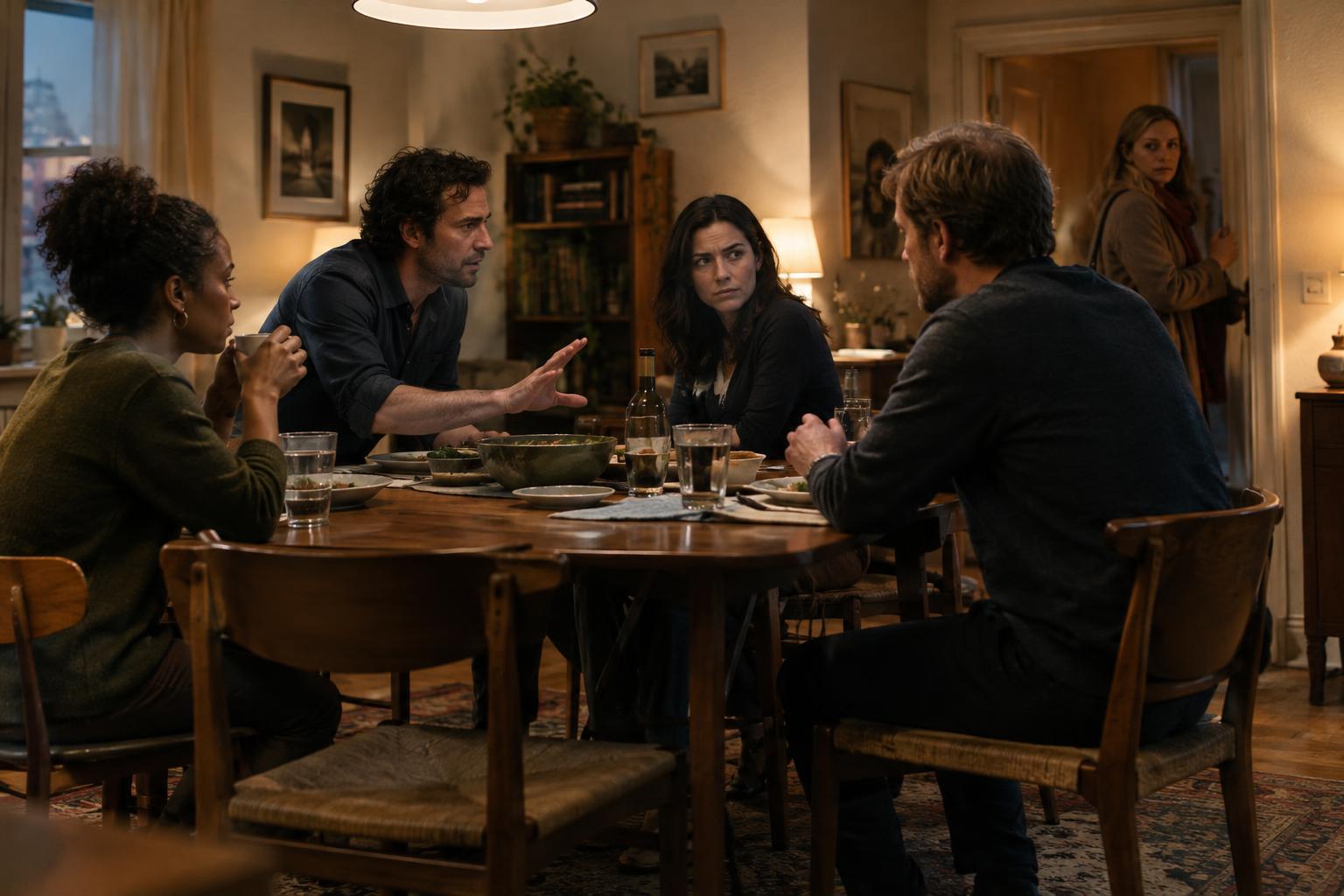
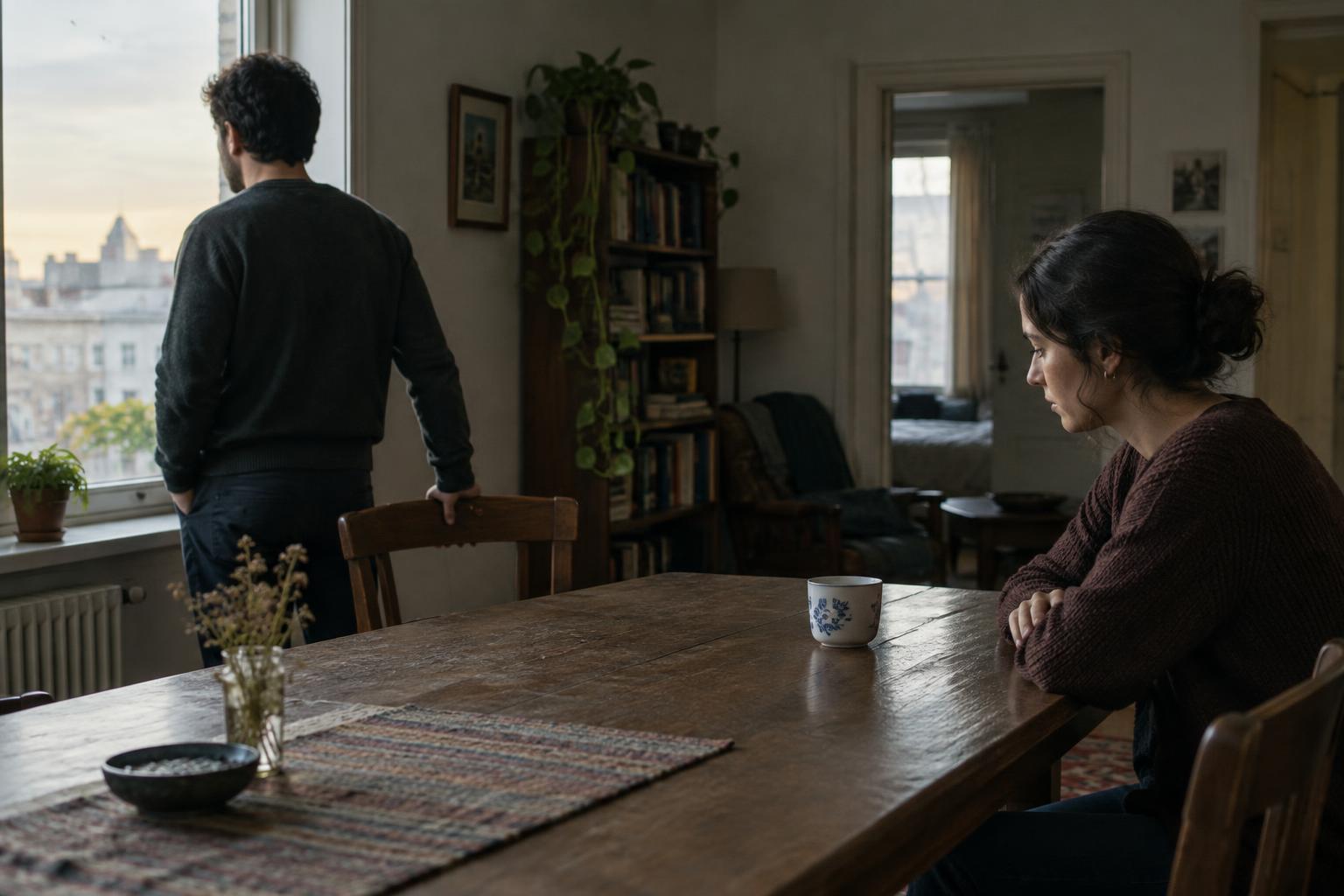
Where actors stand, move and look can express a relationship before either person speaks. Distance may offer safety, signal caution or make an apology harder to attempt. An obstacle such as a doorway or dining table can give a character a place to retreat behind. What matters is not a universal rule about space but how the arrangement changes within this particular scene.
Map the turning points, then test movement around them. If one character approaches while the other stays still, does the approach feel welcome or intrusive? If a character turns away, are they ending an exchange or inviting the other person to follow? Let performers explore these possibilities before locking in marks for the camera. Precise blocking is strongest when it preserves the impression that a person has made a choice, not merely arrived at a predetermined position.
Let the camera observe the right information
A close-up can make a small reaction visible, but it does not automatically make a moment powerful. Camera distance determines what the viewer can compare. A wider frame may show someone maintaining a calm face while their body remains angled toward an exit. A two-shot can hold both a gesture and its effect on another person. A close-up may be most useful after the audience understands what the character is responding to.
Decide whose experience guides the scene. If the viewer knows about a hidden letter and one character does not, a glance toward the drawer can carry suspense. If the viewer is meant to share the character’s uncertainty, revealing the drawer too early may weaken the moment. Shot choices can clarify what is seen, what is missed and when a reaction becomes legible. Give the performance enough screen time to develop rather than cutting every time a face changes.
Protect the pause in editing and sound
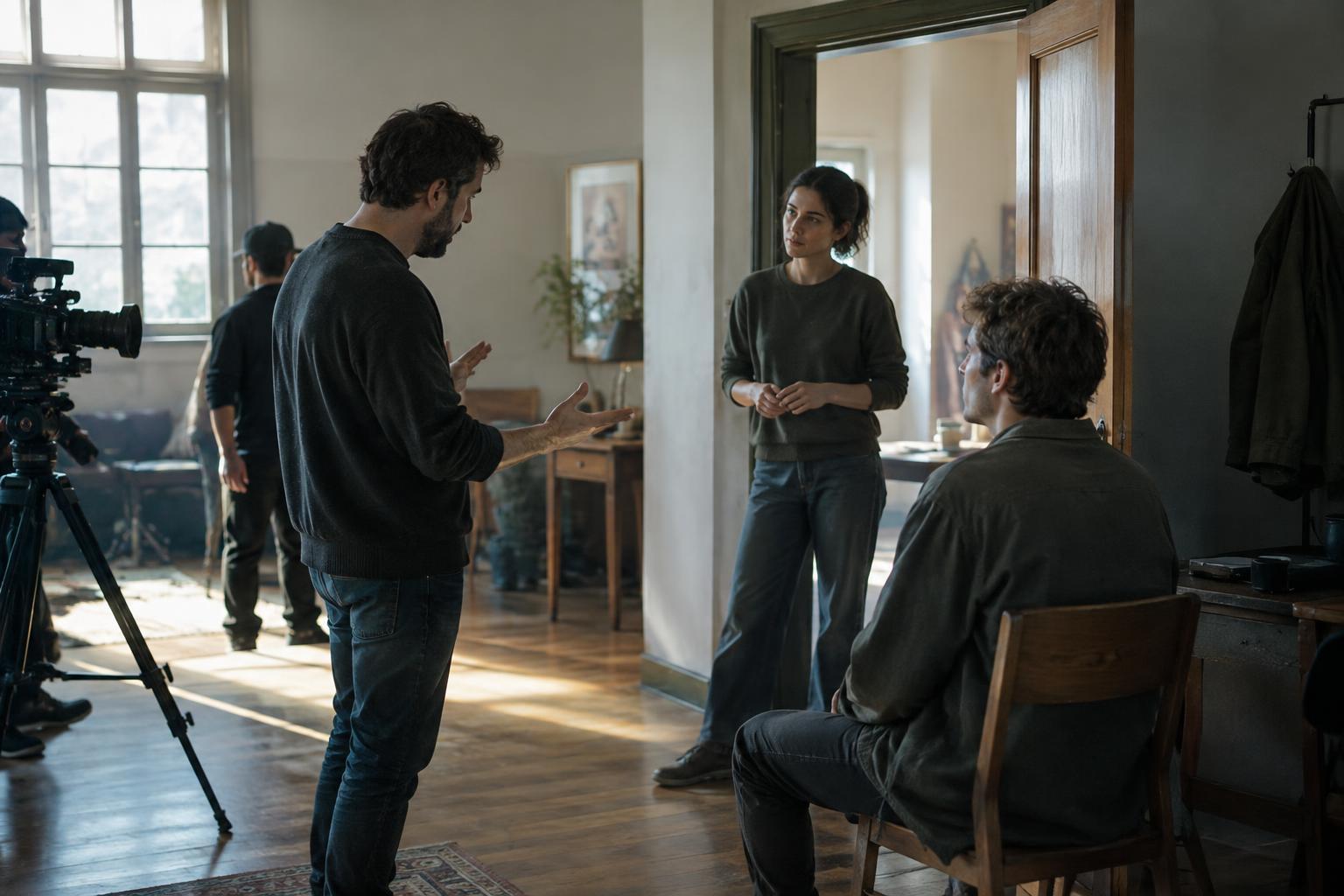
On set, capture the moments before and after an apparent beat ends. A character may take longer than expected to accept a hand, or continue listening after a door closes. Those edges give an editor room to shape the scene’s rhythm. In the edit, a pause should earn its duration: it might allow a new thought to register, build discomfort or show that someone has chosen not to respond. If nothing develops, shortening it may make the silence more pointed.
Sound also tells the audience how to inhabit a quiet moment. Footsteps receding, a chair shifting or the steady noise of a room can draw attention to a character’s hesitation. Music may support a scene, but it can also settle the emotion before the performance has done its work. Try listening without a score and watching without sound during review. The first test reveals what the actors and images communicate; the second reveals whether the audio adds tension or merely explains it. When action, framing and rhythm work together, silence feels like part of the story rather than a gap in it.