Give the scene a conversation beneath the conversation
Subtext is not simply a secret that the audience must guess. It is the gap between what a character says and what they need, fear or hope to accomplish. A scene about choosing a paint color might really be about who gets to call an apartment home. To direct that gap, start with a question: what does each person want from the other right now, and why can’t they ask for it plainly? The answer gives the actors something playable and gives every visual choice a purpose.
Imagine two siblings sorting the kitchen before selling their childhood house. One says, “You can take the blue mug.” The offer could be generous, dismissive or an attempt to end an argument before it begins. Its meaning depends on what came before, what each sibling wants and how the other responds. If one has already packed everything except the mug, the line may feel like a final concession. If the mug is the first object either has touched, it may be an invitation to talk. Directing subtext begins by choosing that underlying action, not by asking an actor to look mysterious.
Turn private intentions into visible behavior
A useful direction gives an actor an action rather than an emotion to display. “Get her to stay until the boxes are finished” offers more to play than “be sad.” The character might prolong a practical task, ask a question they know the answer to or keep a needed roll of tape just out of reach. None of these gestures automatically means longing; in context, together, they can reveal an effort to delay goodbye.
Small actions work best when they also make ordinary sense. A sibling wiping a clean counter may be avoiding eye contact, but they are still doing something plausible in a kitchen being emptied. Let the behavior meet resistance. The other sibling could take the cloth and put it away, quietly ending the delay. That exchange gives the scene a shift without requiring either person to name the feeling. If a gesture is too conspicuous or repeated too often, it can start to look like a code the audience is being asked to decode.
Use blocking to change the relationship
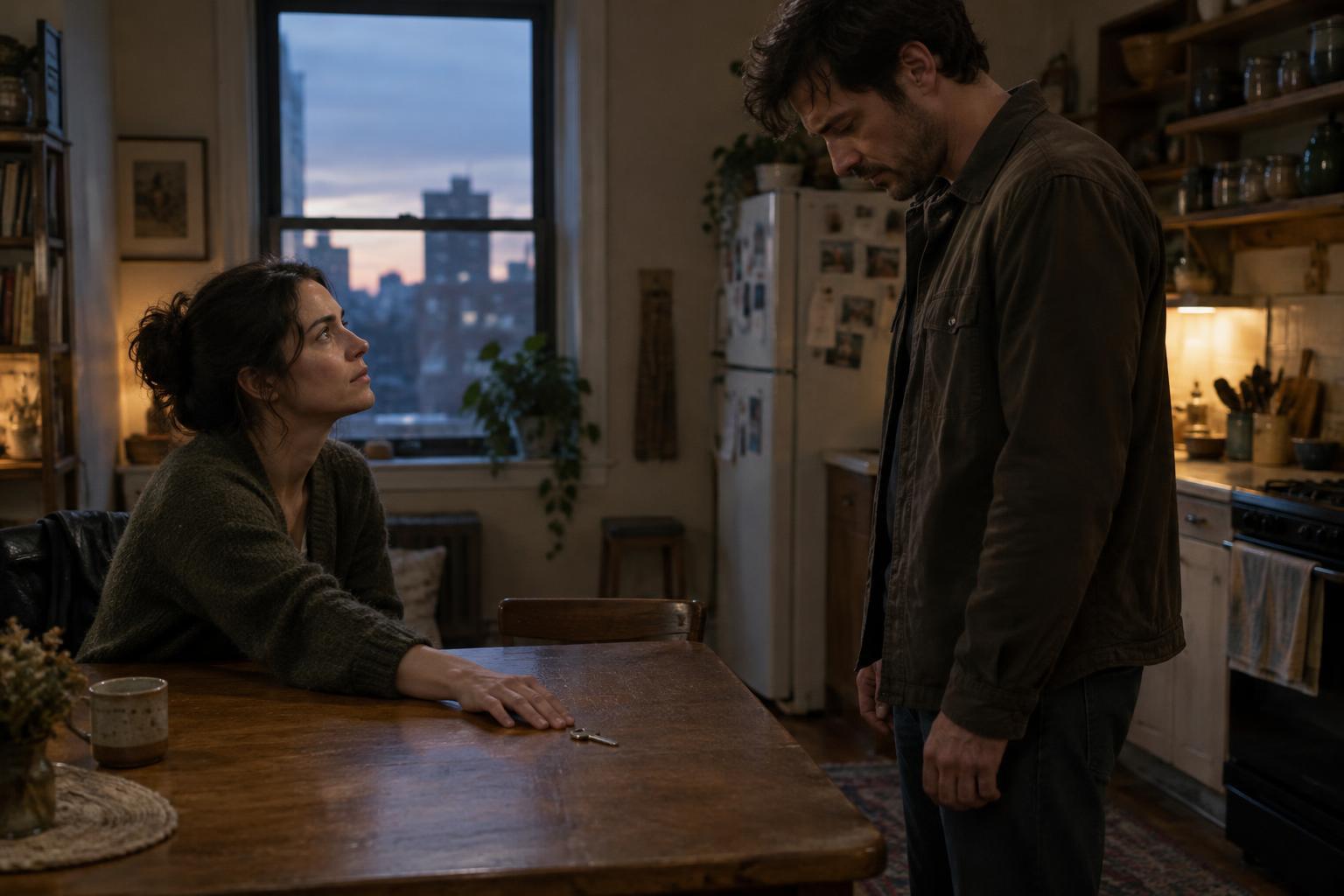
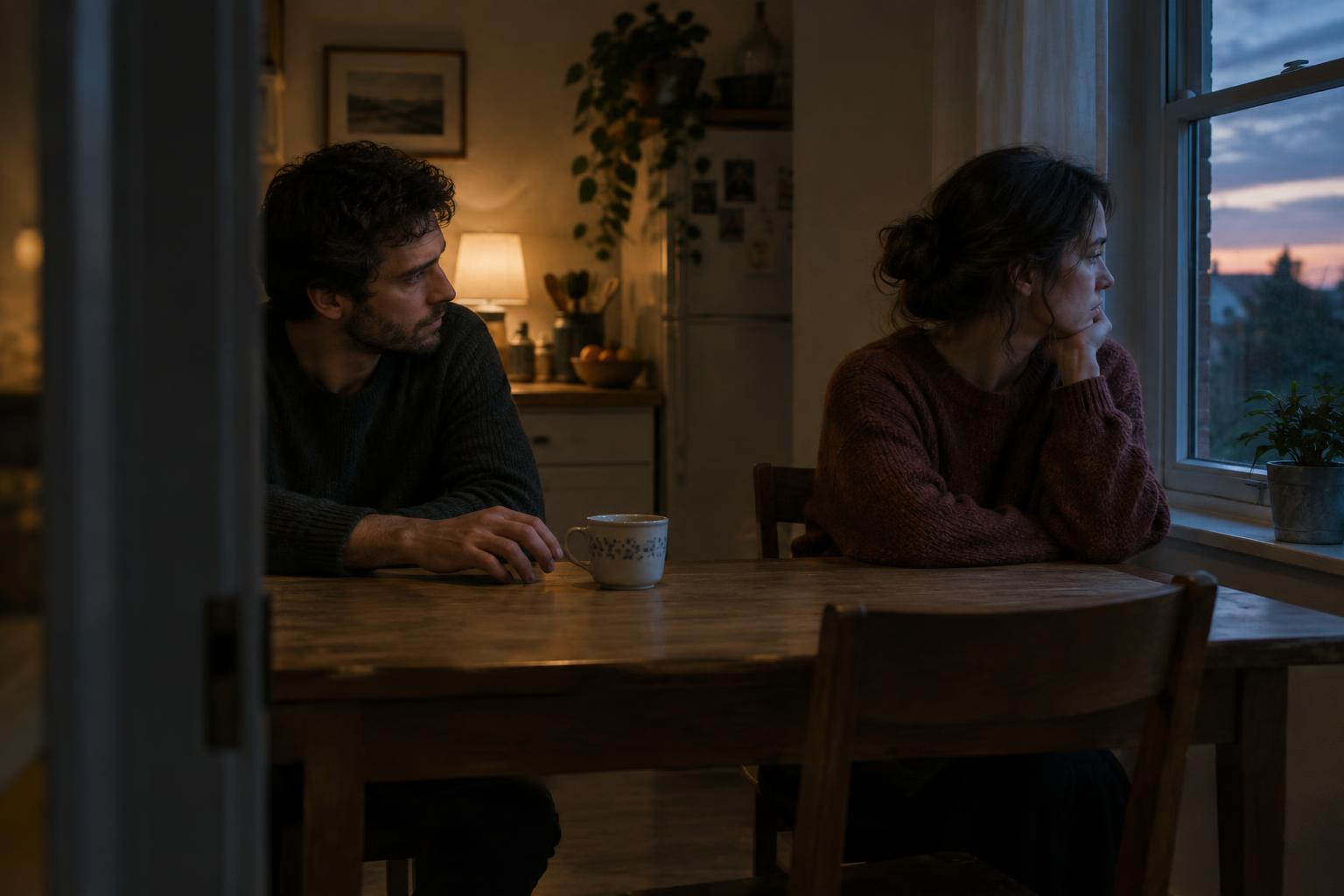
Where characters stand, move and stop can make an unspoken negotiation legible. Begin by deciding what each person is protecting: a doorway, a box, a place at the table or simply enough distance to stay composed. Then look for a reason for the arrangement to change. If the siblings sort opposite sides of the kitchen, crossing the room to retrieve the mug becomes a choice. One can make space; the other can decline to enter it.
Blocking is most expressive when it evolves with the scene rather than illustrating a fixed idea. A character who starts near the exit may sit down after hearing an unexpectedly kind remark. Another may step closer while speaking politely, putting pressure on the listener despite reassuring words. Rehearsal can help find movements that feel motivated by the task and the room. The aim is not to assign a universal meaning to distance or proximity. It is to let the audience notice a change in behavior at the moment the emotional balance changes.
Choose what the camera lets us notice
Framing can support subtext by deciding which response matters. During the line about the mug, staying on the listener may reveal a pause the speaker never sees. A wider view might instead show both siblings maintaining a careful distance. Neither choice is inherently subtler; each tells the audience where to look for the scene’s tension. Plan coverage around turning points, not just around who is speaking.
Objects can help focus attention, but they do not need to become heavy symbols. The blue mug matters because the characters handle it differently: one offers it, the other leaves it on the table, and later someone wraps it for the trip. A close view is useful if a decision happens in that moment. If the camera insists on the mug every time it appears, it may announce its importance before the characters’ actions have earned it. Restraint leaves room for viewers to make the connection themselves.
Protect the unsaid in performance and editing
On set, explore variations in what a character is trying to do rather than asking for a uniformly quieter performance. The same line can be offered as a peace treaty, a test or a way to hurry someone out. Listening is as important as delivery: a character may prepare a reply and abandon it after seeing the other person’s face. A brief change of plan can carry more weight than a long, expressive pause.
Editing then determines how much of that change the audience experiences. Cutting away immediately after a line may keep a scene brisk, while holding through the listener’s decision to answer—or not answer—can let the subtext land. Silence needs shape: something should be at stake while the characters wait. Review the scene without assuming viewers know your intentions. If the hidden conflict is impossible to follow, a clearer setup or choice may help. If every shot explains it, consider removing one. Strong subtext leaves the feeling understandable while allowing the characters to keep their dignity.