Think of a plant as an invitation to remember
A plant is a detail introduced before it becomes important: an object, a skill, a rule, a habit, or a piece of information. Its payoff is the later moment when that detail changes what a character can do or how the audience understands an event. The connection may be subtle or obvious, but it should feel fair. Viewers do not need to predict the outcome; they need enough context to recognize why it makes sense once it happens.
Consider a character who always checks that a window is latched before leaving home. At first, the action might suggest caution. Later, an open window tells us someone has entered. The detail works twice: it expresses character when introduced and supplies evidence when it returns. A plant that exists only to prepare a plot twist can feel conspicuous. Giving it a useful role in its first scene helps it belong to the story.
Decide what the payoff needs to accomplish
Before writing a setup, identify the change you want at the payoff. Does it solve a practical problem, expose a lie, reverse an assumption, or show that a character has grown? The answer determines what must be established earlier. If a character will repair a radio during a crisis, the script may need to show both their ability and why the radio matters. If the same moment is meant to show courage, the earlier scenes should also establish what makes taking that risk difficult for them.
Not every returning detail needs a surprise. A small promise can create anticipation: a child keeps asking a parent to attend a performance, and the parent’s arrival or absence becomes the payoff. The emotional question is clear even though the outcome is uncertain. This is often stronger than hiding every setup, because the audience has a reason to care while waiting for the answer.
Make the setup part of a scene, not an announcement
A setup draws less attention to its mechanics when it serves an immediate scene goal. If a locked door will matter later, an early scene could show a character struggling to carry groceries through it. That interaction establishes how the door works while revealing the character’s circumstances. By contrast, a line that explains the lock solely for future use may sound like the screenplay pausing to brief the audience.
Choose the form of the setup that suits the detail. A visual action can establish where an object is kept. A disagreement can introduce a rule or a difference in belief. A failed attempt can demonstrate the limit of a skill more convincingly than a claim that someone is good at it. In each case, the information should be clear enough to recall without demanding that the scene revolve around it.
Build a connection without repeating yourself
The distance between plant and payoff depends on how prominent and complicated the detail is. A brief glimpse of an ordinary object may need another meaningful appearance before it becomes decisive. A highly unusual object or a tense exchange may remain memorable without repetition. Rather than mentioning a detail again in identical terms, let its significance change. A spare key might first represent trust, then become a source of suspicion, and finally enable a choice that resolves the conflict.
Be careful with details that disappear for most of the script and return just in time to rescue a character. Ask whether the audience could reasonably remember them and whether the character’s use of them follows from what has been shown. Also consider cost: if the payoff solves a problem too easily, a limitation or difficult decision can keep the outcome dramatic. The plant makes an action possible; it does not have to make that action painless.
Revise from the payoff backward
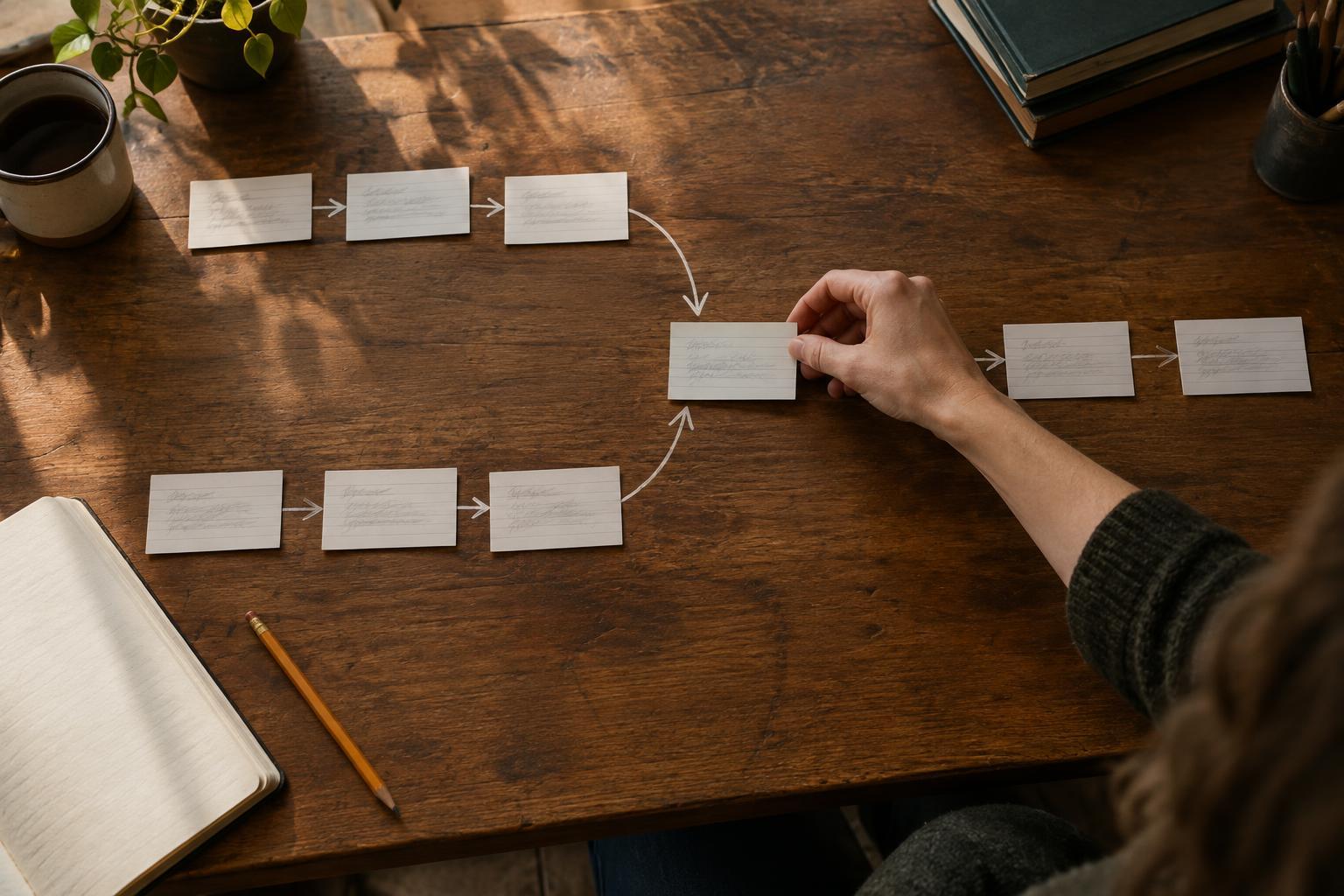
During revision, mark each major payoff and trace its prerequisites. What must the audience know? What must the character know? These may differ. Then look at every earlier appearance of the detail and ask what purpose it serves in that scene. If a setup is confusing, clarify it. If it is overly emphasized, give the scene another reason to include it or reduce the attention it receives.
Finally, check the payoffs for more than logical accuracy. A planted detail can return exactly as promised yet feel flat if it has no effect on character or conflict. The strongest return often changes the meaning of the earlier moment. The cautious window-checker, for instance, might leave the window open deliberately to help someone escape. The audience recognizes the familiar action, but the new choice reveals how the character has changed.