Separate stakes from urgency
Stakes are what a character stands to lose or gain. Urgency is the pressure to act before an opportunity changes or disappears. A character can face enormous stakes with little immediate urgency, as when they know a relationship is failing but keep postponing a conversation. Another character can feel intense urgency over a small task because missing the moment would mean something important to them.
This distinction helps writers avoid treating every quiet scene as a problem to solve with a louder threat. Instead, ask two questions: What matters to this character here? Why is this the moment they must decide what to do? A scene can be tense without physical danger if the answer to both questions is clear. The pressure might come from an arriving guest, an unfinished apology, or the growing likelihood that someone will speak first.
Make consequences specific to the character
“Everything could change” is less useful on the page than a particular change the audience can imagine. If a student risks losing a place in a program, consider what that place means beyond the formal outcome. Perhaps it offers a way to leave home, or perhaps accepting it would mean breaking a promise to a friend. The same event can carry different weight depending on what a character values and what they believe it says about them.
Give the audience enough context to understand that value before the decisive moment. You need not explain it in a speech. A character carefully keeping an old acceptance letter, avoiding a certain person in a hallway, or rehearsing a request they cannot quite make can establish what is at risk. Then, when the choice arrives, a small action may have a large emotional consequence.
Use pressure that changes the available choices
A countdown can create urgency, but a visible clock is only one tool. Pressure becomes more interesting when time alters the character’s options. A person hoping to confess a mistake may be able to do it privately at first. Later, a colleague is drawn into the problem. Later still, admitting the truth may protect that colleague but expose a separate secret. The situation has not necessarily become more dangerous; it has become harder to resolve without a cost.
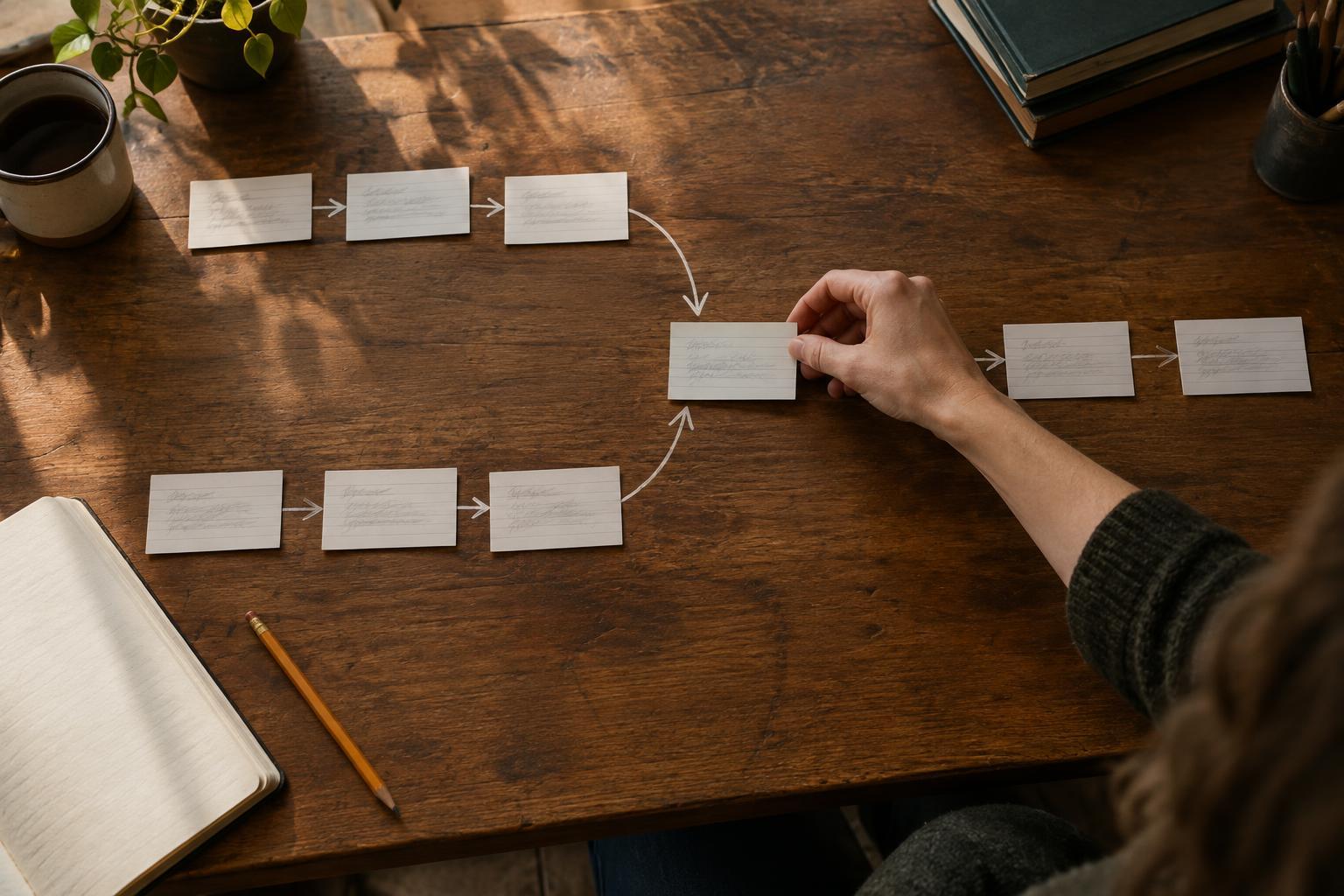
This approach gives scenes a sense of movement without requiring each one to top the last. Track what the character knows, who else knows it, and which choices remain possible. When a scene ends, something should shift in at least one of those areas. The next scene can then begin under different pressure, even if it takes place in the same room and the characters speak softly.
Let characters respond, not just endure
Consequences feel heavier when characters try to prevent them. If a protagonist only waits for trouble to arrive, the script may need increasingly dramatic events to maintain momentum. When they pursue a goal, bargain, conceal information, or change tactics, each attempt can create a new complication. Their decisions also reveal which costs they are willing to accept and which ones they keep pushing onto others.
Consider a scene in which two siblings must decide what to do with a family home. One wants to sell; the other wants more time. Rather than adding a sudden catastrophe, let one sibling make a practical offer that appears generous but closes off a future possibility the other has quietly hoped for. The tension comes from a real choice: accept help now, or preserve a chance that may never become viable. Neither option needs to be villainous for the scene to hurt.
Revise the rhythm of consequence
Constant escalation can flatten a story because the audience has no space to register what an event means. After a consequential choice, allow a scene to show its effects: a changed routine, an avoided call, a gesture that no longer feels welcome. These moments are not pauses in the story when they reveal how the character’s world has shifted. They give later decisions a foundation.
In revision, look at each sequence and identify the immediate goal, the possible cost of failure, and the choice that changes the situation. If several scenes repeat the same threat without changing the character’s options or understanding, consider combining them. If a major turn feels oddly weightless, the script may need less spectacle and more attention to what the character gives up. Urgency keeps a story moving; specific, lasting consequences give that movement meaning.