Give the subplot a job
A subplot is more than a second set of events happening near the protagonist. It is a smaller line of conflict that puts pressure on the main story. It may complicate a goal, expose a weakness, test a relationship, or create an opportunity the central conflict could not produce on its own. If removing it leaves the main story essentially unchanged, the subplot may be interesting but not yet integrated.
Start with the main story’s driving question: what does the protagonist want, and what stands in the way? Then ask what another character wants that could alter the protagonist’s path. Suppose a chef is trying to keep a struggling restaurant open. A subplot about a cook seeking a job elsewhere is not automatically relevant because both characters work in the same kitchen. It becomes relevant when the cook’s decision forces the chef to change a menu, share control, or confront the way they treat their staff.
Build a chain of consequences
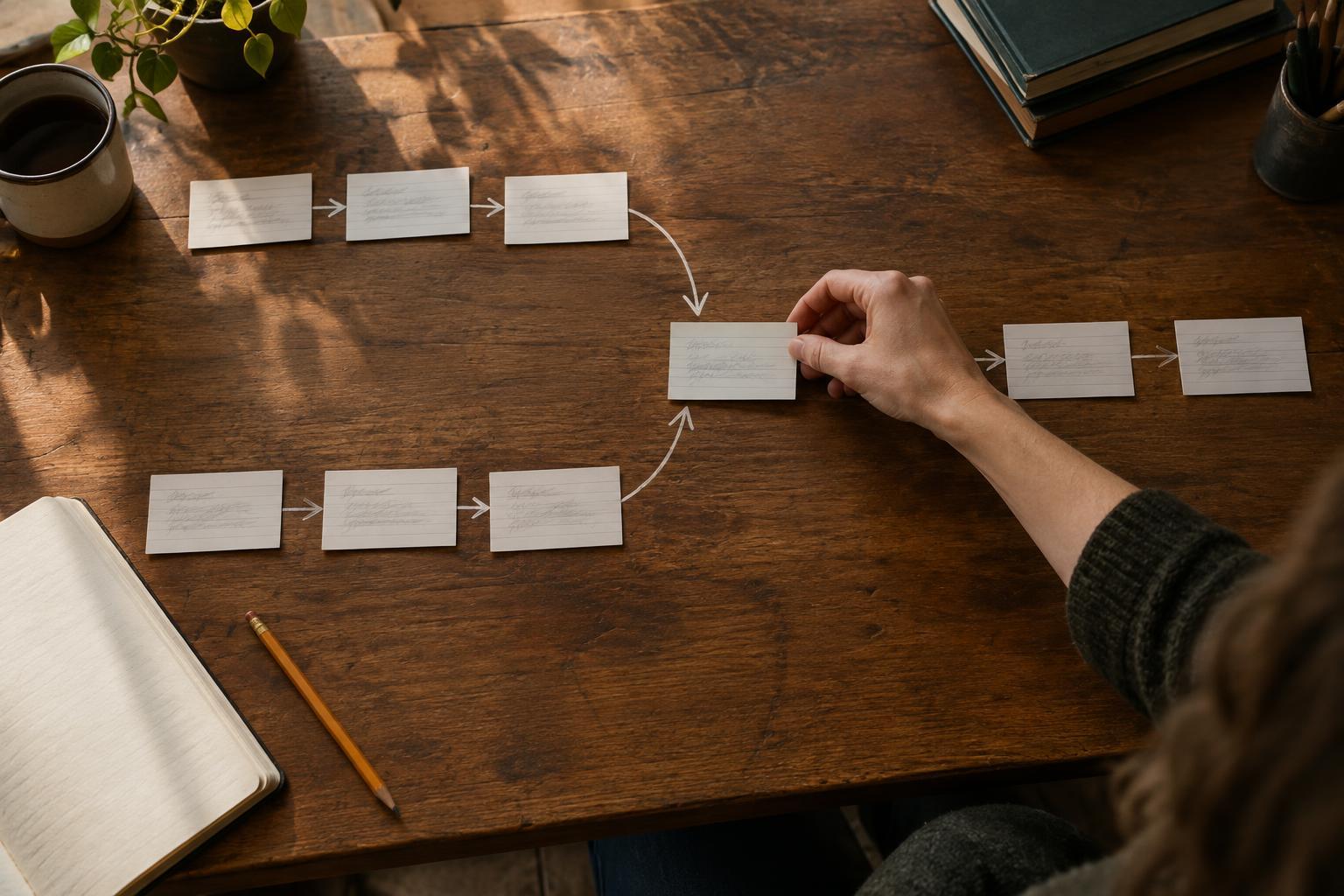
The strongest connection between plot and subplot is causal. An event in one line of action changes the options available in the other. The chef refuses to train the cook for a more senior role. The cook secretly interviews elsewhere. Short-handed during an important service, the chef must decide whether to trust an inexperienced replacement or admit that keeping control has endangered the restaurant. Each development creates a new problem rather than merely reminding the audience that the cook has ambitions.
Look for exchanges that work in both directions. The restaurant’s financial pressure might make the cook’s search more urgent, while the cook’s possible departure raises the cost of the chef’s stubbornness. When the two conflicts affect each other, scenes can do more than one job. A conversation about scheduling, for example, can advance the immediate problem of staffing while revealing why trust has broken down. The scene still needs a clear purpose in the moment; it should not feel like a delivery system for plot information.
Use contrast to deepen the central question
A subplot can also matter by offering a different answer to the main story’s central question. If the chef believes that saving the restaurant means doing everything personally, the cook might believe that leaving is the only way to grow. Both are struggling with loyalty and independence, but they respond differently. Their choices allow the story to examine those ideas through conflict rather than speeches.
Contrast does not require characters to represent fixed positions. The cook might initially mistake every request for teamwork as an attempt to hold them back. The chef might gradually learn to delegate but still make a poor decision under pressure. Let each line of action challenge the other. A useful test is to describe what the protagonist believes at the start, then identify the moment when the subplot makes that belief harder to maintain. If no such moment exists, the thematic connection may be too abstract to shape the drama.
Place turns where they change the main story
A subplot does not need the same amount of screen time as the central plot, but it does need movement. Give its characters a goal, an obstacle, a choice, and a consequence. Then place its major turns where they can affect the protagonist’s next move. The cook receiving an offer matters more if it arrives just as the chef commits to a demanding new service than if it comes after the restaurant’s future has already been settled.
Avoid treating every subplot scene as a pause before returning to the main action. A quiet scene can carry tension if a choice is being made or withheld. The cook may decide not to mention the offer; the chef may notice a packed bag and say nothing. Those decisions change what each character knows and can make a later confrontation feel earned. What matters is not constant activity, but a developing situation with consequences.
Revise for payoff, not neatness
In a draft, mark each subplot scene and write down what changes because of it. Track practical effects, such as a lost ally or a new plan, alongside emotional ones, such as damaged trust. If several scenes repeat the same tension without changing either character’s options, combine them or give one a sharper turn. If a development feels sudden, look for an earlier choice or detail that can prepare it without announcing the outcome.
The subplot’s ending need not be tidy, but it should answer the conflict it raised. The cook might stay under new terms, leave after helping with one final service, or discover that the offer is not what they wanted. Any of those outcomes can work if it affects the chef’s final choice and reflects what both characters have learned or refused to learn. A subplot earns its ending when resolving it changes the meaning of the main story’s ending, not simply when every loose end is tied off.