The editor works with possibilities
A film shoot produces pieces rather than a finished experience: multiple performances, camera angles, pauses, entrances, exits and sounds. The editor’s task is to find a coherent path through those possibilities. A script and a director’s intentions provide a starting point, but the recorded material may reveal a different strength. A glance that seemed minor on set might become the moment that makes a scene understandable.
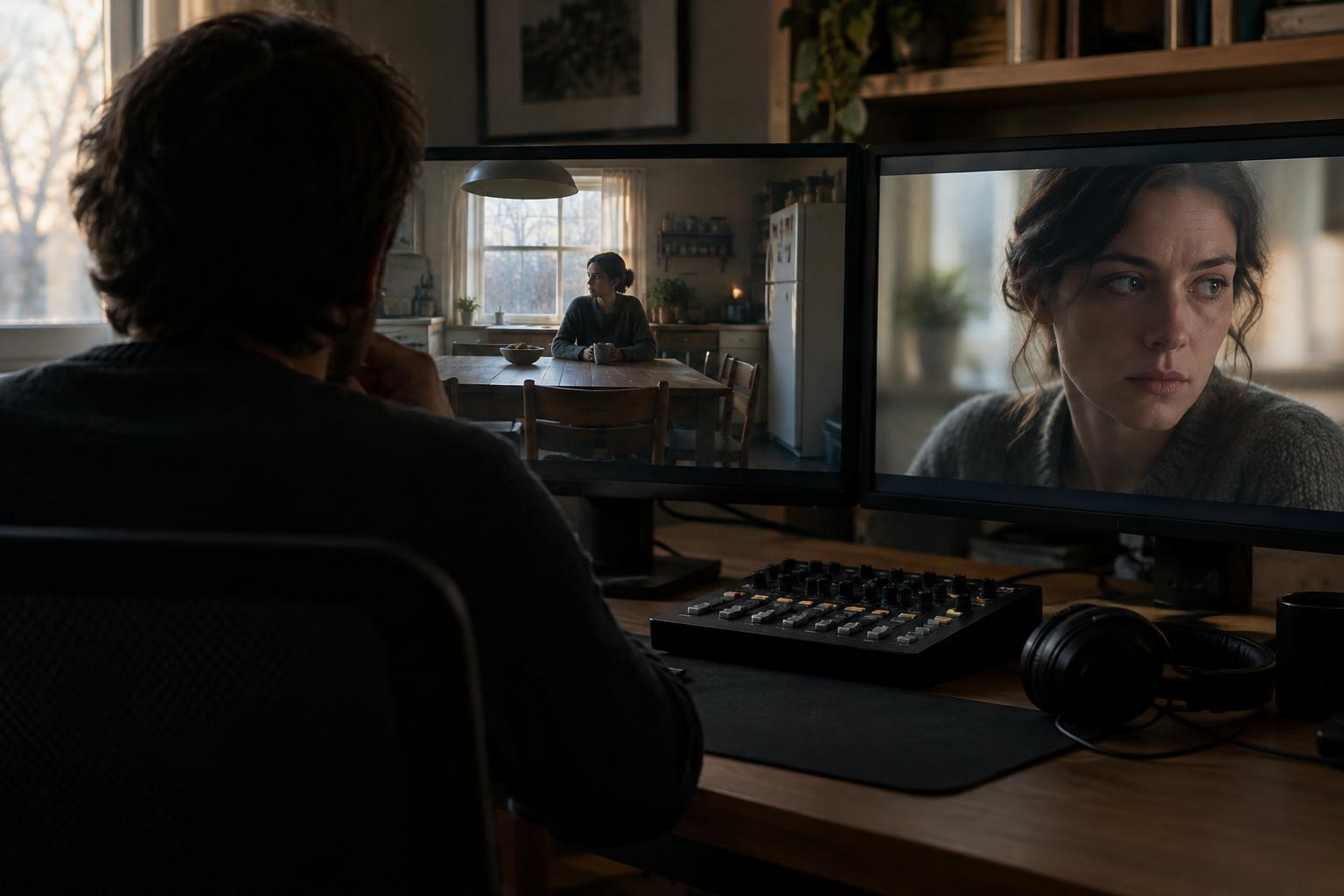
Before cutting, an editor needs to know what is available. Reviewing and organizing footage helps distinguish one take from another and makes useful moments easier to find later. The editor may note where an actor changes emphasis, where a camera move lands cleanly or where a background action complicates a shot. This preparation is not separate from storytelling: close attention to the material is how its opportunities become visible.
Selecting a take means choosing an effect
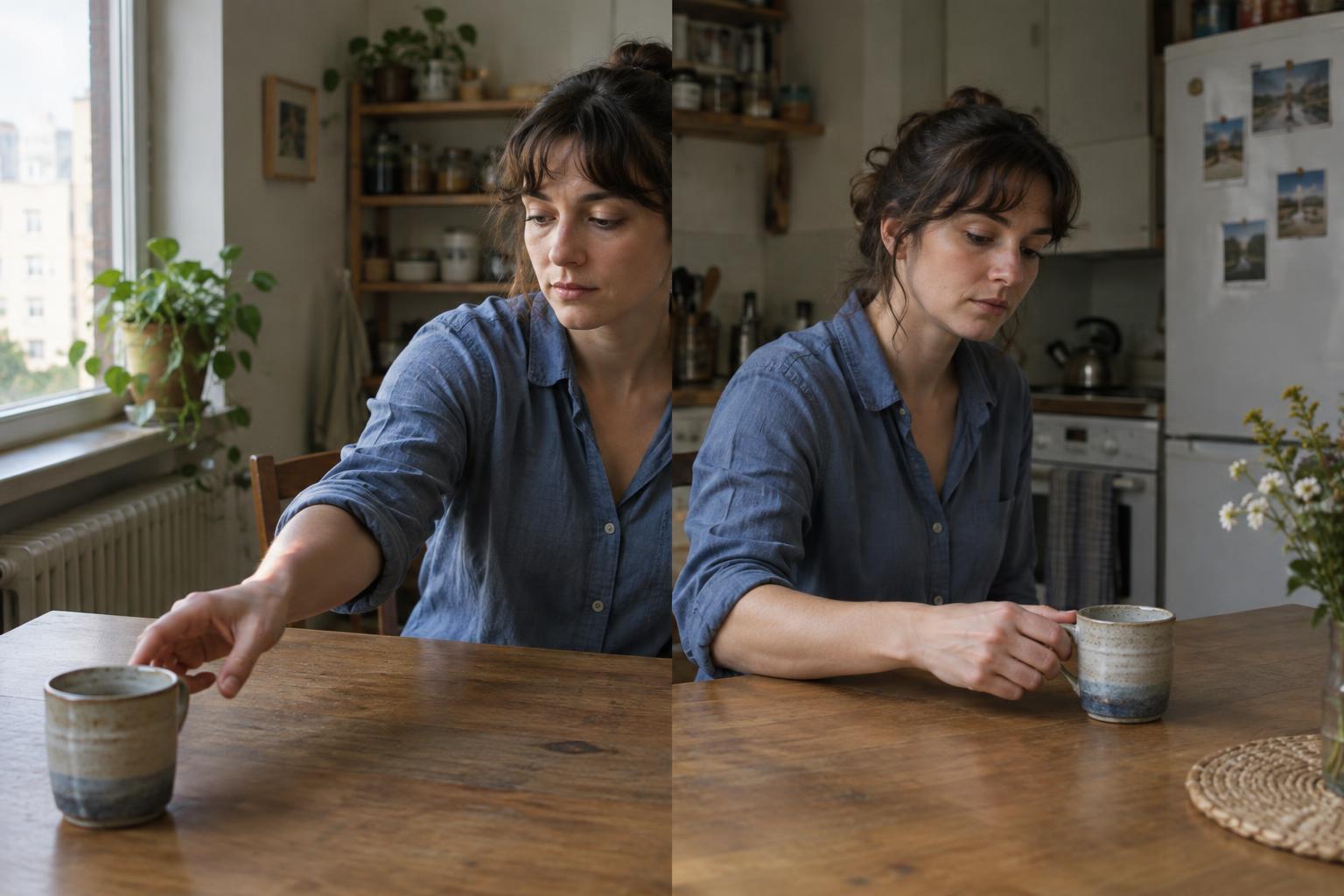
The most technically tidy take is not always the most useful one. A slight hesitation may reveal uncertainty; a quicker delivery may make a character seem defensive. Editors compare these effects against what the scene needs at that point in the film. If the audience must notice a decision forming, a held expression may matter more than a perfectly matched gesture.
A take also has to work with the shots around it. Differences in position, eyeline or movement can make a cut distracting, although a strong performance sometimes justifies a small mismatch. Editors weigh such trade-offs rather than applying a fixed rule. They might begin with the take that best carries the scene’s central emotion, then look for supporting shots that preserve its force. The aim is not to hide every imperfection; it is to keep attention on the story.
Building the scene in the timeline
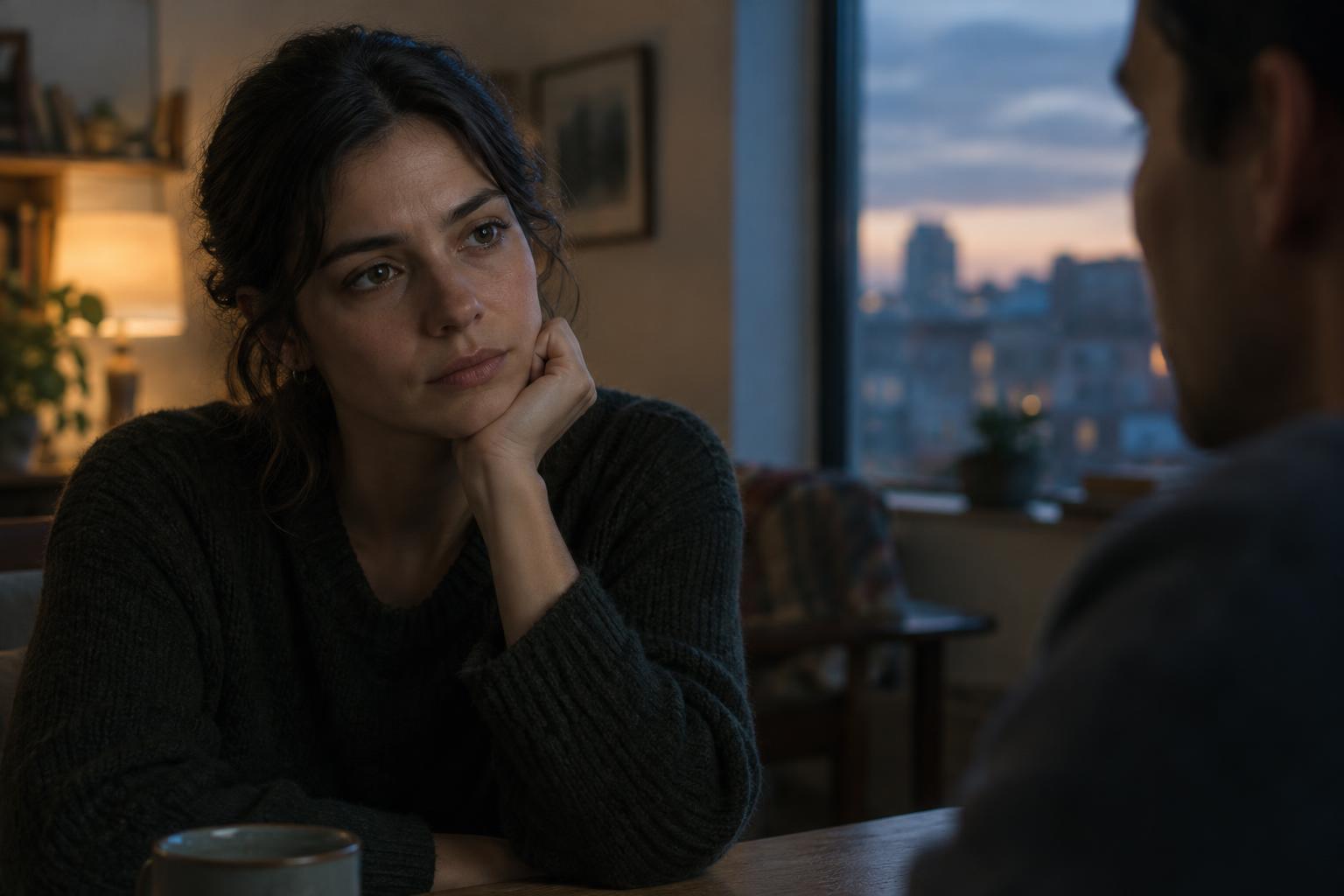
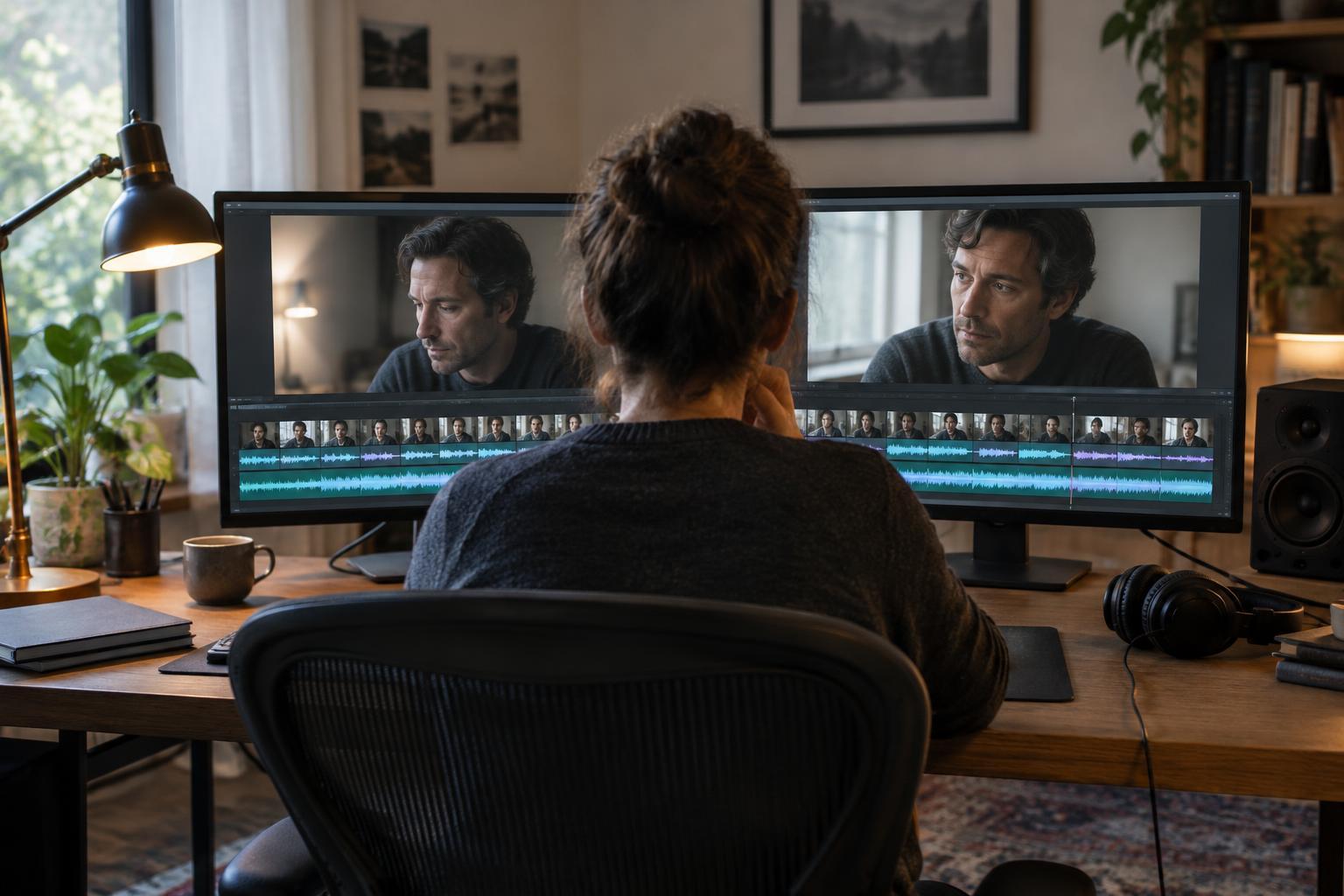
Once promising material is identified, the editor tests how shots relate. A scene can open on a speaker, on a listener or on the detail both characters are avoiding. Each choice tells the audience where to look and what to wonder about. Holding a wide shot can make a room feel tense and inescapable; moving to a close view can make a small reaction decisive. The order and duration of shots create meaning that no single image carries alone.
Editors also decide when information arrives. Showing a reaction before revealing its cause can create curiosity. Cutting to the cause first can make the reaction easy to read. Neither approach is inherently better. The question is what the audience should know, expect or feel at that instant. Even a straightforward conversation changes when a response is delayed by a beat or when the cut arrives before a speaker finishes.
Pacing extends beyond speed
Pacing is often described as how fast a film moves, but it also concerns how long an idea has to register. A rapid sequence can feel repetitive if every cut delivers the same information. A quiet shot can feel active if the audience is waiting for someone to speak or act. Editors shape that experience by varying duration, removing redundant beats and allowing important changes room to land.
They also consider the sequence around a scene. A pause that works in isolation may feel too long after several other pauses; an abrupt cut may give welcome energy after an extended exchange. This is one reason editors revisit earlier decisions as the film takes shape. A cut is judged not only by whether it works locally, but by what it contributes to the larger flow.
Sound, revision and the final shape
Picture is only part of the timeline. Dialogue, room tone, footsteps and other sounds can connect shots that do not match perfectly in space or time. Letting a voice begin before the image changes can pull the audience into the next scene; keeping a sound after a cut can make the previous moment linger. Music may support a rhythm, but it can also disguise a weak one. Testing a sequence without its temporary music can help reveal whether the images and performances carry the intended effect.
Editing remains a process of revision and collaboration. A director may clarify the desired emphasis, while later work on sound and picture may offer new options or expose a problem. Editors try alternatives, watch how each choice affects the whole and keep adjusting. Their work is most visible when a cut surprises us, but it is just as present when a moment feels effortless: we understand where we are, what has changed and why it matters.