Find the moment the scene turns
A scene usually earns its place because something changes: a character learns a fact, makes a choice, loses an advantage or sees a relationship differently. That change is the scene’s turn. Before deciding where to begin, describe the situation on either side of it. For example: “Mara thinks her brother will help her; by the end, she knows he has already warned their father.” This gives the scene a direction. It also makes it easier to spot material that merely delays the turn.
The turn need not be loud or final. A polite refusal can matter more than a shouting match if it closes off a character’s only workable plan. Nor does every scene need to resolve its central question. An interruption can change what a character is willing to risk. The useful test is whether the audience leaves with a different understanding of the story than it had on entering.
Enter when the pressure becomes visible
Writers often begin with the first event that would occur in real life: someone arrives, removes a coat, accepts a drink and starts a conversation. Those actions may establish a mood, but they are not automatically the best opening. If the dramatic question is whether Mara’s brother will help her, the scene might begin as she says, “You told him, didn’t you?” The audience has something to interpret immediately. The omitted arrival can remain understood.
Starting late does not mean withholding every piece of context. Viewers need enough footing to follow the conflict: who wants what, where the characters are and why this encounter matters. A brief visual detail, a reaction or a line of dialogue can provide that footing while the scene moves. Beginning with the brother quietly hiding his phone, for instance, may establish suspicion before Mara speaks without requiring an explanation.
Some scenes do benefit from a slower approach. If a friendly routine is about to be broken, showing part of that routine can make the break felt. The question is whether each opening beat builds expectation, tension or character—not whether it could plausibly happen before the argument.
Leave after the consequence lands
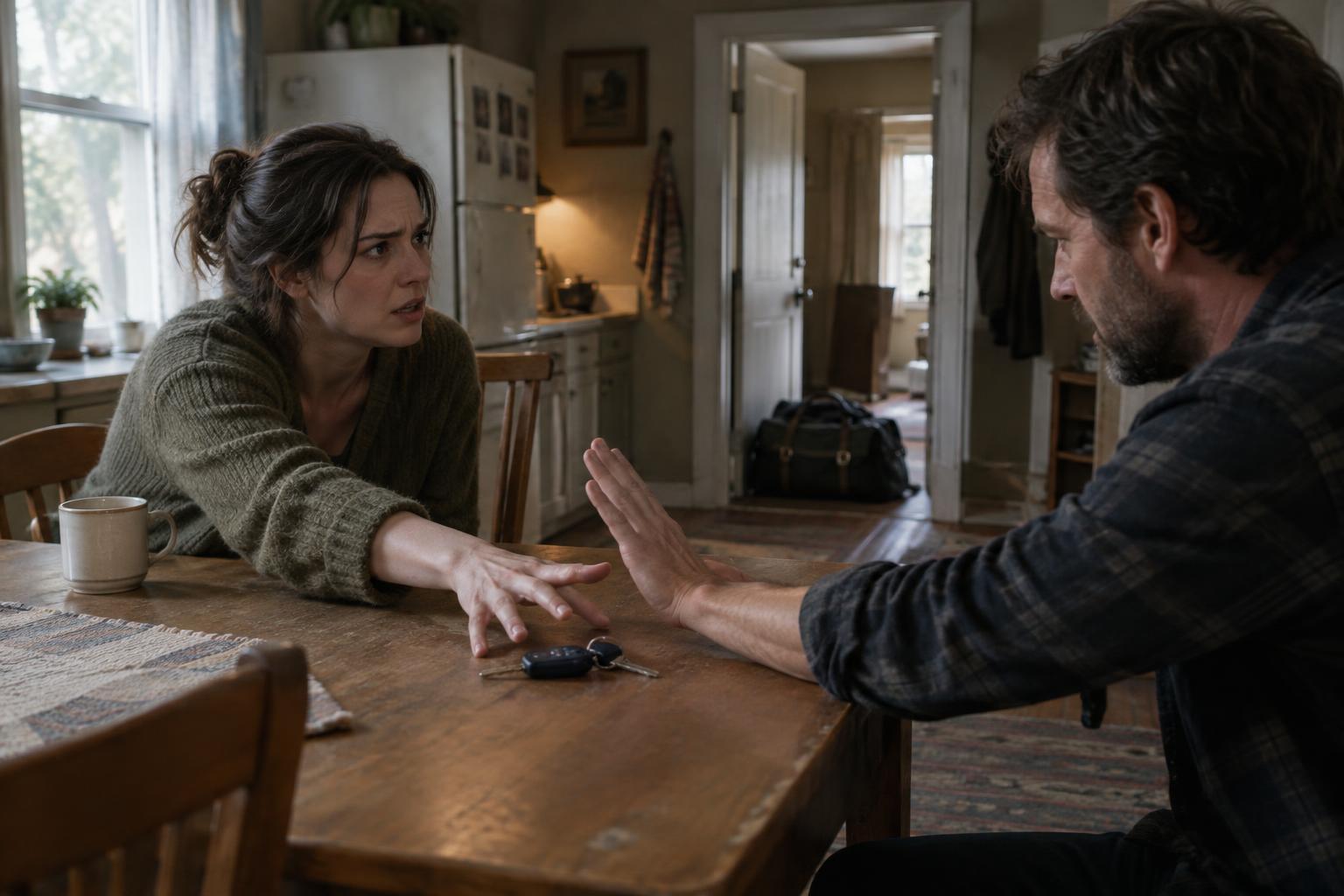
Endings often run long because the writer keeps confirming a point the audience has already grasped. After the brother admits he warned their father, Mara may repeat that she trusted him, hear an apology, restate her plan and walk out. Any of those beats could be valuable, but together they may soften the impact of the admission. Try stopping at the first moment that makes the new situation unmistakable: Mara takes back the spare key she came to give him, then leaves.
An exit can also occur before a character physically departs. A cut from the brother’s admission to Mara acting on the news in the next scene lets the audience carry the emotional connection across the edit. Conversely, staying for a silent beat may be essential if the character’s reaction is the real turn. Leave when the next beat would repeat the consequence, not when the dialogue happens to stop.
Consider what question the ending hands to the following scene. “Will he confess?” may become “What can Mara do now that he has?” A clear handoff creates momentum without requiring a cliffhanger. The scene has completed its job while the story remains in motion.
Use directing choices to sharpen the boundaries
Where a scene starts and stops is not only a screenplay decision. Blocking, framing and sound can carry information that might otherwise demand extra dialogue. Entering on a close view of an untouched second place setting can suggest an absence before anyone mentions it. Holding a wide shot as one character moves away can show the cost of a decision without an explanatory exchange. These choices work best when their meaning is grounded in what the scene has already established.
The cut itself affects emphasis. Ending on the person who delivers the news gives weight to their action; ending on the listener may give weight to its effect. A sound continuing into the next scene can create continuity, while a sudden silence can mark a break. None of these devices repairs an unclear dramatic turn, but each can help the audience feel precisely where that turn lands.
Revise by testing the edges
During revision, mark the first beat that creates a question and the last beat that adds new meaning. Read the scene once from that first beat, then try cutting one beat later. At the end, stop after each possible final line or action and ask what would be lost if the rest disappeared. If the answer is only “we would not see them say goodbye,” the cut may be helping.
A useful second test is to compare what the audience knows at the opening and closing. If nothing important has shifted, changing the entry and exit will not solve the deeper problem; the scene may need a stronger choice or discovery. If a shift is present, trimming the edges can bring it into focus. The goal is not to make every scene as short as possible. It is to spend time where time changes what the audience feels or understands.