Camera height is a point of view
A camera does not have to tilt dramatically to change how a scene feels. Move it from a seated character’s eye level to the height of someone standing nearby, and the same conversation can take on a different relationship to its subjects. The first position may place us alongside the seated person; the second may let us observe them from above. Neither meaning is automatic, but each position offers the audience a different place from which to watch.
Height works with framing, lens choice, distance, and movement. A low camera close to a face can make that face dominate the frame, while a low camera farther away may emphasize the room rising behind it. Before treating a height as a symbol of power or vulnerability, ask what it actually changes within the image: which faces are visible, what sits behind them, and how much of the space the viewer can understand.
Use eye level as a question, not a default
Eye level can create a sense of sharing a character’s position, especially when the camera is close enough for subtle reactions to matter. Yet whose eye level is it? In a scene between a child and an adult, placing the camera at each person’s height for their respective shots can give both a grounded perspective. Keeping every shot at the adult’s height produces a different pattern: the child may be consistently seen from above, even when speaking with confidence.
A small adjustment is often more useful than a conspicuous high- or low-angle shot. Raising the camera slightly might allow a viewer to see a letter on a table while keeping the speaker’s expression readable. Lowering it might hide the letter until a hand reaches for it. These choices guide attention and the timing of information without requiring the audience to notice the camera.
Watch what happens to the background
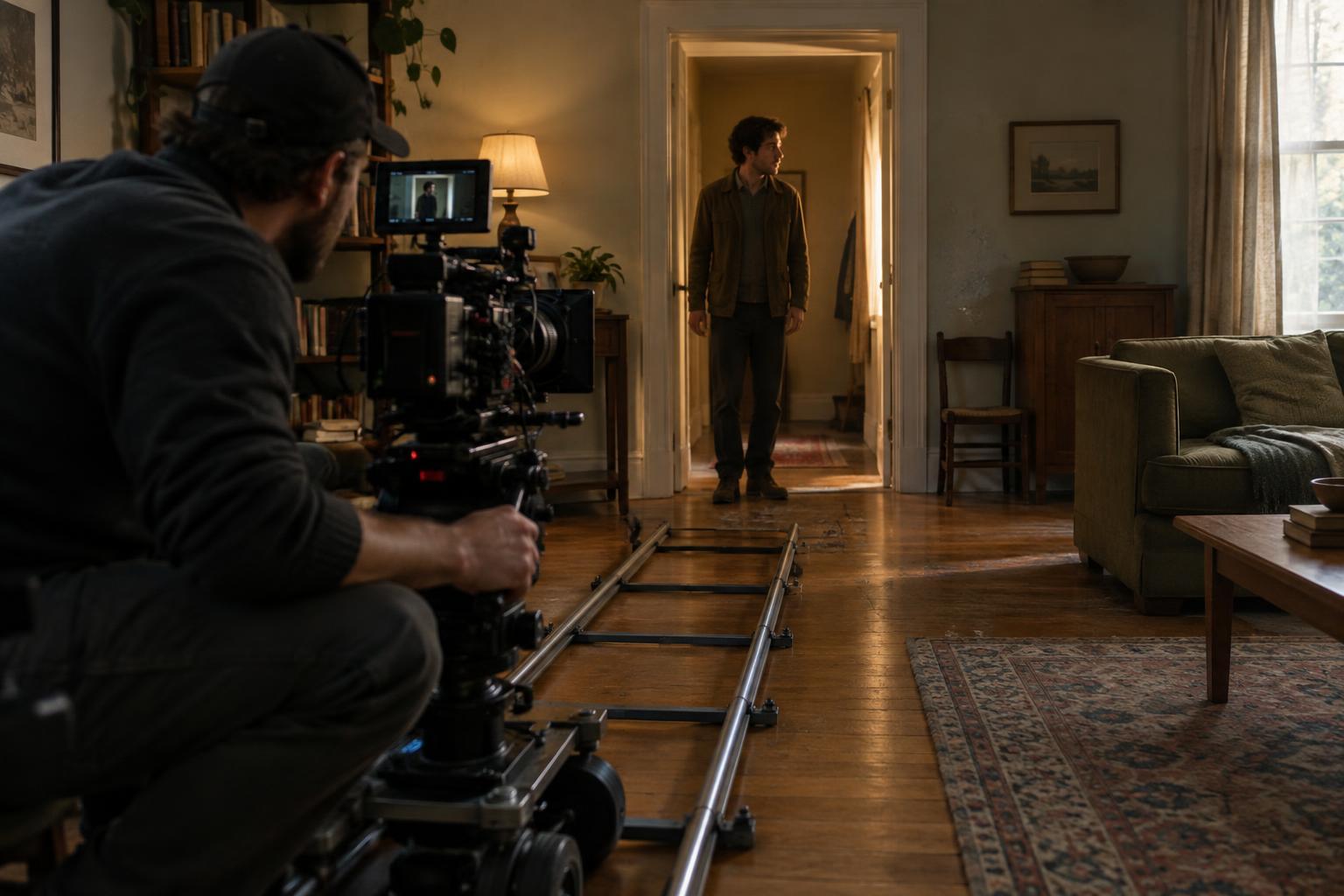
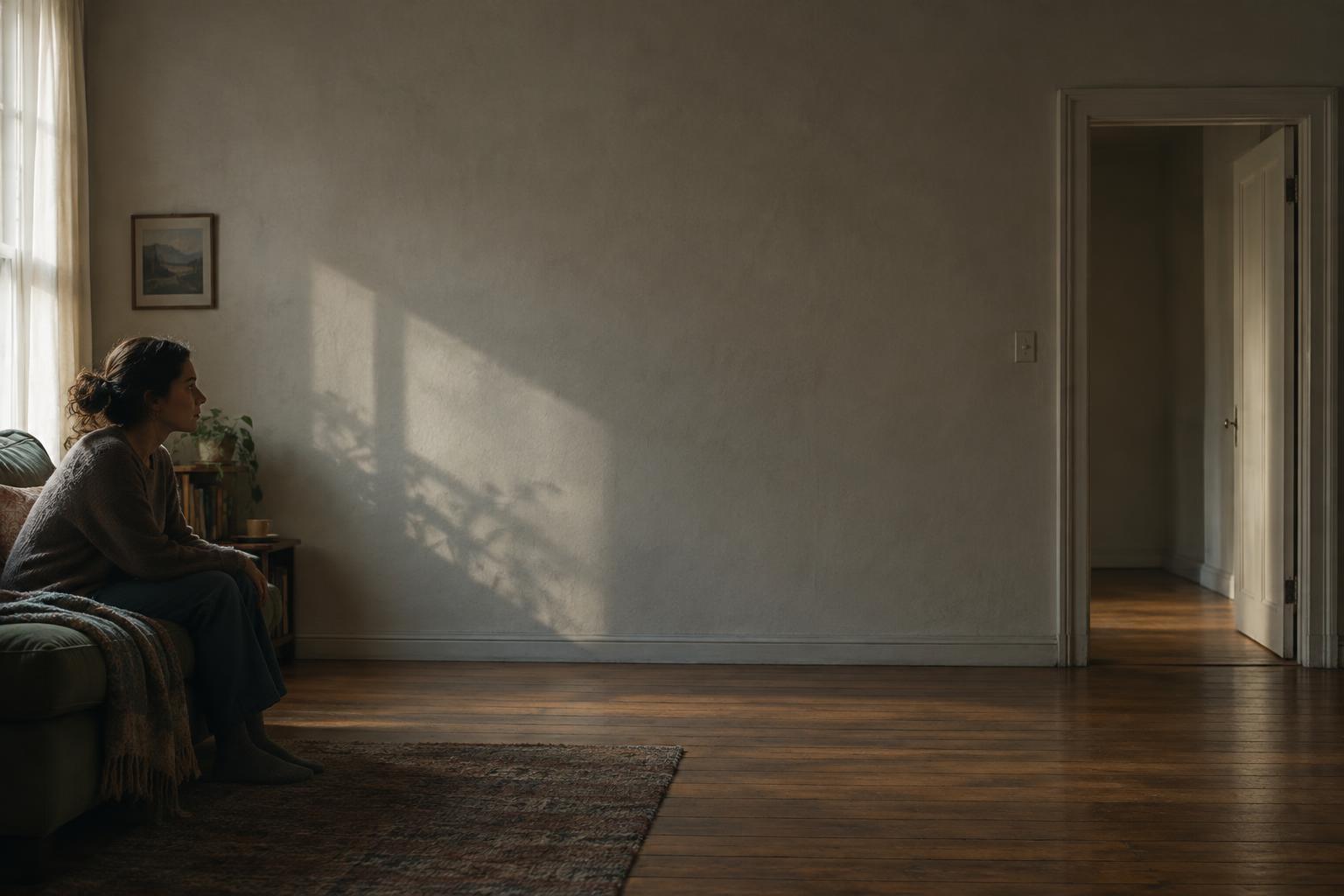
Changing height rearranges the visible world behind a subject. From a lower position, a doorway, window, or ceiling may occupy more of the frame. From a higher one, a desk, patterned floor, or cluster of objects may become prominent. Even if the actor holds the same mark and the frame remains a medium shot, the image can communicate a different relationship between person and place.
This makes height useful for production design as well as performance. Suppose a character is trying to keep a workspace orderly while a half-finished project spreads across the floor. A slightly raised camera can let that mess enter the shot without cutting away to an insert. A lower position might keep it out of view, allowing the character’s claim that everything is under control to stand for a moment longer. In both cases, the camera’s position helps decide when the setting contributes to the story.
Compare heights across a scene
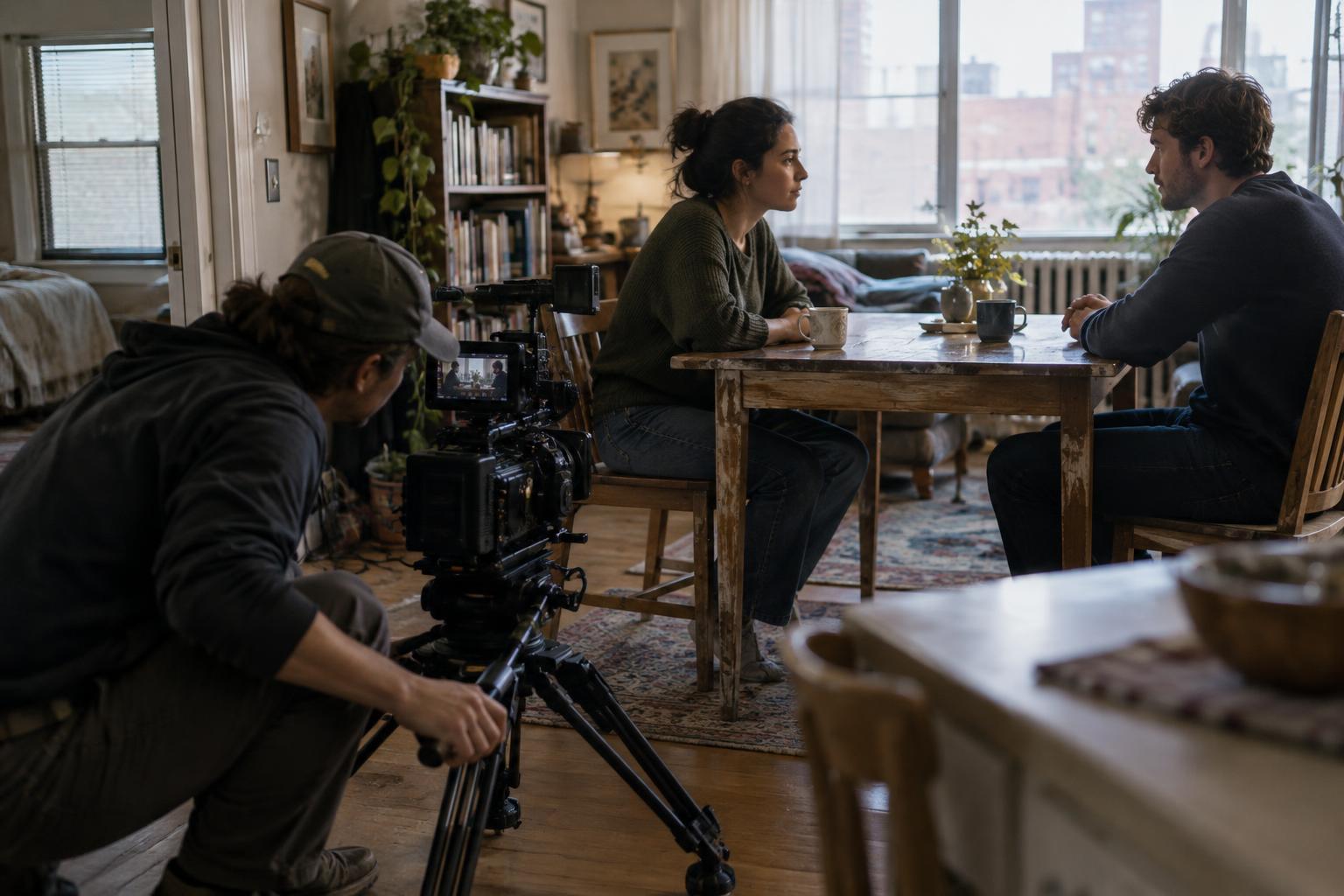
An individual shot gains meaning from the shots around it. Two characters filmed at similar heights and distances may feel like participants in a shared space. If one character’s coverage gradually shifts higher while the other’s stays steady, viewers may notice a growing imbalance, though the effect depends on the performances and the rest of the framing. Consistency can be just as expressive: keeping a camera at table height throughout an argument can make every interruption and glance play out within one stable visual rule.
When planning coverage, consider the cut between shots, not only the appeal of each composition. A change in camera height can make the background jump, alter the apparent position of a sightline, or suddenly reveal something previously concealed. Such shifts may be useful if the scene turns at that moment. If they are unintentional, they can draw attention away from the exchange.
Test the choice where the action happens
A practical way to choose height is to rehearse the scene and identify the action the viewer needs to follow. Is the important event a face registering doubt, a hand covering an object, or one person moving closer to another? Set a starting height, then try modest moves up and down while keeping the intended frame size in mind. Compare what each version reveals, obscures, and places behind the actors.
Avoid asking only whether a shot looks striking in isolation. Check whether performers can move naturally within it and whether it connects clearly to the next shot. A low angle that suits a still pose may lose a crucial expression when an actor leans forward; a higher angle that clarifies the room may make a quiet reaction harder to read. The strongest camera height is the one that supports the scene’s changing information and relationships, even when the adjustment is almost invisible.