Start with the relationship, not the coverage
Shot-reverse-shot is a familiar way to film a conversation: show one person looking toward another, then cut to the other person looking back. Its apparent simplicity can make it feel like a default. Yet each camera position makes a choice about whose experience matters, how close the audience feels to each character, and what changes as the exchange unfolds.
Before placing a camera, identify the scene’s dramatic question. Is one person trying to win an argument, conceal a fear, or find out whether they can trust the other? A conversation about a missing key may be visually straightforward until one character realizes the other is lying. That realization, rather than the dialogue alone, can guide which face receives the closest view and when.
Establish the space and protect the eyelines
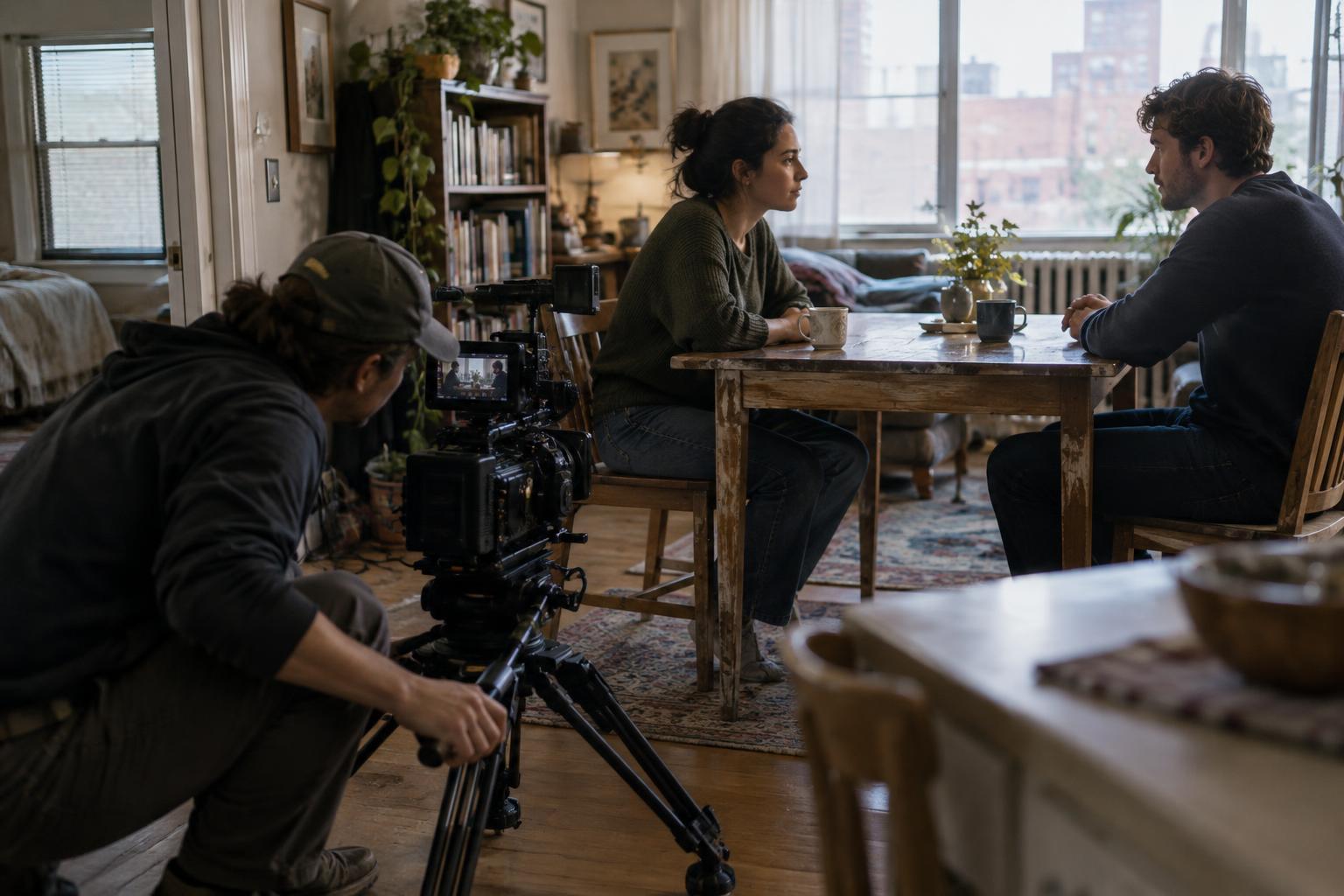
Imagine two people seated across a table. An imaginary line runs between them. If the cameras filming their individual views stay on the same side of that line, one person will generally look toward one edge of the frame and the other toward the opposite edge. The cuts then suggest that they are facing each other. Crossing the line without a clear visual cue can make them appear to have changed places.
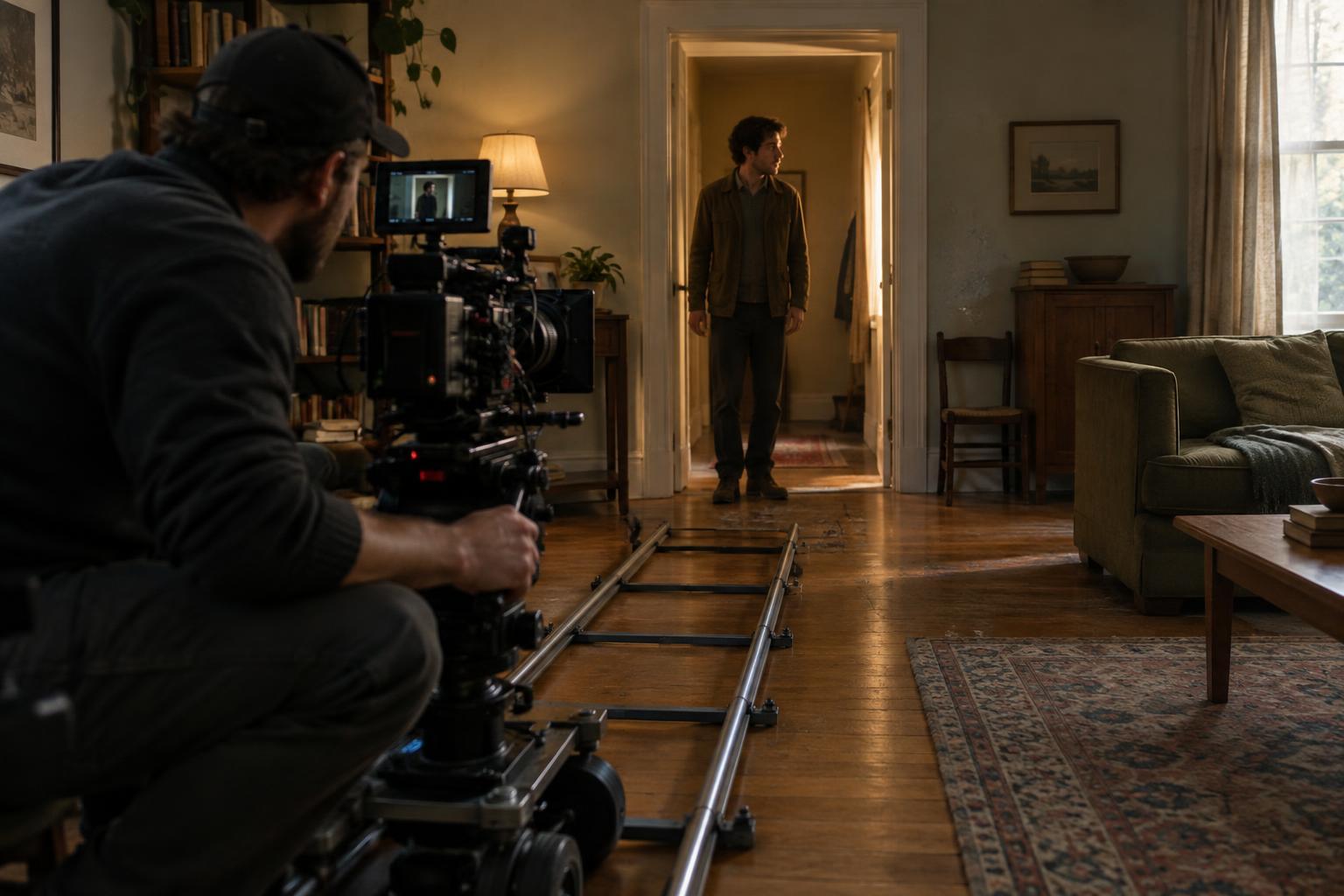
A wider shot can introduce the room, the distance between the characters, and the direction each faces. It need not be repeated every time someone speaks. Once the geography is clear, tighter shots can let an audience pay attention to small shifts in expression. If the scene benefits from changing sides, show the transition through a moving camera or an intermediate angle that helps viewers understand the new orientation. The aim is not to obey a rule for its own sake, but to keep spatial confusion from competing with the drama.
Choose how much of the other person to show
An over-the-shoulder shot includes part of the listener in the foreground while looking toward the speaker. It keeps the two people visually connected, even when only one face is readable. A clean single removes that foreground presence. It may make the speaker seem more exposed, more isolated, or simply easier to study. Neither choice has a fixed meaning; its effect depends on the other shots around it.
Camera height, distance and framing add further possibilities. Matching the two sides of a conversation can suggest a balanced exchange. A wider frame for one character and a tighter one for the other may instead draw attention to unequal levels of comfort or scrutiny. Such differences work best when they arise from the scene’s changing stakes. If every reply receives a dramatically different angle, the pattern may distract from the performances.
Let listening shape the cut
Shot-reverse-shot is not a requirement to show each speaker on every line. A listener’s face can be the most revealing image in the scene, especially when the spoken words have a meaning the listener does not yet accept. Holding on that face gives the audience time to notice a hesitation or a change of mind. Cutting to the speaker only after the listener reacts can also make the next line land differently.
The sound of a voice can continue across a cut, so the image and the dialogue do not have to change at the same moment. Try reading a scene with the sound imagined over different faces: whose response would add information that the words do not? Conversely, a delayed reverse angle can withhold a character’s reaction and create uncertainty. These decisions turn coverage into a point of view rather than a mechanical exchange of close-ups.
Plan for a change within the scene
A useful shot plan allows the visual pattern to develop. A scene might begin in a shared frame, move into balanced over-the-shoulder views, and finish on a single after one person withdraws from the conversation. The change need not be dramatic. Even a small increase in distance can make a familiar setup feel less intimate, provided the surrounding shots make that difference legible.
When planning coverage, note where the conversation turns and which reaction carries that turn. Then check that the camera positions preserve a coherent sense of space and give the editor meaningful choices. The strongest shot-reverse-shot sequence is not necessarily the one with the most angles. It is the one in which each view helps the audience understand what speaking, listening and silence are doing to the relationship.