What negative space does in a frame
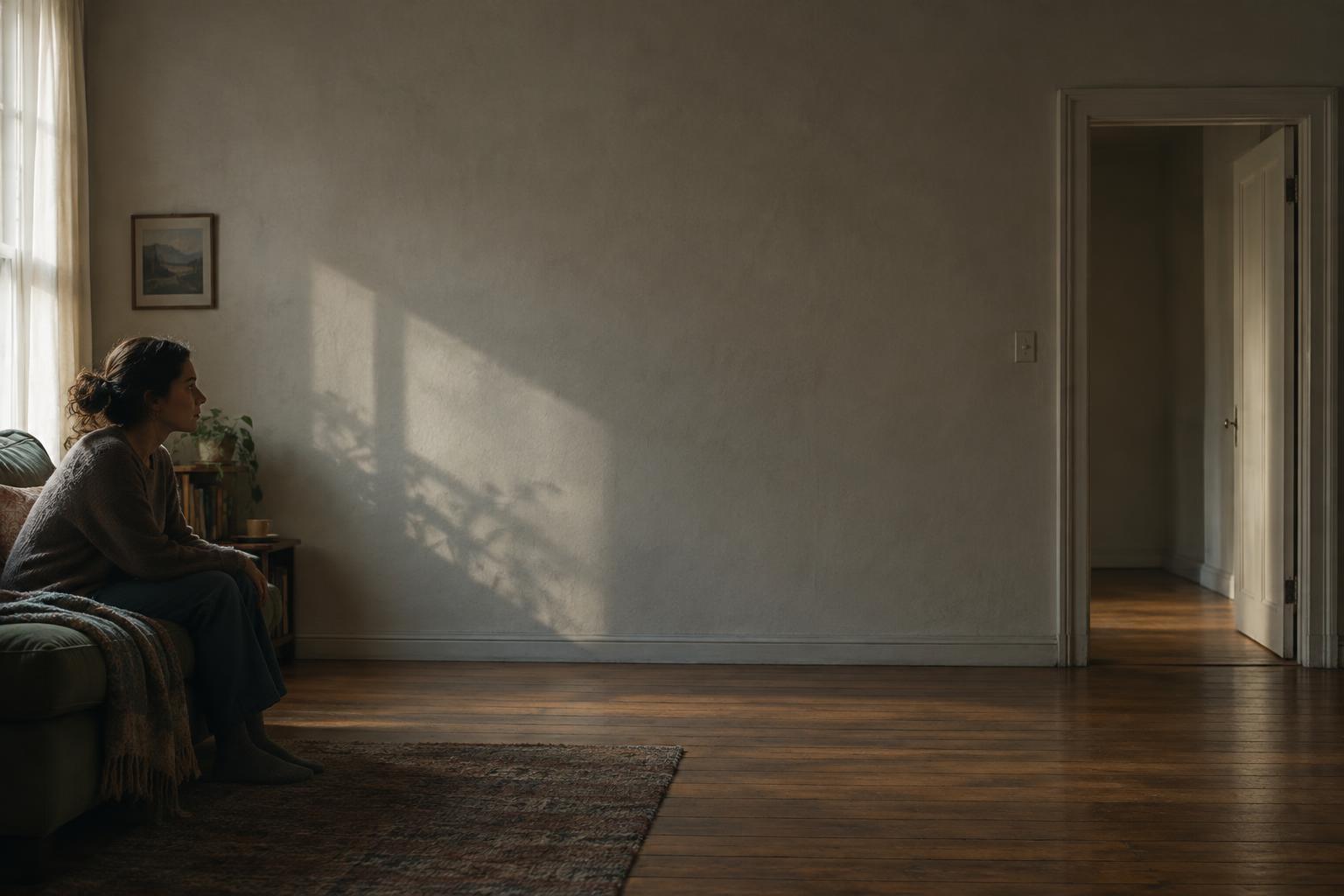
Negative space is the area around and between the main subjects of an image. It might be a blank wall beside an actor, an open stretch of road ahead of a car, or a patch of darkness beyond a doorway. The space need not be featureless. What matters is that it carries less immediate visual information than the subject, giving the viewer room to notice the subject’s position and wonder about the area around it.
In moving images, that room can become a question. A person placed at one edge of a wide frame may appear to be waiting for someone to enter from the other side. A close shot with little space around a face can feel more confined, even if nothing in the location has changed. Neither effect is automatic: performance, lighting, sound, and the surrounding shots all influence how an audience reads the composition. Negative space gives those elements a place to work.
Give empty space a direction
The placement of space relative to a subject is often more important than its size. If a character looks off-screen, leaving room in front of their gaze encourages viewers to consider what they see. Space behind them may instead make us alert to what they have not noticed. The same principle applies to movement. A cyclist with open road ahead seems to have somewhere to go; a cyclist pressed against the edge of the frame may seem about to leave it or run out of room.
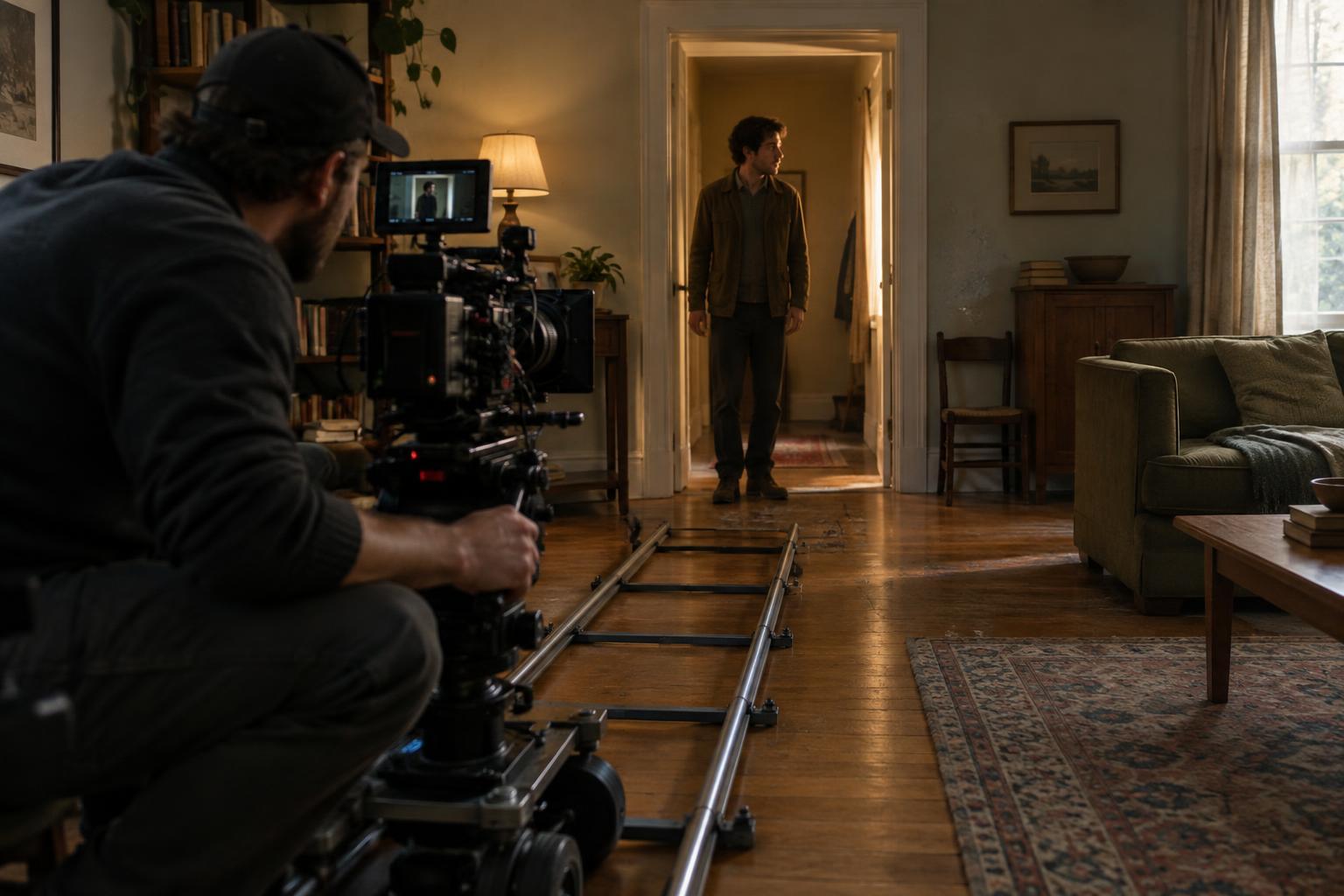
These expectations are useful because they can be met or frustrated. Imagine a character standing on the left, watching an empty hallway that occupies the rest of the shot. If another person enters the hallway, the composition has prepared us for the arrival. If no one comes, the held emptiness may make the wait itself the event. The shot does not need to announce a threat. It simply asks the audience to keep looking.
Use space to express a relationship
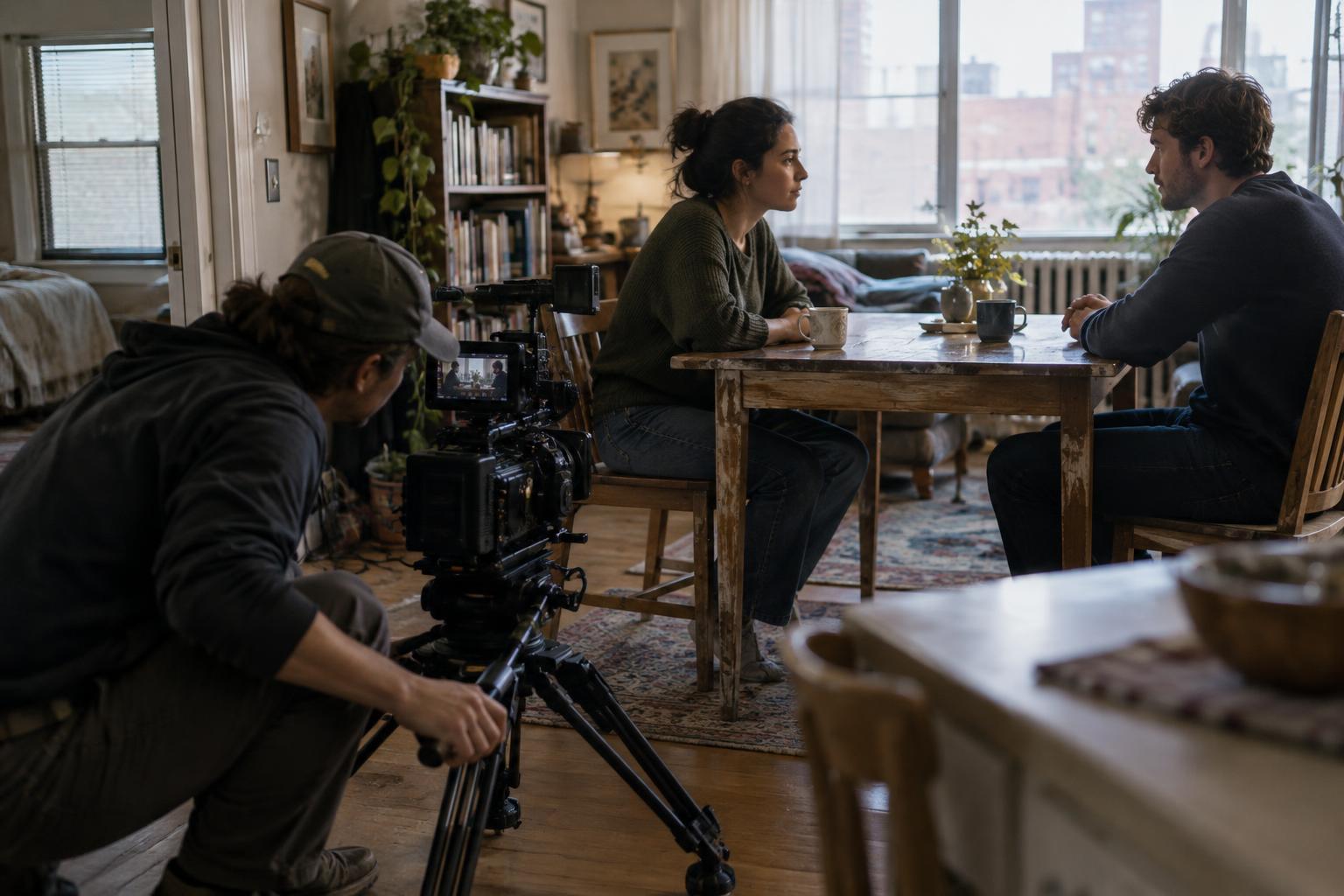
Negative space can also make distance between people visible. Two characters at opposite ends of a frame might be physically close enough to speak softly, yet the unoccupied area between them can emphasize hesitation or disagreement. Bringing them into the same part of the frame later offers a visual change that supports a change in their relationship. The composition works best when that shift follows what the actors do, rather than trying to replace it.
Empty space around a single person can suggest isolation, but it can also suggest freedom or calm. A figure small against an open landscape may feel exposed in one scene and relieved in another. To decide which reading serves the story, ask what the character wants at that moment. Are they seeking privacy, fearing pursuit, or taking in a new place? The answer can guide choices about frame size, where to place the person, and how long to hold the shot.
Build and release anticipation
A composition creates an expectation only if viewers have enough time and clarity to notice it. A brief glimpse of an empty doorway may register as background. A longer hold, a character’s glance toward it, or a sound from beyond it can make the doorway important. Sound is especially useful because it can point to something outside the visible frame without requiring the camera to reveal it. Silence can have a similar effect when a scene has led us to expect an arrival.
An editor can then choose when, or whether, to answer the question the frame raises. Cutting to the doorway may confirm what is there. Staying with the character may keep us focused on their reaction. Cutting away before anything enters can leave the expectation unresolved. Because a conspicuously empty area often attracts attention, use it selectively. If every shot seems to reserve a space for a surprise, the audience may start watching the technique instead of the scene.
Test the frame against the scene’s purpose
When planning a shot, start with a simple question: where should the viewer look, and what should they expect next? Sketch or photograph two versions of the same setup, placing the subject near the center in one and to the side in the other. Then consider what the surrounding space appears to promise. A composition that looks striking as a still image may feel misleading once the subject moves or the next shot arrives.
On set, check the edges of the frame as carefully as the subject. A bright object, a strong line, or background movement may turn an intended quiet area into a competing point of interest. You can adjust the camera position, lens, lighting, or blocking to make the space read more clearly. The goal is not to leave part of every image empty. It is to make each area of the frame, occupied or not, help the audience follow the story.