Start with the story, not the faders
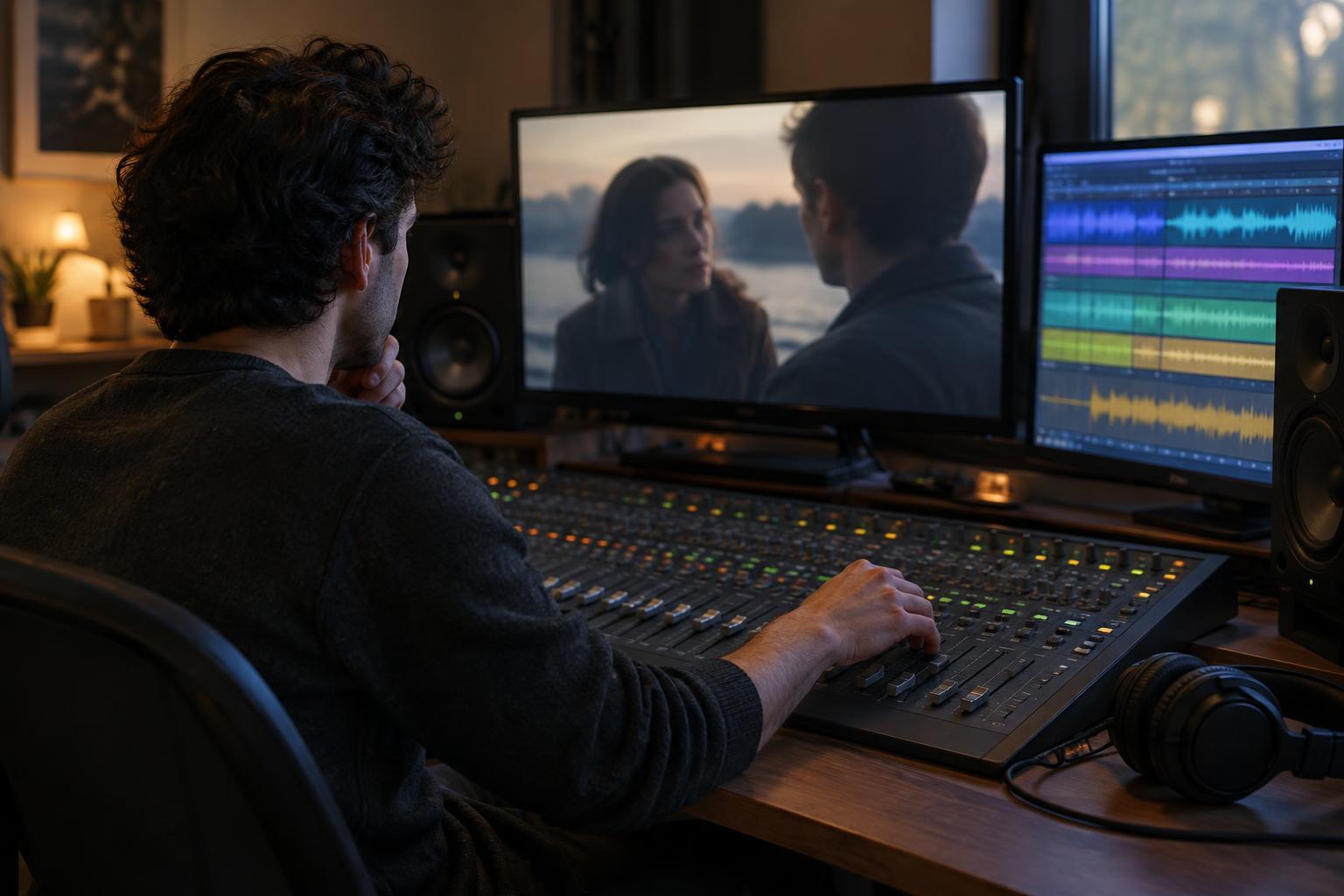
A common first-time mixing mistake is treating dialogue, effects and music as three layers that should all be heard equally. A scene rarely asks for equal attention. In one moment, the audience needs to catch a quiet line; in another, a passing train may overwhelm the conversation by design. Before adjusting levels, watch the scene and decide what the listener should notice at each turn.
Write down the moments that carry essential information: a name spoken under someone’s breath, a door latch that signals an arrival, or a musical shift that changes how an ending feels. This gives you a reason to raise or lower a sound beyond whether it seems exciting in isolation. If every layer insists on being prominent, the result can feel smaller rather than bigger, because nothing has room to register.
Make dialogue consistent without flattening the performance
Dialogue is often the anchor of a narrative mix, but simply turning up the dialogue track may also raise room noise, breaths and abrupt changes between takes. Listen to each exchange in context. Adjust unusually soft or loud lines before relying on broad changes to the whole scene, and pay attention to cuts where the background sound suddenly shifts. A brief pause can make that shift more noticeable than a line of speech does.
Clarity does not mean making every word equally loud. A whisper should retain its intimacy, and a character speaking from another room should still feel distant. The goal is for the audience to understand what matters without hearing the mixer constantly correct the performance. If a line is difficult to follow, check whether music or an effect is masking it before pushing the voice higher. Sometimes lowering the competing sound produces a more natural result.
Give effects perspective and a purpose
First mixes often overemphasize effects because each new sound makes the scene feel more complete. Yet an oversized footstep, cup set-down or coat rustle can draw attention away from an actor’s face. Ask whether an effect establishes a place, supports an action or directs attention to a plot point. Sounds that serve none of those purposes may work better at a low level, or not at all.
Perspective helps effects feel connected to the image. A nearby impact can be sharp and present; activity across a large room generally should not seem just as close. The relationship between sounds matters as much as their individual volume. If rain is steady outside a window, for example, it can create a sense of place without competing with every sentence. Leave space for a distinctive effect when the story needs it, then let the background settle again.
Let music support a change rather than announce every feeling
Music can make a rough mix feel immediately more polished, which makes it tempting to keep it prominent throughout a scene. That can crowd dialogue and leave the audience little opportunity to interpret a moment for themselves. Try listening to the scene once without music. Notice where performance, silence and environmental sound already communicate the emotion. When the score returns, give it a specific job: building anticipation, connecting two spaces or carrying the scene after speech ends.
A useful balance may change within a single cue. Music can come forward during a wordless glance, step back for a line and return as the scene transitions. Avoid treating that movement as a mechanical dip under every sentence; obvious rises and falls can call attention to the mix. Listen instead for natural openings in the arrangement and the conversation. When both voice and music occupy the listener’s attention, decide which one carries the story at that moment.
Check the mix beyond your editing setup
A mix that works on one pair of headphones may not communicate as well through small speakers or in a room with ordinary background noise. After working for a while, take a break and return at a comfortable listening level. Then play the scene from beginning to end without stopping to fix individual sounds. Note every point where you strain to hear a line, notice an unintended jump or lose track of the intended focus.
Try a second playback device if one is available, but do not chase a perfect match between devices. The useful question is whether the scene’s priorities survive the change. Before calling the mix finished, also listen to its entrance and exit alongside adjacent scenes. A single scene can feel balanced on its own yet seem startlingly loud or quiet after a cut. A successful first mix is not one in which every sound is audible all the time; it is one that guides attention without making the guidance obvious.