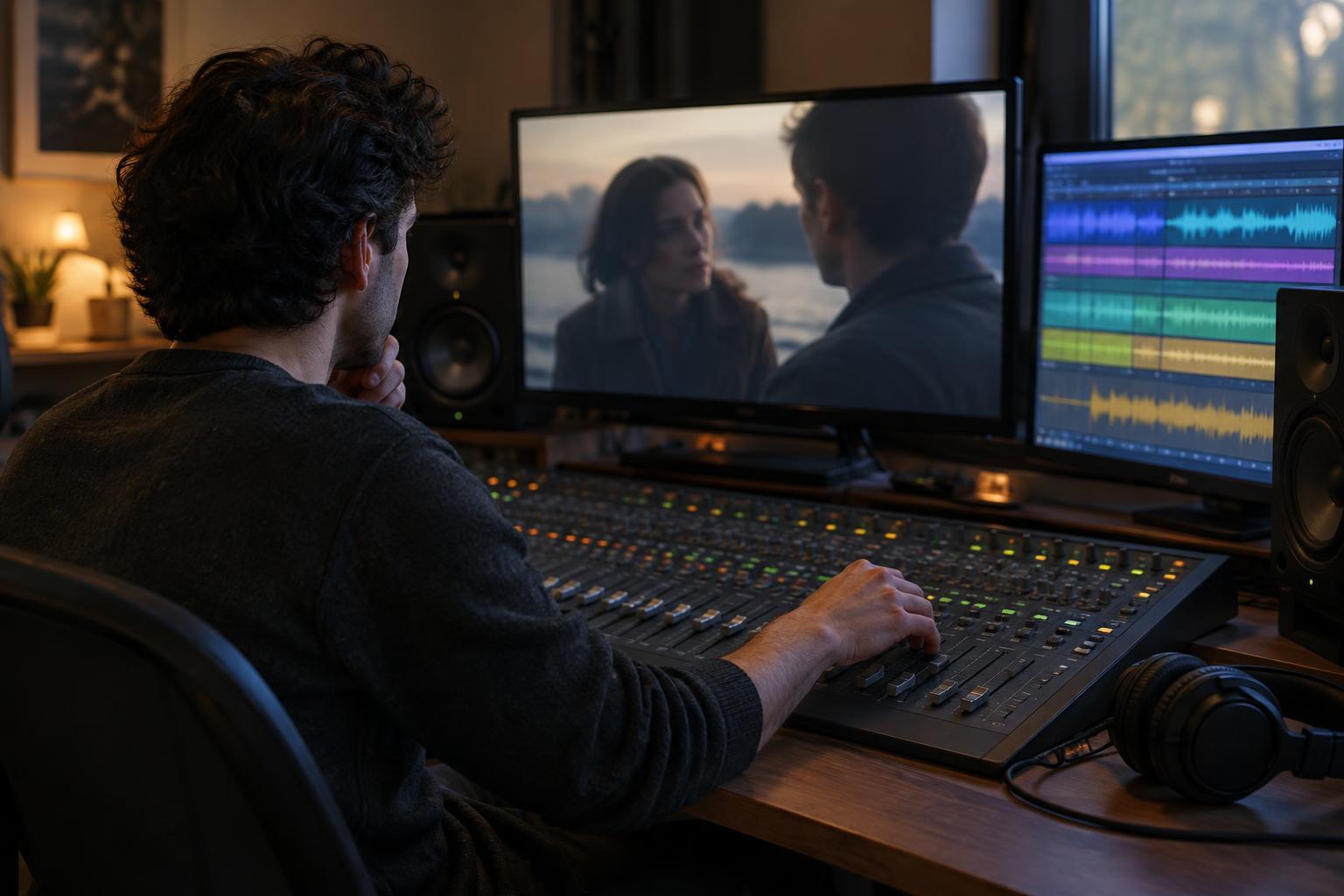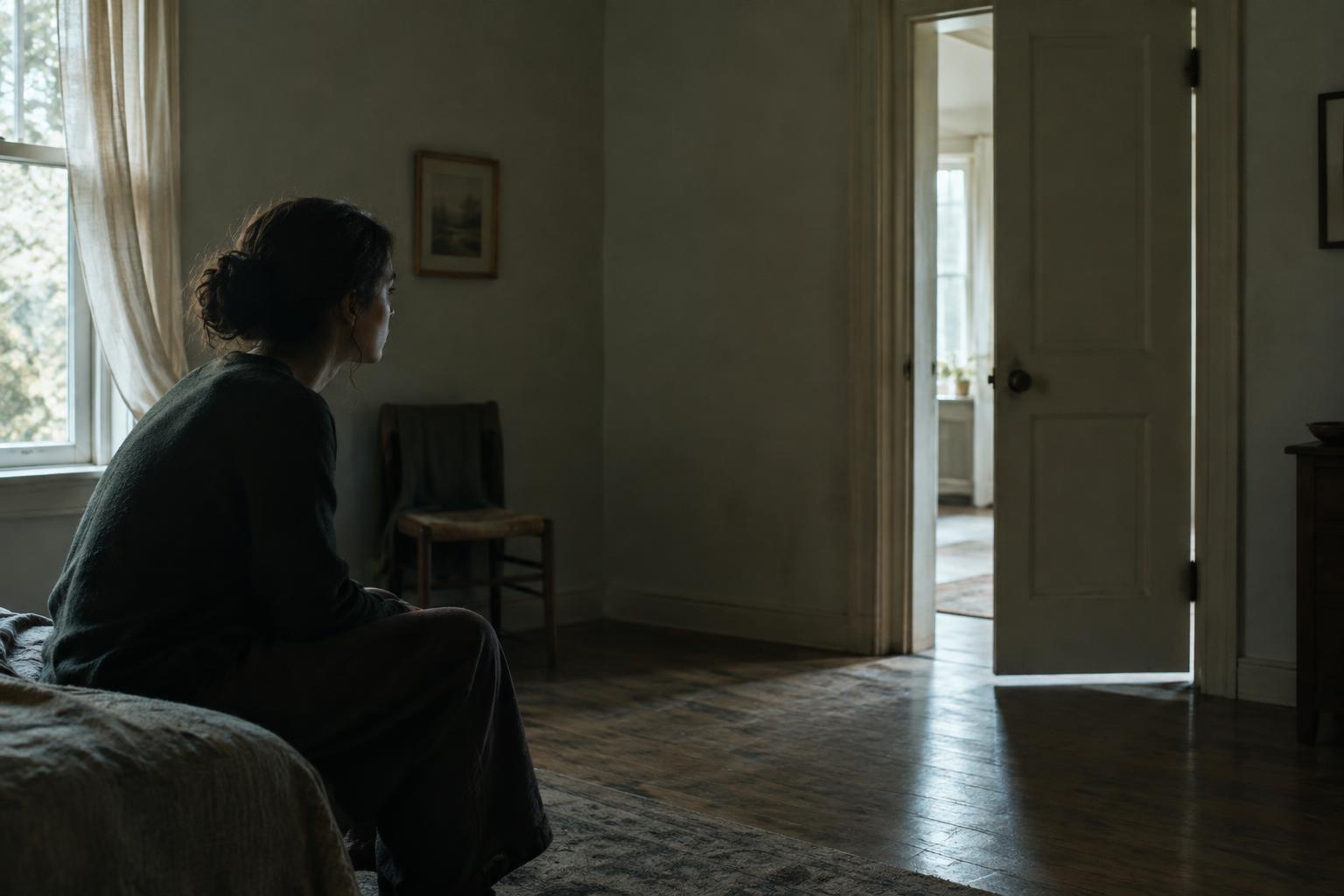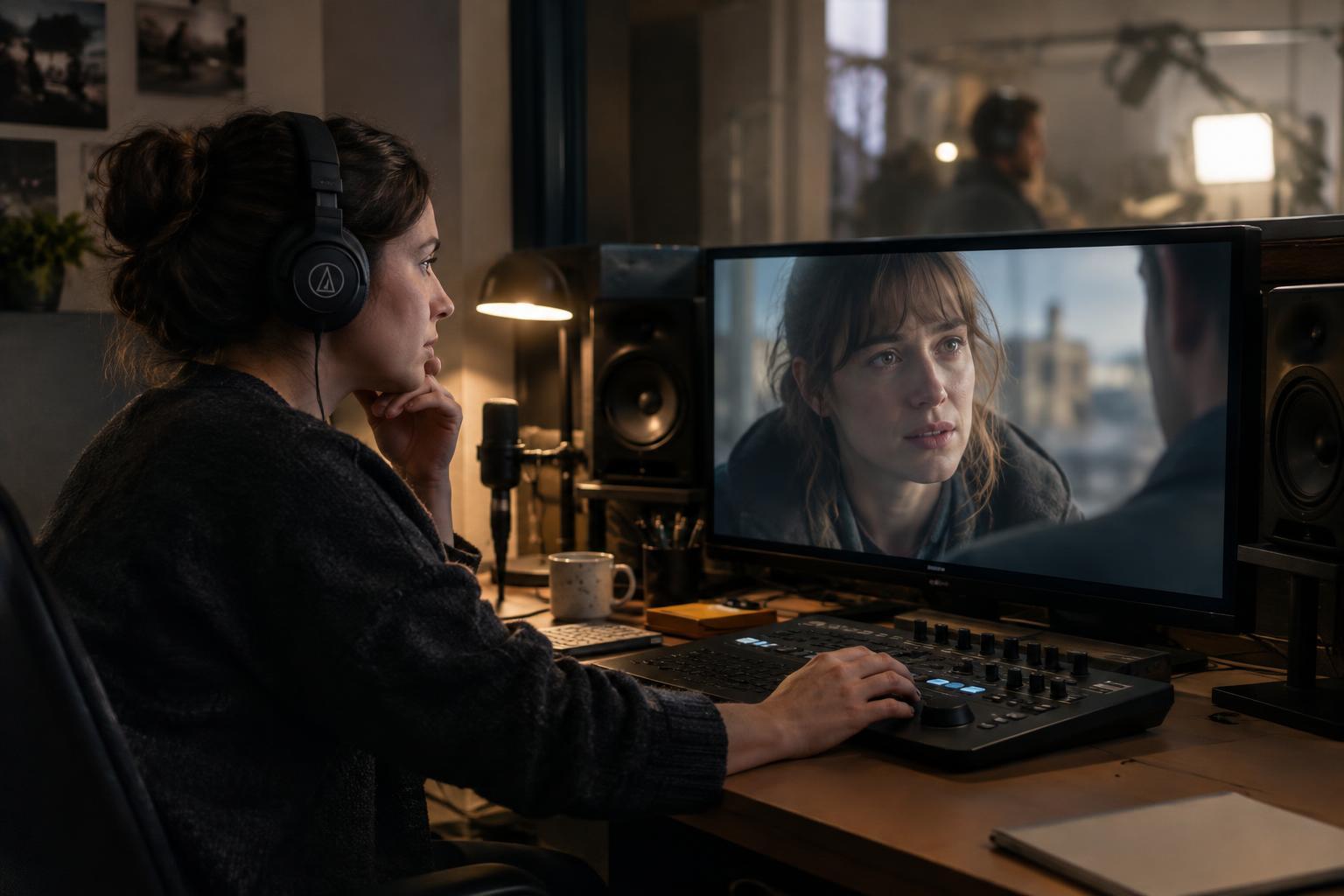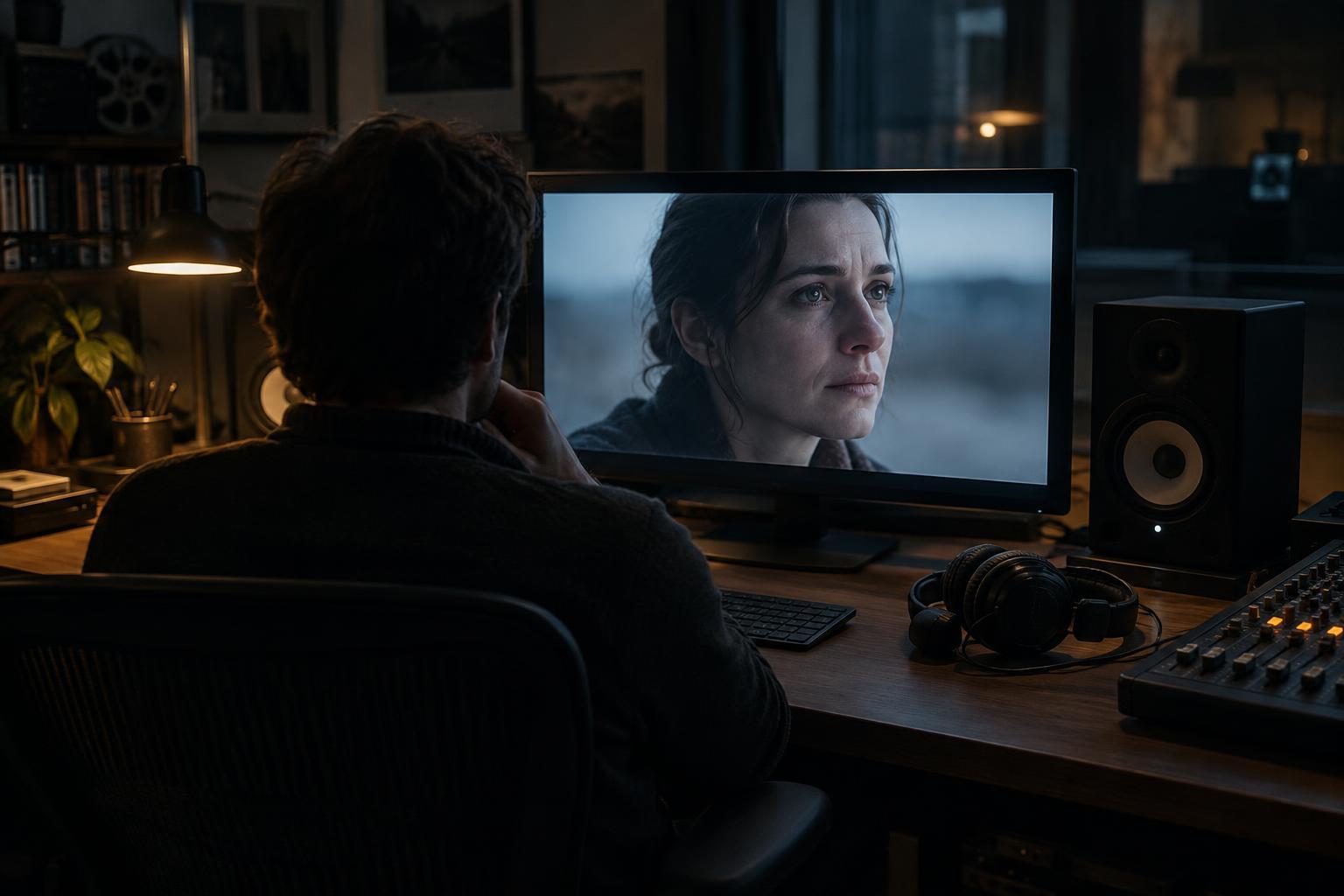
Start with what the scene already communicates
Before placing music under a scene, watch it without a score. What does the audience know, what do the characters want, and what changes by the end? Look for evidence in the performances, shot choices, dialogue, and cuts. If a character’s decision is unclear, a rising cue may make the moment feel important without making it understandable. That is a storytelling problem to examine before it becomes a music problem.
A useful test is to describe the scene’s turn in one sentence: “She arrives expecting an apology and leaves realizing she will not get one.” Then identify where that realization becomes visible or audible. It might be a pause before an answer, a glance toward the door, or a cut that stays on her after the other character speaks. Music can draw attention to that turn, but the turn should have a place to land even when the scene is quiet.
Give every cue a specific job
“Make it emotional” is too broad a brief for a cue. Instead, ask what music could contribute that the images and production sound cannot easily provide. A cue might connect two locations, establish a recurring idea, make a long passage feel continuous, or place a character’s private hope beside an unpromising image. It may also create tension through restraint rather than volume.
Map the cue’s entrance and exit as carefully as its mood. Starting before a character acts can invite anticipation; starting after an action can make space for the audience to judge it first. An abrupt stop may reveal a room’s uncomfortable quiet, while a gradual exit can return attention to footsteps or breathing. These choices change the meaning of a scene. They are more useful planning tools than asking for music to be simply sadder or bigger.
Use temp tracks as questions, not answers
A temp track is a piece of existing music placed in an edit to explore timing, texture, or dramatic direction. It can make an unfinished sequence easier to discuss, especially when the intended score does not yet exist. Its danger is familiarity: after repeated viewings, a track’s rhythm and melody may begin to feel inseparable from the cut. The team can then mistake attachment to that particular recording for a clear idea about the scene.
When testing a temp, write down what it actually helps. Is its pulse supporting the cut? Does its sparse instrumentation leave dialogue room? Does a change in harmony coincide with a reveal? Try a contrasting track, move the entrance, lower the level, and watch the sequence without music again. If the scene only works with one highly expressive recording, consider whether its performance, structure, or pacing needs attention. A temp is most useful when it produces questions the team can answer, not a sound everyone feels obliged to copy.
Plan for sound and silence alongside music
Music does not occupy an empty soundtrack. Dialogue, room tone, traffic, clothing movement, and designed effects all shape how a moment feels. A faint mechanical hum might keep tension alive more effectively than a sustained musical note. Conversely, a crowded soundscape may give a delicate cue no room to register. During planning, note which sounds carry story information and which can recede when music enters.
Silence is not merely the absence of a cue. Removing music can make an action feel exposed, but a sudden drop will only have force if the surrounding sound has been considered. Listen for what remains: a chair scraping, a distant conversation, or near-stillness. If the scene needs a shift in perspective, changing the sound environment may be more precise than adding a new musical theme.
Build a cue plan that can change
A simple cue plan can list each proposed cue’s dramatic purpose, possible entrance, intended exit, and relationship to dialogue and sound effects. Mark uncertain spots as experiments rather than decisions. For example, “Test music after the phone call, not during it” gives an editor or composer a concrete option without dictating an instrument or melody. Share the scene’s dramatic turn as well as the temp’s musical qualities, so collaborators understand what the cue is meant to support.
Revisit the plan whenever the cut changes. A shorter look, a different reaction shot, or a new sound effect can remove the need for music or create a better place for it to begin. The goal is not to minimize scoring on principle. It is to let music make a distinct contribution to a scene whose characters, images, and sounds are already doing meaningful work.