Start by Listening to the Scene
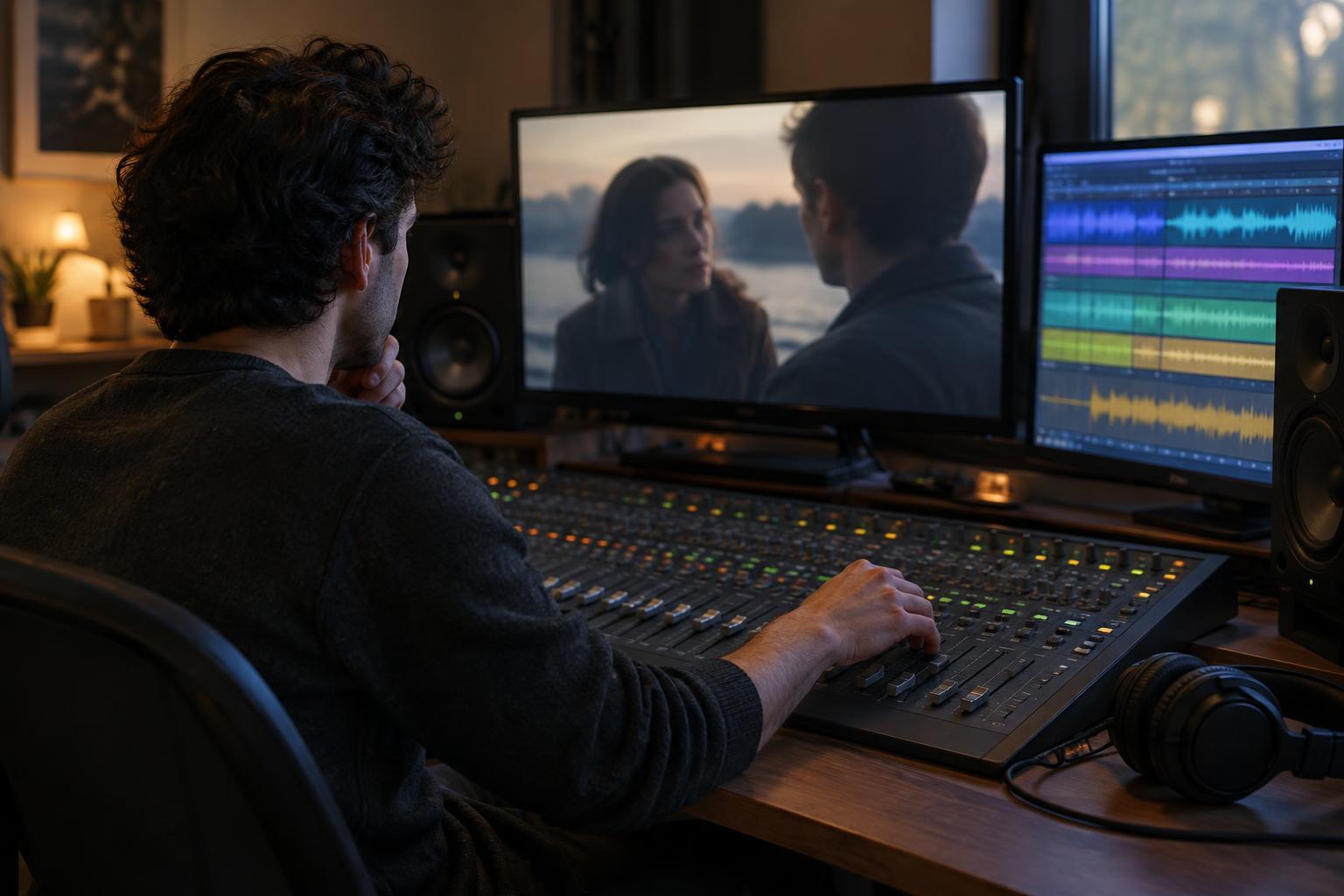
Dialogue editing is not simply the removal of unwanted sound. Its purpose is to help viewers follow the conversation without drawing attention to the edit. A faint rustle may be worth fixing if it masks a word; the same rustle may be harmless during a tense pause. Before changing anything, listen to the scene from beginning to end. Note which words are hard to understand, where the background changes, and which breaths or hesitations carry emotion.
Then listen to the available takes with picture. A cleaner line is not always the better line: its timing, emphasis or eye-line may sit awkwardly against the chosen image. Keep the original track accessible, and make a copy before detailed work. That gives you a reliable reference when processing begins to make the speech sound thin or unusually smooth.
Build a Continuous Foundation
On set, every microphone captures more than a voice. It also records some of the space around it: air movement, distant activity and the room’s particular character. When an editor cuts directly between pieces recorded under different conditions, that background can jump or disappear. Even a silent gap between lines can sound conspicuous if the surrounding shot suggests an occupied room.
Look for stretches of usable room tone from the same setup and use them to fill gaps where needed. Match them by ear rather than assuming any quiet recording will work. Short crossfades can soften joins between dialogue and background, but a fade cannot hide a major change in tone by itself. If a line comes from another take, listen across the whole transition, including the moments before and after the words. The goal is continuity, not absolute silence.
Remove Distractions Selectively
Work from the most obvious problems toward the smallest ones. A bump, click or short clothing scrape may be repairable by replacing a tiny section with nearby clean audio, adjusting the cut, or reducing the sound locally. When a noise overlaps a word, a different microphone or take may offer a better solution. Avoid making a broad change to an entire scene when only one moment needs attention.
Noise reduction can help with steady background sound, but aggressive settings may give speech a hollow or watery quality. Apply it conservatively, and compare the result with the unprocessed line at a similar listening level. The same restraint applies to equalization: a small adjustment may improve intelligibility, while excessive brightening can exaggerate sibilance and mouth sounds. Fix what interferes with understanding; leave harmless texture alone.
Protect Breaths, Pauses and Vocal Detail
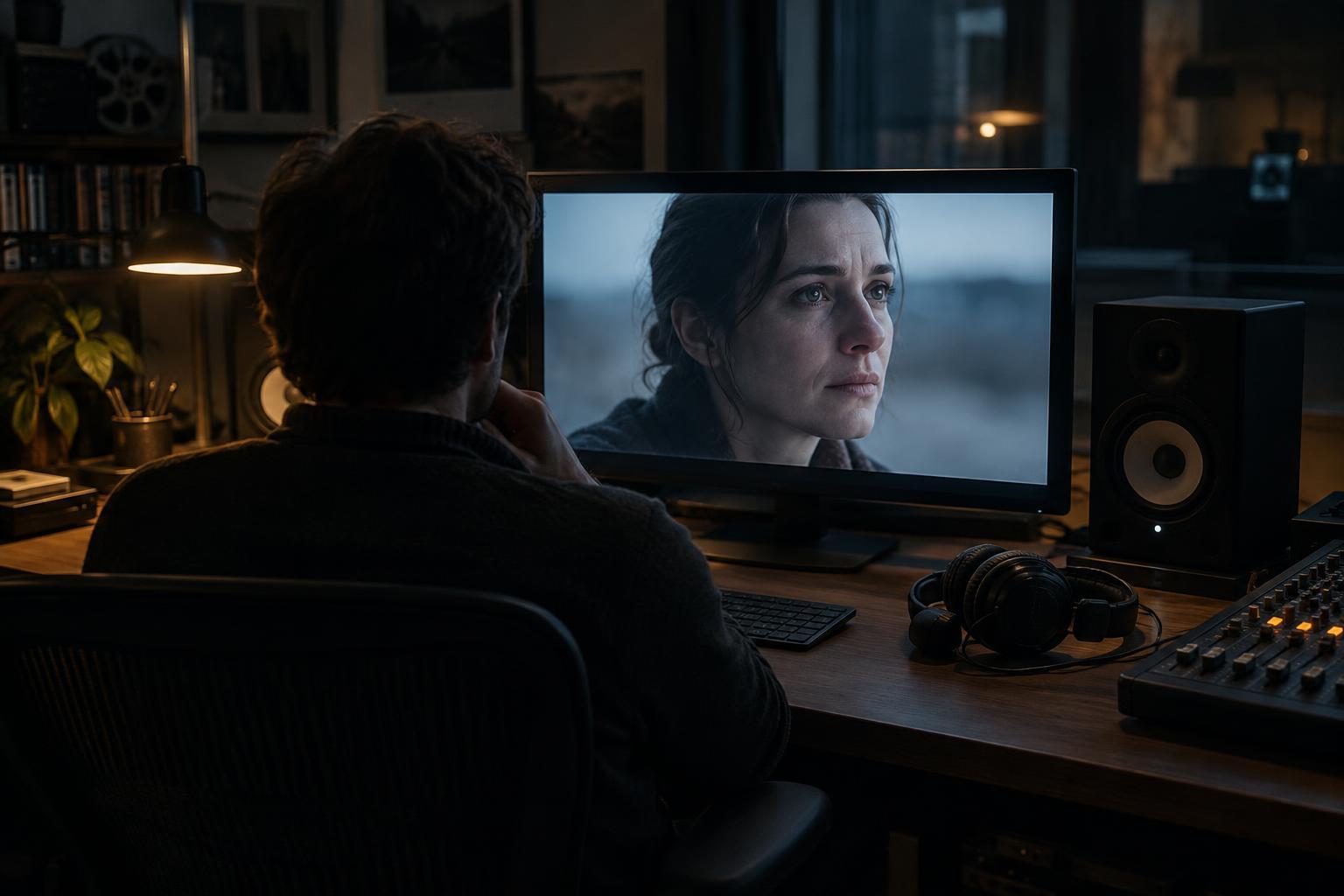
A breath can signal effort, fear, impatience or a decision not to speak. Pauses also establish the rhythm between characters. Cutting every inhale and tightening every gap may make dialogue technically neat but emotionally rushed. Before shortening a pause, watch the actor’s expression and consider what the silence is doing in the scene. If a breath is distractingly loud, lower it gently rather than removing it automatically.
Small volume adjustments are often more natural than heavy processing. A quiet word can be raised without pushing the entire line louder; a sharp consonant or lip smack can be reduced without dulling the performance around it. Listen for changes in perspective, too. A voice recorded close to the microphone may need careful balancing when the picture cuts to a wide shot, but it should still sound like the same person in the same space.
Check the Edit in Context
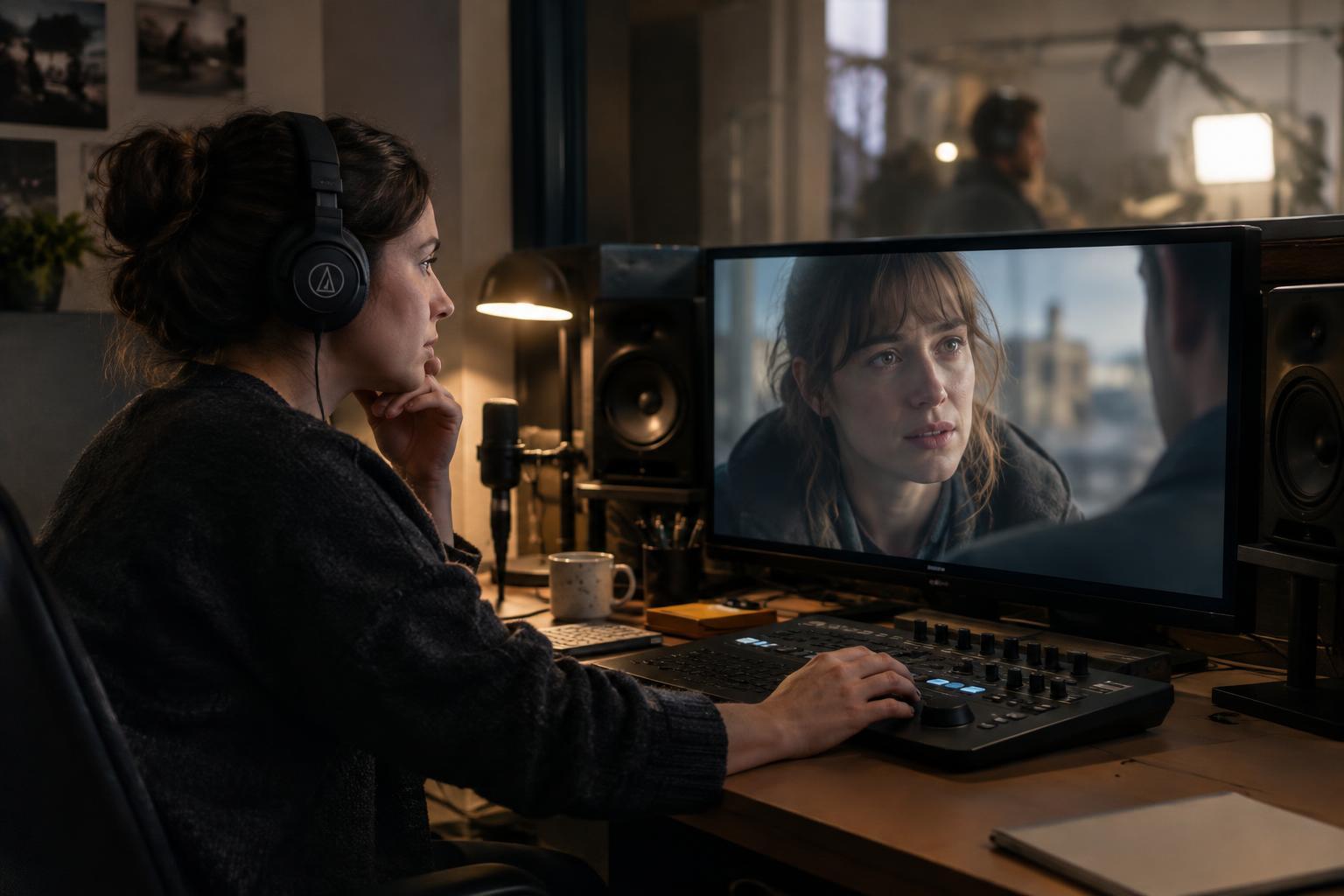
A dialogue track that sounds clean in isolation may feel unnatural alongside music, effects and images. Play the full scene at a comfortable level, then check difficult passages on another ordinary speaker if one is available. Can you follow the words without strain? Do edits call attention to themselves? Does the background remain believable when a character stops speaking? These questions matter more than whether the waveform looks tidy.
Keep notes on problems that editing alone cannot solve. A badly obscured line may require another take, a careful replacement recording or a change in the scene’s sound design. Those choices should support the story rather than chase a perfectly noise-free track. The strongest dialogue edit lets the audience hear the words, feel the pauses and stay focused on the characters.