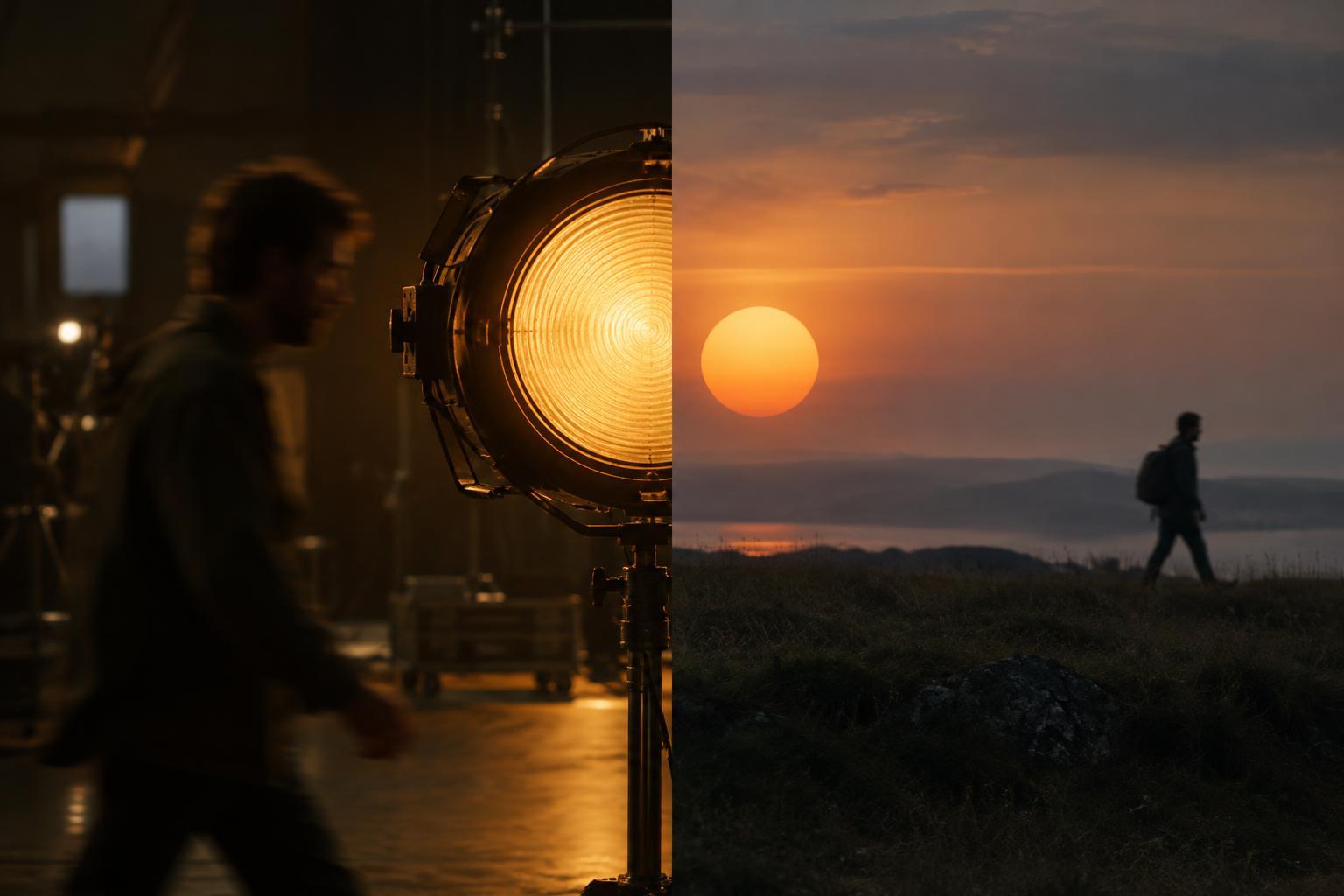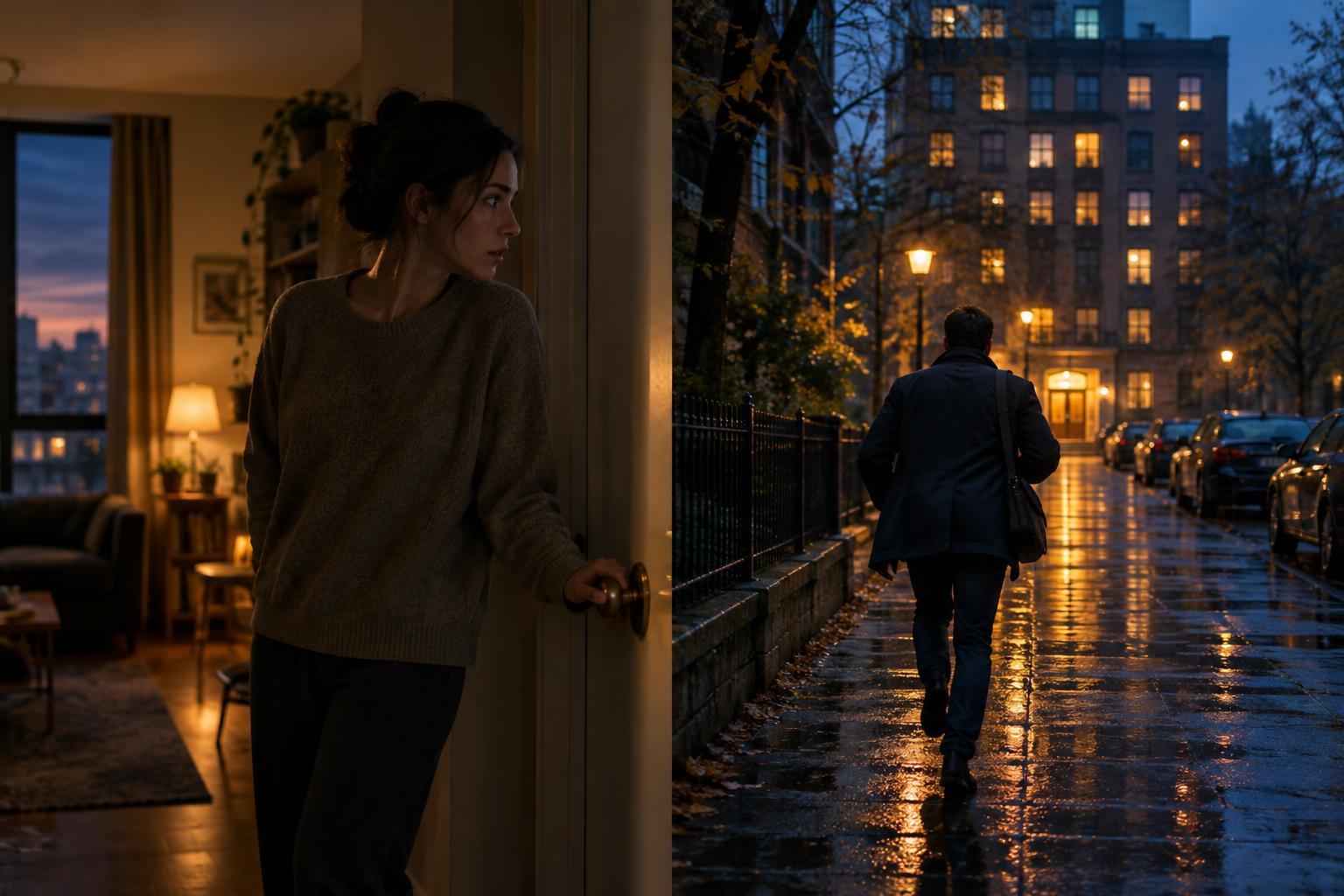
What a cut between storylines tells us
Cross-cutting moves between two or more lines of action that the viewer understands as unfolding at roughly the same time. A familiar example alternates between someone trying to reach a destination and someone waiting there. Each return updates our sense of progress. Even when the characters never share a frame, the edit makes their actions feel connected.
That connection is a storytelling choice, not merely a way to cover separate locations. Placing one action beside another invites viewers to compare them, anticipate a collision or question what one character knows about the other. Cross-cutting can suggest simultaneity, but the film still needs to establish it clearly enough for the intended effect. A shared deadline, a phone call or an event visible from both locations can help. Without such cues, viewers may read the scenes as parallel in theme rather than happening at the same moment.
Suspense depends on what each return changes
A suspense sequence needs more than increasingly short shots. It needs a developing question: Will the person arrive before the door opens? Will one character discover something before another acts? On each return to a storyline, something should change in the viewer’s understanding of the answer. An obstacle appears, a decision is delayed or a seemingly safe situation becomes less secure.
The length of each visit can shape that question. Staying with a character through a difficult choice lets the audience feel the weight of it. Cutting away just before the choice is made may create anticipation, but repeated interruptions can make the scene feel evasive. Faster alternation can intensify a climax when both storylines are advancing. Used too early, it leaves little room for tension to grow. Sometimes a long hold on the person who is waiting is more unsettling than a rapid series of cuts to the person rushing toward them.
Juxtaposition can reveal character and theme
Cross-cutting can build meaning even when no one is racing against a clock. Imagine alternating between a character carefully preparing a public apology and another character quietly repairing the damage that made the apology necessary. The contrast between speech and labor may tell us more about responsibility than either scene would alone. The edit does not have to declare which character is right; it gives viewers a relationship to consider.
Small visual or behavioral echoes can make that relationship legible. One character closes a box while another opens an envelope. Two people hesitate before answering different questions. Such pairings can create a pattern, but they work best when the actions matter within their own scenes. If every cut announces a tidy comparison, characters may start to feel like illustrations of an idea rather than people pursuing goals. Leave room for differences that complicate the parallel.
Sound can join scenes without making them identical
Sound offers ways to connect storylines before the image does. A ringing phone can begin over the end of one scene and lead into another; a machine’s steady rhythm can carry across a cut to a different workspace. These bridges make a transition feel purposeful. They can also briefly raise a question about where a sound comes from, provided the film resolves that uncertainty when clarity matters.
Silence and contrast are just as useful. Cutting from a noisy gathering to a quiet room may isolate a character more forcefully than a matching sound would. Sound perspective helps preserve geography: voices, room tone and background activity can remind us which space we have entered after a rapid exchange of images. When music spans both storylines, consider whether it should bind them emotionally or whether separate sound worlds would better express the distance between them.
Build the sequence from turning points, then test its clarity
When planning a cross-cut sequence, write down the main change in each storyline: what a character wants, what interrupts that goal and what they do next. Then identify the moments when switching stories would give the audience a new piece of information or a useful pause. This approach is helpful during both scripting and editing. It keeps the structure tied to choices and consequences rather than to a fixed pattern of alternating shots.
In the edit, try different entry and exit points. A cut just before an action finishes may make the audience predict its outcome; a cut just after it finishes may let that outcome color the next scene. Watch the sequence without assuming prior knowledge of the script. Can a viewer tell whose location they are seeing, why the switch matters and whether the events overlap in time? If not, a clearer establishing detail or an extra beat within one storyline may do more than another cut.
The strongest cross-cutting gives each storyline its own momentum while making their relationship worth watching. Whether the result is suspense, irony or a quieter comparison, meaning emerges in the space between scenes—and in the decision about when to cross that space.