Start with what the character does every day
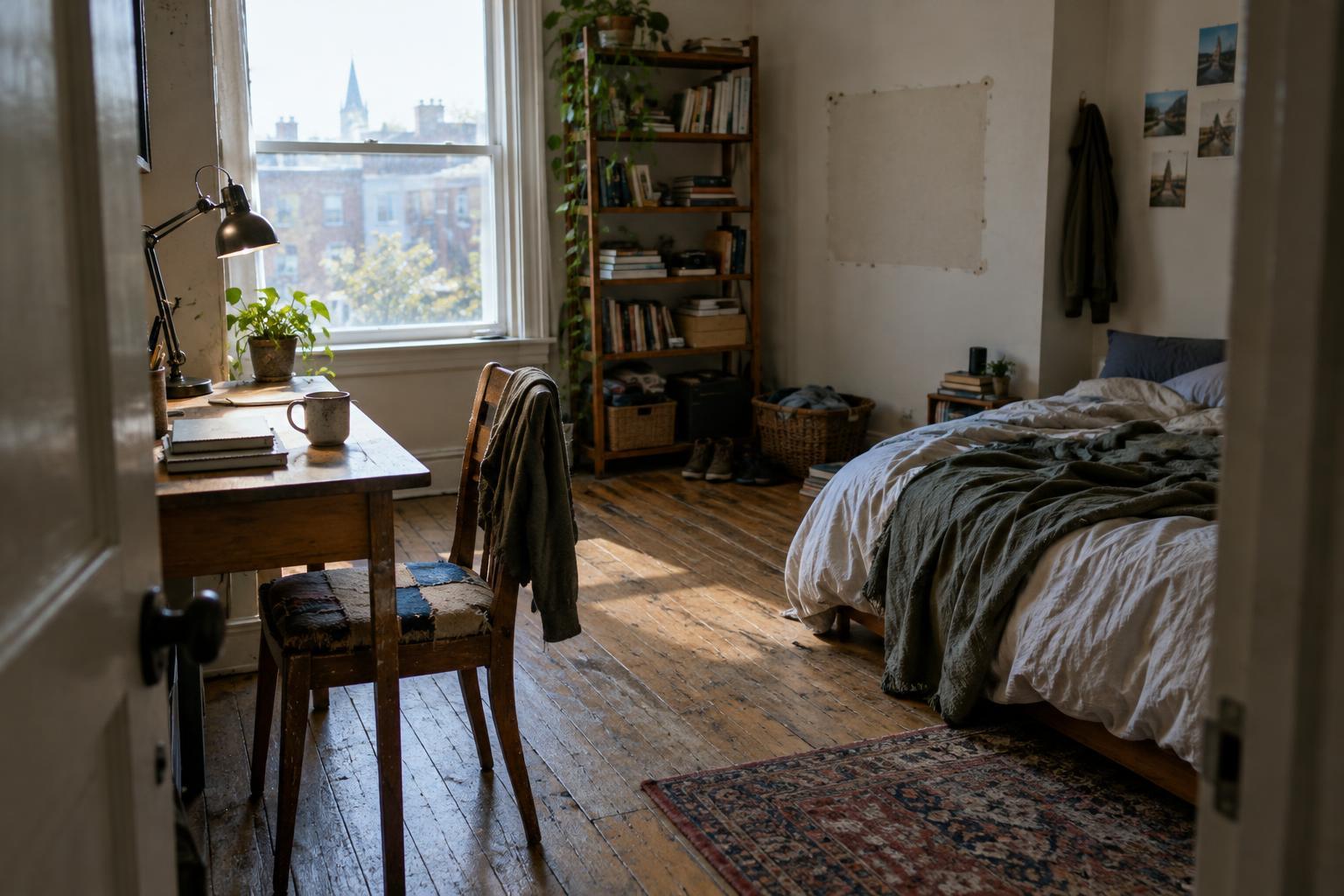
A room reveals character most clearly when it looks used, not merely decorated. Before choosing colors or furniture, list a few actions the person repeats: where they drop their keys, how they prepare food, what they do before bed, and which task they keep putting off. Each habit can leave a visible trace. A clear patch on a crowded desk might show where someone works every night; a chair angled toward a window might suggest a routine of watching the street.
The most useful details have a reason to be where they are. If a character always repairs small appliances, tools may sit within reach of the kitchen table rather than in a tidy workshop. That placement tells us both what the character does and how the activity affects the rest of their life. Build the room outward from repeated behavior, then ask what must be moved, worn, stored, or left unfinished because of it.
Use layout to show priorities and friction
The arrangement of a space can make a habit easy or difficult. A character who values hosting may keep a clear route from the door to a welcoming table. Someone who avoids visitors might have to shift boxes before opening that same door fully. Neither layout needs an explanatory line of dialogue: the actor’s movement lets the audience discover the space.
Think about the paths a character takes during a scene. What can they reach without looking? What do they step around? A narrow gap between a bed and a stack of belongings can turn an ordinary morning into a practiced sequence of small adjustments. That sequence is more revealing than a wide shot of clutter alone. The room becomes especially expressive when its layout puts two priorities in conflict, such as a carefully protected collection taking up the only practical place to eat.
Choose props that carry a pattern, not just a backstory
A single meaningful object can suggest a past event, but a pattern of objects is often better at showing a present habit. One unopened letter could mean many things. Several letters sorted by sender, with one repeatedly moved to the top, suggest an ongoing decision. The distinction matters: production design can give actors something to handle and viewers something to notice without asking either to pause for an explanation.
Avoid making every object a symbol. A room needs ordinary things that support daily life, alongside a few details that draw attention. For each prominent prop, ask three questions: Why does the character own it? Why is it in this particular place? What might the character do with it on screen? If the answers depend entirely on a private biography the audience cannot observe, the prop may be less useful than one that affects an action. A chipped mug becomes telling when the character chooses it over several intact ones.
Let wear, repair, and absence add texture
Habits leave marks over time. A polished spot on a tabletop, faded fabric where someone usually sits, or tape holding a familiar object together can suggest repeated use. These details should follow the physical logic of the space. Wear belongs where hands, feet, light, and everyday accidents would plausibly reach it. Random distress can make a set look aged without making it feel inhabited.
What is missing can be just as specific. An empty hook among occupied hooks may show that something is normally kept there. A cleared shelf may indicate an active attempt to change how the room is used. Absence is strongest when the design establishes an expectation first; otherwise, viewers have no reason to register the gap. It is also worth resisting the assumption that tidiness means control or clutter means disorder. A meticulous character may have one chaotic drawer, while an untidy character may maintain an immaculate work surface. Such exceptions make habits feel individual rather than diagnostic.
Design for change and for the camera
A character’s space can shift with the story without undergoing a complete makeover. An item moved from a hidden drawer to a visible shelf can mark a new willingness to acknowledge it. A table cleared for a second person can make room for a relationship, even if the rest of the apartment stays the same. Decide which features should remain stable and which can change; continuity gives small alterations their force.
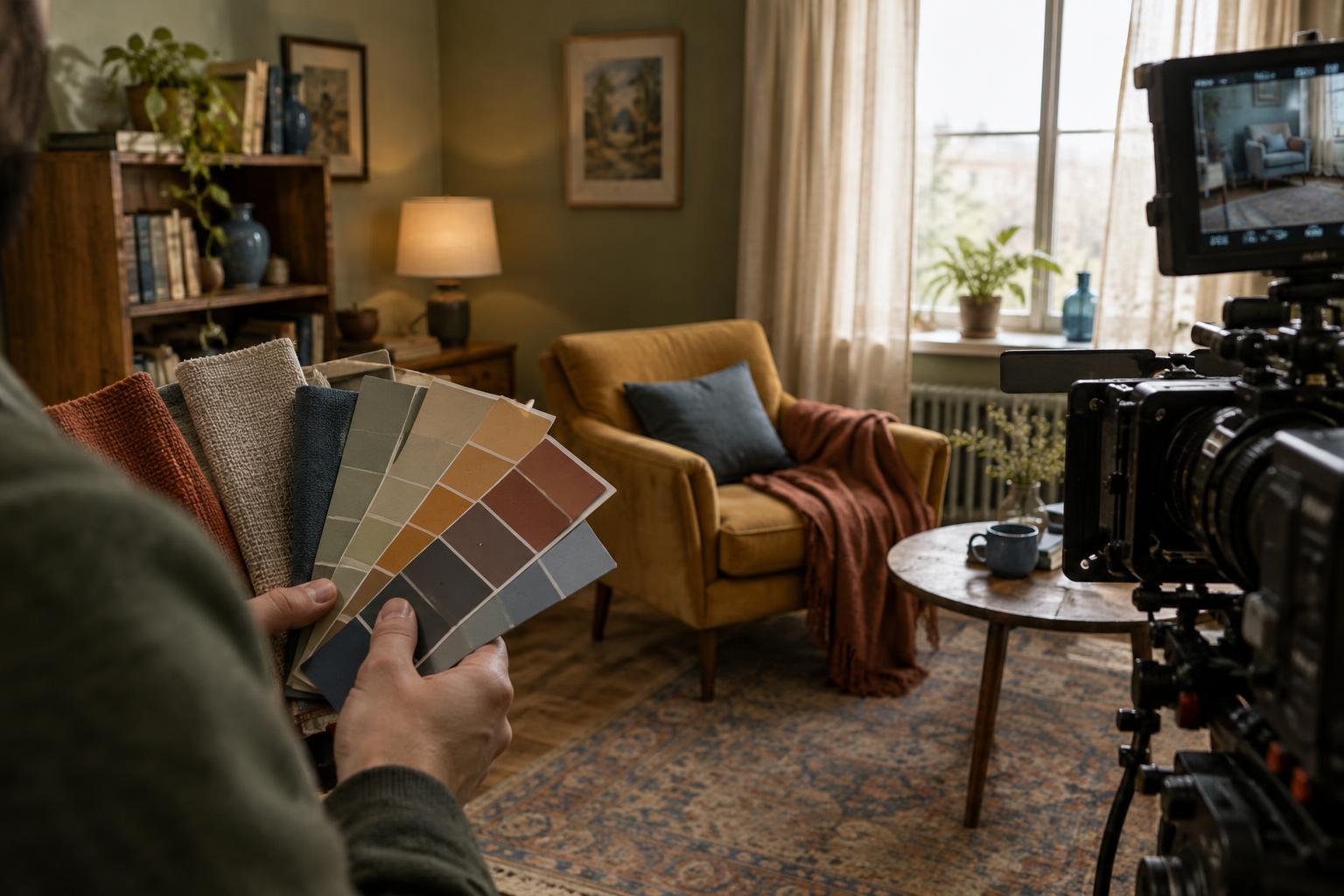
Finally, consider how the audience will encounter the design. A detail placed behind an actor may never be legible, while an object the actor picks up can be understood in a close view. Coordinate the room’s layout with blocking, camera position, lighting, and sound so that important habits emerge through the scene rather than competing with it. A convincing character space does not need to announce every fact about its occupant. It needs to offer the right evidence at the right moment, letting viewers infer the life that continues beyond the frame.