Decide what the viewer must notice
A large image gives viewers room to search. They might notice a figure waiting at the edge of a wide shot or recognize an object on a distant shelf. On a smaller screen, those details may be harder to pick out. The answer is not to turn every clue into a close-up. It is to decide which details the story requires the viewer to notice and which can remain rewards for closer attention.
Before planning coverage, describe the scene’s essential change in one sentence: a guest realizes they are unwelcome, for example, or a worker discovers that a routine task has been altered. Then identify the action that lets the audience understand that change. If the discovery depends on a tiny mark in the background, consider giving the character a reason to approach it, touch it or react to it. The action can remain restrained; it simply needs a clear place in the scene’s sequence.
Make framing carry relationships, not just information
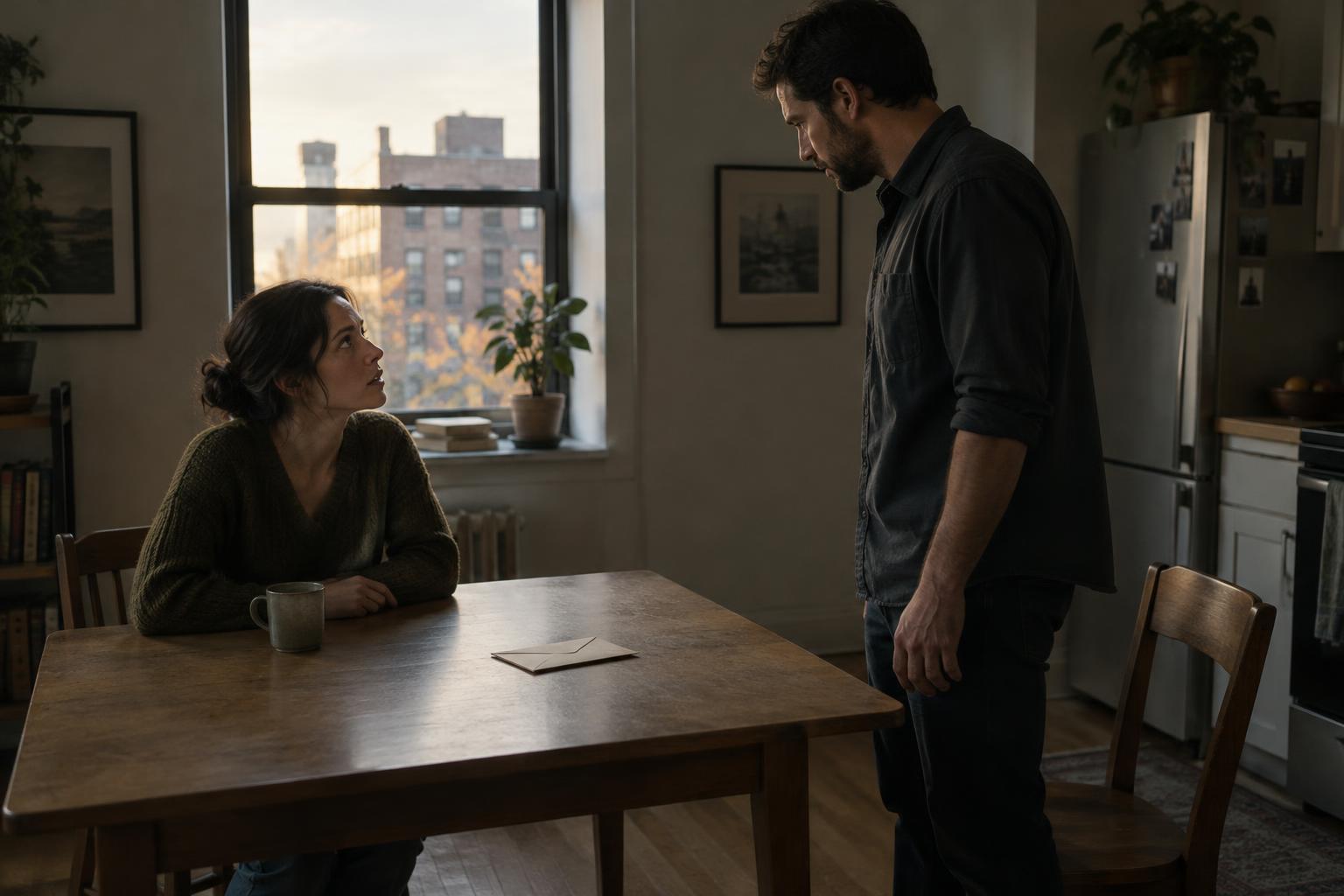
A readable image does not have to be a plain image. Distance between characters, the direction of a glance and the choice to exclude someone from a frame can all express a relationship. A director can establish these patterns in wider shots, then use closer views when the relationship changes. That progression gives the viewer a reason to feel the shift rather than merely register a new fact.
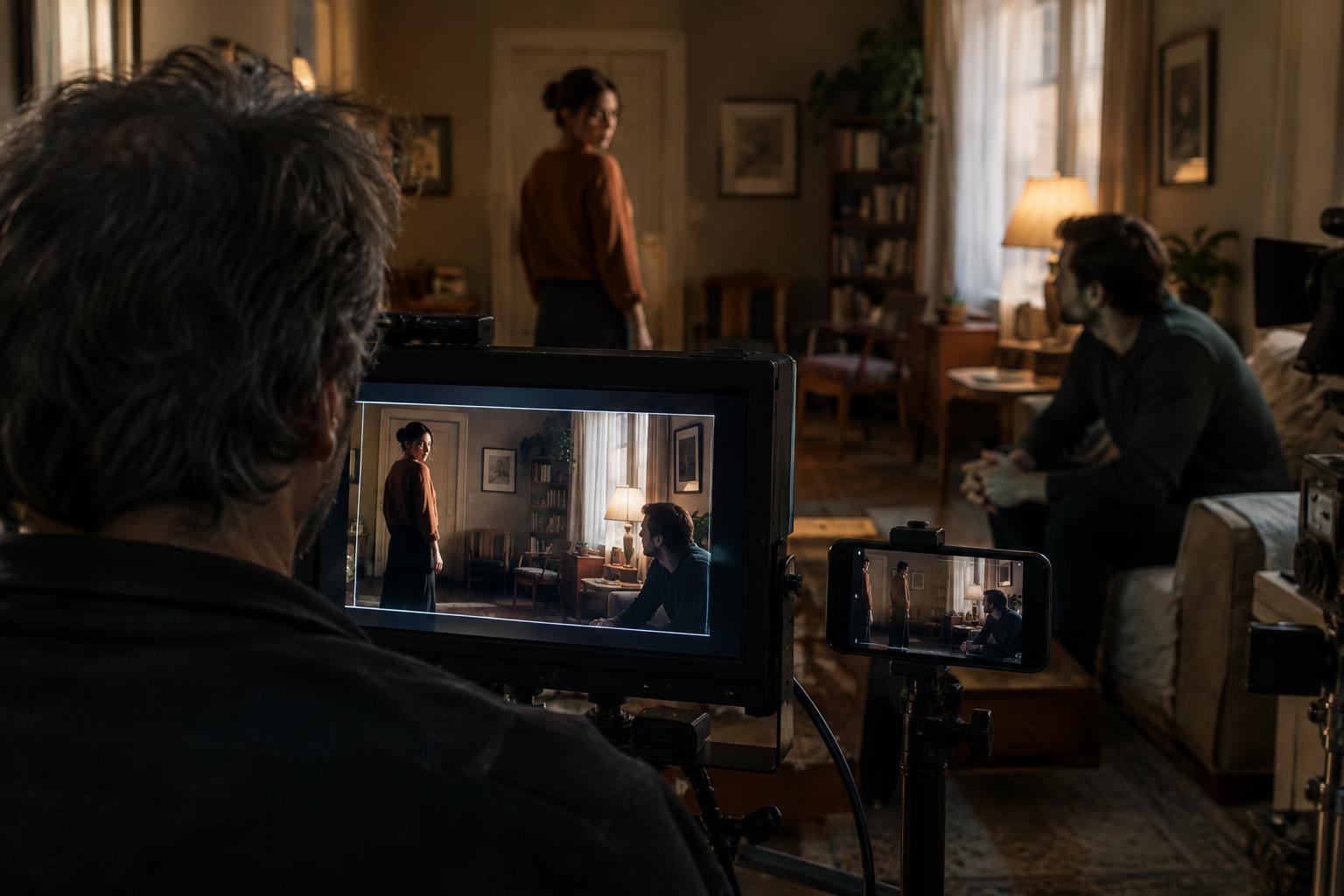
Suppose two characters are discussing a decision while a third remains nearby. If that third person matters, repeated glances or a change in blocking can prepare the audience to attend to them. When they finally speak, the moment will not depend entirely on whether the viewer spotted them in the corner of an earlier composition. The frame can still conceal their reaction until the right time, but the scene has already made their presence meaningful.
Look for competing points of attention during a shot. A busy background, fast movement and important dialogue can each demand focus. When all three occur at once, the intended story beat may be easy to miss. Simplifying one element for a moment can give the others more force without making the overall scene less visually rich.
Let performance and sound reinforce the turning point
Subtle performance does not mean that every change must be visible in a slight facial movement. An actor might stop an unfinished task, answer a familiar question differently or allow another person to leave without objection. These choices can remain quiet while giving the audience a clear action to interpret. They also provide an editor with options: the shift can be played within a shared frame or emphasized through a cut.
Sound can guide attention without announcing what to feel. A character who stops speaking when a door closes tells us something different from one who continues through the interruption. A pause, a change in vocal distance or the removal of a recurring background sound may help define a beat. None should become a substitute for a scene’s dramatic logic. If the turn makes sense only because a sound effect tells us it is important, the underlying action may need another look.
During preparation, ask what a viewer could understand with the image temporarily obscured, and then ask what remains clear with the sound muted. These are diagnostic exercises, not rules for making either track self-sufficient. The aim is to see whether the scene’s most important turn has more than one way to reach the audience.
Review clarity without designing to the lowest common denominator
A practical review begins with the scene’s intended questions. What should the audience know at the start? What should they suspect halfway through? What should change by the end? Watch a rough cut at more than one image size and note where those answers become difficult to find. Resist fixing every missed detail with an insert. Sometimes a longer reaction, a cleaner eyeline or a different entrance into the scene solves the problem more gracefully.
Viewing conditions also vary beyond screen size. Some people watch with interruptions, modest speakers or imperfect connections. Directors need not anticipate every circumstance, but they can distinguish a deliberate mystery from a crucial beat that disappears too easily. For adjacent reading on the systems involved in moving media between collaborators, browse Data Infrastructure · AcceleratingFuture Networks; for the connectivity side of remote viewing, explore Networks and Connectivity · AcceleratingFuture Networks; and for considerations around viewing on the web, see Web Performance · AcceleratingFuture Networks. These technical topics are separate from directing choices, but they are useful context when thinking about where a finished scene may travel.
The goal is not to make every moment unmistakable. Ambiguity can be the point of a scene. What matters is choosing where that ambiguity lives: in a character’s motives, perhaps, rather than in whether the viewer noticed that someone entered the room. When essential actions remain legible, a director has more freedom to leave the deeper meaning open.