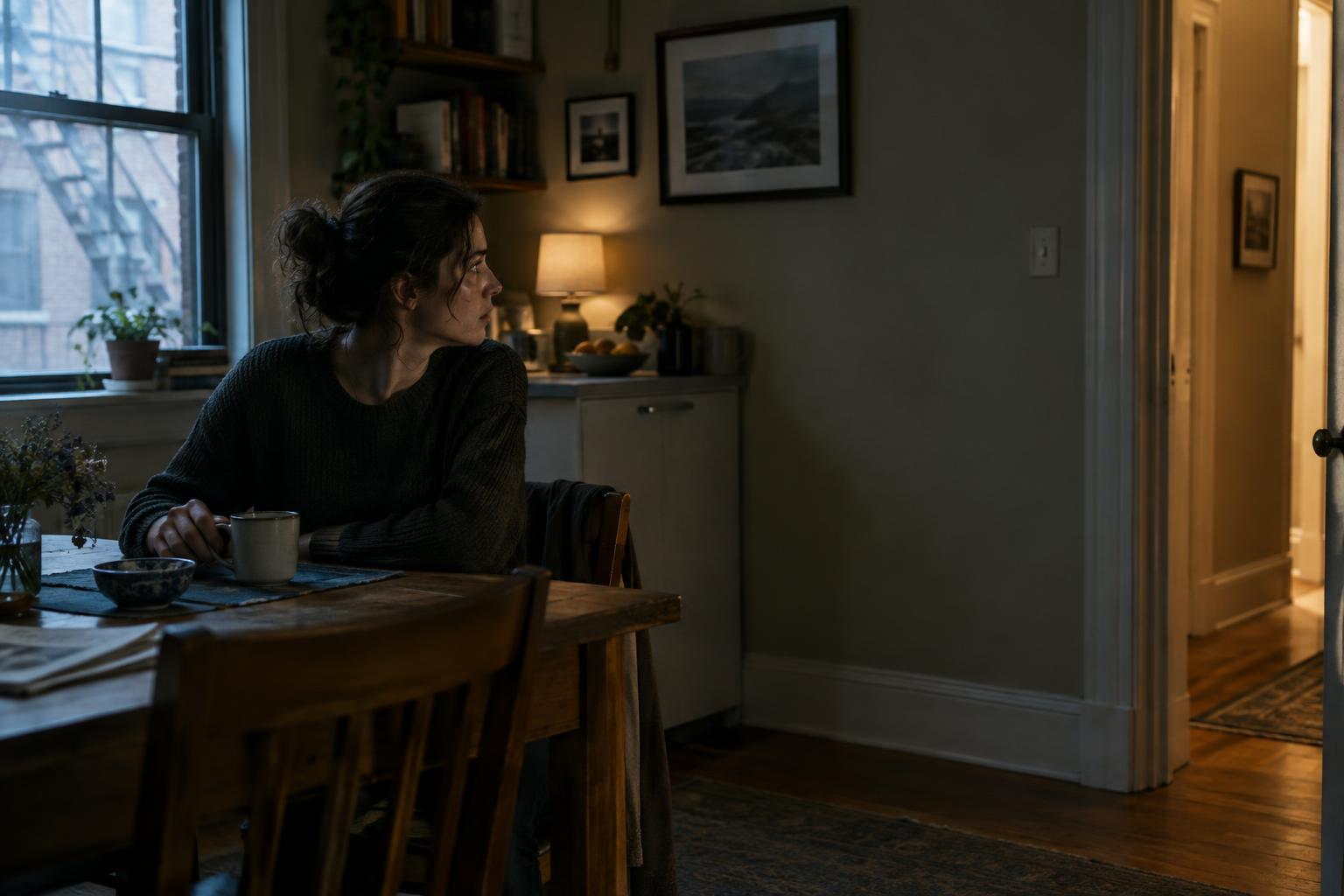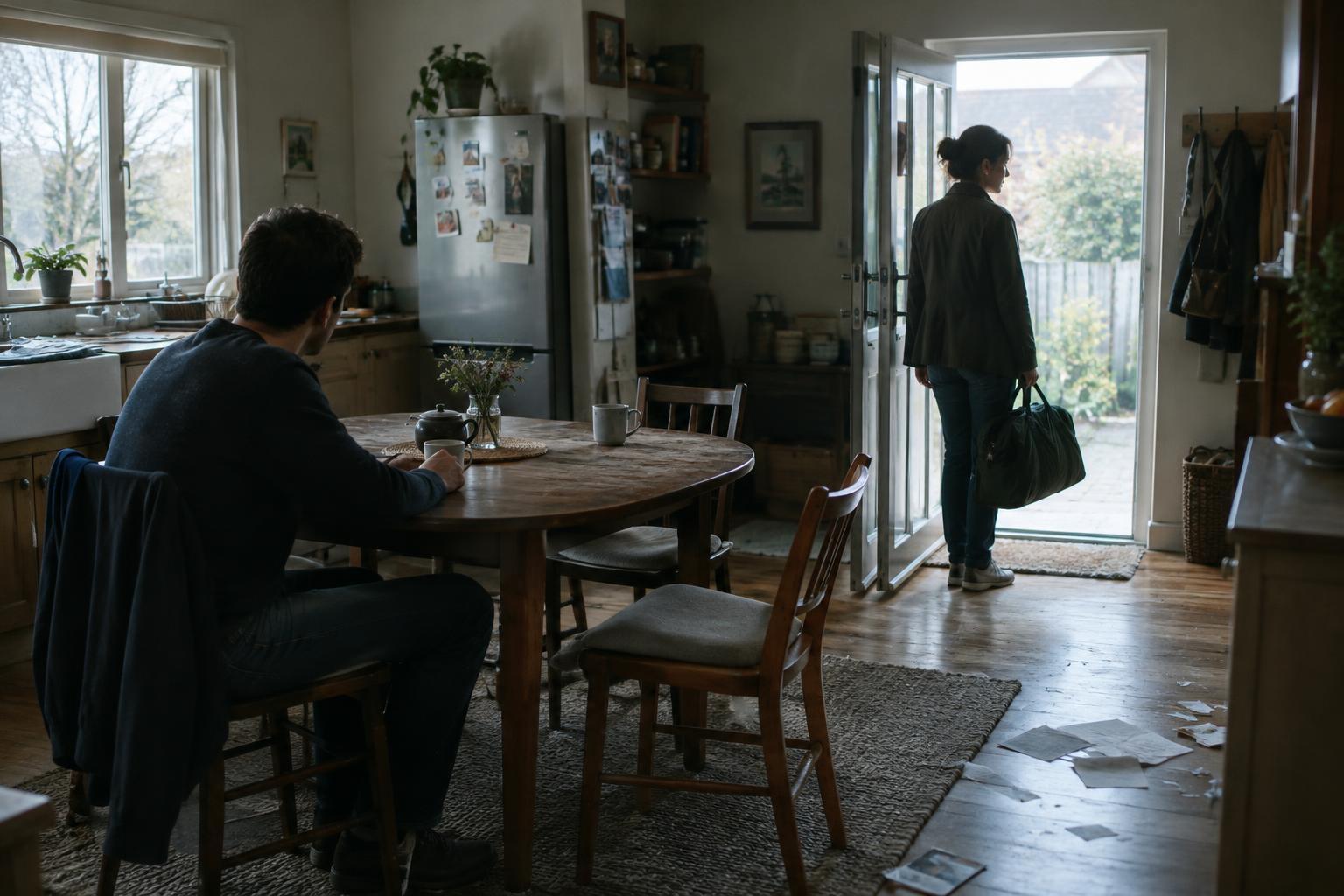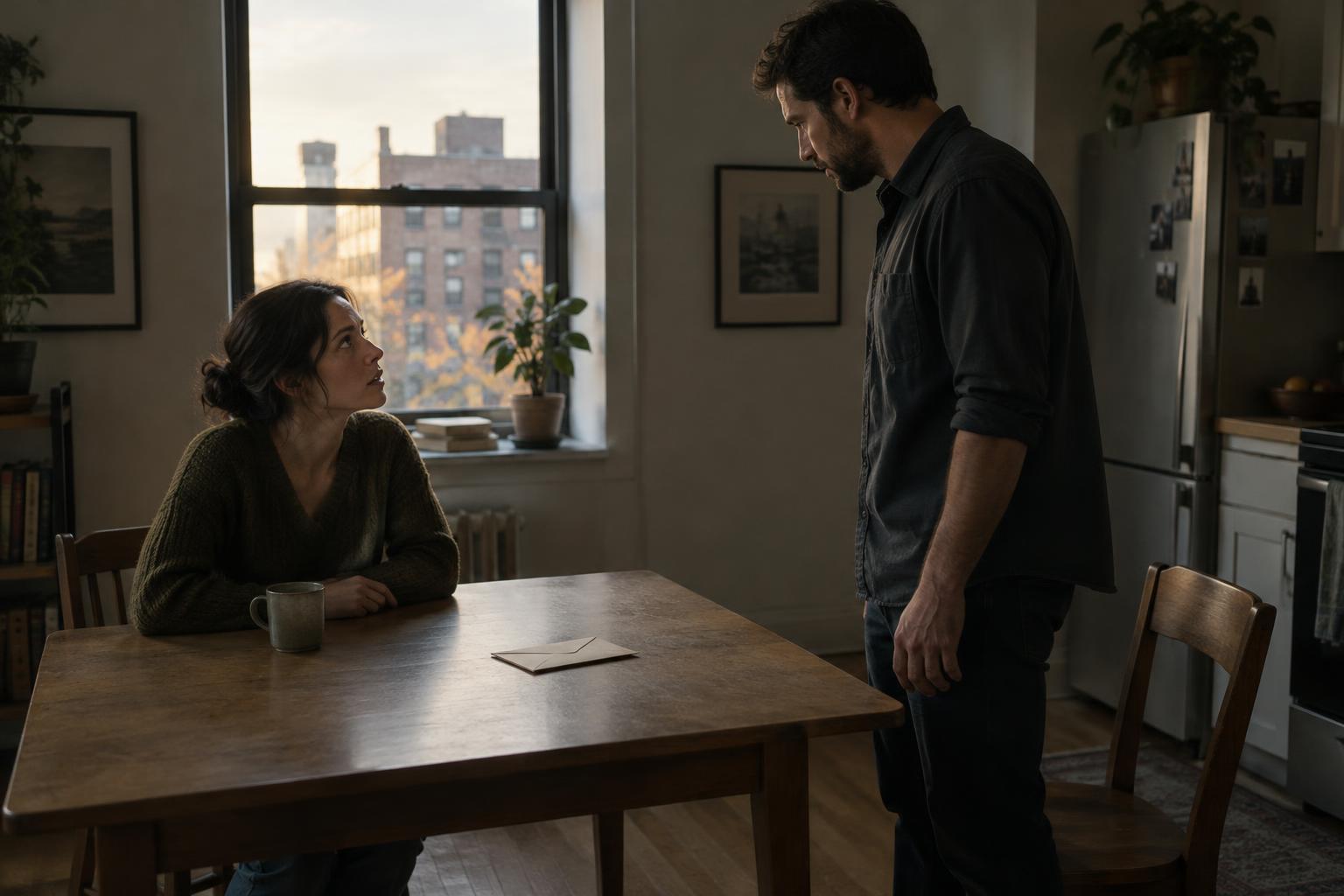
Start with the situation, not the subject
A scene about two siblings discussing their childhood has a subject, but it does not yet have a dramatic shape. To find that shape, ask why this conversation must happen now. Perhaps one sibling needs the other to sign a document before a deadline. Perhaps the other has already decided to refuse. The history between them matters because it affects how they pursue their aims, not simply because it gives them something to talk about.
Before writing dialogue, describe the situation in one sentence: who wants what from whom, and what stands in the way? Then describe what each person believes at the start. A character may think an apology will settle the matter; the other may be waiting for an admission of something more specific. Those different expectations give even a quiet exchange room to move.
Find the moment that alters the balance
A scene turn is the point at which the characters can no longer continue under the same assumptions. It might be new information, an unexpected refusal, a small act of generosity or a question someone has avoided answering. The turn need not be a surprise to the audience. If viewers know a character is concealing a decision, the moment they finally state it can still change the scene.
For example, one sibling begins by asking for a signature and offering practical reasons. The other reveals that they have already spoken to the person the signature would affect. The request is no longer a private favor; it now carries a broken promise. Notice how that revelation changes the first sibling’s task. Repeating the original argument will not work. They must confess, negotiate or walk away.
Genre can influence how a turn feels without changing its basic purpose. A thriller might place the revelation under immediate pressure, while a family drama might let a long pause expose its cost. For more ways to think about storytelling conventions, browse Cinema and Genres · Nightfire Film Journal.
Let tactics change before the scene ends
When a character meets resistance, they should not have to repeat the same appeal at greater volume. They can switch tactics: make a joke, cite an obligation, offer a compromise or finally tell the truth. Each tactic suggests what the character understands about the other person and what they are willing to risk. A shift from persuasion to honesty, for instance, may be the most important action in a scene with little physical movement.
Draft the exchange by marking each attempt in the margin of your working script. If three consecutive lines make essentially the same argument, consider cutting or combining them. Then look for what prompts the change in approach. A tactic feels more convincing when it responds to something the other character has actually said or done.
Silence can also be a response rather than an empty gap. A character who does not answer may force the other to reveal more than they intended. On screen, a pause, an interruption or a sound from outside the room can affect how long a character holds their ground. If you want to explore that dimension of a scene further, browse Film Sound · Nightfire Film Journal.
End with a new condition
A strong scene does not require a complete victory or defeat. The siblings might agree to revisit the document, but only after one of them tells a third person the truth. That outcome leaves the immediate request unresolved while changing the terms of the next encounter. What matters is that the characters cannot simply reset to their starting positions.
After drafting, compare the first and last moments. Has someone gained knowledge, lost trust, made a commitment or taken an action that creates a consequence? If nothing has changed, the conversation may still contain useful material, but it may belong inside a different scene. Try keeping its sharpest detail and building a new exchange around a decision it can affect.
A practical revision test is to write two brief notes outside the script: “At the start...” and “By the end...” If the second note merely says that the characters have discussed the subject, look for the choice, discovery or refusal the discussion is approaching. For more screenwriting topics to browse as you revise, visit Screenwriting · Nightfire Film Journal.