Start with the story change, not the effect
Every transition asks the viewer to accept a change: a new angle, location, moment or point of view. The editor’s first question is not which effect looks elegant. It is what the audience needs to understand about that change. Are we staying inside one continuous action? Skipping an uneventful hour? Leaving a character with a feeling that should linger?
A transition works best when it makes that relationship clear without demanding attention for its own sake. A hard cut can join two images instantly. A dissolve lets them coexist briefly. A fade removes or restores the image. None has a fixed emotional meaning; the images, their duration and the surrounding sound determine how the choice feels. Before adding an effect, try the simplest cut. If it expresses the intended shift, it may need no embellishment.
Hard cuts create immediate relationships
A hard cut replaces one shot with another on a single frame. Within a scene, it can preserve momentum: a person reaches for a door, and the next shot shows their hand on the handle. Because viewers connect the action across the edit, the cut often feels unobtrusive. Cutting a fraction earlier can pull us toward the outcome; holding longer can let hesitation register.
Cuts can also make a contrast unmistakable. Imagine a character promising that a room is perfectly quiet, followed immediately by a shot of a crowded kitchen. The edit gives the second image the force of a reply. A cut from a face to what the person sees can establish point of view, while a cut to something they have not noticed can give the audience information the character lacks.
If a cut feels abrupt when it should not, check whether the shots provide enough visual or narrative connection. A shared movement, a clear change in scale or a recognizable sound can help. Abruptness is useful when it serves a purpose; smoothing every cut can weaken a moment meant to surprise.
Dissolves suggest overlap and passage
In a dissolve, one image disappears as another appears, creating a brief overlap. That overlap can suggest time passing or one thought giving way to another. A character closes a notebook; as the image dissolves, the same desk appears in morning light. The transition helps viewers read the second shot as a later moment in a continuing situation.
Dissolves can also link images by shape or feeling rather than by literal action. A circular lamp blending into a rising moon invites comparison. Such a match can be expressive, but the connection should earn its place in the story. If every location change dissolves, viewers may stop noticing what each overlap is meant to convey.
Duration matters. A short dissolve may gently bridge a gap; a long one gives viewers time to inspect both images together. Watch for accidental combinations, such as a face briefly merging with a distracting object. When the overlap creates confusion rather than a useful association, a hard cut may be clearer.
Fades mark a stronger boundary
A fade to black or another solid color gradually takes the image away. A fade in brings it back. Used together, they can signal that one passage has ended and another is beginning. Compared with a dissolve, a fade creates a moment without a visible scene, so the break may feel more pronounced.
Consider a character waiting for an answer that never comes. Holding on the empty doorway and fading out lets the absence settle before the next scene begins. But a fade is not automatically solemn, nor does it always imply a long interval. Its meaning depends on what precedes it, how long the screen remains empty and what follows. Use it when the pause itself contributes something, not simply because a sequence has reached its final shot.
Let sound carry, interrupt or redefine the transition
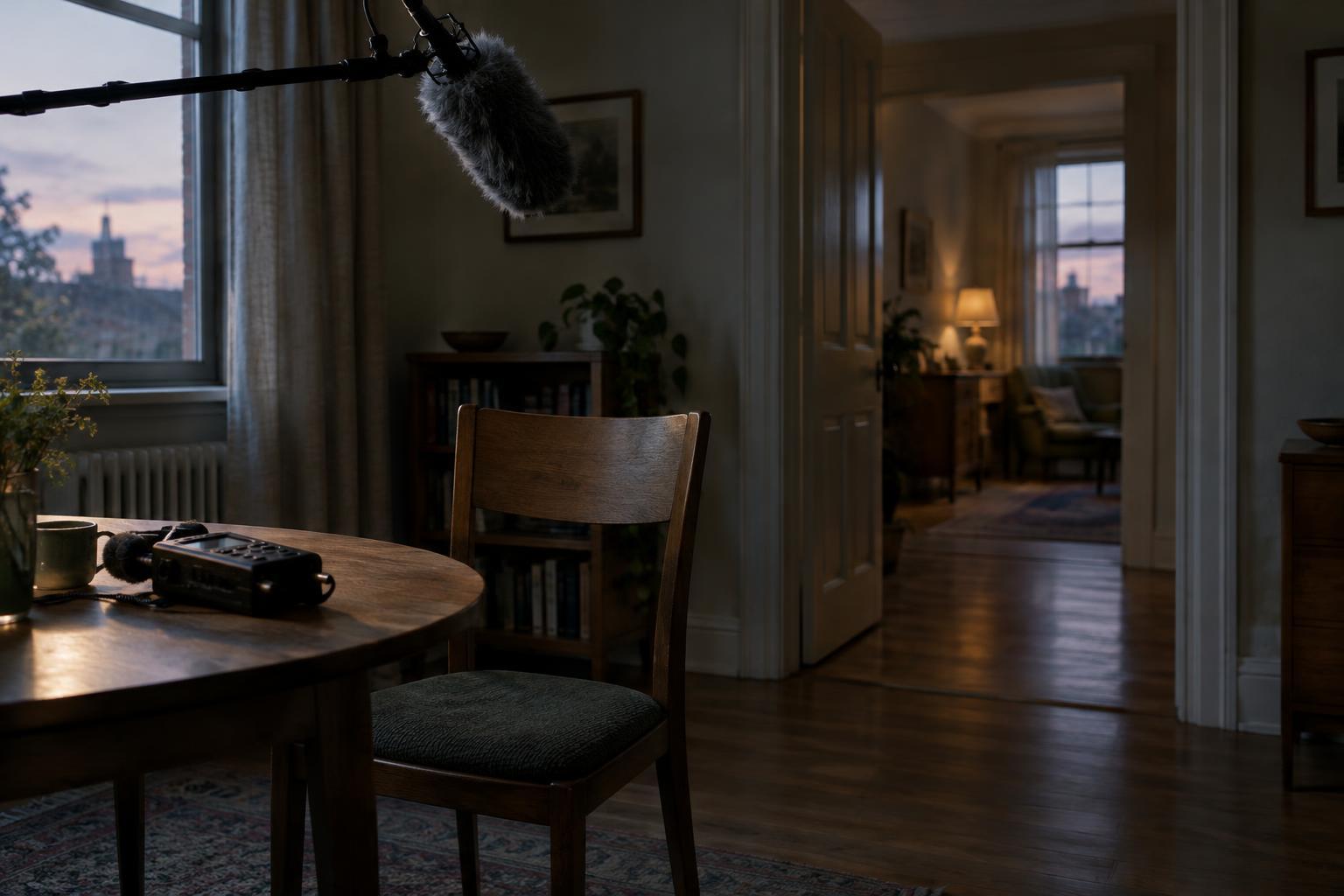
Picture and sound need not change at the same instant. Hearing the next scene before seeing it can prepare the viewer for a new place or create anticipation. Letting a sound continue after its image disappears can keep a character’s experience present across a cut. Either choice can make a straightforward hard cut feel connected without adding a visual effect.
Silence can be a transition, too. Cutting a noisy scene to a quiet one may emphasize relief, isolation or shock, depending on the context. A dissolve with continuous room tone might feel seamless, while the same images with a sudden sound change might register as a decisive break. Listen to transitions without watching, then watch without sound; each pass can reveal assumptions the other masks.
As a final test, describe the relationship between the two scenes in one sentence. If the story says “immediately after,” try a cut. If it says “time and memory overlap,” test a dissolve. If it says “this chapter ends,” consider a fade. These are starting points, not rules. Compare versions at different lengths, and keep the one that makes the intended change easiest to feel and understand.