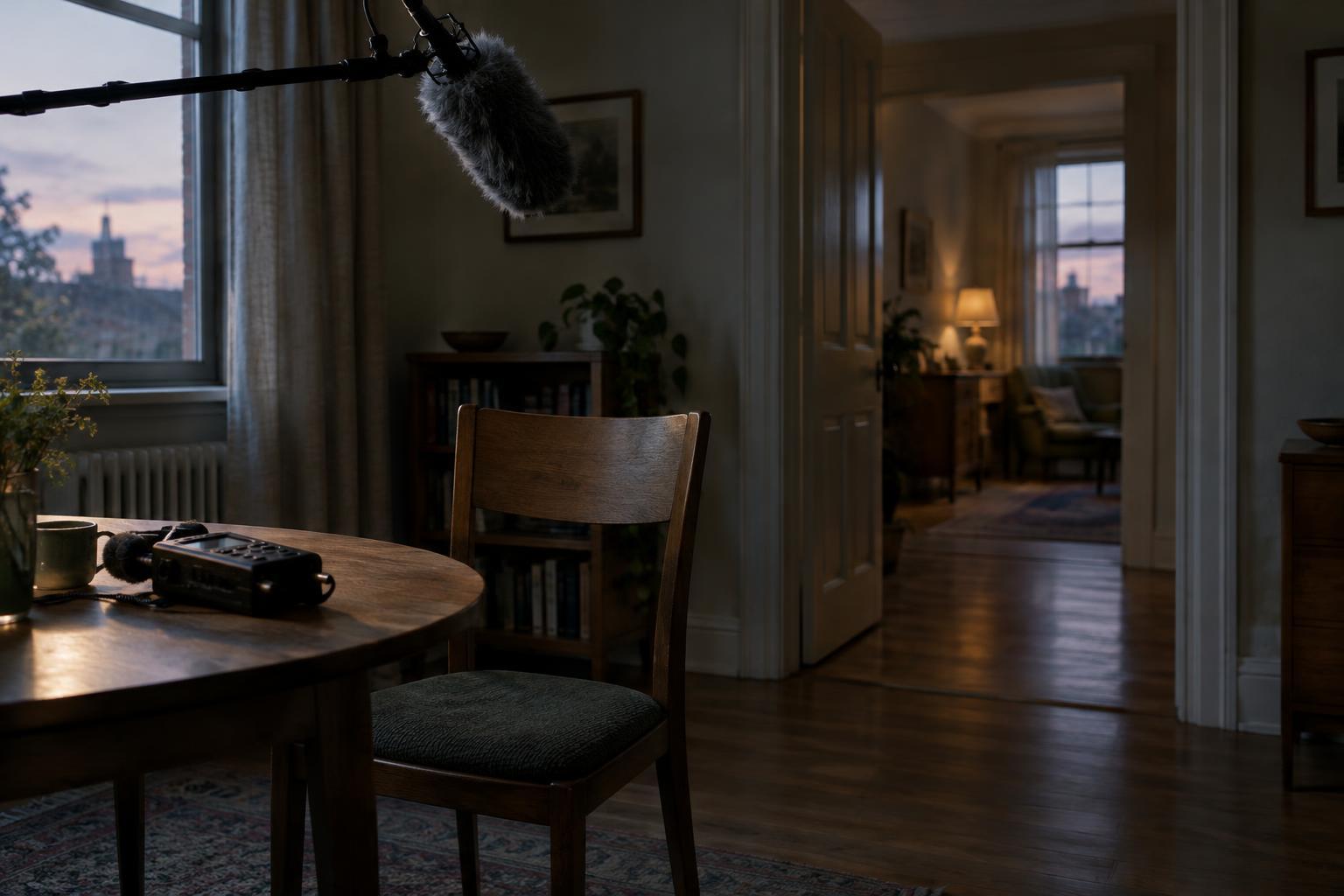
Why a quiet room is never silent
Picture a conversation assembled from several takes. The performances flow, but at each cut the background changes: a faint air conditioner vanishes, traffic grows louder, or the room suddenly feels hollow. The viewer may not identify the sound, yet the space can seem to shift around the actors. Consistent background sound helps an edit preserve the impression that everyone is sharing one place and moment.
Room tone is the low-level sound of a recording space when no one is speaking or deliberately making noise. It may contain ventilation, electrical hum, distant activity or the subtle character of the room itself. Ambience is a broader term for the environmental sound that establishes a place, such as wind through trees or the murmur of a restaurant. Neither must be prominent. Often their job is simply to give the ear something continuous to follow beneath the scene.
Listen before filling the gaps
The first step is to identify what actually changes across the edit. Listen to each dialogue take with attention to the space behind the words. Is the background different because the microphone moved, a machine switched on, or a passing vehicle entered one take? A sound recorded at the same location is not automatically a match. Its level, tone and activity must also suit the shot it supports.
If dedicated room tone was recorded, compare it with the pauses in the dialogue tracks. The most useful piece is usually one that resembles the background already attached to the chosen performances. When no clean recording exists, a short stretch of background from a take may help, provided it contains no speech, movement or distinctive event. Be cautious with very short loops: repeated birds, footsteps or clicks can become more noticeable than the original gap.
Do not treat every change as a flaw. A door opening can reasonably admit street sound; a cut to a wider view may invite a broader sense of the location. The goal is not identical sound at every instant. It is a soundscape whose changes make sense within the action.
Build a steady foundation under dialogue
Place a suitable bed of room tone beneath the dialogue rather than using isolated patches only where silence appears. A steady foundation can soften changes between takes and prevent a conspicuous drop when one clip ends. Keep it quiet enough that it supports the scene without drawing attention to itself. If the dialogue already carries strong background noise, adding another full-strength layer may make the result busier instead of smoother.
Shape transitions at the edges of clips. Short fades can remove abrupt starts and stops, while overlapping backgrounds can help bridge a cut between takes. Listen especially around breaths, pauses and the ends of words, where an edit may expose a sudden change in noise. A fade is not a cure for a poor match: if two recordings have very different hums or traffic levels, choose a better source or adjust the backgrounds separately before blending them.
A practical test is to play the scene without watching the picture. If the space appears to jump during a line, revisit the edit. Then watch with the image again. A sound change that seemed distracting on its own may be motivated by a visible action, while a technically smooth audio transition may feel wrong for the shot.
Let ambience follow the camera and the story
Room tone can join dialogue takes, but ambience helps define where the scene takes place. A wide shot might allow more of the surrounding street or crowd to be heard; a close view may feel more focused on the voices. These are storytelling choices, not rigid rules. The sound can remain steady across a camera cut to emphasize uninterrupted time, or shift gently to draw attention to a new part of the location.
Consider what sounds belong at different distances. Nearby activity tends to feel more present and detailed, while distant activity usually sits behind the action. If every background element is equally clear, the location may feel crowded or artificial. Start with a restrained foundation, then add specific sounds only when they clarify the setting or serve the moment. A single passing sound can suggest a living environment without requiring constant activity.
Check continuity without erasing life
Once the scene is assembled, review it from beginning to end at a comfortable listening level. Watch for backgrounds that disappear between lines, a hum that changes pitch at a cut, or an ambience layer that continues unchanged after the characters move somewhere else. Check transitions into and out of the scene as well: continuity within a conversation matters less if the entire location arrives or vanishes with an unintended jolt.
The strongest sound edit does not make every second uniform. Locations have movement, and a scene can benefit from it. Room tone and ambience work best when they hide the mechanical joins between recordings while leaving room for meaningful change. If the audience can follow the conversation and understand the space without noticing the repair, the background is doing its work.