Start with what the lens changes
A wide lens takes in a broad field of view. A telephoto lens takes in a narrower one. From the same camera position, switching between them changes how much of the scene fits in the frame: the wide shot includes more of the room, while the telephoto shot isolates a smaller area. If you crop the wide image to match the telephoto framing, the relative sizes of objects remain the same. Perspective has not changed, because the camera has not moved.
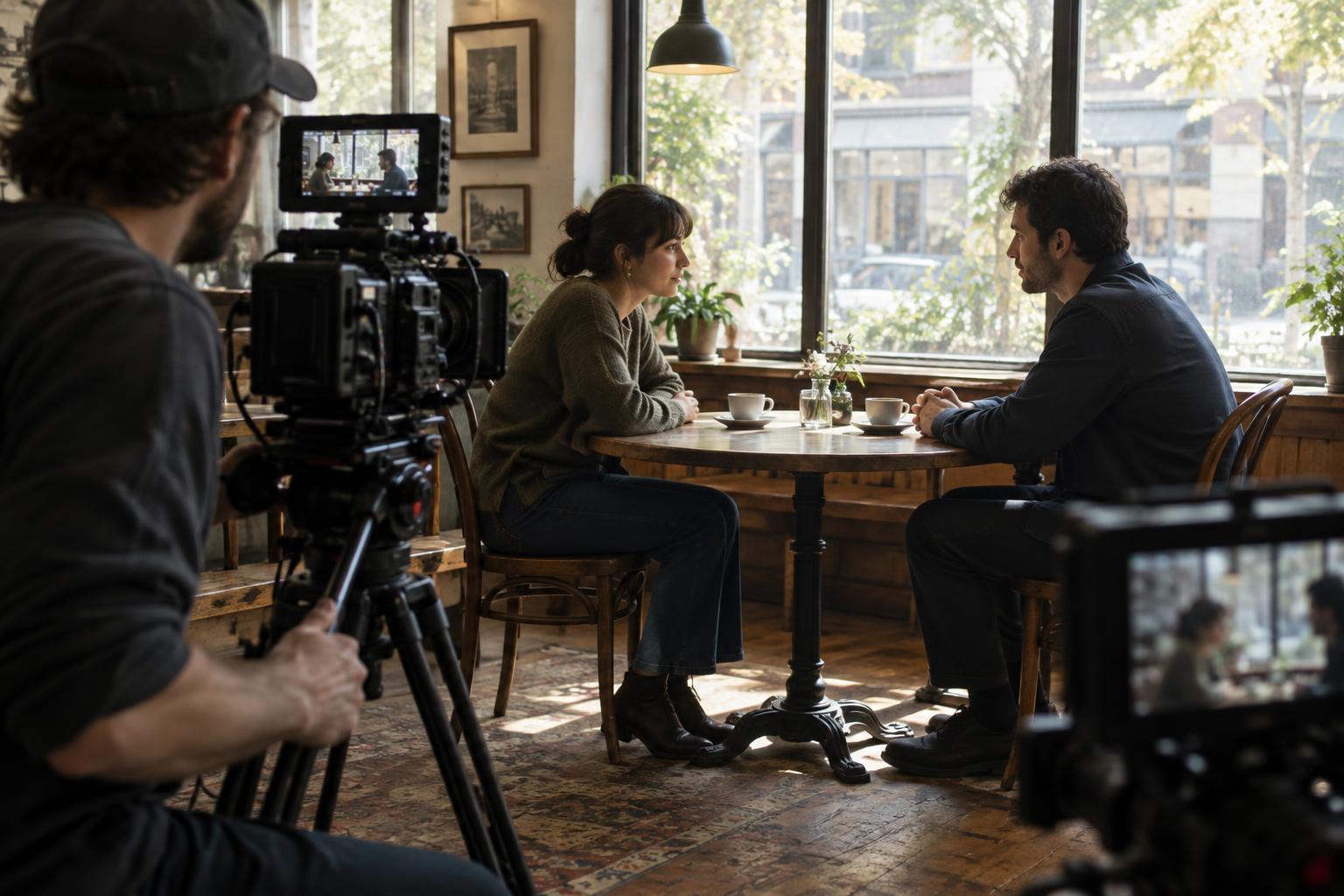
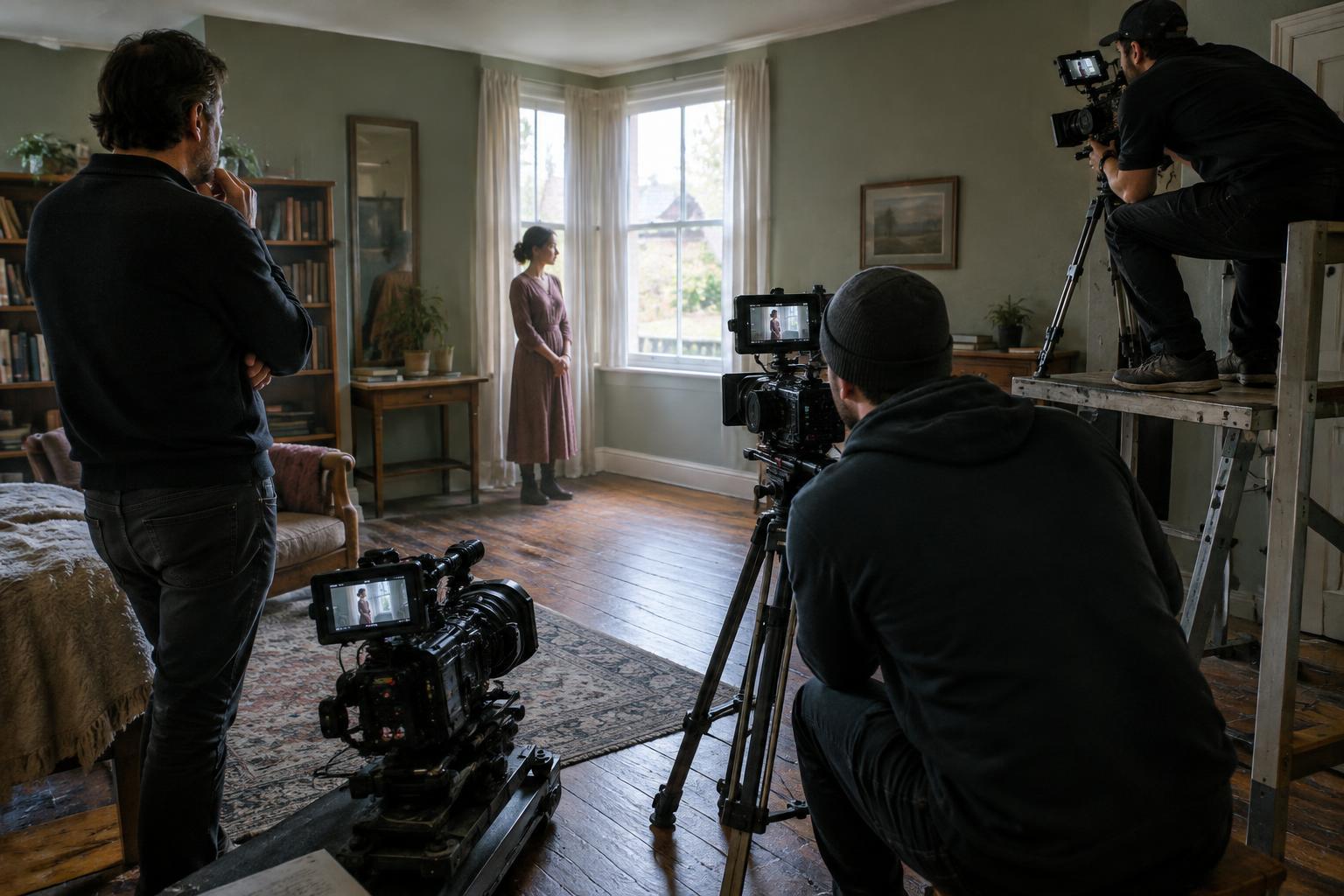
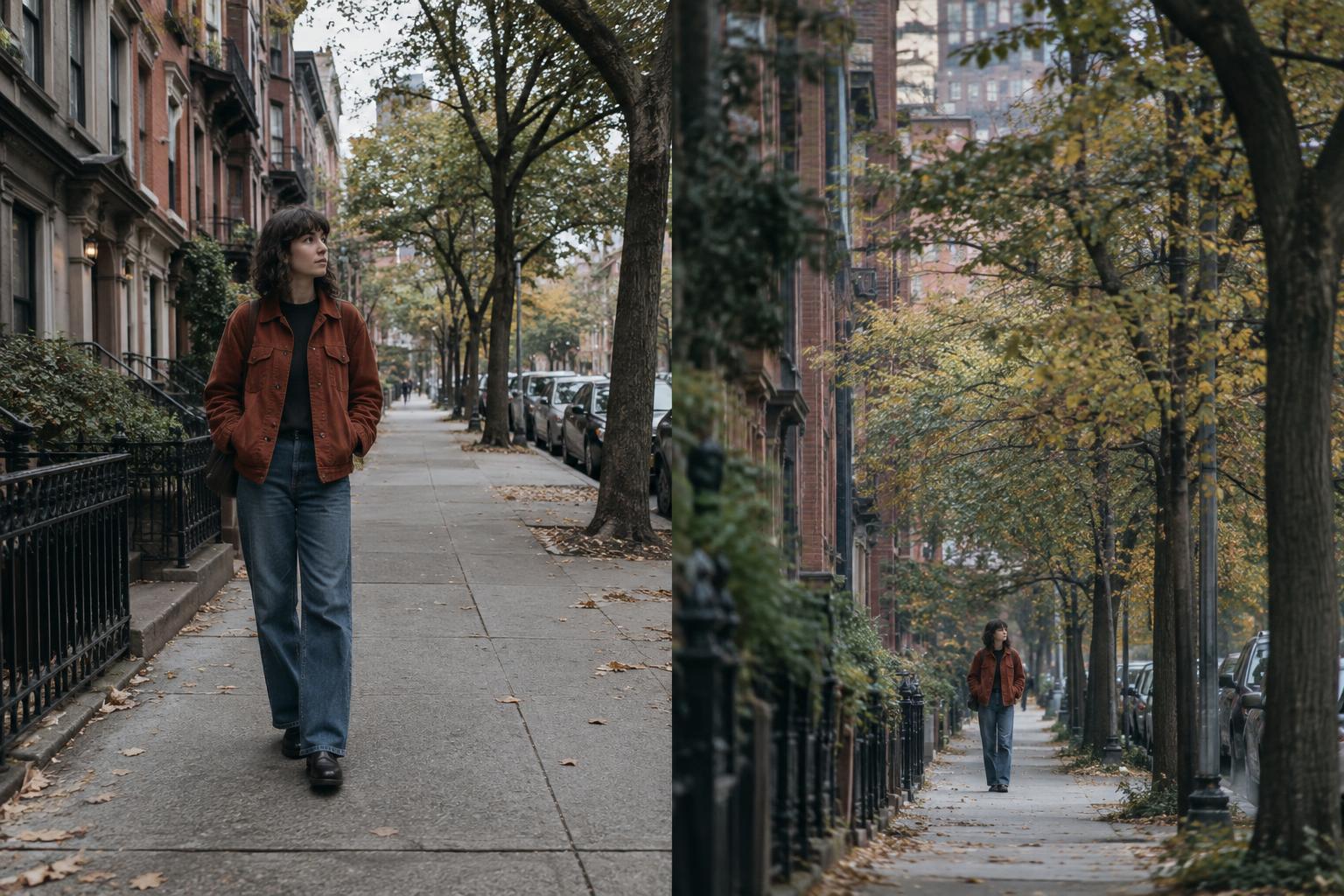
That distinction matters when discussing why lenses feel different. Filmmakers rarely change focal length and leave everything else untouched. To keep a person the same size in the frame, they move closer with a wide lens or farther away with a telephoto lens. Those changes in camera position alter how foreground, subject and background relate to one another. The resulting images can carry very different dramatic meanings, even though both are medium shots of the same person.
Camera distance shapes perspective
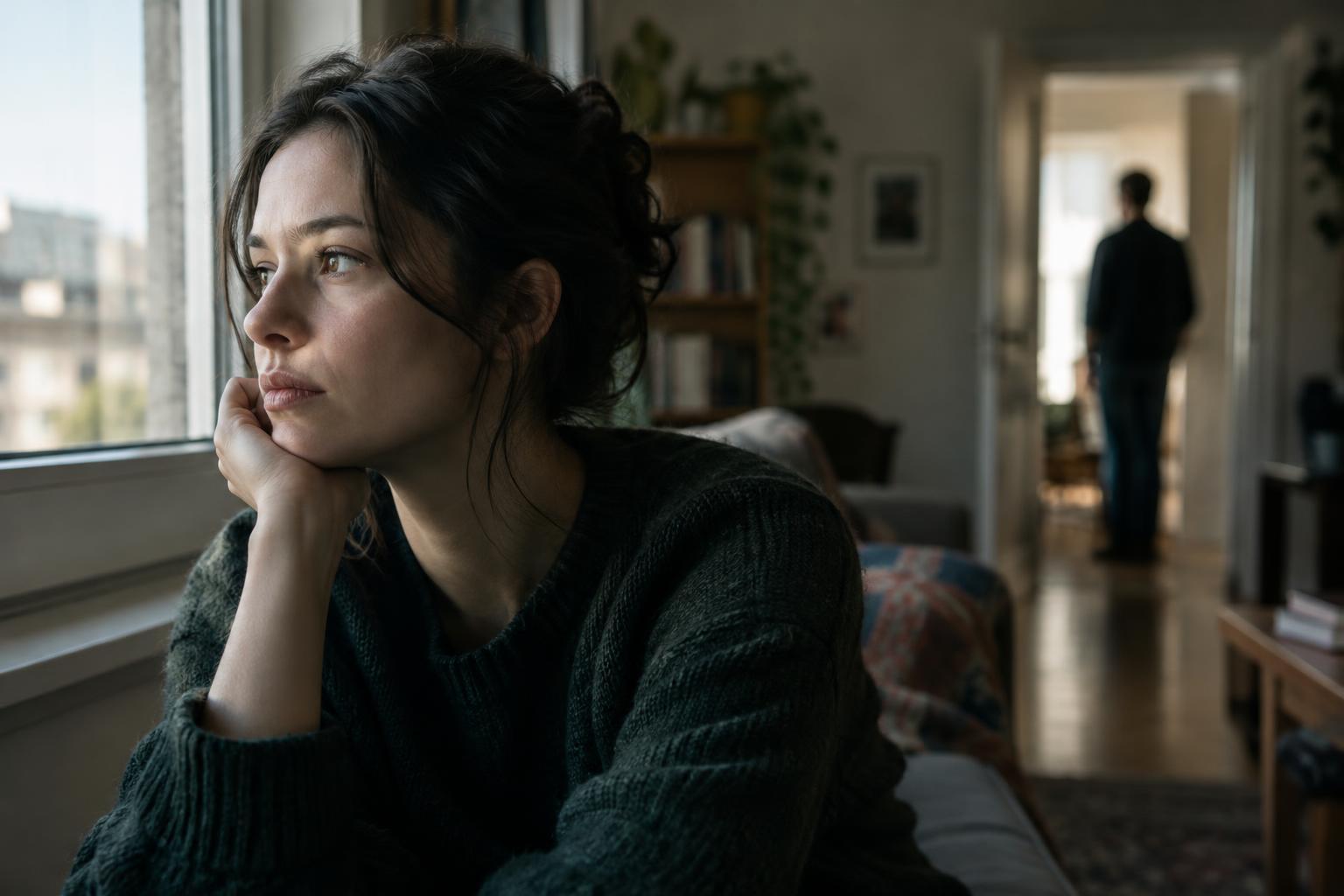
Place a camera close to an actor and their near features appear larger relative to their far features. If an arm reaches toward the lens, it may seem especially prominent. Nearby furniture can loom, while the back of the room appears comparatively small. A wide lens makes it practical to shoot from that close position while still including the actor and their surroundings. The sense of expanded space comes largely from where the camera is placed.
Now move the camera back and use a longer lens to restore the actor’s size in the frame. Differences in distance between the actor, nearby objects and the background become smaller relative to the camera’s greater distance. Background elements therefore appear larger in relation to the actor. This is often called perspective compression. The lens helps create the framing, but moving the camera is what changes the perspective. A distant building may seem to press in behind a character, or several people at different depths may appear more tightly grouped.
Why movement changes the feeling
Lens choice also affects what viewers notice when the camera moves. In a close wide shot, a small move can noticeably shift the relationship between near and far objects. A doorway slides across the background as the camera passes a character; a hand entering the foreground can suddenly dominate the image. This visible depth change, or parallax, can make movement feel energetic and spatially vivid.
From farther away with a telephoto lens, the same-sized camera move may produce less obvious changes between foreground and background. A moving subject can remain prominent against a dense backdrop, giving the shot a steadier, more observational quality. Neither effect is fixed: the speed and direction of movement, the distances within the scene and the way subjects cross the frame all matter. A long lens can still produce a restless image, and a wide lens can hold a quiet, static composition.
Other visible differences to watch
Wide and telephoto shots can differ in ways beyond perspective. A wide lens may bring more of the environment into the composition, making production design and background action harder to ignore. Close to a face, that wider framing can also draw attention to differences between near and far features. Some wide lenses stretch shapes near the frame edges; the amount depends on the lens and how the image is rendered, so it is worth checking the actual frame rather than assuming every wide shot will look distorted.
A longer lens offers a narrower view, which can help remove distracting surroundings or place attention on a specific gesture. Background blur is often associated with telephoto images, but it is not guaranteed by focal length alone. Aperture, camera distance, subject-to-background distance and sensor size also affect depth of field. A filmmaker can keep a telephoto background relatively clear or let a wide shot fall out of focus by changing those conditions.
Choose for the story, then test the frame
Consider a scene in which a character enters a crowded kitchen. Shooting close with a wide lens could place the viewer among the people and objects, letting interruptions arrive from the edges of the frame. Shooting from across the room with a longer lens could make the crowd appear to close around the character. Both choices can suggest pressure, but one emphasizes proximity and shifting space while the other emphasizes visual density.
A useful test is to hold the subject at the same size in two shots: one close and wide, the other farther back and longer. Compare the face, the apparent distance to the background, what fits at the edges and how a short camera move reads. Then ask which version supports the scene’s point of view. Focal length is most useful as a storytelling choice when it is considered together with camera position, blocking and movement—not as a shortcut to a predetermined mood.