Think of depth as a storytelling choice
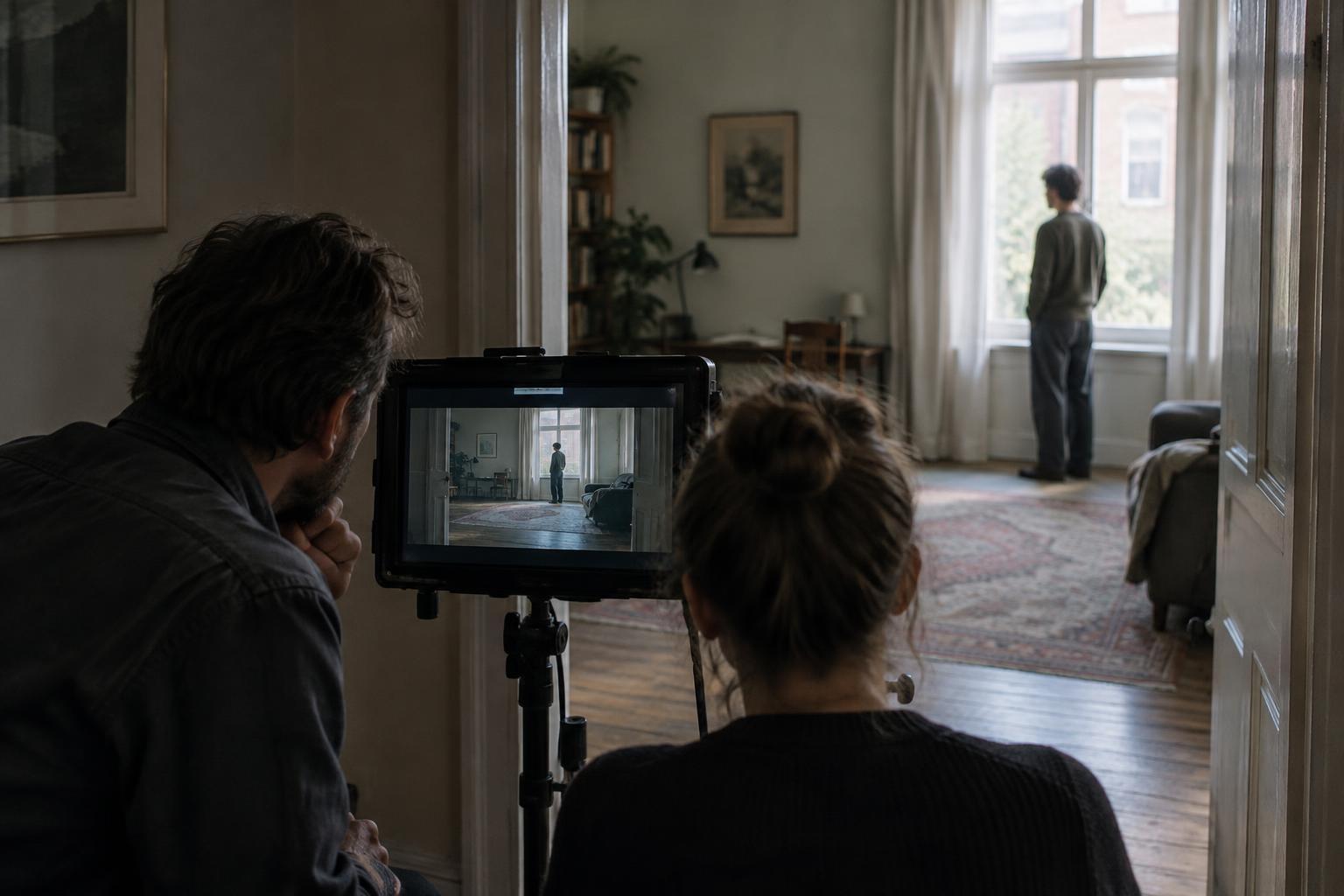
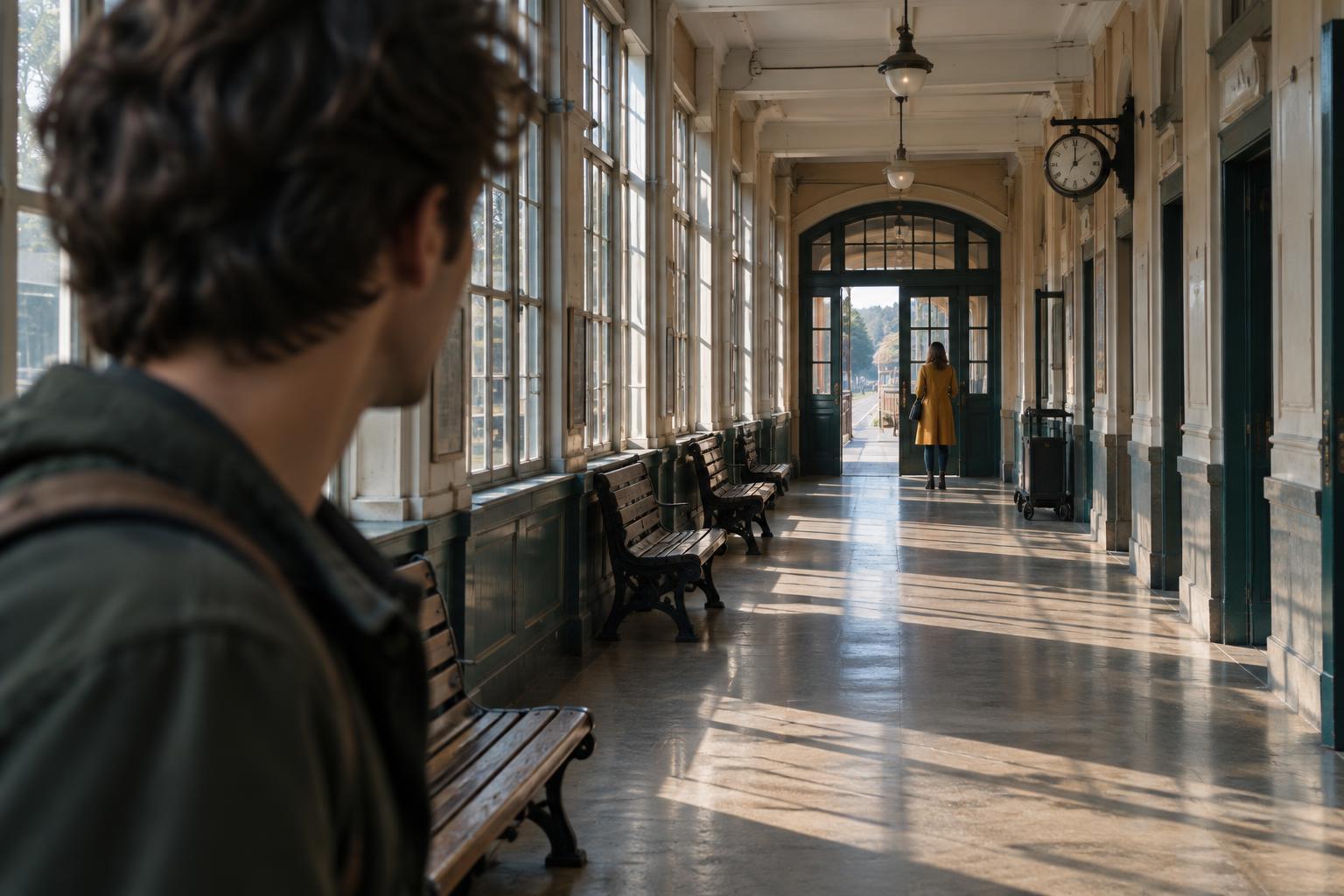
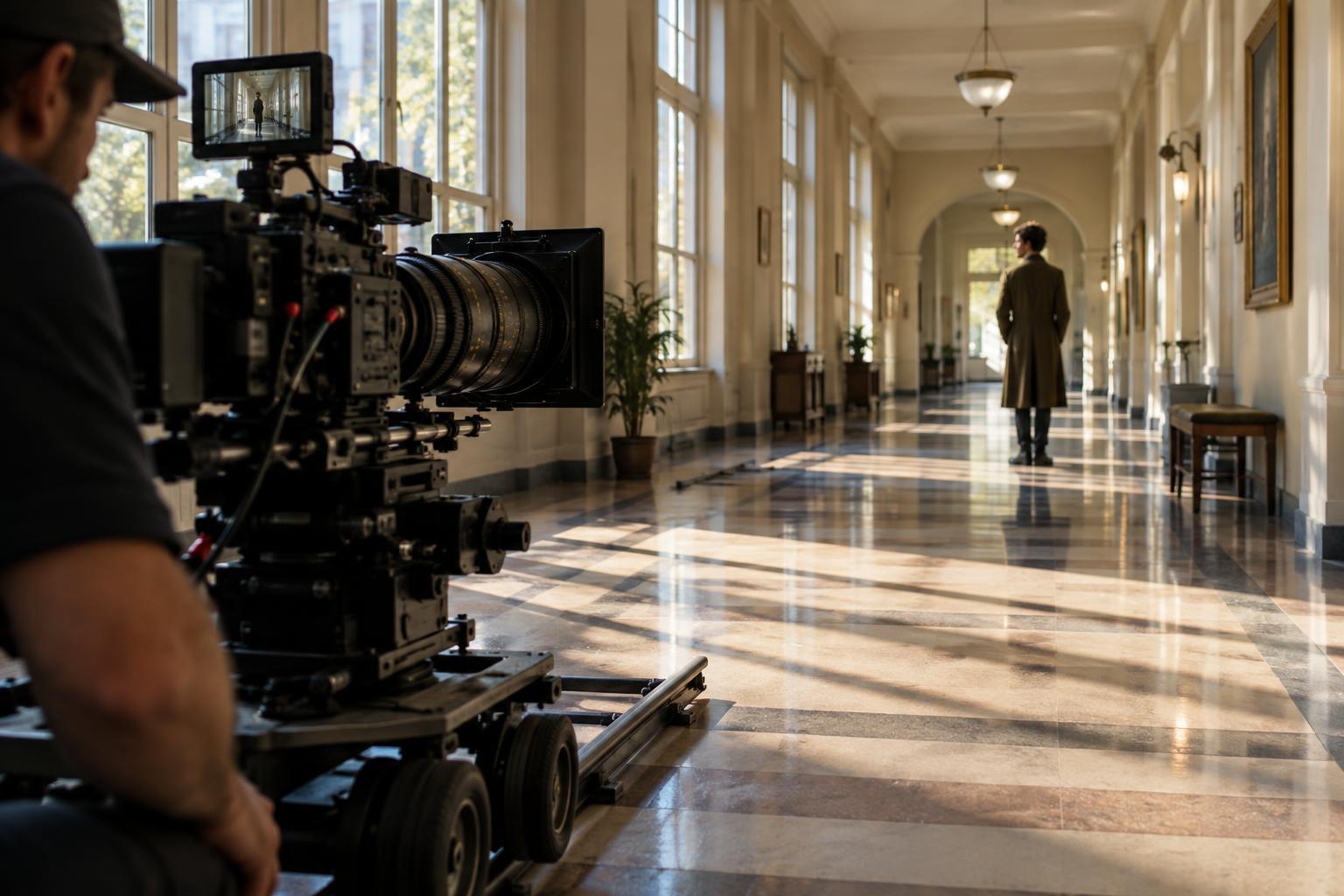
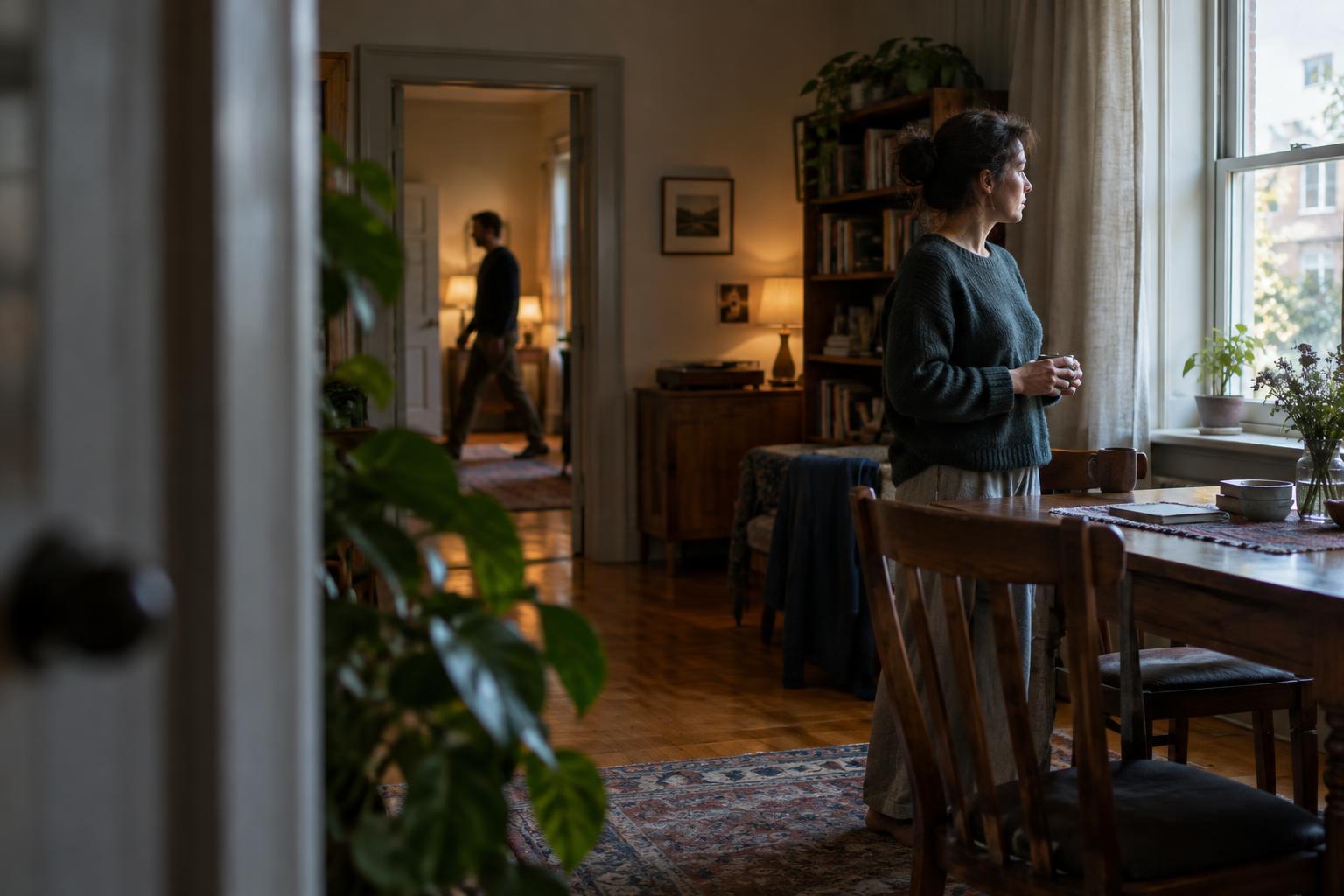
A frame has height and width, but the scene it contains also has distance. The foreground sits nearest the camera, the background lies farthest away, and the middleground occupies the space between them. These are flexible relationships, not fixed marks on a floor. A person can move from one layer to another during a single shot, changing how we read the scene.
Depth gives viewers more than a sense of physical space. It can show who is close to whom, what a character notices, and what they fail to see. Imagine a character seated in the middleground while another quietly packs a bag in the background. Both actions can remain visible, allowing the audience to understand a departure before the seated character does. The layers create dramatic information without requiring a cut.
Give each layer a purpose
Start by identifying the main action, then ask what the other layers contribute. A foreground object might frame a character, partly conceal them, or place the audience on one side of a barrier. An empty middleground can make two people feel separated. A background doorway might suggest an exit, a possible arrival, or simply the wider world beyond the conversation. Not every layer needs an important detail; empty space can be meaningful too.
Placement matters because elements can compete for attention. A bright sign immediately behind an actor’s head may distract from an intimate performance, while a foreground shape that covers a face may hide information the scene needs. Before adding visual texture, describe the job of each visible element in plain language. If it neither clarifies the space nor strengthens the moment, consider moving it or leaving it out.
Use blocking to change the image over time
Blocking—the positions and movements of people within a scene—is a direct way to build depth. Two characters standing side by side may appear united. Place one near the camera and the other at the far end of a room, and their distance becomes part of the exchange. If the distant character crosses into the middleground, the relationship changes visibly before anyone speaks.
Movement through the layers can also guide a viewer’s eye. A person entering from the background may initially seem unimportant, then become central as they approach. A character who retreats behind furniture can become harder to read even while staying in the shot. Rehearse these paths from the camera’s position: a crossing that feels substantial on the floor may barely register in the frame, while a small shift may reveal or obscure another person.
Control attention with focus, perspective and light
Focus helps establish a visual priority. Keeping a foreground face sharp while the background remains soft can emphasize an immediate reaction. Shifting focus to a figure behind that face can transfer attention without moving the camera. Deep focus, where multiple distances remain reasonably clear, gives viewers more freedom to examine simultaneous actions. Neither approach is inherently more cinematic; the useful choice is the one that supports what the audience should understand at that moment.
Camera position and lens choice affect how strongly distances appear. Moving the camera closer to a foreground object can make its relationship to the background more pronounced; changing focal length while keeping the subject similarly framed can alter the apparent spacing of objects. Test the arrangement rather than relying on a lens setting alone. Light and contrast provide another guide: a bright background may pull the eye away from a dim subject, while a small pool of light in the middleground can make an otherwise busy frame readable.
Design the layers for the whole scene
A strong composition must work for more than a single still image. Check what happens when actors turn, sit, cross or leave. Does a foreground frame become an obstruction? Does an important background action remain visible long enough to register? If a shot will be followed by a closer view, consider which spatial details the audience needs first so the cut feels clear rather than disorienting.
For a simple exercise, film one short action three ways: against a plain wall, with a foreground object and a visible background, and with a person moving between the layers. Keep the action the same and compare what each version makes easy to notice. Depth is not a requirement to fill every part of the screen. It is a way to arrange space so that attention, relationships and change can be felt within the shot.