Movement through space versus movement within the frame
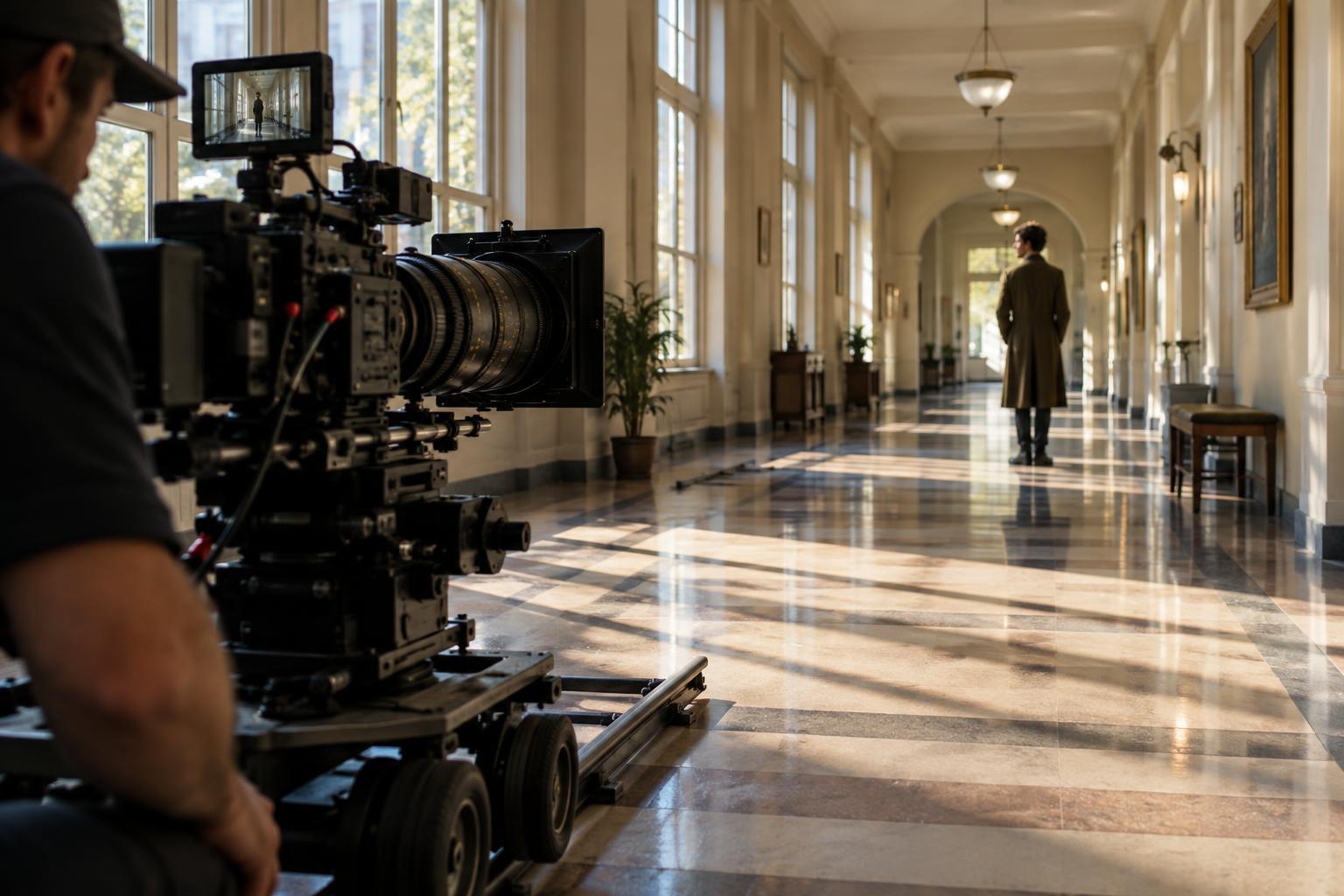
A tracking shot changes the camera’s position during a shot. It might follow someone down a hallway, move sideways past a row of faces, or travel toward an object on a table. A zoom keeps the camera in place while the lens changes its field of view, making a subject occupy more or less of the frame. Both can turn a wide view into a close one, but they do not show the same journey.
As a camera travels, its relationship to nearby and distant objects changes. A chair can slide across the foreground while a doorway shifts more slowly behind it. This changing relationship, called parallax, helps viewers sense the depth of a space. A zoom made from a fixed position does not create that change. Instead, it selects a tighter or wider portion of the view already available to the camera.
What a tracking shot asks viewers to follow
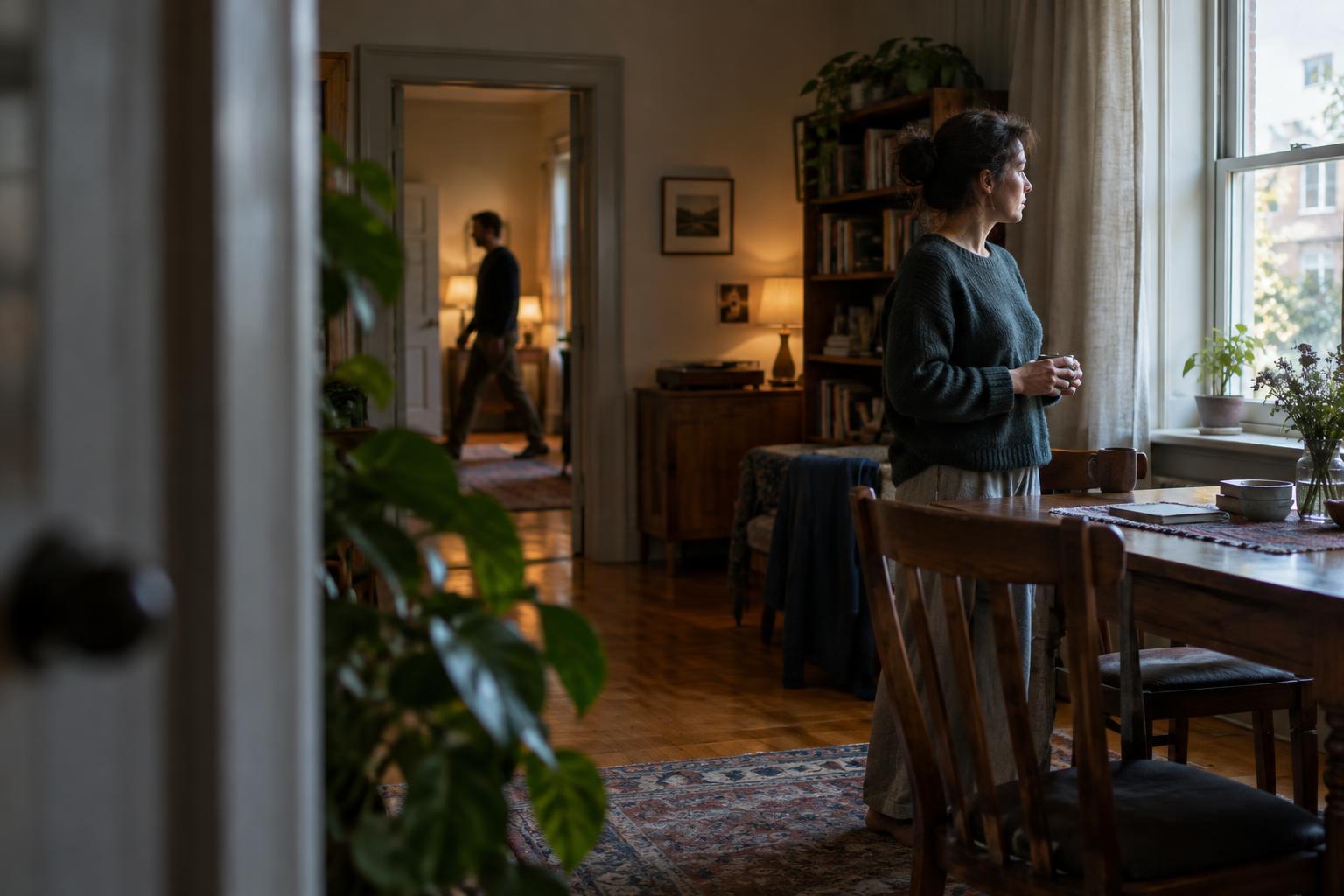
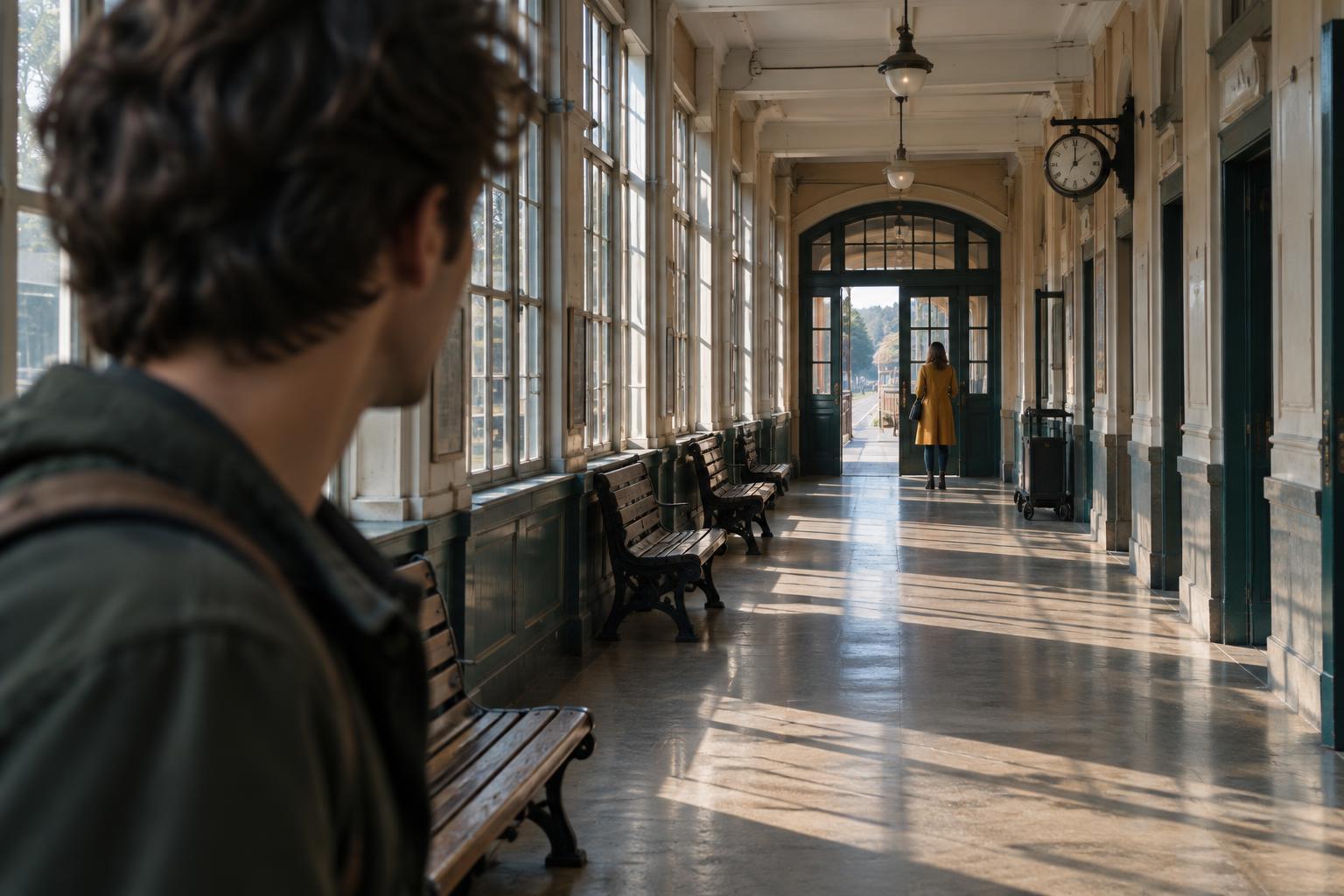
Tracking can connect attention to physical action. If a character crosses a crowded room and the camera goes with them, viewers discover obstacles, glances and exits along the way. Moving closer to a silent character can make the approach itself feel significant: each second narrows the distance between the audience and a possible reaction. The effect depends on what the movement reveals, not simply on the fact that the camera moves.
Direction matters. A lateral move can uncover information that was hidden behind a wall or another person. A move backward can make room for a second character to enter the composition without cutting away. Because the camera changes position, a tracking shot also changes which objects overlap in the frame. That makes it useful when a scene is about relationships within a space: who is near whom, what blocks a path, and what comes into view as someone moves.
What a zoom asks viewers to inspect
A zoom can redirect attention without relocating the camera. Imagine a wide shot of a dinner table. A slow zoom toward one guest’s hands invites viewers to look more closely while the room remains anchored in the same perspective. A fast zoom to a newly noticed detail can feel like a sudden act of recognition. Neither effect is automatic; the subject, speed and surrounding shots shape how the change reads.
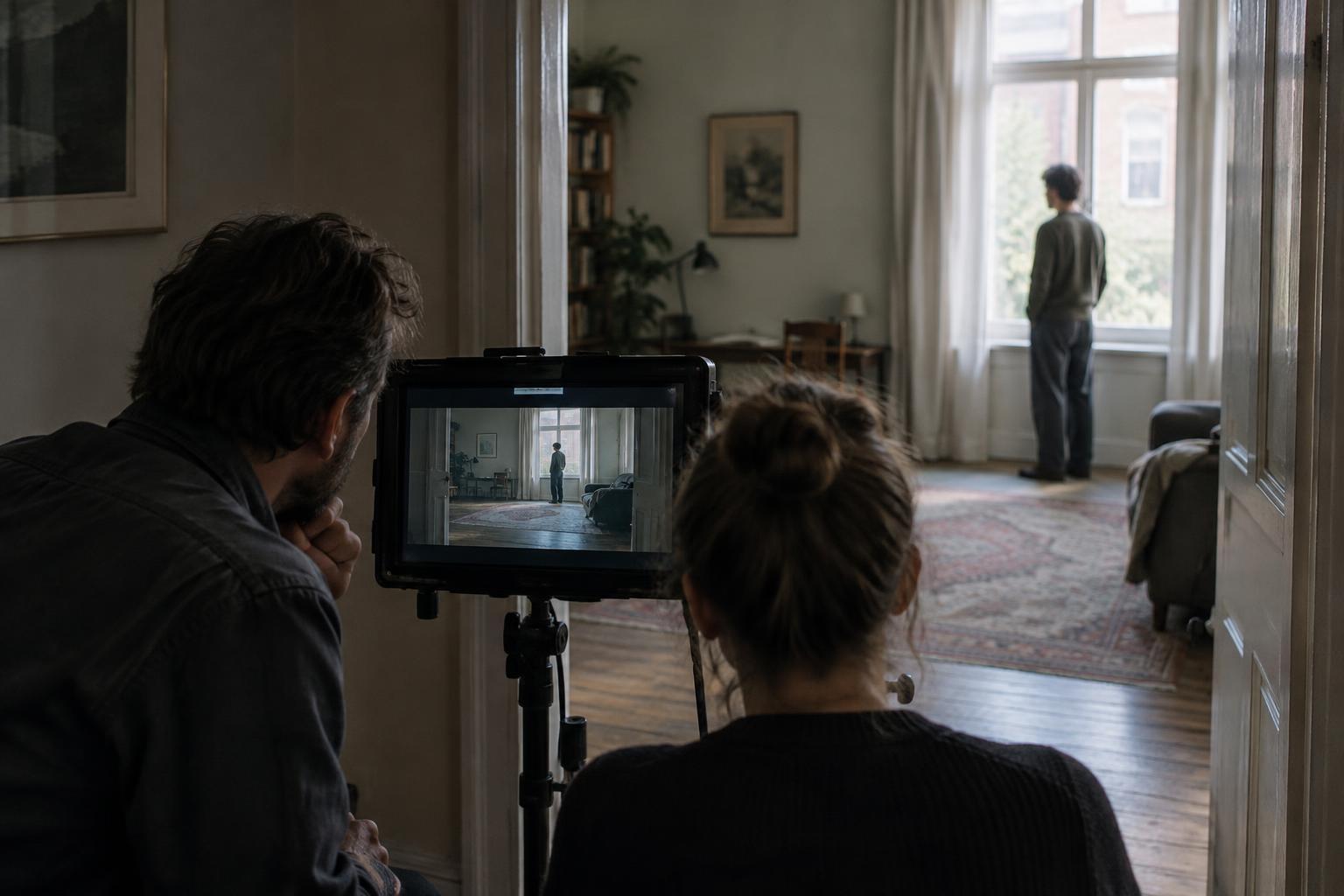
Zooming in crops away more of the surrounding scene, while zooming out restores context within the lens’s view. That can be useful when the story turns on a change in what matters: a small gesture becomes the focus, or a close view gives way to a wider one that shows who else has been watching. Unlike a camera move, a zoom does not let viewers see around an obstruction. Its strength is not exploration of space but a clear change in emphasis from one vantage point.
Choosing a movement for the scene
Start with a simple question: should viewers feel that they are entering or crossing the space, or should they feel that their attention is being narrowed from where they already stand? Tracking often suits discovery through movement. Zooming often suits inspection from a fixed position. These are possibilities, not rules. A slow track can be restrained, and a zoom can be unobtrusive if it begins and ends within a carefully composed shot.
Then consider what happens at the edges of the frame. During a track, foreground objects may pass by, new sightlines may open, and performers may need to meet the camera at precise moments. During a zoom, elements near the edges disappear or return, but their positions relative to one another remain largely consistent. Sketching the opening and closing frames helps test whether the intended detail stays visible and whether the wider composition gives it enough context.
Plan the change, not just the technique
A useful camera move has a beginning, a reason to change and an ending. Decide what viewers should notice before the shot changes, what prompts the shift and what they should understand afterward. If a character spots a mark on a door, a track might carry viewers past other clues to reach it. A zoom might isolate the mark from across the room, preserving the character’s distance from it. The same detail can therefore produce two different experiences.
Finally, watch the shot without dialogue, then with the scene’s sound and edit. A movement that feels clear on its own may compete with a performance, a sound cue or the next cut. If viewers are meant to study a face, give them time to do so after arriving at the new framing. Whether the camera travels or the lens zooms, the strongest choice is the one that makes the audience’s changing attention part of the storytelling.