Start with what the viewer needs to notice
A handheld shot changes slightly as the camera operator responds to the action. A locked-off shot holds a fixed frame, usually from a tripod or another stable support. Neither approach carries a single meaning. Handheld does not automatically make a scene urgent, and a still camera does not automatically make it calm. The effect depends on framing, lens choice, movement within the shot, sound and the shots around it.
Before choosing a setup, ask what the viewer should watch for. If the scene turns on a small change in someone’s expression, a steady frame can give that change room to register. If the viewer needs to discover information alongside a character moving through a space, a responsive handheld camera may help maintain that connection. The choice is less about whether the camera looks cinematic and more about how it guides attention.
Give each camera position a point of view
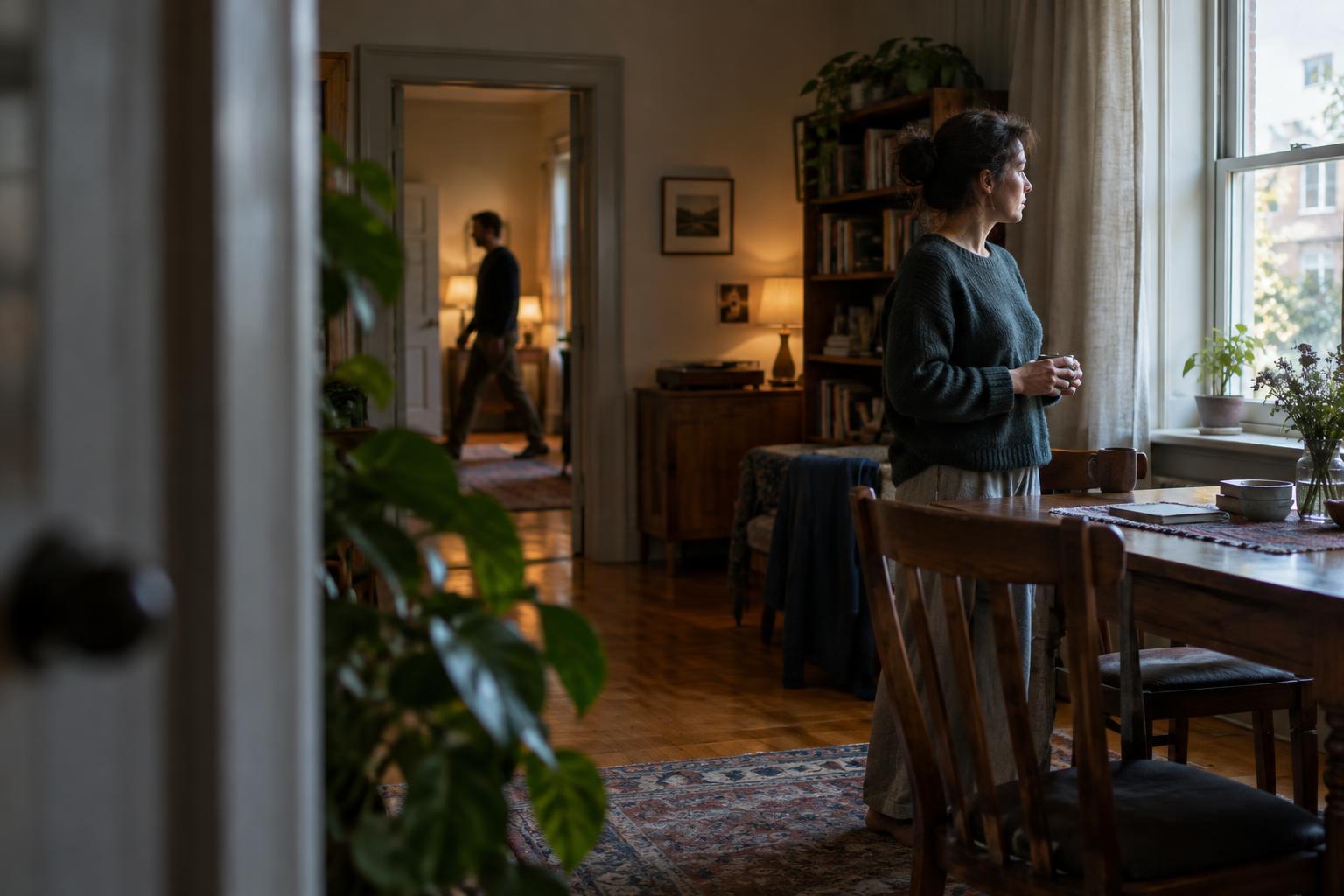
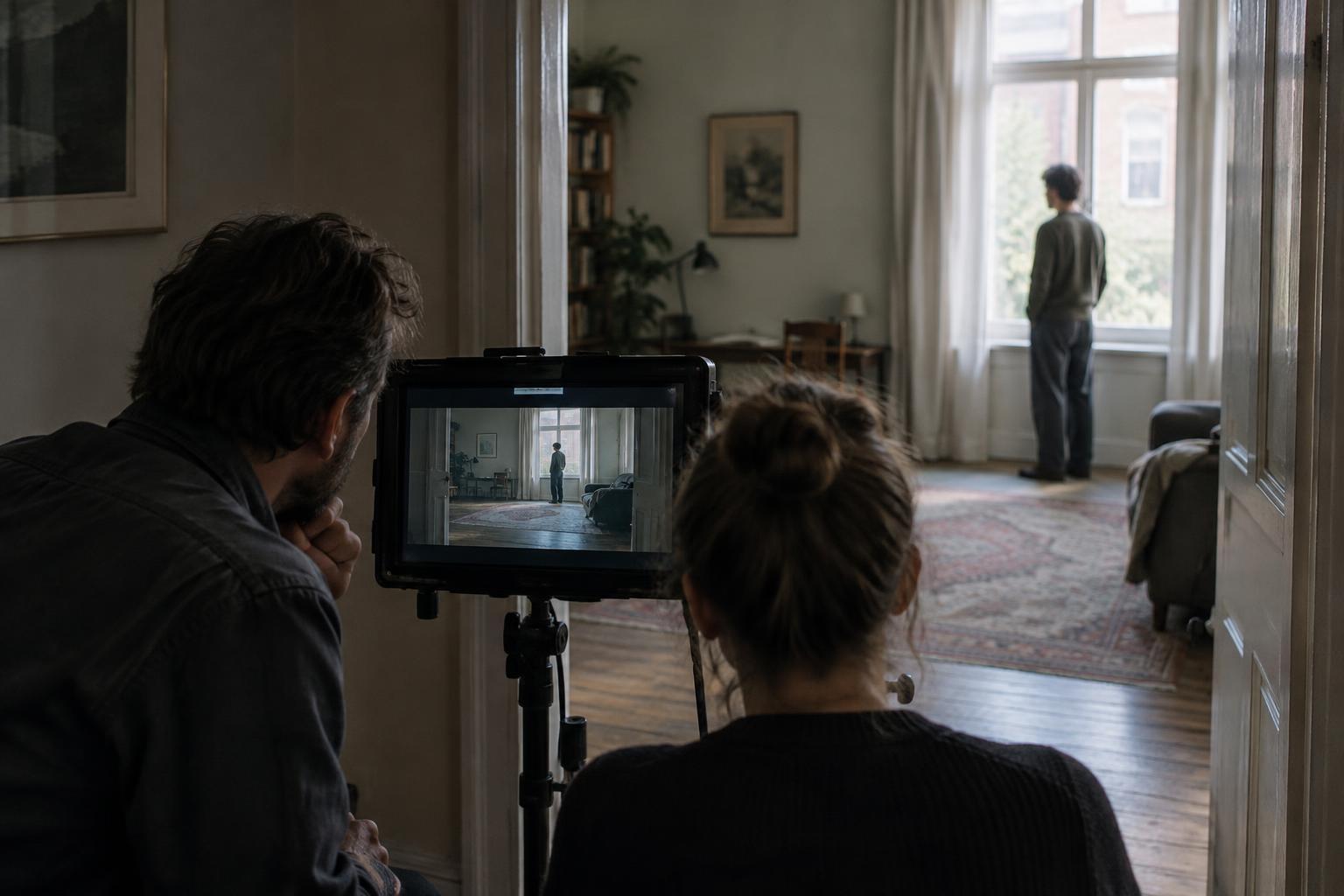
A locked-off frame lets action unfold against stable boundaries. A person crossing from one side of the image to the other becomes noticeable because the frame stays put. Empty space can create anticipation: the viewer has time to wonder who or what might enter it. Stillness can also make a character’s inability to leave a room feel more pronounced. These effects come from the relationship between the frame and the action, not from a rule that static shots must feel distant.
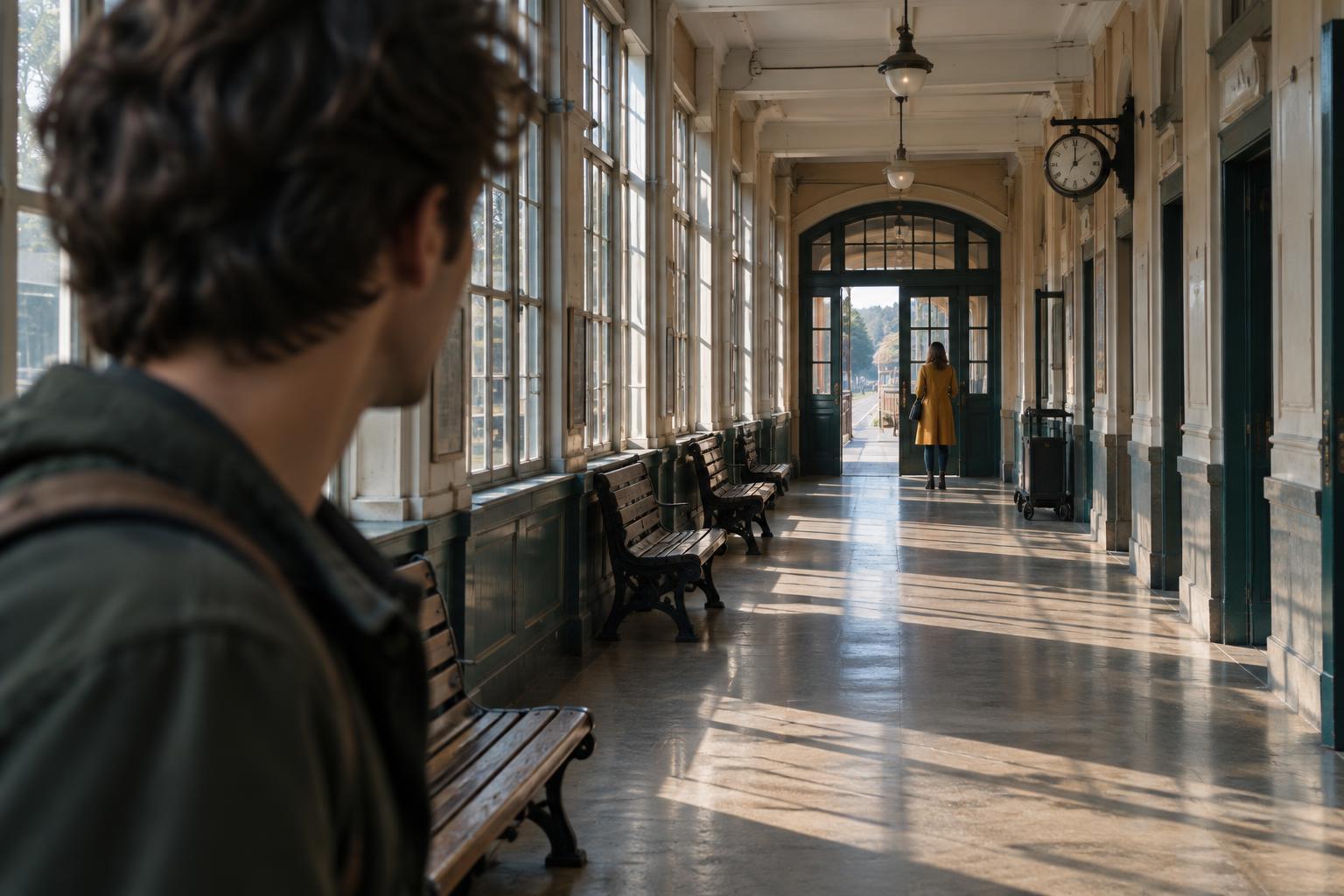
Handheld shooting can make the frame feel more reactive. It may follow a face, hesitate before revealing something or struggle to keep two people in view. Those adjustments can suggest that the viewer is close to events as they unfold. But constant correction can also distract from a performance. Decide what motivates each movement. Is the camera following a decision, searching for information or simply drifting? If its movement has no clear purpose, the audience may notice the technique before the story.
Build rhythm through contrast
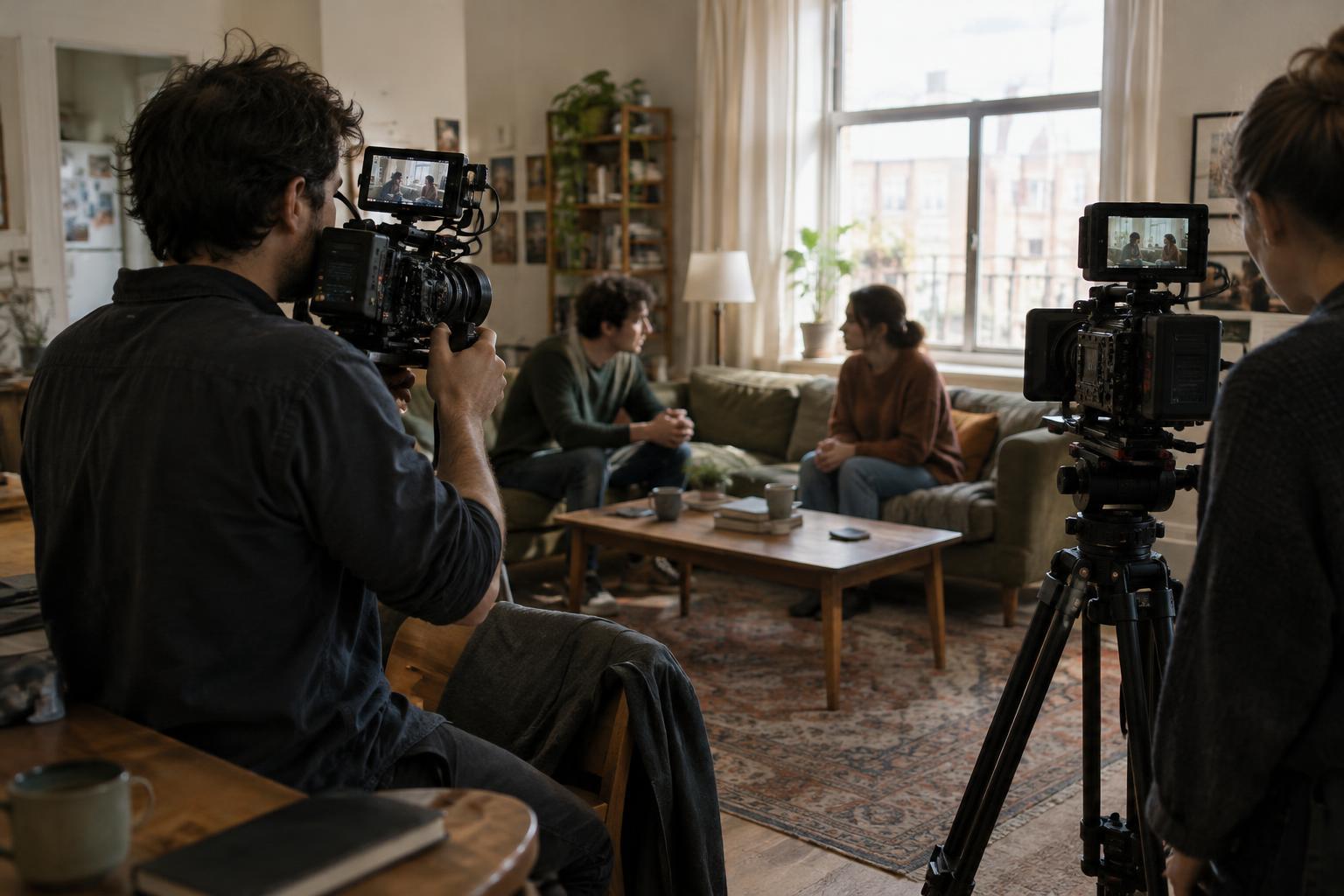
Visual rhythm is not just the speed of camera movement. It is the pattern of movement and stillness across a scene. Consider a conversation that begins in two fixed compositions. The stable framing lets the audience learn where each person stands and how much space separates them. When one person unexpectedly walks away, following them handheld could make the break in that pattern felt. The shift matters partly because the earlier shots established a different expectation.
The reverse can be just as expressive. A scene might begin with a camera following a character through a crowded room, then cut to a locked-off wide shot once they are left alone. The camera stops pursuing them, and the viewer can take in the distance around them. Neither transition requires a dramatic shake or a conspicuous cut. A modest change in camera behavior can be enough when it arrives at a meaningful point in the scene.
Plan for performances, space and the edit
The practical demands of a scene should inform its visual language. Handheld work gives an operator some freedom to adjust when performers change pace or direction, but it still benefits from rehearsed positions and a shared understanding of what must remain visible. Locked-off shooting asks for careful blocking: if an important action happens outside the frame, the camera will not follow it. That limitation can be useful when an off-screen sound or reaction is more compelling than a direct view.
Think ahead to how the shots will cut together. A moving shot may be difficult to join cleanly to another angle if the camera’s direction and the performer’s movement do not match. A fixed composition can provide a clear point of orientation, but a long sequence of similar fixed angles may feel repetitive if nothing changes within them. You can vary shot duration, distance and the position of people in the frame without switching camera support.
Choose a rule, then know when to break it
For a short scene, try writing a simple camera rule before making a shot list: stay locked off while the characters avoid the truth; move only when one acts on it. That rule is not a formula for every story. It is a way to test whether each setup has a reason to exist. During rehearsal, watch where your attention naturally goes and whether the planned frame helps the viewer look there.
If a shot is not working, ask a specific question before changing the camera style. Is the important gesture too small in the wide frame? Does following the character reveal information too early? Would holding still allow a pause to last? Handheld and locked-off shots are tools for shaping what viewers notice and when they notice it. A coherent visual rhythm comes from making those choices scene by scene.