Start with what the object does
A hero prop is an object the film asks us to notice. It might be a key that opens the wrong door, a notebook that changes hands or a coat a character cannot bring themselves to discard. Its importance comes from action, not ornament. Before choosing its color or texture, describe what the object must do in the story: reveal information, create an obstacle, prompt a decision or mark a change in a relationship.
Then trace when the audience needs to recognize it. A prop introduced briefly in an early scene may have to remain identifiable when it returns much later, even under different lighting or from another angle. That does not mean making it loud. One distinctive feature—a worn corner, unusual clasp or clear silhouette—may be enough. The aim is recognition without making every appearance feel like a clue announced in advance.
Let character shape the design
An important object should belong to the world of the character who owns or uses it. A carefully repaired bag tells a different story from an immaculate replacement, even if both carry the same document. Consider how the character obtained the prop, how long they have kept it and whether they treat it as precious, useful or burdensome. Those questions suggest materials and wear more naturally than a request to make something look “interesting.”
Handling can be as expressive as appearance. A character might straighten a bent photograph whenever they are nervous, or keep a letter folded so tightly that opening it becomes an event. Design the prop to support those actions. If a scene depends on someone slipping an item into a pocket, passing it unnoticed or struggling to open it, its size, weight and construction affect the performance. A beautiful object that cannot be used convincingly can work against the scene.
Design for the camera and the cut
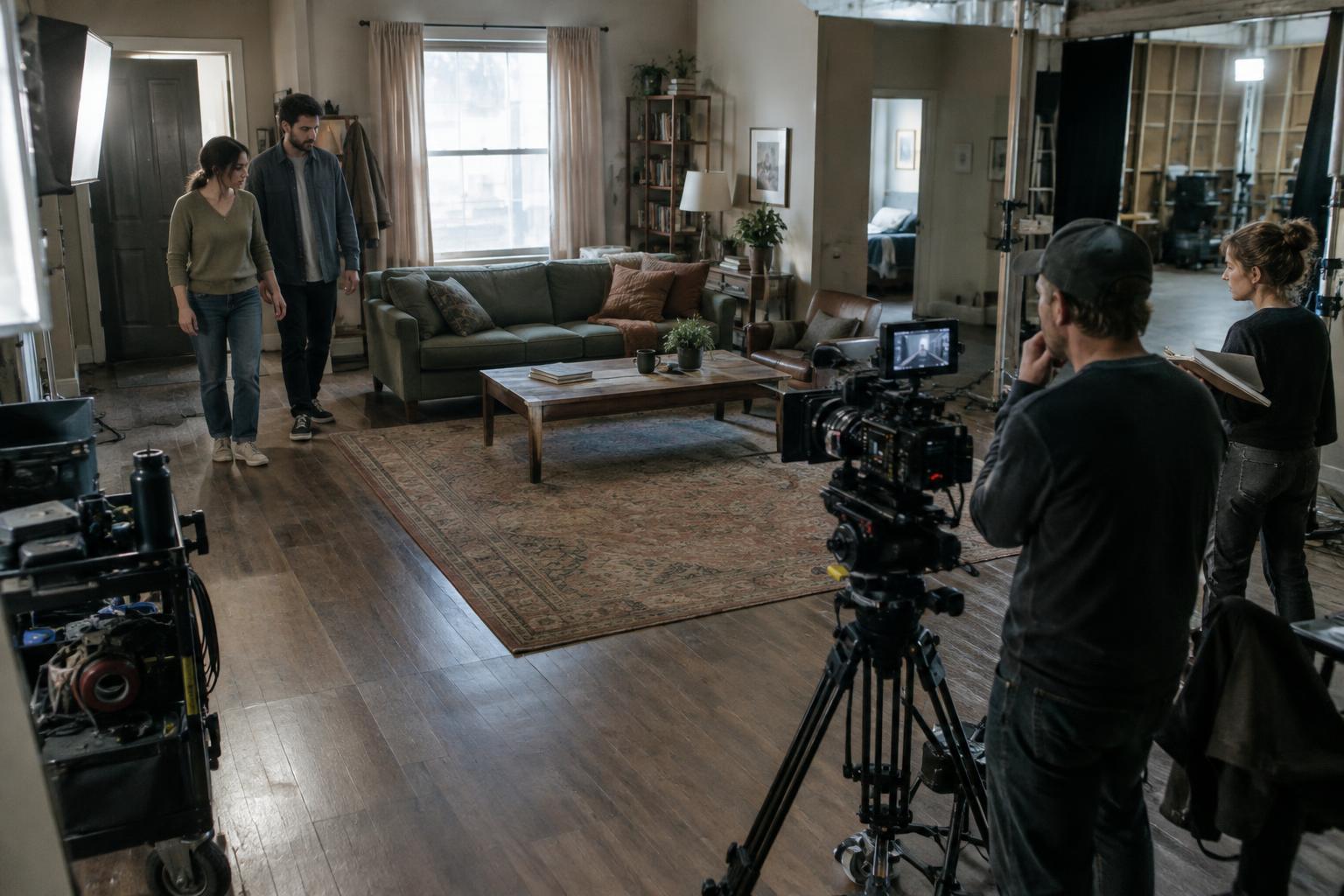
A prop may need to communicate at several scales: across a room, in a medium shot and in a close-up. Details that look striking on a worktable can disappear on screen; others can become distracting when enlarged. Test the object against the likely framing and lighting rather than judging it only in isolation. If the audience must read a label or notice a small alteration, allow for a shot that gives them enough time and visual clarity to do so.
Editing also changes what a prop must accomplish. If a scene cuts from a hand finding an object to another character reacting, viewers need to understand what was found before the reaction lands. A recognizable shape or deliberate placement may do more work than elaborate decoration. Conversely, a mystery may depend on withholding a detail. In that case, the prop still needs to look credible when partially seen and remain consistent when finally revealed.
Track every change of state
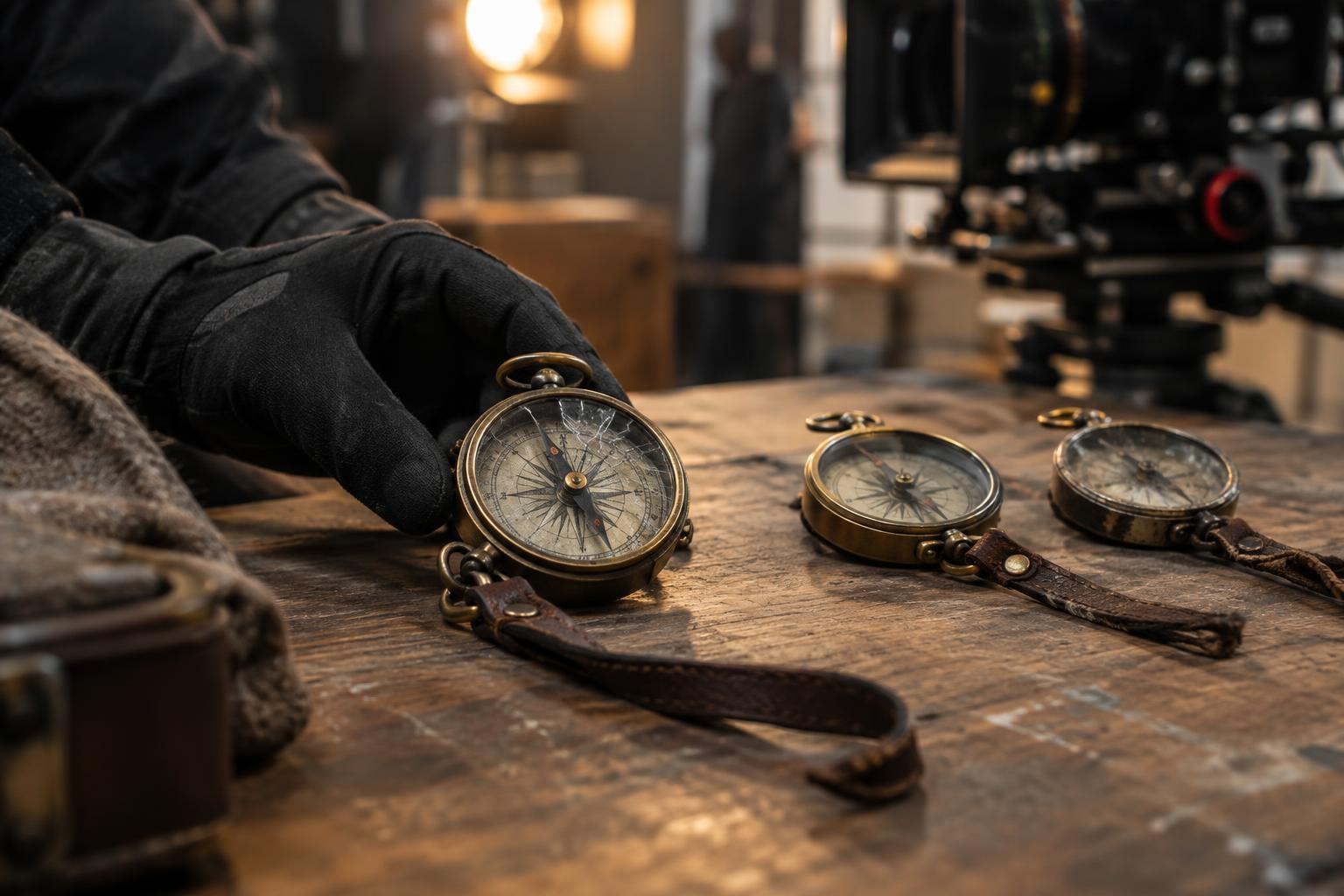
Plot objects often change: a seal breaks, a surface gets wet, a page tears or an item moves from one person to another. List those states in story order, then note the order in which scenes might be filmed. That simple comparison helps identify when matching versions are needed. If a character drops a fragile object repeatedly, usable duplicates may be more valuable than a single perfect original.
Continuity is not only about avoiding mistakes. A new scratch can show that an object has survived an encounter; a missing piece can make a later action harder. Record where each change happens and whether the audience is meant to see it occur. A prop that appears damaged without a clear cause can confuse the story, while a carefully timed alteration can carry meaning without dialogue.
Give the object a meaningful payoff
The strongest hero props are not necessarily the most elaborate. They become memorable because the film establishes a relationship between object, character and choice. A familiar item can gain a different meaning when someone gives it away, refuses to touch it or uses it for a purpose its original owner never intended. Production design can prepare that turn by keeping the object legible and its history visible, without insisting on one interpretation.
As a final check, ask what would be lost if the prop were replaced by a generic object. If nothing changes, the design may need a clearer story function—or the scene may not need a hero prop at all. If the replacement weakens an action, obscures a connection or flattens a character decision, the object is doing its job. It matters because the story has made room for it to matter.