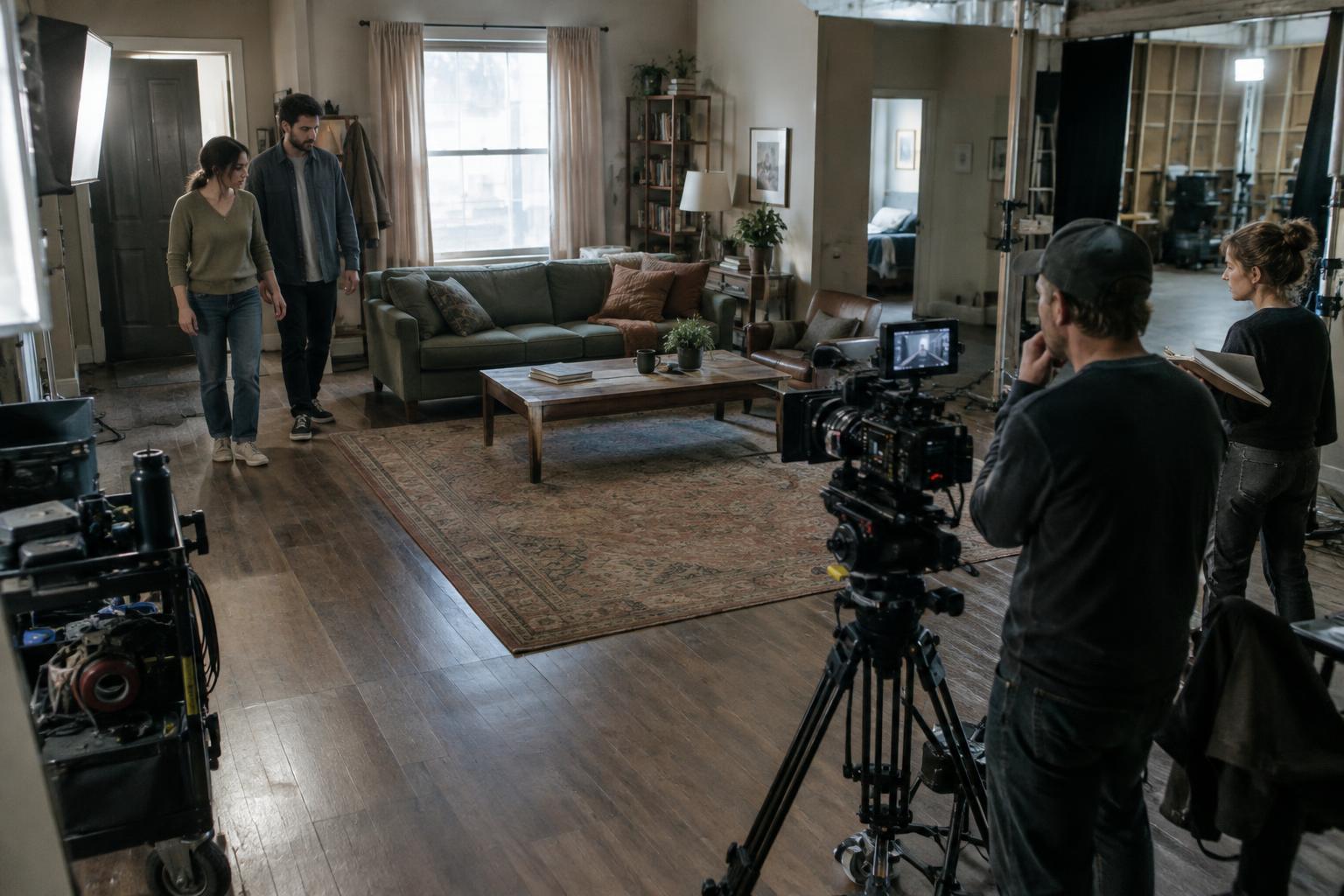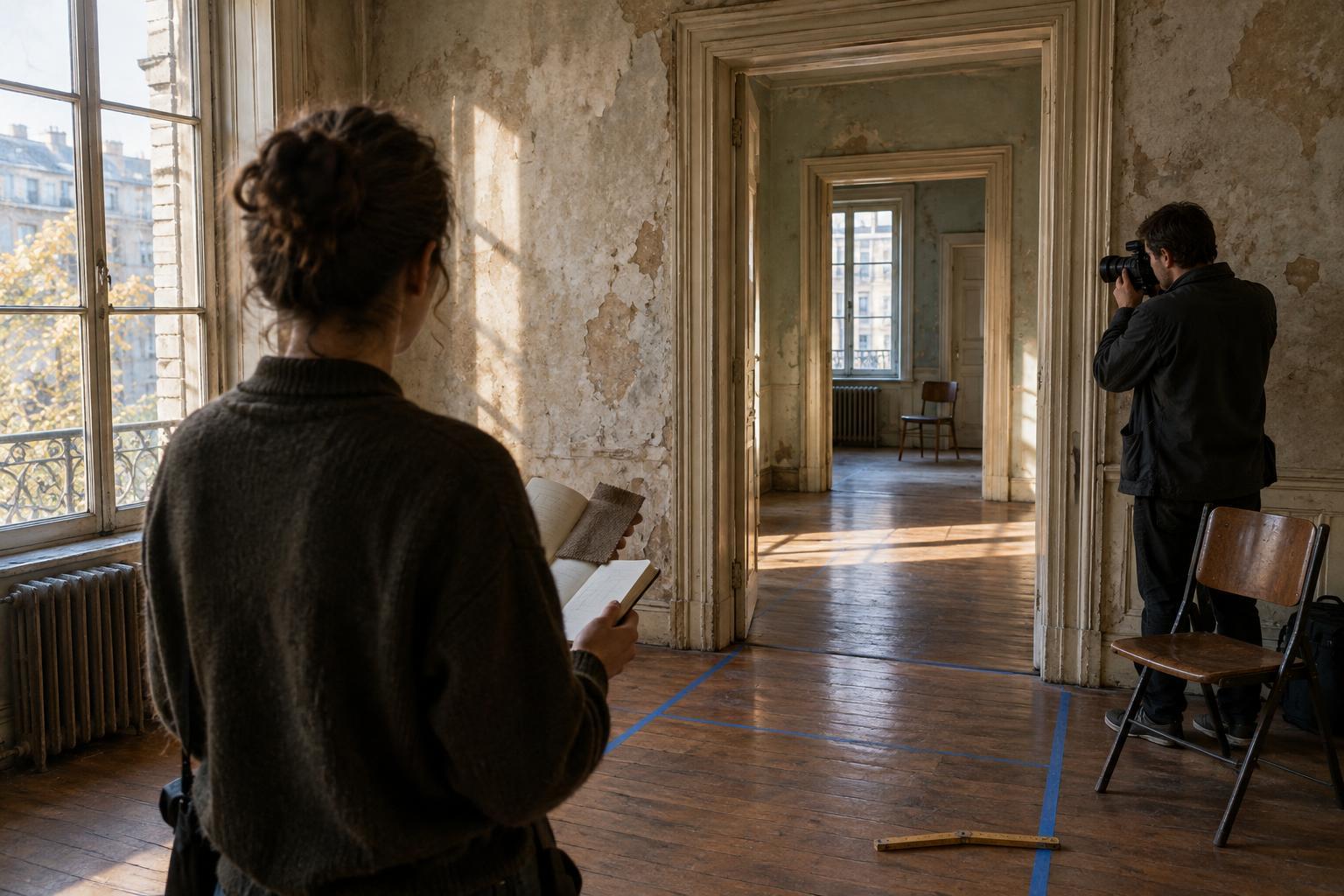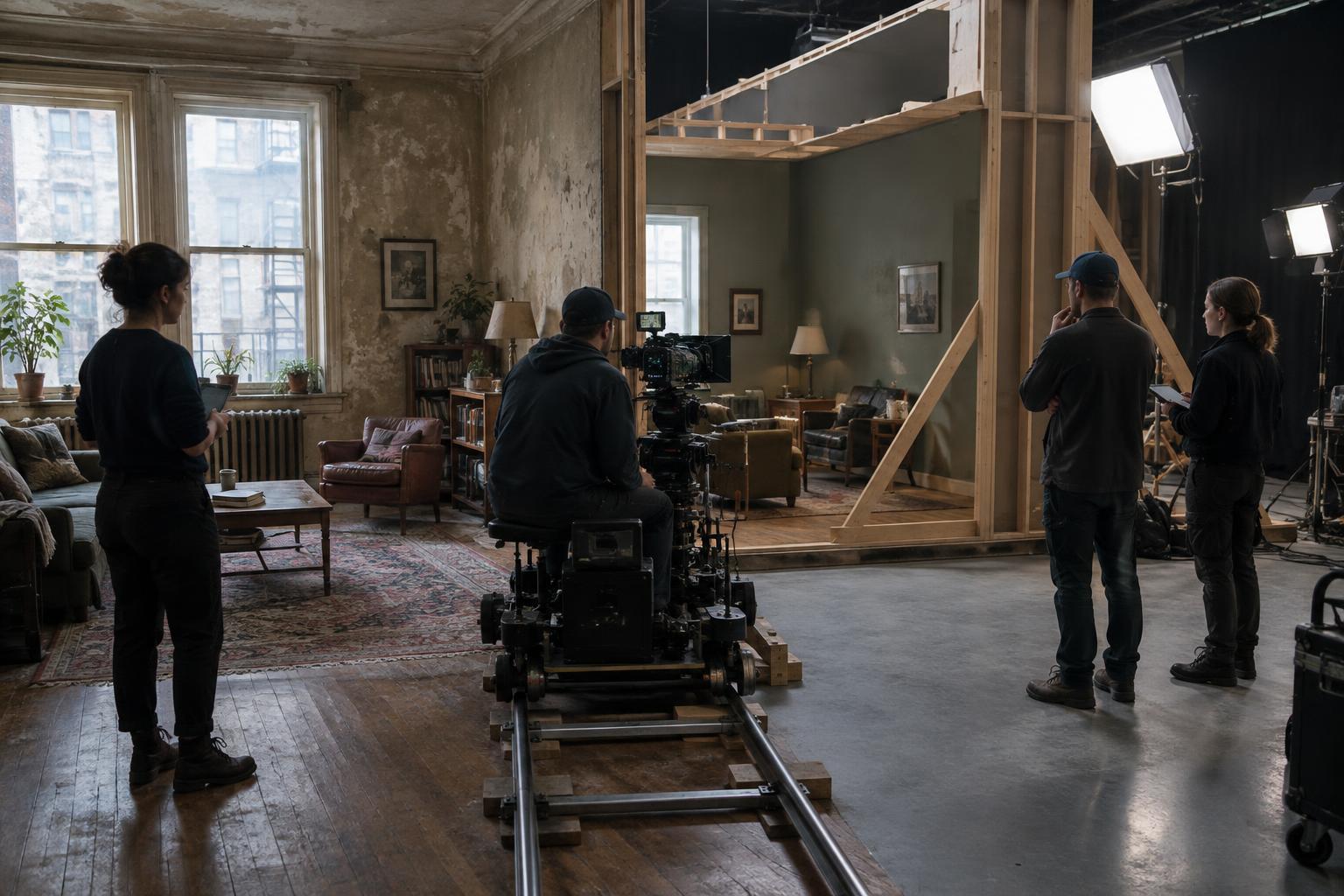
Start with what the scene needs to communicate
A practical location is an existing place used for filming, while a built set is a space constructed or substantially altered for the production. Neither choice is automatically more authentic. A worn apartment might give actors details to respond to without much decoration. A set might tell the same story more clearly because every doorway, window and object supports the scene.
Before comparing spaces, describe the scene in dramatic terms. Does a character need to feel trapped, exposed or at home? Which parts of the environment must the audience notice? A location with striking architecture may be tempting, but it can compete with a quiet performance. Conversely, an ordinary real room may supply the visual messiness that makes a character’s life feel specific. Choose the space that helps the scene make its point, not simply the one that looks best in a photograph.
Test the space against the camera plan
A room that works for a visitor may not work for a camera. Walls can block a wide shot, a low ceiling can limit lighting, and a narrow hallway can leave no space for crew or equipment. If a scene relies on a long move, a reveal through a doorway or several characters sharing a frame, walk the proposed blocking in the real space. Note where the camera, performers, lights and people operating them would actually stand.
A built set can solve these problems with movable walls, carefully placed windows or extra depth beyond a doorway. It can also provide a consistent layout for coverage, so cuts between angles feel spatially coherent. But that flexibility only matters if the design serves a considered shot plan. For a scene built around stillness and close observation, the constraints of a practical room may be productive rather than limiting.
Listen, look and revisit
Sound and light can change the value of a location. A room near traffic, ventilation or other activity may be difficult for dialogue, even if it looks ideal. Windows can offer beautiful daylight but create continuity problems when scenes take hours to shoot. Visit at the time you expect to film when possible, and listen for sounds as carefully as you inspect the walls.
Consider what must remain unchanged across the schedule. A working shop may rearrange its stock; a public space may look different from one day to the next. Built sets offer greater control over dressing and repeatable camera positions, although they still require careful continuity. A practical location can work well when its owner can accommodate the shoot and its changing conditions do not undermine the scene. The question is not whether a space is controllable in theory, but whether the production has enough control for the shots it needs.
Compare the whole workload, not just the space
A location may avoid construction costs but require travel, permissions, protection of existing surfaces, limited working hours and time to restore the space afterward. A set requires materials, labor, build time and somewhere to put it. Either option can become expensive if its limitations force extra shooting days or complicated workarounds. Compare realistic plans for the same scene rather than a location fee against a construction estimate alone.
Access matters as much as price. Can performers and crew work safely in the space? Is there room for equipment, changing areas and basic production needs? What changes are permitted, and what must be removed each day? Answering these questions early helps the production designer, director and cinematographer make choices together. It also prevents a visually promising space from becoming a daily obstacle.
Use a hybrid when the story benefits from both
The decision need not apply to an entire film—or even an entire setting. A production might film a building’s exterior and entrance on location, then shoot dialogue in a built interior that offers better sound and camera access. A practical room can also be modified with removable dressing to strengthen its character without rebuilding it from scratch.
To choose, list each scene’s essential visual details, planned shots and likely sources of disruption. Then ask what would be gained and lost with each approach. If a real place supplies irreplaceable texture and accommodates the work, use it. If the scene depends on repeatable light, intricate movement or extensive changes to the space, a set may be worth the effort. The strongest choice is the one that lets the environment support the story throughout the shoot, not just in the first frame.