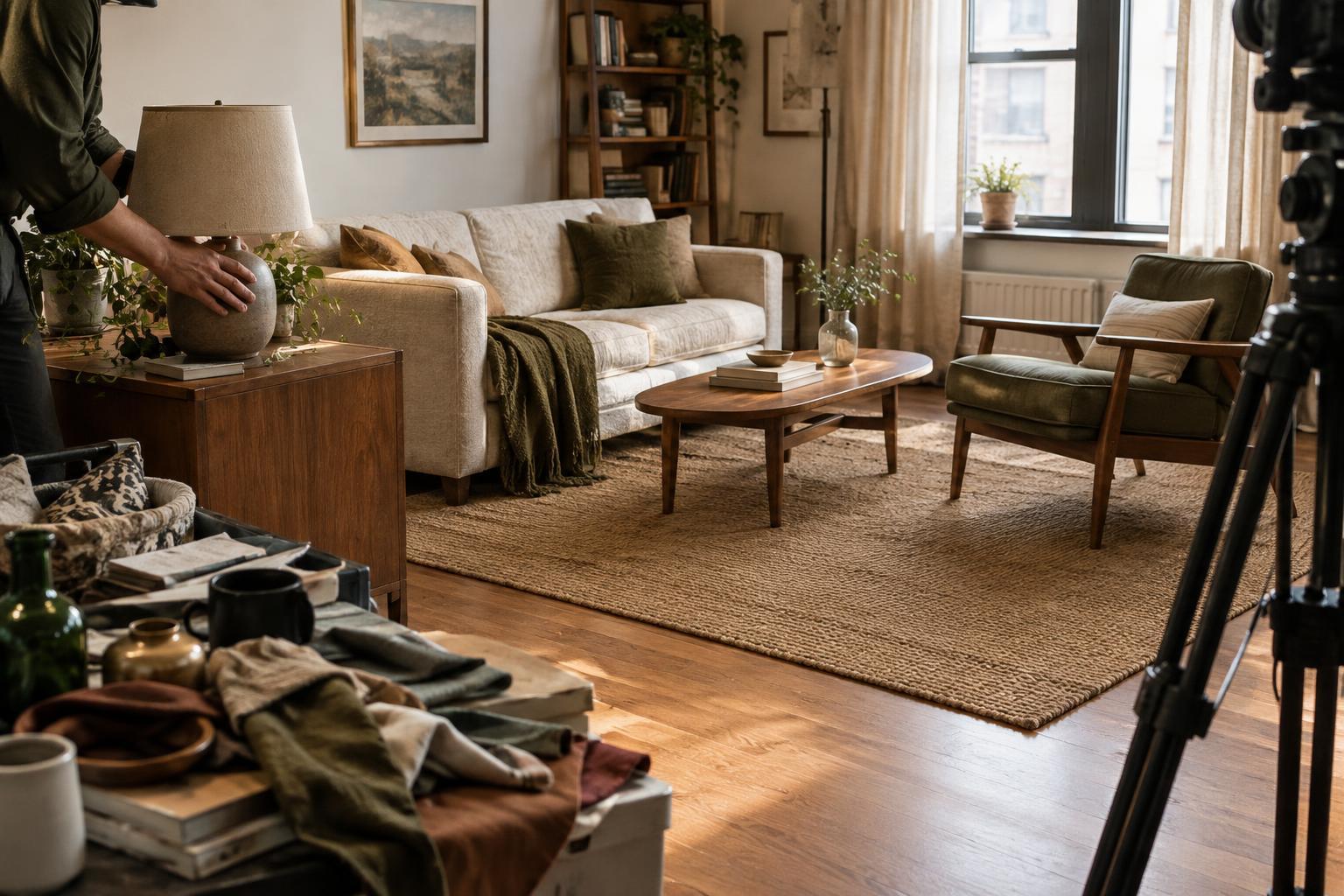
Start with what the space must do
A room in a film is more than a backdrop. It gives characters places to enter, hide, pause and look toward. It also gives the camera sightlines and the lighting team places to put or conceal equipment. Production design and lighting work best when they begin with the same question: what must this space communicate in each scene?
The script may call a kitchen warm and inviting, but that description is only a starting point. If an argument turns the kitchen into an uncomfortable place, the team needs to know where the actors will stand, what will appear behind them and whether the light should change as the scene develops. A conversation with the director and cinematographer about blocking, framing and mood helps turn an abstract description into decisions about the room.
Make a layout that works for people and cameras
A convincing layout is not always a workable filming layout. A dining table might look natural against a wall, yet leave too little room for an over-the-shoulder shot. A doorway might establish a clear route into the room but put the actor directly in front of the only plausible window light. Before details are finalized, the teams can walk through likely actions and camera positions together.
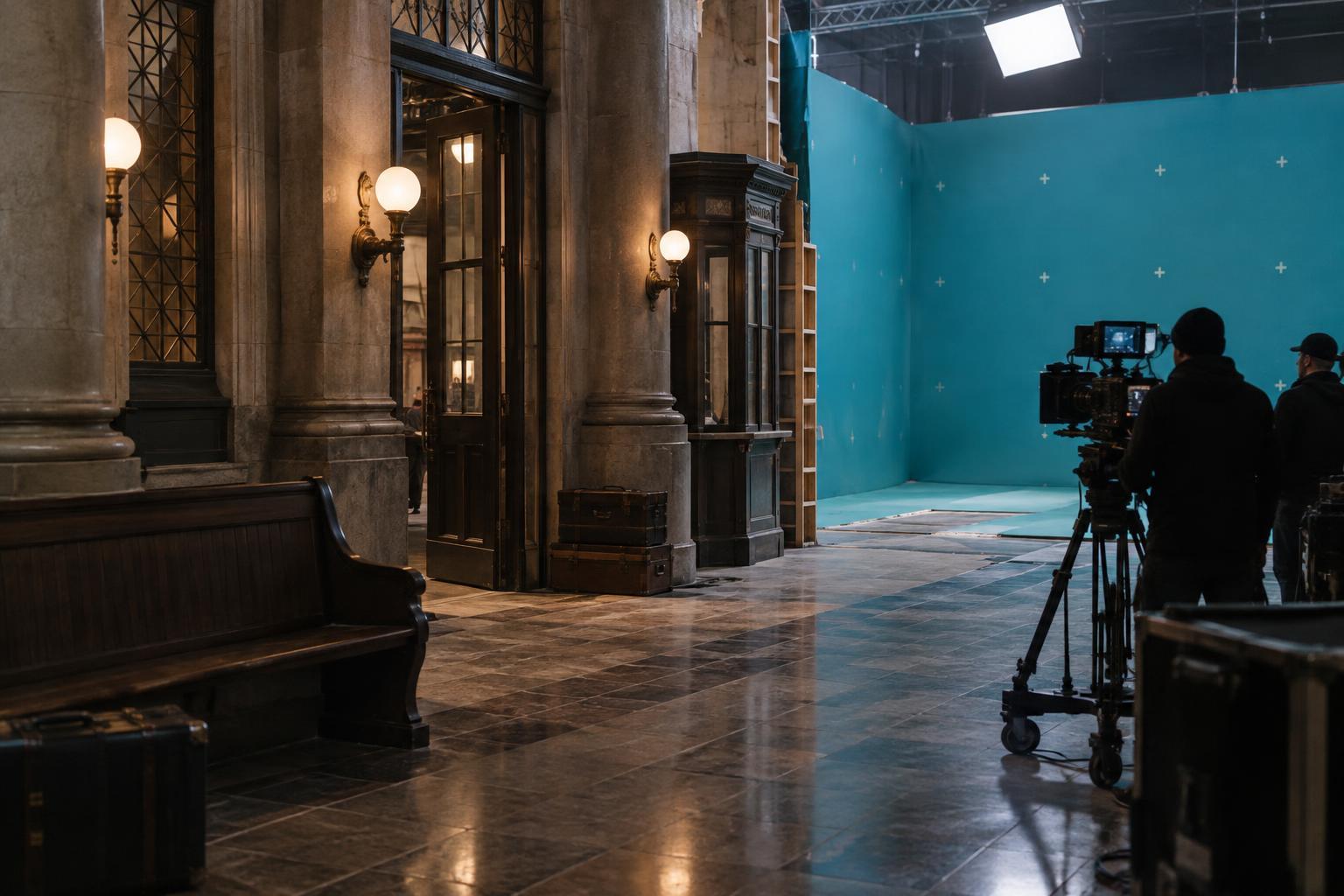
For a built set, this discussion may affect wall placement, removable panels, ceiling height and the position of windows. On a location, where changes may be limited, it can guide furniture choices and identify where lights can sit outside the frame. Neither team needs to solve every shot in advance. The aim is to preserve useful options without making the space feel arranged solely for the camera.
Treat surfaces and fixtures as shared tools
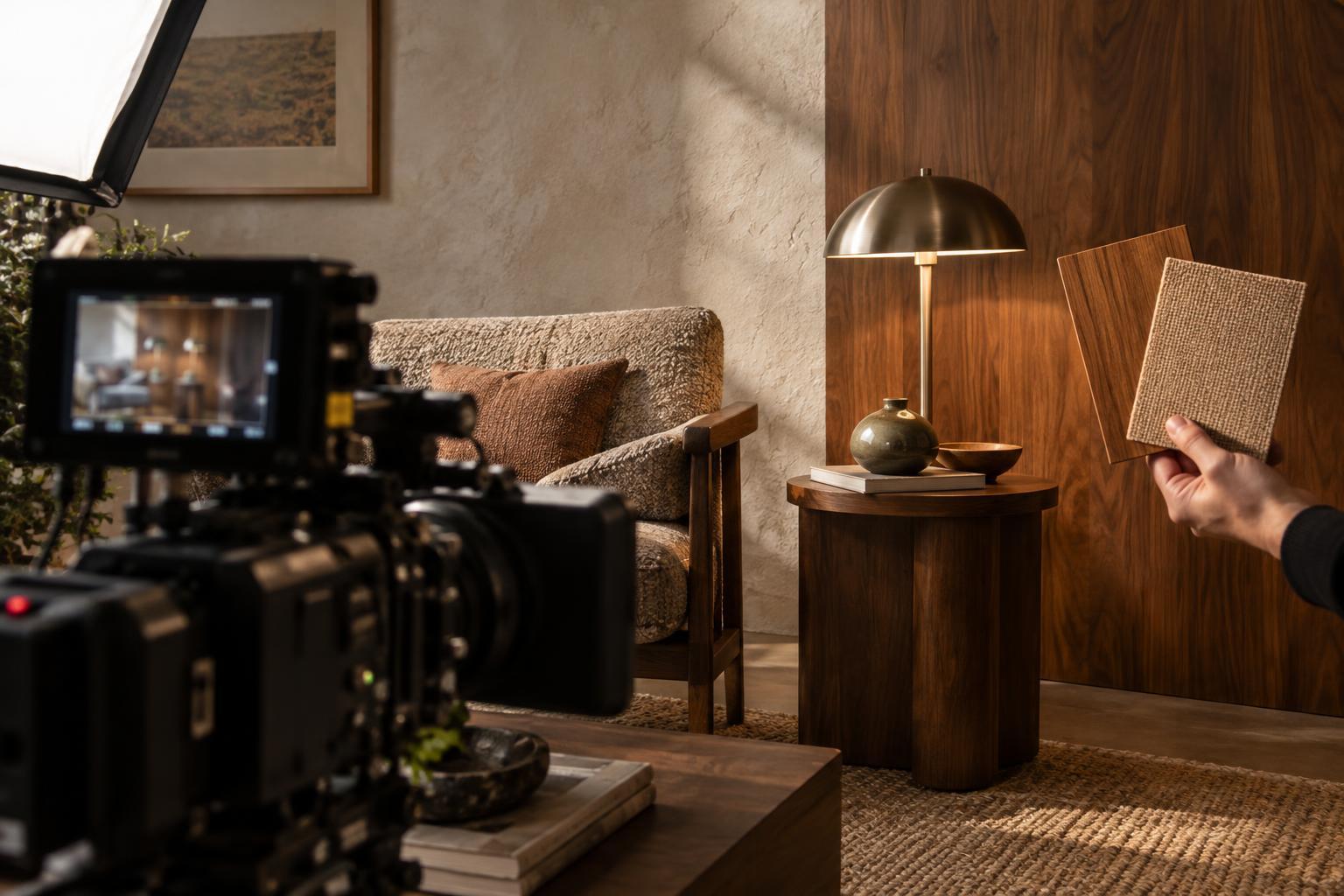
Color and texture change how a room takes light. A pale wall can return light into an actor’s face; a dark wall may absorb it. Glossy tile, glass and polished metal can introduce reflections that become visible when the camera moves. These effects are not automatically problems. They may help define a setting, but they are easier to use deliberately when the production designer and cinematographer consider them before a surface is chosen.
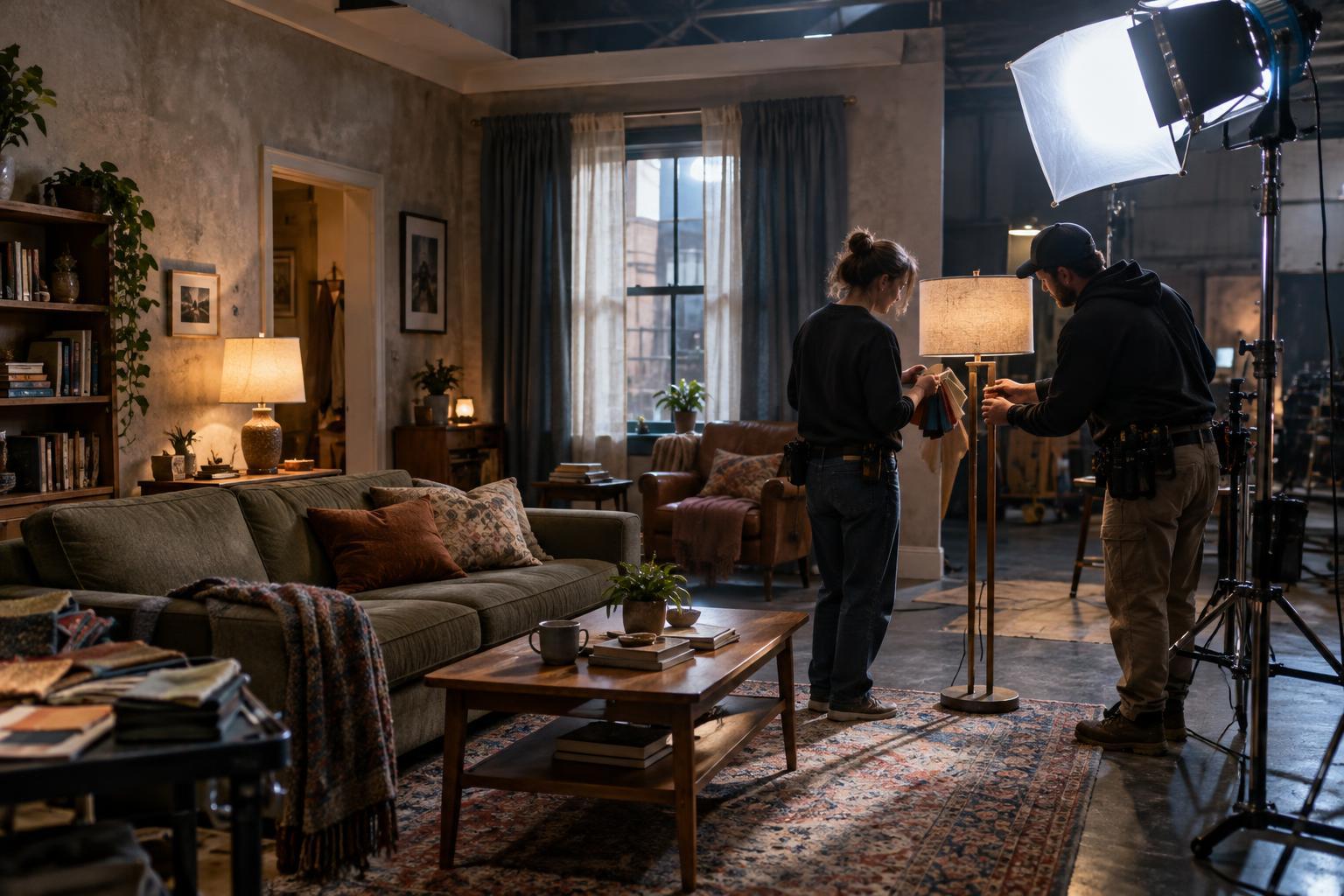
Lamps, signs and other visible fixtures are shared decisions too. A table lamp can reveal a character’s habits and suggest a believable source of illumination. Its shade, height and placement also affect how much of that light reaches a face. The lighting team may add separate equipment to shape the final image, but a practical fixture gives that image a reason to look the way it does. Agreeing early on fixture positions and the desired appearance of their light can prevent a set from needing conspicuous last-minute changes.
Test the room under the conditions it will face
A paint sample viewed in daylight may look different under the light intended for a scene. Fabric can lose detail in shadow, while a patterned wall can draw attention away from a performance. Small camera tests with representative colors, materials and fixtures can reveal these interactions before the full space is dressed. When a test is not possible, samples and clear plans still give the teams something concrete to discuss.
It also helps to plan for changes across the story. If several scenes take place in the same room at different times of day, the set should support each version. Window coverings might allow the light to feel open in one scene and restricted in another. Furniture or dressing might move for story reasons, but its position should be recorded so that shots meant to connect still feel like they occupy the same place.
Keep a shared plan flexible
Planning does not mean fixing every visual choice before filming. An actor may find a better path through a room, or a camera angle may expose a surface no one expected to see. A useful shared plan identifies what matters most: the room’s story function, the intended direction of light, essential sightlines and the elements that must stay consistent. That gives each team a basis for adapting without pulling the image in conflicting directions.
The strongest collaboration is often visible in how little the audience notices the work. A lamp seems to belong beside a chair, a window feels right for the hour and a character can cross the room without the space losing its shape. Production design makes the place specific; lighting makes it legible and expressive. Planned together, they let the setting participate in the story.