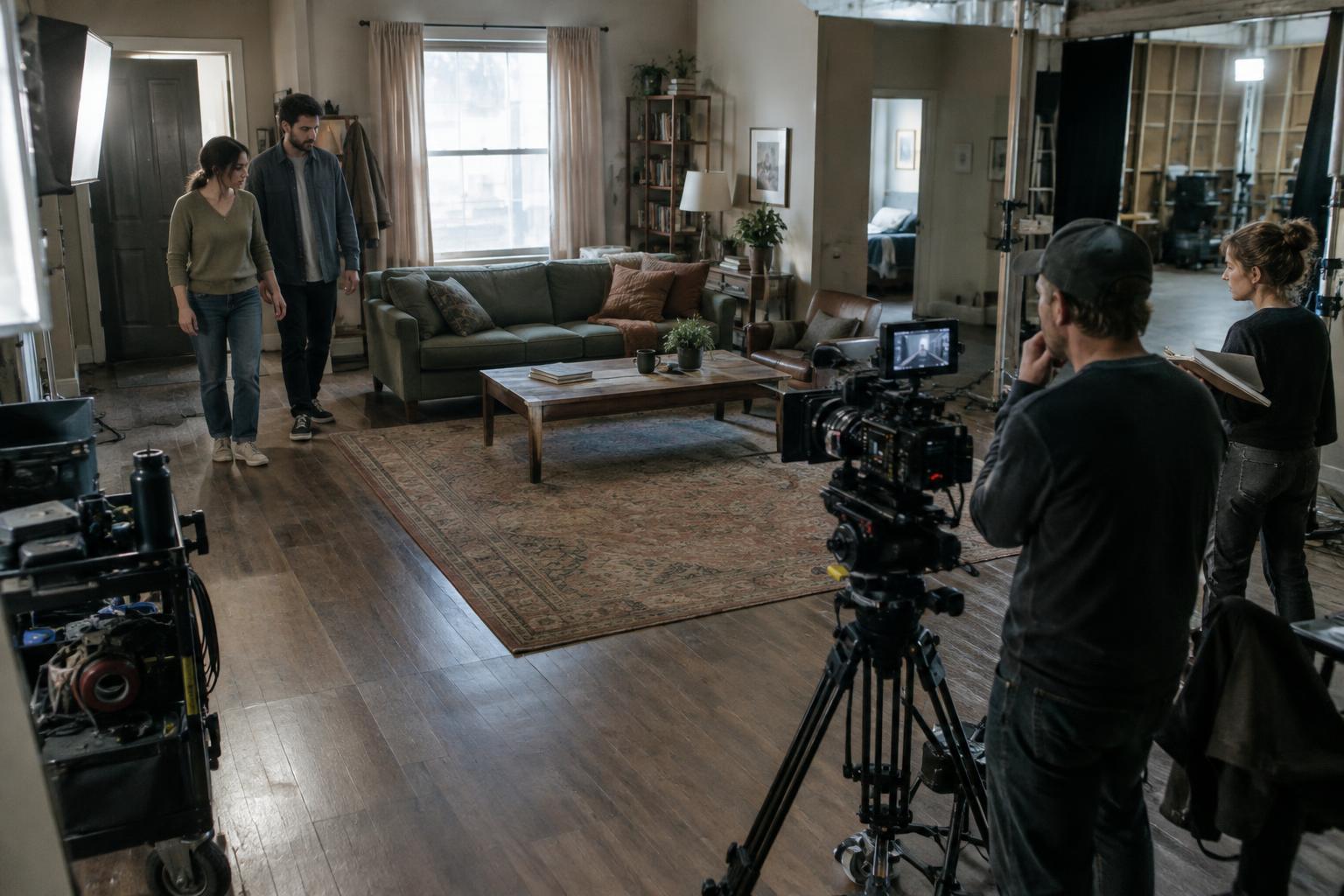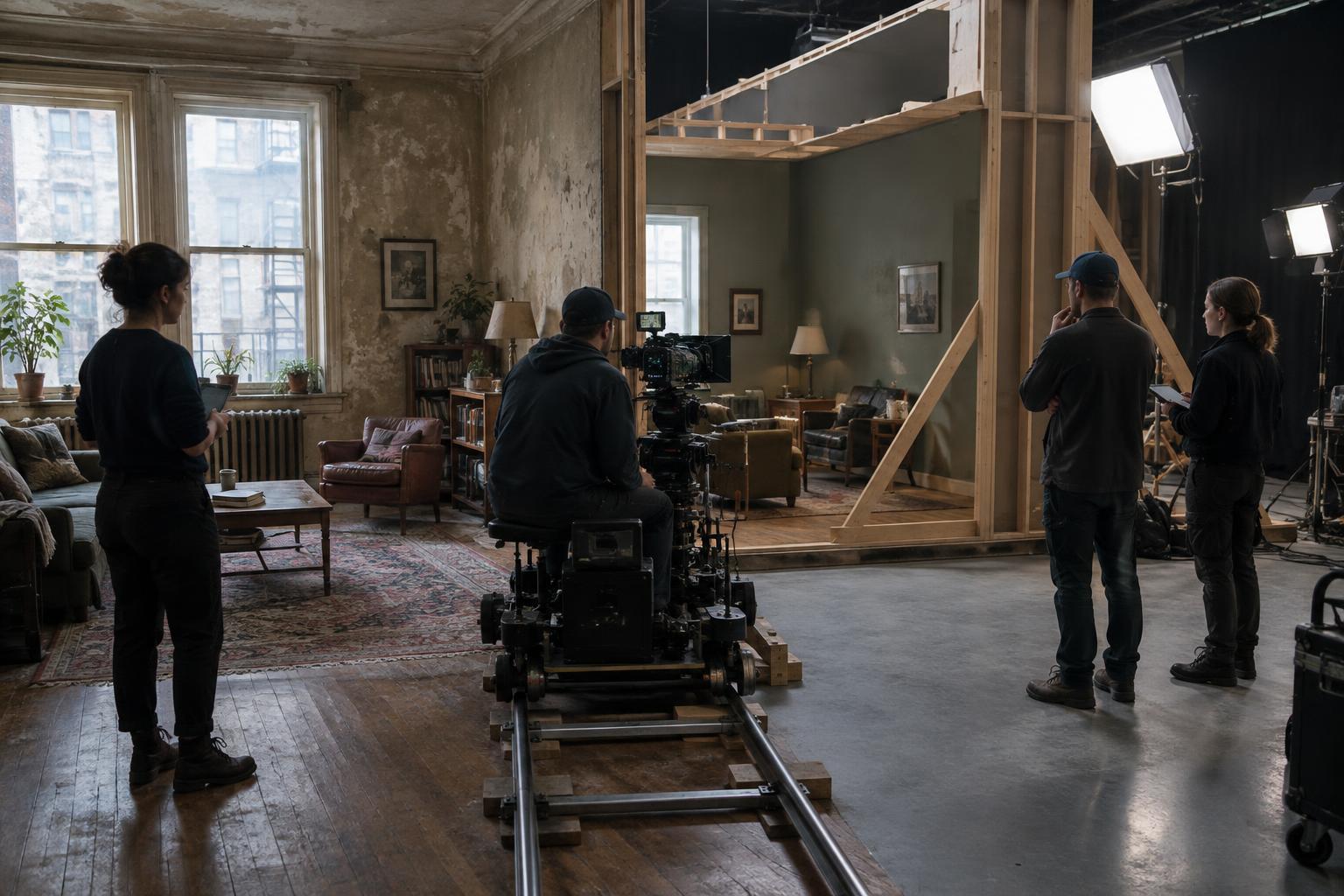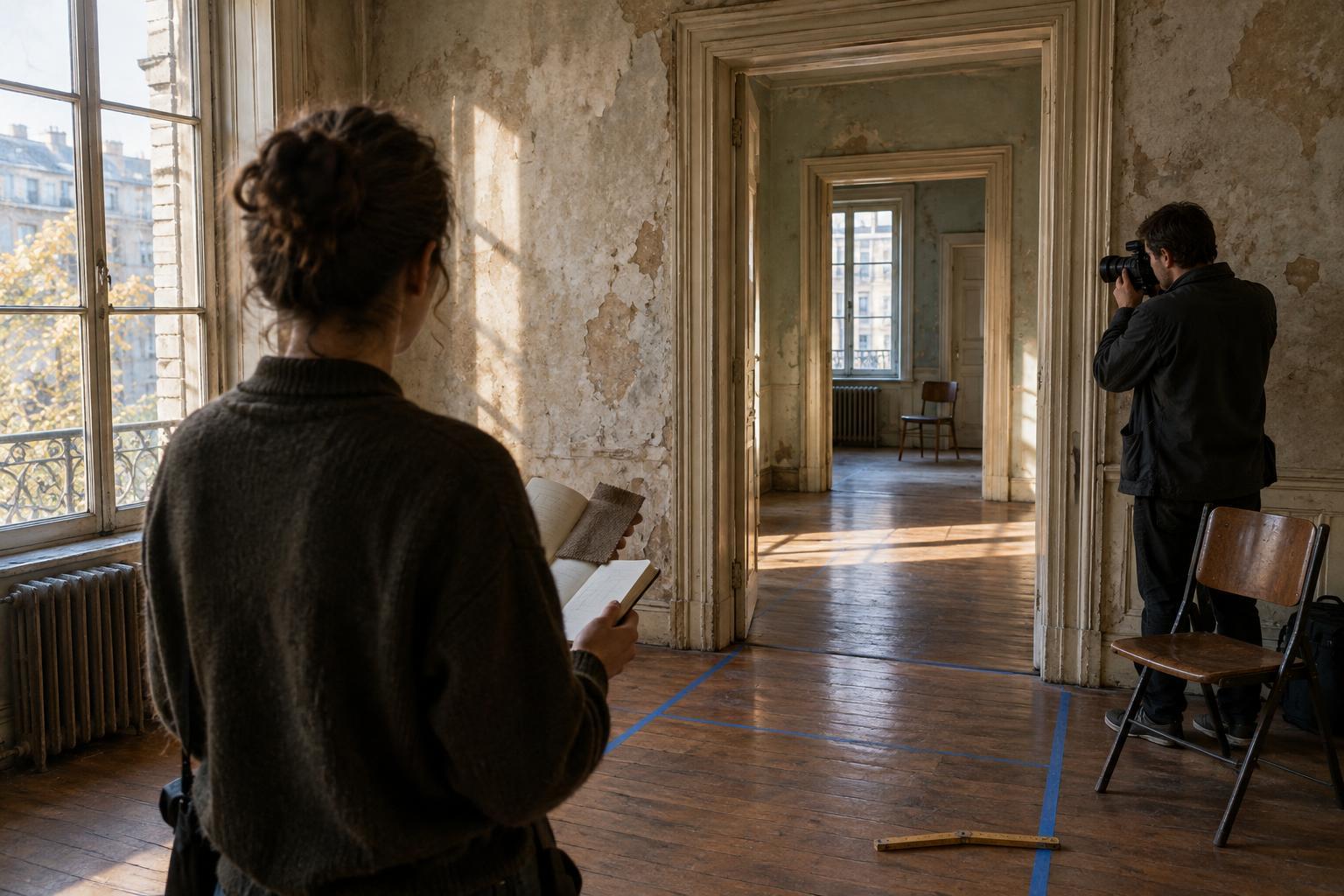
The simplest distinction is action
A prop is usually an object a performer handles or uses during a scene: a letter they unfold, a coat they put on, or a glass they lift. Set dressing is usually there to establish the space around them: books on a shelf, framed photographs, or glasses arranged on a café table. Both are part of the visible world, but they answer different immediate questions. Props help stage what a character does. Set dressing helps show where that action takes place.
The boundary is practical rather than permanent. A lamp may begin as part of the room’s dressing, then become a prop when a character switches it off. A stack of papers may remain background texture in one shot and become central to the next scene when someone searches through it. What matters is not the object’s name but its relationship to the action. Once a performer interacts with it, the production needs to consider how that interaction will be repeated across takes and camera angles.
Props turn decisions into visible behavior
A well-chosen prop gives an actor something specific to do without requiring dialogue to explain it. A character might straighten a crooked name tag before entering a meeting, hide a worn envelope when someone approaches, or keep stirring a drink long after the conversation has stalled. None of those gestures has a fixed meaning on its own. The scene, performance, and framing give it context. The object provides a way to make an internal state visible.
Props also affect blocking and rhythm. If a character has to find a key, open a box, and remove a photograph, those actions take screen time and determine where their attention goes. A director and actor can use that sequence to delay a line or redirect a glance. The choice should be purposeful: an object that creates business without changing how we understand the moment may only distract from it.
Set dressing tells a quieter story
Set dressing shapes the audience’s impression before anyone touches anything. A nearly empty apartment can feel temporary, lonely, or deliberately controlled, depending on its layout, light, and the few objects left in view. A crowded workbench might suggest active projects, accumulated habits, or a lack of space. These are possibilities, not universal codes. Effective dressing supports the particular character and situation rather than relying on a generic idea of what a room should look like.
Placement matters as much as selection. A family photograph facing a chair may feel different from the same photograph tucked behind a pile of unopened mail. Objects near a doorway can guide the eye as a character enters; a busy wall behind a face can compete with a close-up. Production design works with framing, lighting, and movement, so a convincing room is not necessarily one filled with detail. It is one whose details remain useful from the angles the film needs.
When an object changes jobs
Imagine a kitchen scene in which two siblings argue while packing up their childhood home. Boxes, dish towels, and mismatched chairs help define the space. A chipped mug sits near the sink as part of that background. Midway through the scene, one sibling picks it up and realizes the other has kept it. The mug has moved from environmental detail to an object that drives action. Its earlier placement now helps the discovery feel natural rather than planted at the last second.
That shift has practical consequences. The team may need matching versions of the mug, a clear starting position, and a plan for where it goes after each line and cut. If it breaks, spills, or passes between performers, the demands increase. Continuity is not just about avoiding mistakes; it protects the scene’s emotional logic. An object cannot carry a revealing gesture if its location or condition changes confusingly between shots.
Choose objects for the story they can sustain
For an aspiring creator, a useful approach is to list what each important object must accomplish. Does it establish a place, reveal a habit, motivate movement, or become a focus of conflict? An object can do more than one job, but assigning every item deep symbolism can make a set feel overdesigned. Leave room for ordinary things that make the environment believable without demanding attention.
Then test the choices in the scene itself. Can the actor handle the prop naturally? Can the camera see the detail when it matters? Does the surrounding dressing support the intended focus, or pull the eye away? Discussing those questions across directing, design, camera, and editing helps the world remain coherent. The best distinction between props and set dressing is ultimately a storytelling one: some objects build the space we believe in, while others give characters a way to change what happens inside it.