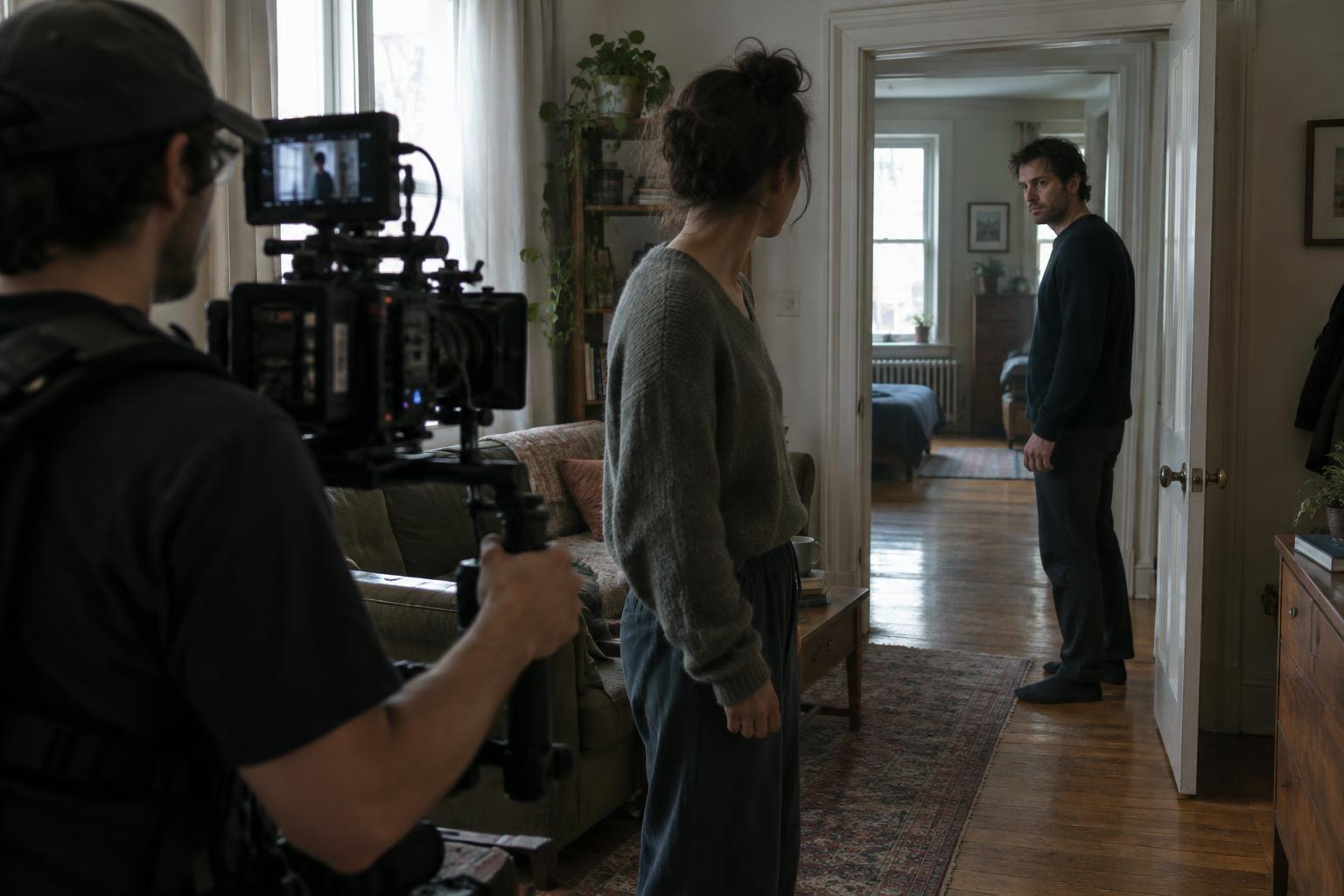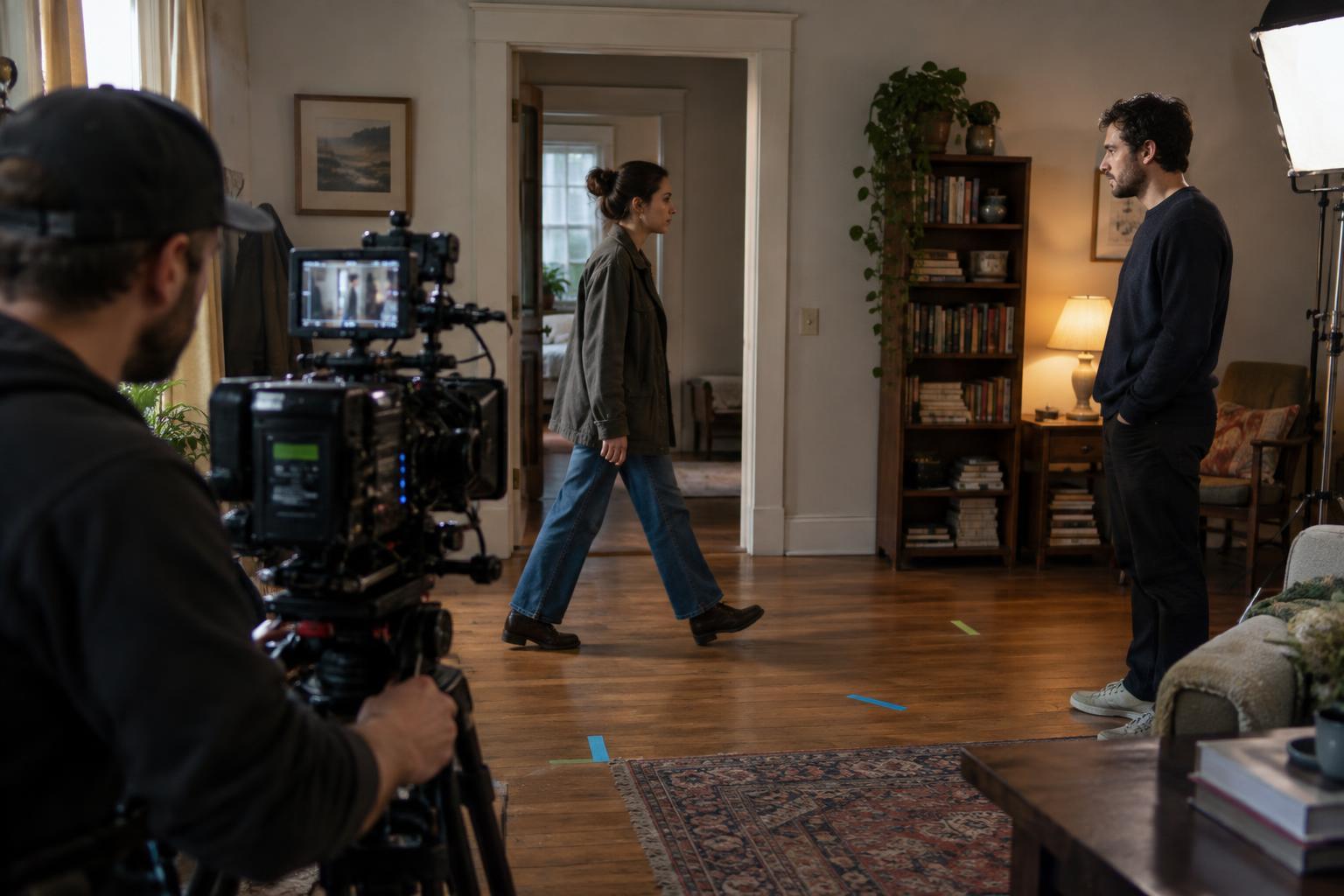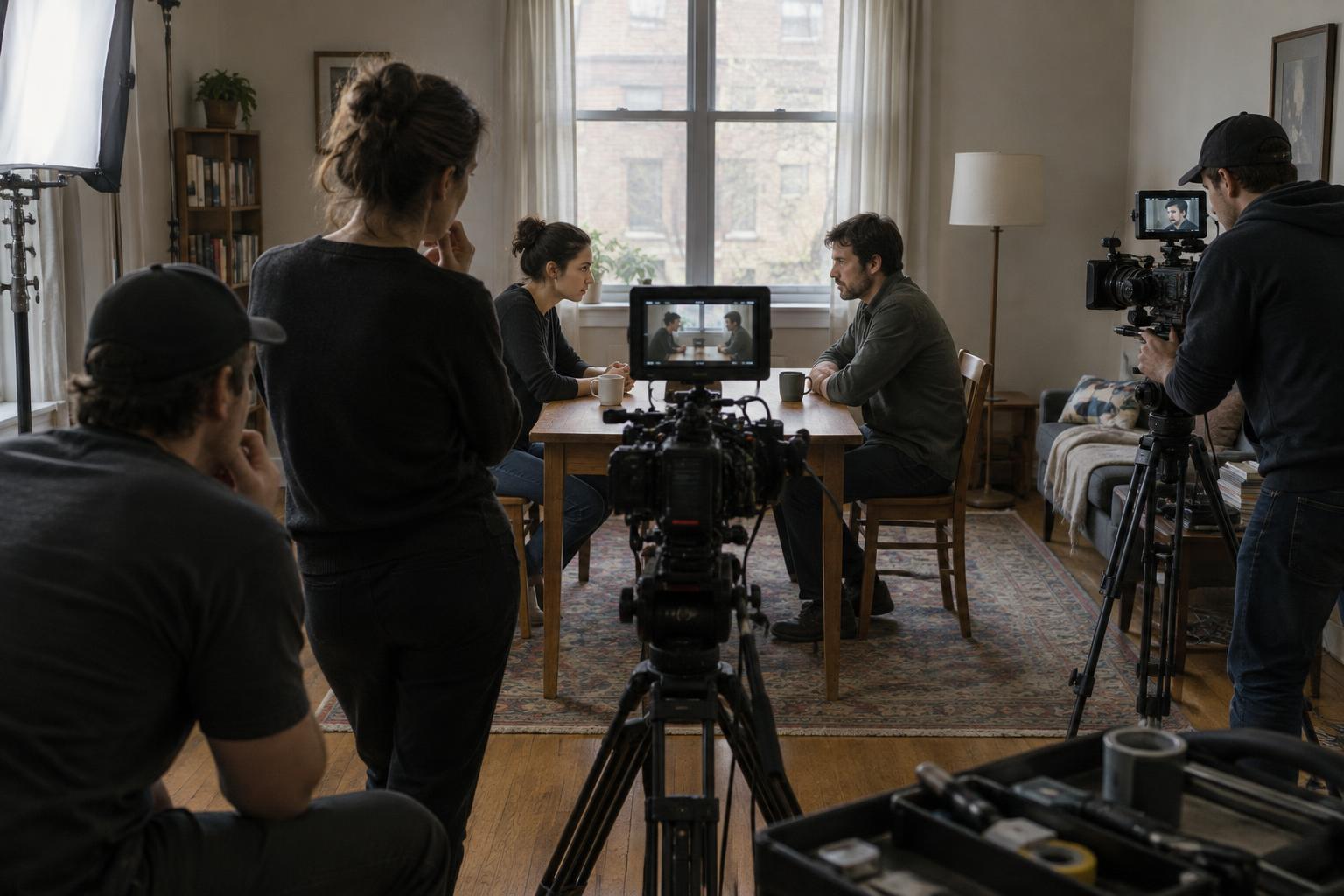
What a rack focus does
A rack focus is a change in focus during a continuous shot. The camera may stay still while a foreground object becomes sharp and a background figure softens, or the shift may happen alongside camera and actor movement. Either way, the viewer is invited to look somewhere new without the break of an edit.
Imagine a character reading a note near the lens while another person waits in the doorway. If focus moves from the note to the person, the shot can connect the information in the character’s hand with the person’s reaction. Reverse the shift, and the note may feel like a revelation prompted by that reaction. The same two subjects can suggest different relationships depending on when each becomes clear.
Rack focus is sometimes treated as a decorative flourish, but its strongest use answers a storytelling question: what should the viewer notice now, and why at this moment? Sharpness helps direct attention, though it does not control it completely. Movement, faces, light and sound can still pull the eye toward a soft part of the frame.
Build a reason for the shift
A focus change feels motivated when it follows a change in the scene’s priorities. A character notices something across the room. A quiet listener becomes more important than the speaker. An ordinary object takes on a new meaning after a line of dialogue. In each case, the shift can make the audience participate in a moment of discovery.
The direction of the rack matters. Moving from a person to an object may reveal a clue or show what they are considering. Moving from an object to a person can emphasize the human consequence of what we have seen. A shift between two faces can hand attention from one reaction to another while preserving their shared space and the duration of the moment.
Before planning the shot, try describing its turning point in a sentence: “We first watch the speaker, then realize the listener has understood something.” If that sentence is hard to complete, a rack focus may not add much. A cut, a change in blocking or simply holding the frame might express the scene more clearly.
Use distance, framing and timing together
For a visible rack focus, the subjects need to occupy different focus distances, and the image needs enough separation between sharp and soft areas for viewers to register the change. Aperture, focal length, camera position and the distances between subjects all affect how pronounced it looks. A shallow depth of field can make the transition obvious, but it also leaves less room for a subject who moves unexpectedly.
Composition gives the eye a path to follow. If both subjects remain recognizable while soft, the viewer can anticipate the destination of the shift. If the second subject is hidden until focus reaches them, the moment may work more like a reveal. Neither approach is inherently better; each creates a different level of anticipation.
Timing gives the technique its emotional shape. A quick shift can feel like a sudden realization. A slower one can let attention drift toward an uncomfortable detail. Consider where the shift begins, when the new subject becomes legible and how long the shot holds afterward. If the shot ends as soon as focus lands, the audience may have little time to read the new information.
Plan the shot for people, not just marks
A focus pull is easier to repeat when actors, camera and focus operator share a clear plan. Blocking provides useful cues: a hand lowers, someone turns, or a performer reaches a position in the room. Rehearsal can show whether the shift should follow that action, lead it slightly or wait until it is complete. The goal is not necessarily mechanical perfection; it is a transition that supports the performance.
The background deserves attention too. A bright practical light, a moving extra or a high-contrast shape may compete with the intended subject even when out of focus. Check the frame at both ends of the rack and during the transition. If the viewer’s eye repeatedly goes to the wrong place, changing the staging or lighting may help more than making the focus pull faster.
Sound can also prepare an attention shift. A voice from deeper in the room may make a move toward that speaker feel natural, while a small off-screen noise can create expectation before the source comes into focus. This gives the shift a reason within the scene rather than relying on blur alone to announce importance.
Know when to leave the image alone
Not every change of attention needs a rack focus. Keeping both subjects sharp can let viewers choose where to look and notice tension between simultaneous actions. Holding focus on one person while another moves in the background can make that background action feel overlooked, uncertain or secondary. A cut can be more direct when the story needs an immediate new viewpoint.
When reviewing a shot, watch it without concentrating on the technique. Ask whether your attention moves at the intended moment and whether you have enough time to understand what the new subject adds. If the focus shift calls more attention to itself than to the scene, simplify it. The most useful rack focus does not merely show that the camera can change its mind; it shows why the story has.