What visual continuity helps the audience understand
Visual continuity is not a demand that every frame look alike. It helps viewers understand where people and objects are, which way they are moving, and how one shot relates to the next. When those relationships change without a visible cause, a viewer may briefly stop following the action and try to reconstruct the room instead.
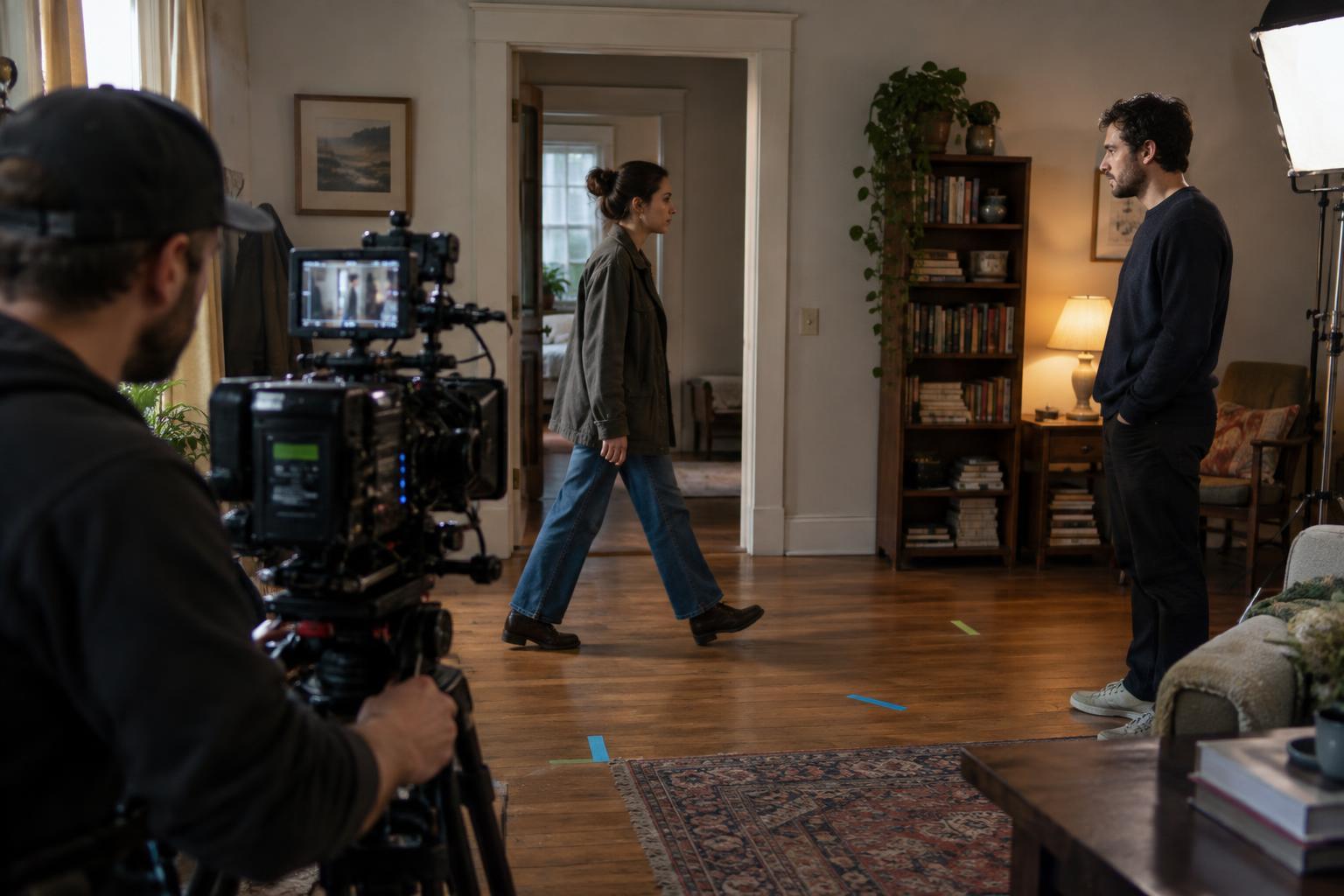
Imagine a person walking toward a doorway on the right side of the frame. If the next shot shows them entering from the right and moving left, it may look as though they have turned around. That cut could be perfectly sensible if the camera has moved to the other side of the action, but the audience needs enough information to make that change of viewpoint legible. The goal is not to prohibit surprising images. It is to make sure surprise comes from the story rather than an accidental loss of orientation.
Establish a working screen direction
Before shooting a movement, choose the direction it will generally travel across the screen. If a cyclist is heading toward a destination from left to right, close-ups of the cyclist and wider views of the route will usually read more clearly when they preserve that direction. A shot from the opposite side of the route can make the cyclist appear to ride back the way they came, even though the real-world movement has not changed.
The familiar 180-degree guideline offers a way to manage this. Picture an imaginary line along the action: between two people in conversation, or along a path of travel. Keeping the camera on one side of that line tends to preserve left-right relationships between shots. It is a guideline, not a fence. You can cross the line, but it helps to show the camera moving across it, place a clarifying shot on the line, or establish a new angle before relying on the reversed view.
Track positions and eyelines together
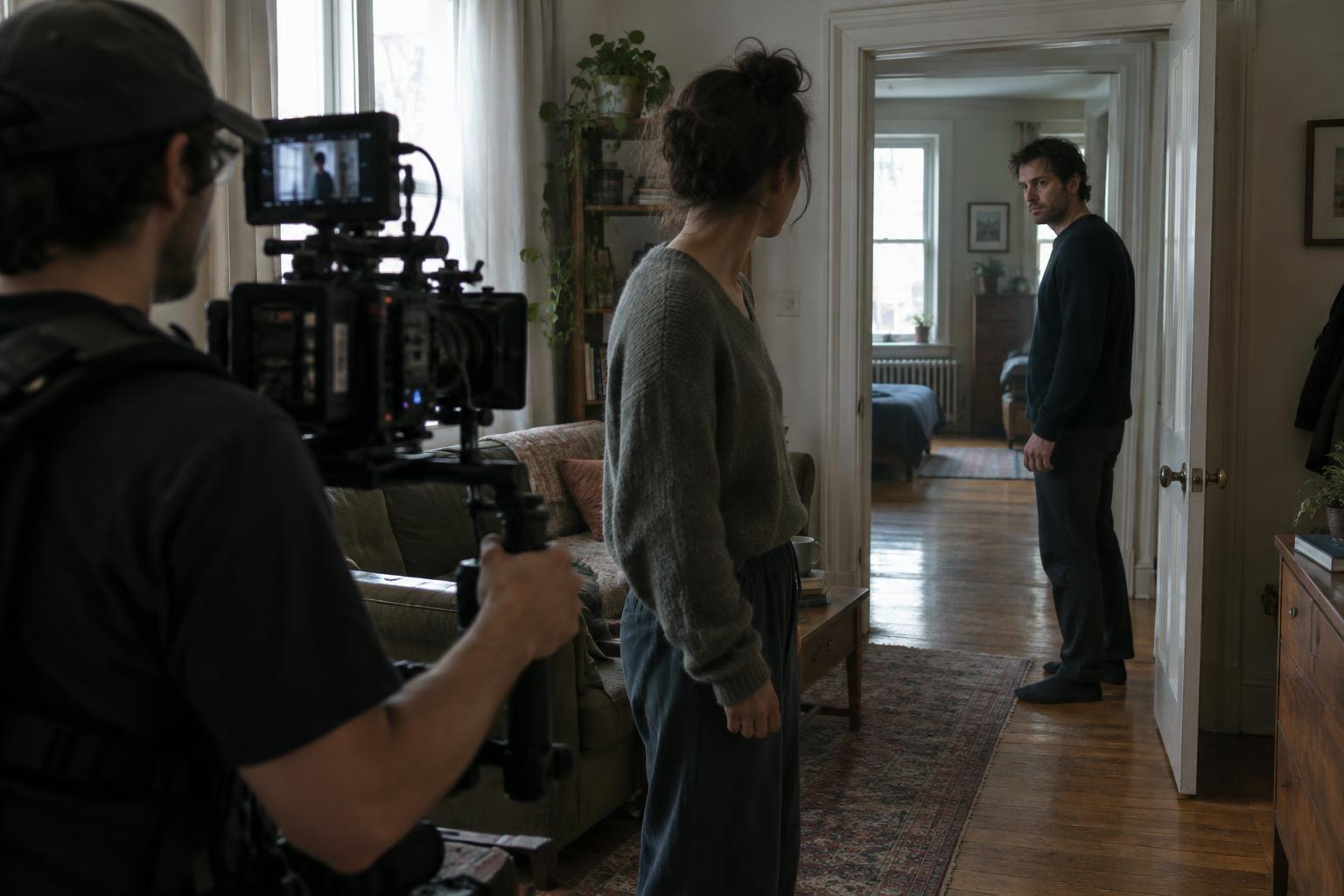
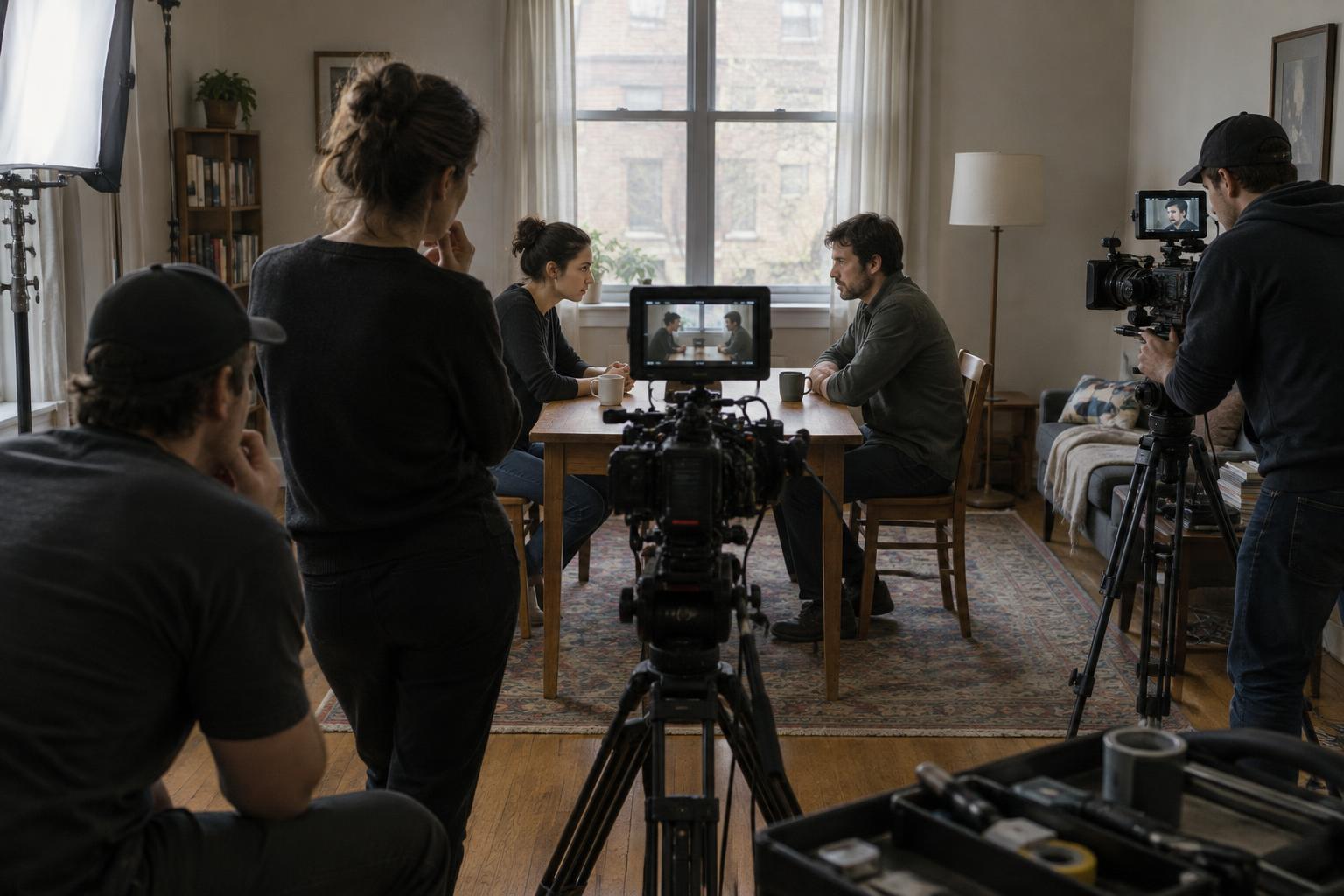
Continuity problems also arise when characters remain seated. In a conversation, one person may appear on the left looking right while the other appears on the right looking left. If an isolated close-up suddenly changes an eyeline, both people can seem to look in the same direction. The performances may still match emotionally, yet the exchange can become harder to read.
A simple overhead diagram can help during planning. Mark each person’s position, the direction they face, and where the camera sits for each intended setup. On set, note changes in blocking as well as camera placement. If an actor moves to the other side of a table, the old diagram no longer describes the scene. Recheck the eyelines and any shots that must cut around the move. A brief wide shot may be enough to show the new arrangement without drawing attention to the mechanics.
Make movement match at the cut
Screen direction is only part of movement continuity. An action that begins in one shot should have a believable relationship to its continuation in the next. If a hand is nearly on a door handle in the wide shot but far from it in the close-up, the action may appear to jump backward. A walk can feel similarly uneven when a character exits one frame at speed and enters the next as though starting from rest.
During coverage, identify actions that will bridge shots: reaching, turning, sitting, crossing a threshold. Give the editor a little movement before and after each action rather than ending every take at the presumed cut. In editing, try different cut points. Cutting while an action is underway can draw attention toward its destination, but a matched gesture cannot rescue a confusing change of geography. First check that the character is still headed where the audience thinks they are headed.
Use deliberate changes without losing the viewer
A reversal of screen direction can be expressive. It might underline a decision to turn back, introduce an opposing force, or make a familiar space feel unfamiliar. For that effect to register, the film should distinguish a deliberate shift from an unexplained mismatch. Show the turn, reveal a landmark from the new angle, or allow a shot long enough for viewers to recognize where the camera has gone.
A useful final check is to watch a sequence with the sound off. At each cut, ask where the characters are, what they are looking at, and which way they are traveling. If the answer depends on dialogue to repair the image, consider whether a different shot, cut point or brief view of the space would help. Clear continuity gives the audience a stable map; once that map exists, a filmmaker can choose when to redraw it.