What sound perspective tells the viewer
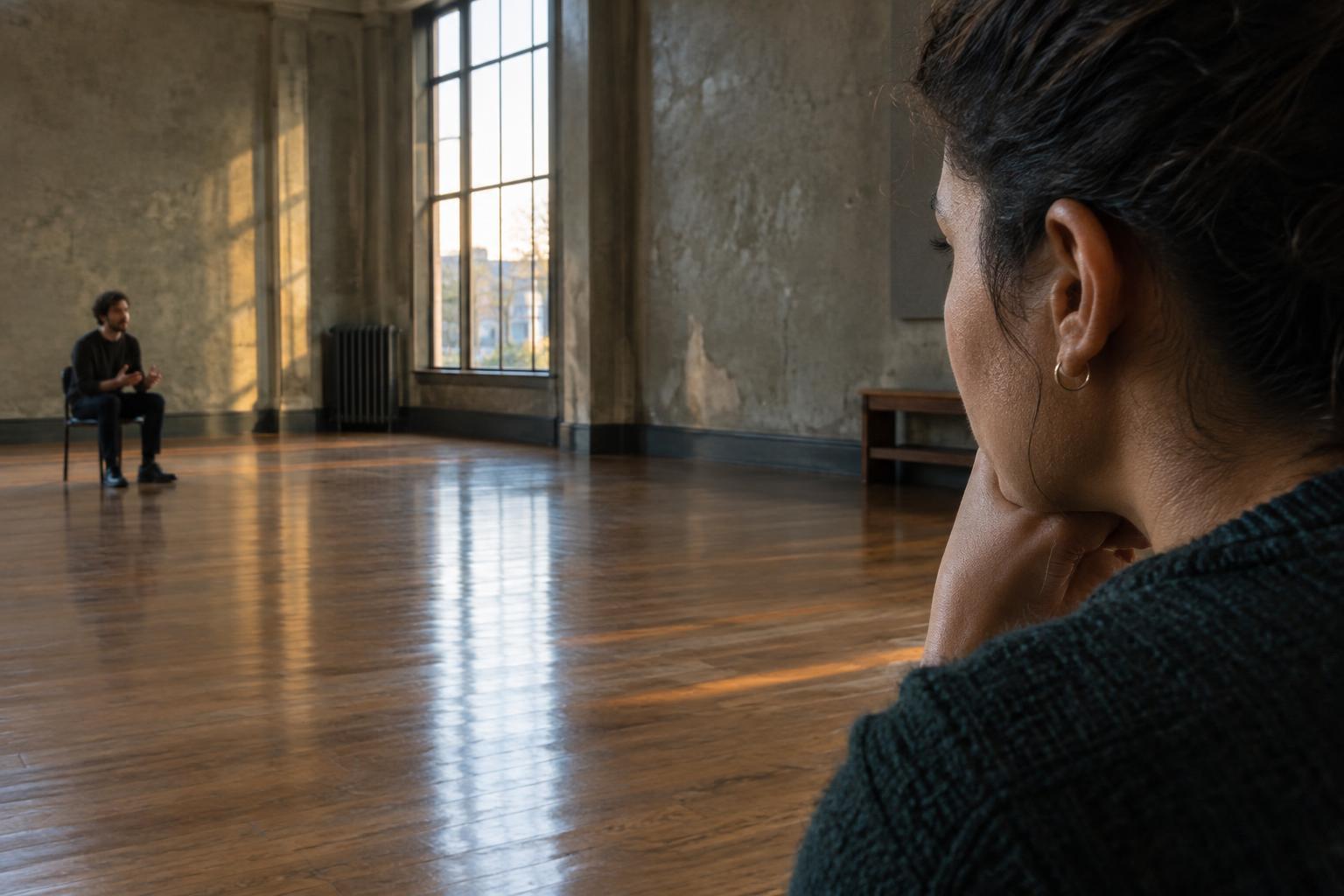
Sound perspective is the sense of where a sound comes from in relation to the listener. A character speaking beside the camera might sound full and detailed. The same character at the far end of a hall might seem quieter, less distinct and more entwined with the room. Those differences help viewers understand a scene’s layout, even when the source is outside the frame.
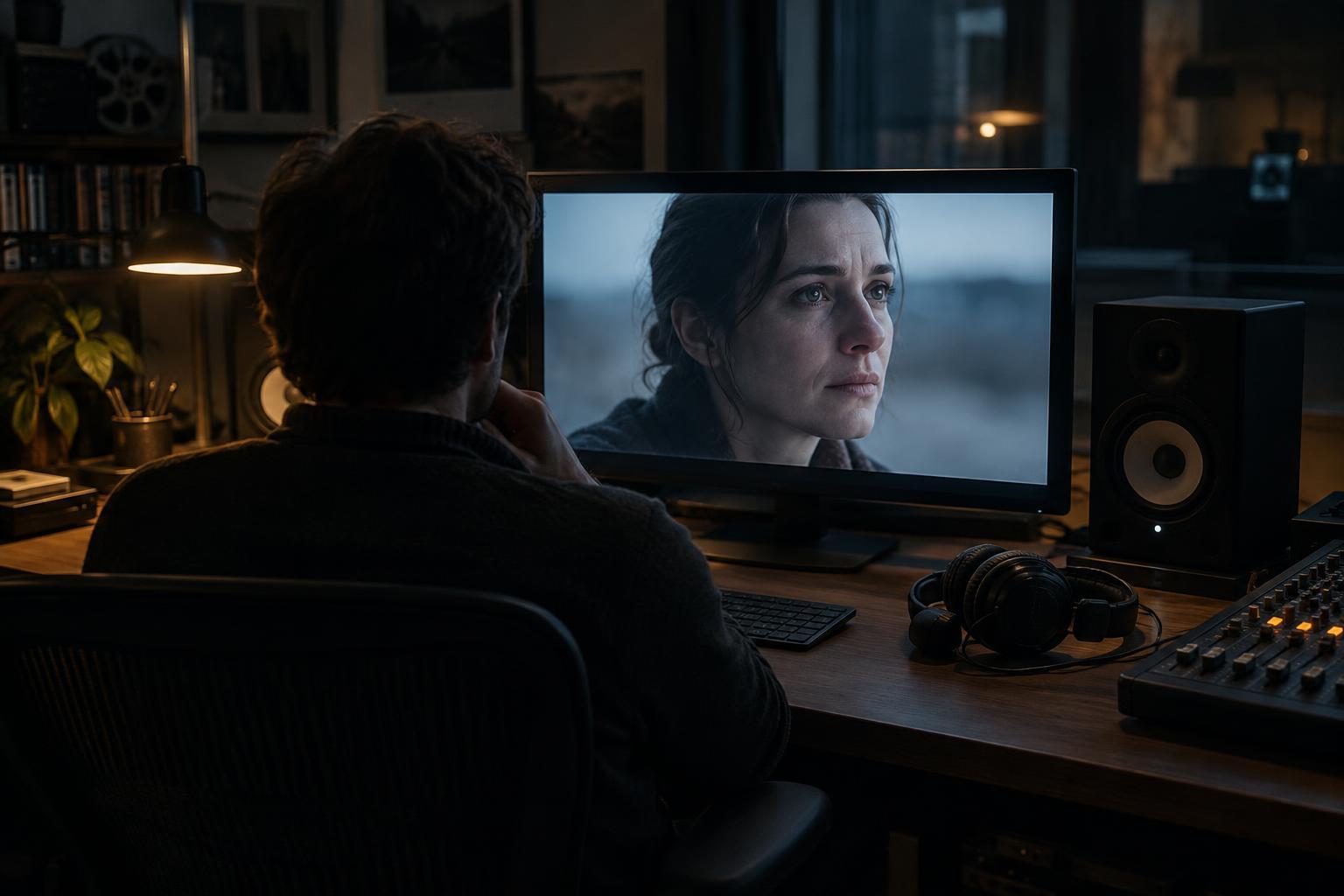
Perspective is also a storytelling choice. A wide shot does not always require distant sound, and a close-up does not always require intimate sound. Keeping a voice unusually close over a wide image can draw attention to its words or suggest that the scene is being filtered through someone’s memory. Letting a close-up retain a distant voice can make a character feel isolated. The useful question is not simply “How far away is the source?” but “Whose experience should the audience share?”
Distance is more than volume
Lowering a sound’s level can suggest distance, but volume alone rarely creates a convincing change in perspective. Nearby sounds often contain small details: breath between words, the scrape of fabric or the crisp start of a footstep. Farther away, those details may be harder to distinguish. Other sounds in the space can compete with the source, making it less prominent without making it disappear.
Consider someone calling from another room. If the voice is merely turned down, it may still sound as though it was recorded close to the microphone. Softening some of its crispness, allowing the room to color it and placing it among other sounds can better convey separation. None of these changes has to be extreme. A listener needs enough information to recognize the voice while sensing that it must travel through a space to reach us.
Let the space have a voice
Rooms alter what viewers hear. A tiled corridor might give footsteps a hard, lingering quality, while a furnished bedroom may make the same steps feel contained. An open exterior may offer little obvious reflection, leaving a distant sound exposed against wind, traffic or other background activity. These are broad possibilities rather than fixed rules: the size, surfaces and contents of a place all affect its character.
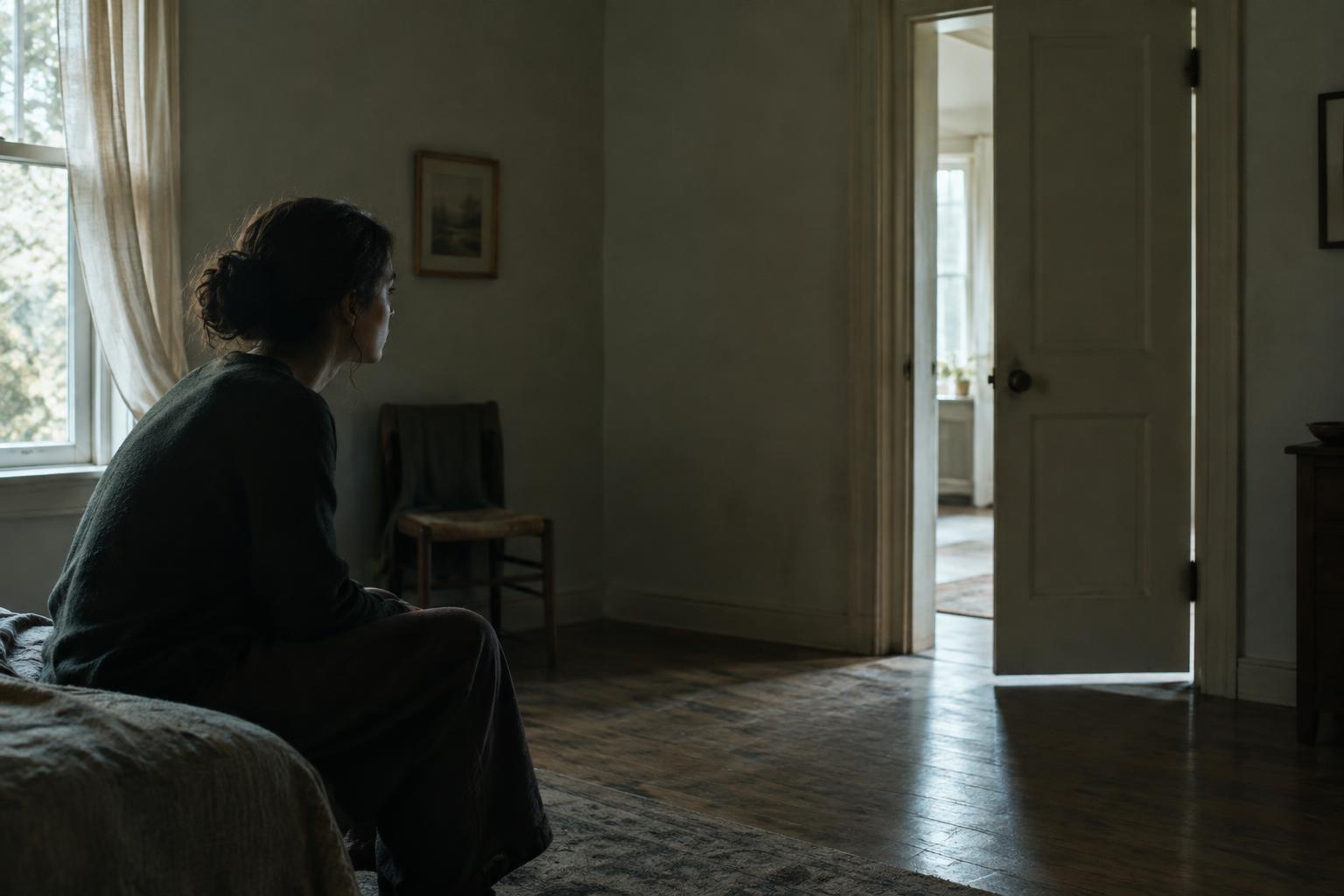
Sound can establish a location before an image confirms it. Imagine a scene that begins on a closed door. Muffled conversation and the faint clatter of dishes suggest a populated room beyond it. When the door opens, the voices become clearer and the background expands. That shift gives the cut or movement a physical consequence. It also helps the audience understand the threshold the character has crossed without an explanatory line of dialogue.
Match changes in perspective to the scene
Editing determines when the audience’s listening position changes. If a conversation cuts between two people across a table, preserving a fairly stable sound perspective may keep the exchange easy to follow. If the scene cuts from one person’s face to what they notice at the far end of a crowded room, a change in the surrounding sound can redirect attention. The transition should serve the scene’s point of view rather than mechanically follow every new camera angle.
Continuity matters when sounds carry across cuts. A passing vehicle can briefly mask dialogue in both shots, connecting them in time and place. Conversely, a sudden drop in background sound can mark a shift into a character’s private attention. Such changes are most legible when the soundscape has first given viewers a consistent sense of the environment. Without that foundation, an abrupt change may feel accidental rather than expressive.
Build perspective with a simple listening pass
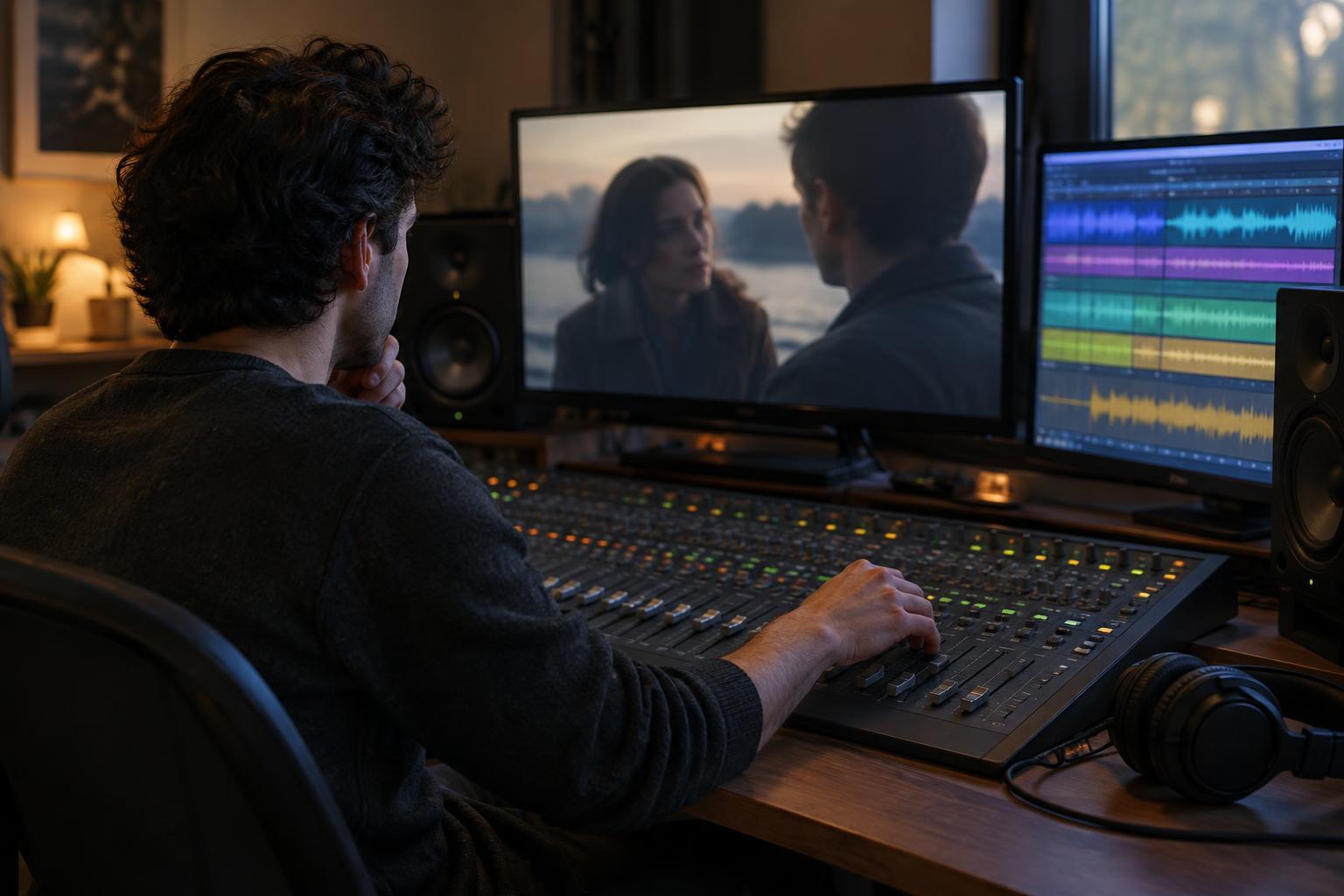
For a scene you are planning or editing, start by mapping the sources: who is speaking, what is moving, which sounds belong offscreen and where the listener seems to be. Then listen with the image hidden. Can you sense which sounds are near, which are beyond a doorway and which belong to the wider environment? If every element feels equally close, identify the details that could recede. If important dialogue becomes hard to follow, reconsider how much distance the story actually needs.
Finally, watch the scene again and note where visual and sonic distance disagree. Some mismatches will need correction; others may be the scene’s strongest idea. A sound perspective works when its choices feel purposeful, whether they reinforce the visible space or reveal how a character experiences it.