What changes when the camera rolls
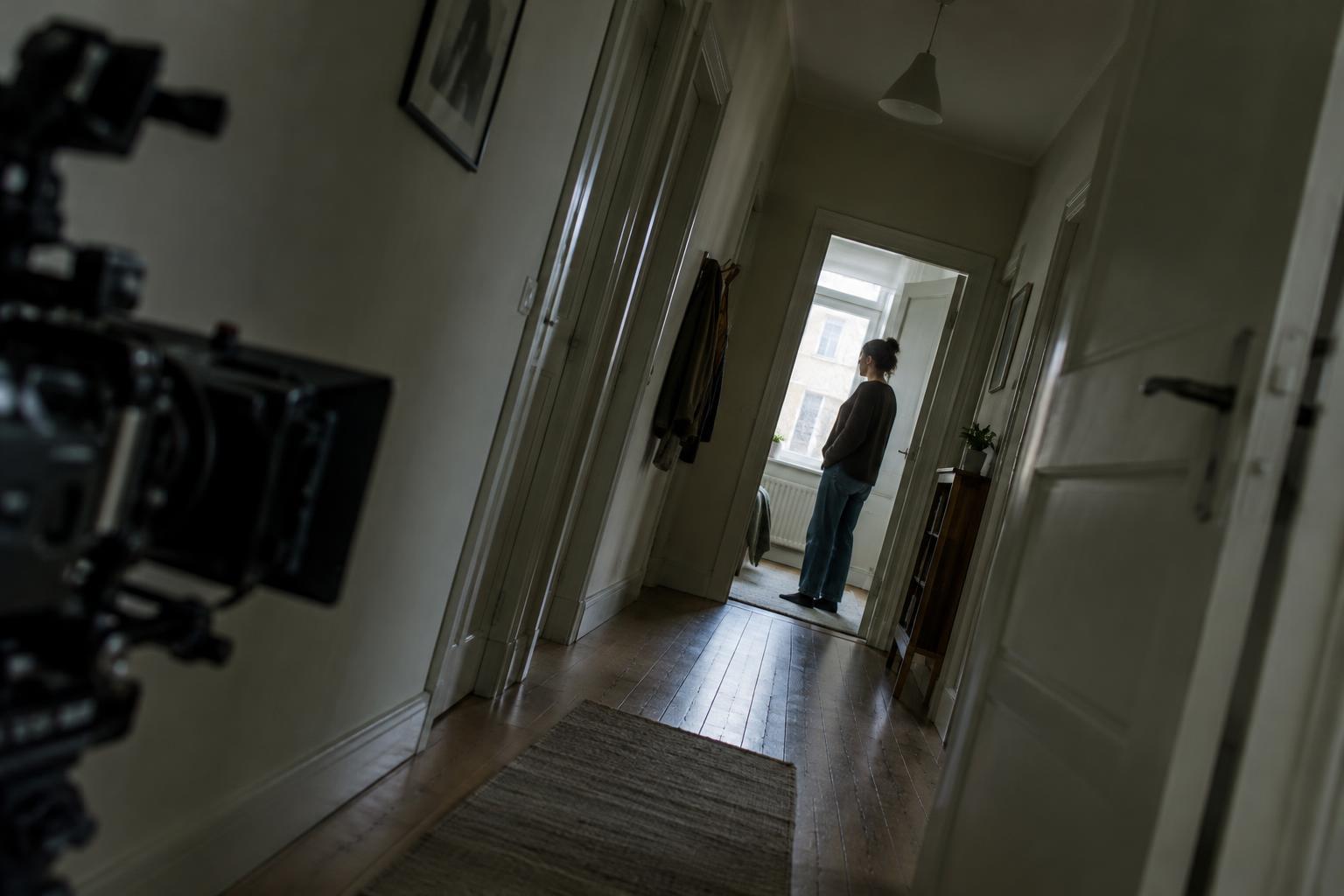
A Dutch angle is a shot made with the camera rotated around the lens axis, so lines that would normally appear upright lean across the frame. This is different from tilting the camera up or down. A vertical tilt changes where the lens points; a camera roll changes the orientation of the entire image. Doorframes, shelves and horizons can all appear slanted, even when nothing in the location has moved.
That change can make an ordinary space feel less settled. It may suggest a character’s uncertainty, draw attention to a shift in a scene, or turn a familiar setting into something harder to read. It does not carry one fixed meaning, though. A playful scene might use a steep angle for energy, while a restrained drama might use a slight lean that viewers register without consciously naming it. The surrounding shots and the moment in the story give the angle its meaning.
Find a reason inside the scene
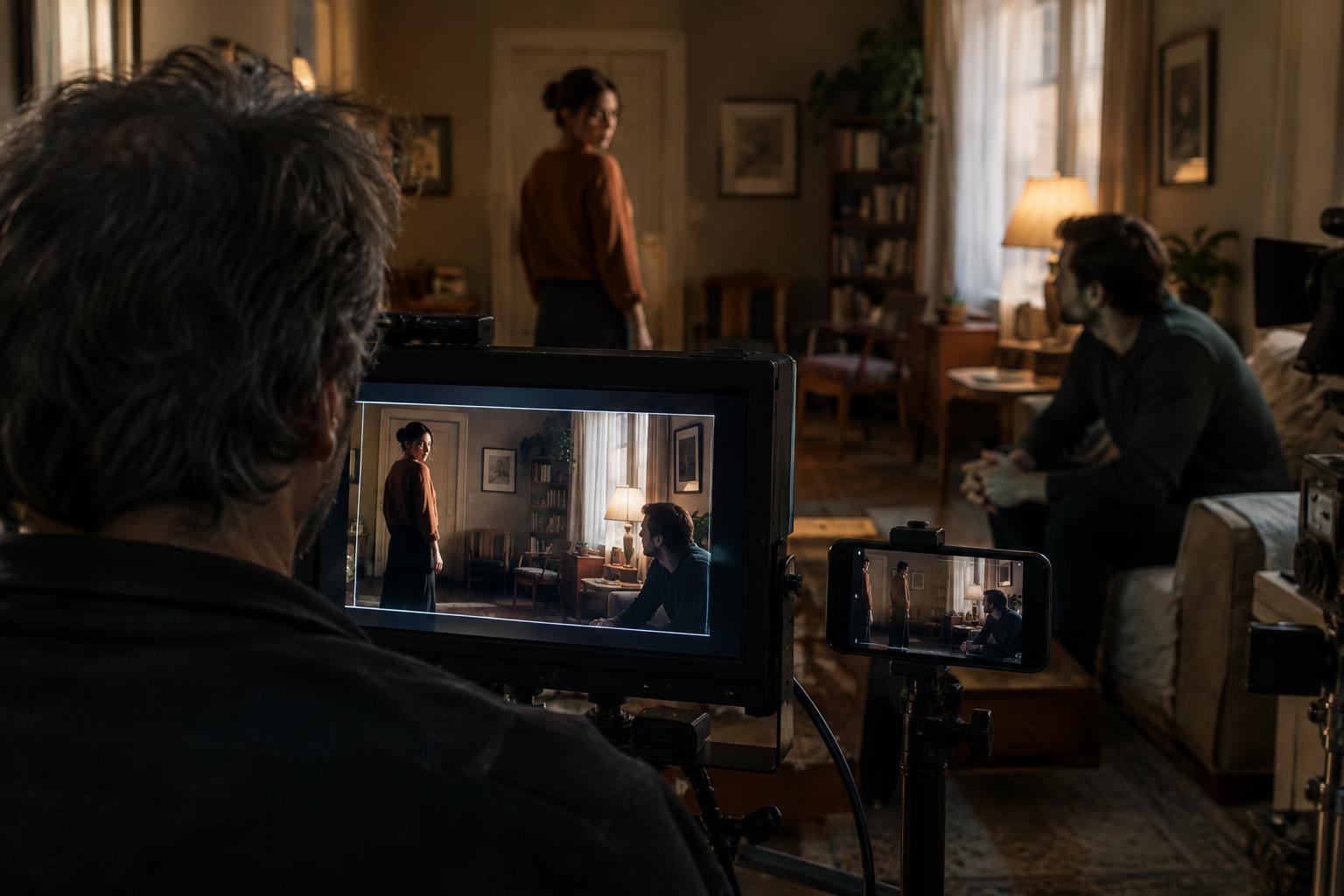
Before rolling the camera, identify what changes for the character or the audience at that moment. Perhaps a person enters a room expecting a routine conversation and realizes they have misunderstood it. Keeping the early shots level establishes a visual baseline; introducing a slant as the conversation changes gives viewers a difference to feel. If the whole sequence is tilted from the start, that shift may be harder to notice.
The angle need not imitate a character’s literal vision. It can express how the scene is being presented rather than imply that the person sees the room at a slant. If you want a more subjective effect, consider what else would make that viewpoint clear: a preceding look, a reaction, or a pattern of shots tied to the character. Without such context, a tilted image may simply look like a general signal that something is wrong.
Ask whether a level shot could make the same point more effectively. Blocking, distance, light and performance may already convey the change. A Dutch angle is most useful when its disruption adds something specific—for example, making a stable-looking environment feel newly difficult to navigate. It should not have to carry an emotion that the scene itself has not established.
Compose the slant, not just the subject
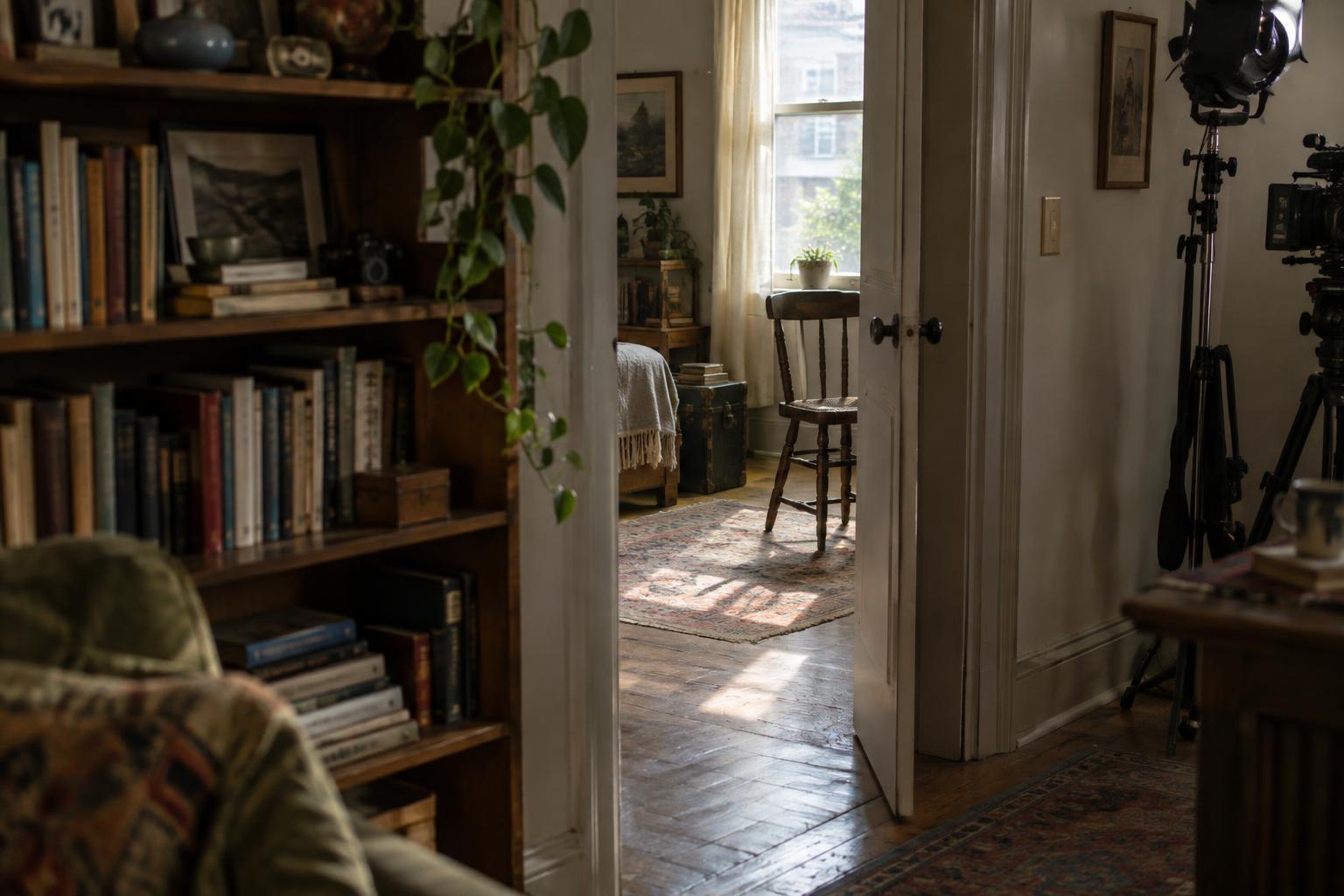
The effect depends partly on what the frame contains. A blank wall gives viewers few upright references, so a modest camera roll may barely register. Doorways, columns and a visible horizon make the rotation easier to perceive. Before choosing an angle, look at the lines behind and beside the subject. Notice whether they guide attention toward the face or pull it into an unimportant corner.
Rotation also changes the usable space around a person. A standing character may seem to press against the edge of the frame, while an empty triangular area opens elsewhere. Those shapes can be expressive, but they can also obscure a gesture or leave too little room for movement. Rehearse the action while watching the frame rather than judging the setup from a still image.
The degree of roll matters less than its relationship to nearby shots. A small change may be enough if everything around it is level; a larger angle may suit a sequence with more overt visual exaggeration. If you cut between two tilted views, check whether their directions and compositions create a rhythm you want. Opposing slants can feel energetic, but they may also make a simple exchange unnecessarily difficult to follow.
Plan the way back to level
Treat the return to an upright frame as part of the choice. You might cut back to level when a character makes a decision, when new information resolves confusion, or when the scene moves to a different point of view. You can also remain tilted after the immediate event has passed if the story calls for its effects to linger. Either approach works best when the visual change has a purpose rather than happening by accident.
For a short exercise, film a simple scene in three passes: entirely level, tilted only at its turning point, and tilted throughout. Keep the performances and blocking as consistent as practical. Compare how clearly each version marks the change and whether the angle draws attention away from what the actors are doing. The aim is not to prove that one style is always better. It is to discover when a slanted frame gives a particular moment more precision than a level one.