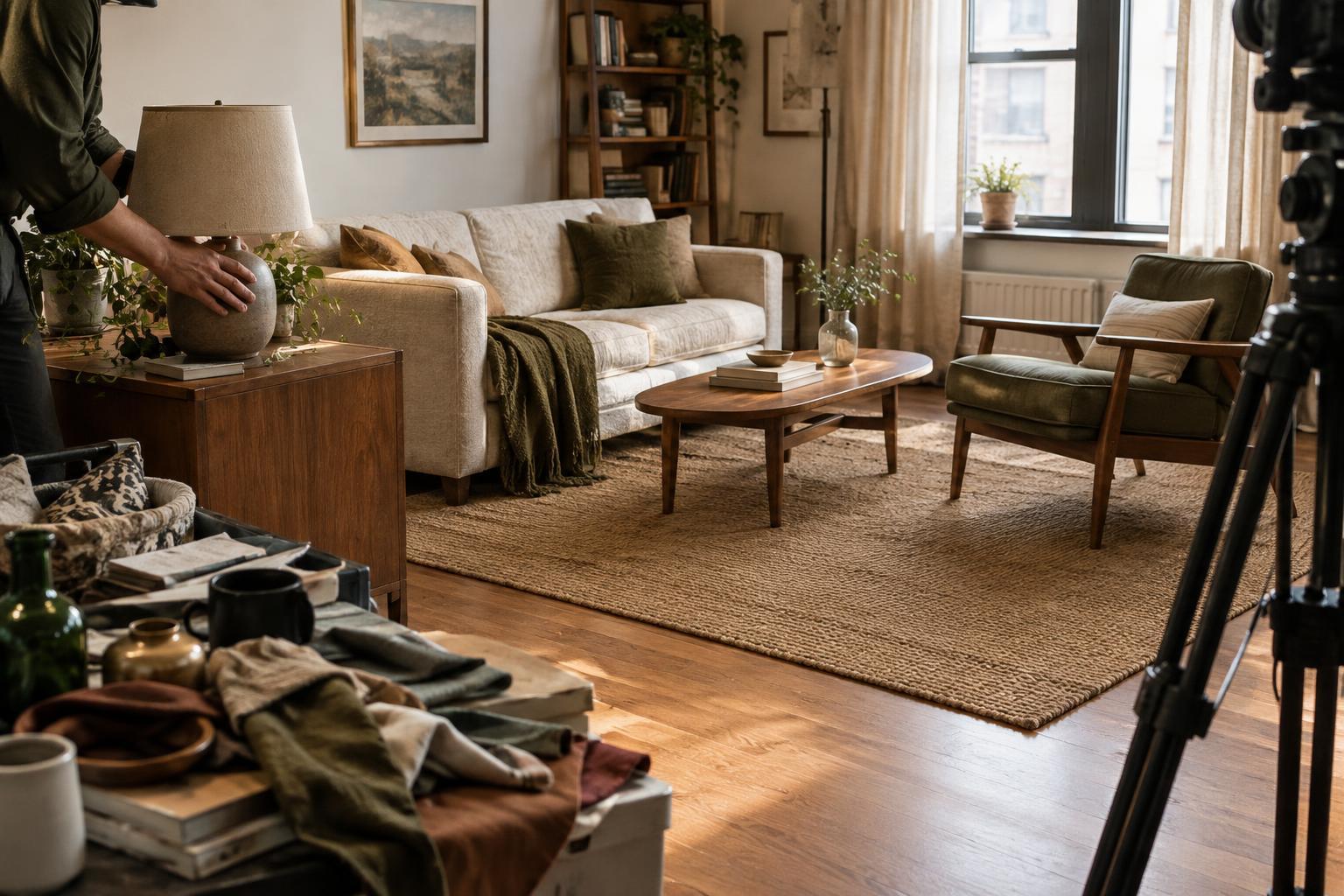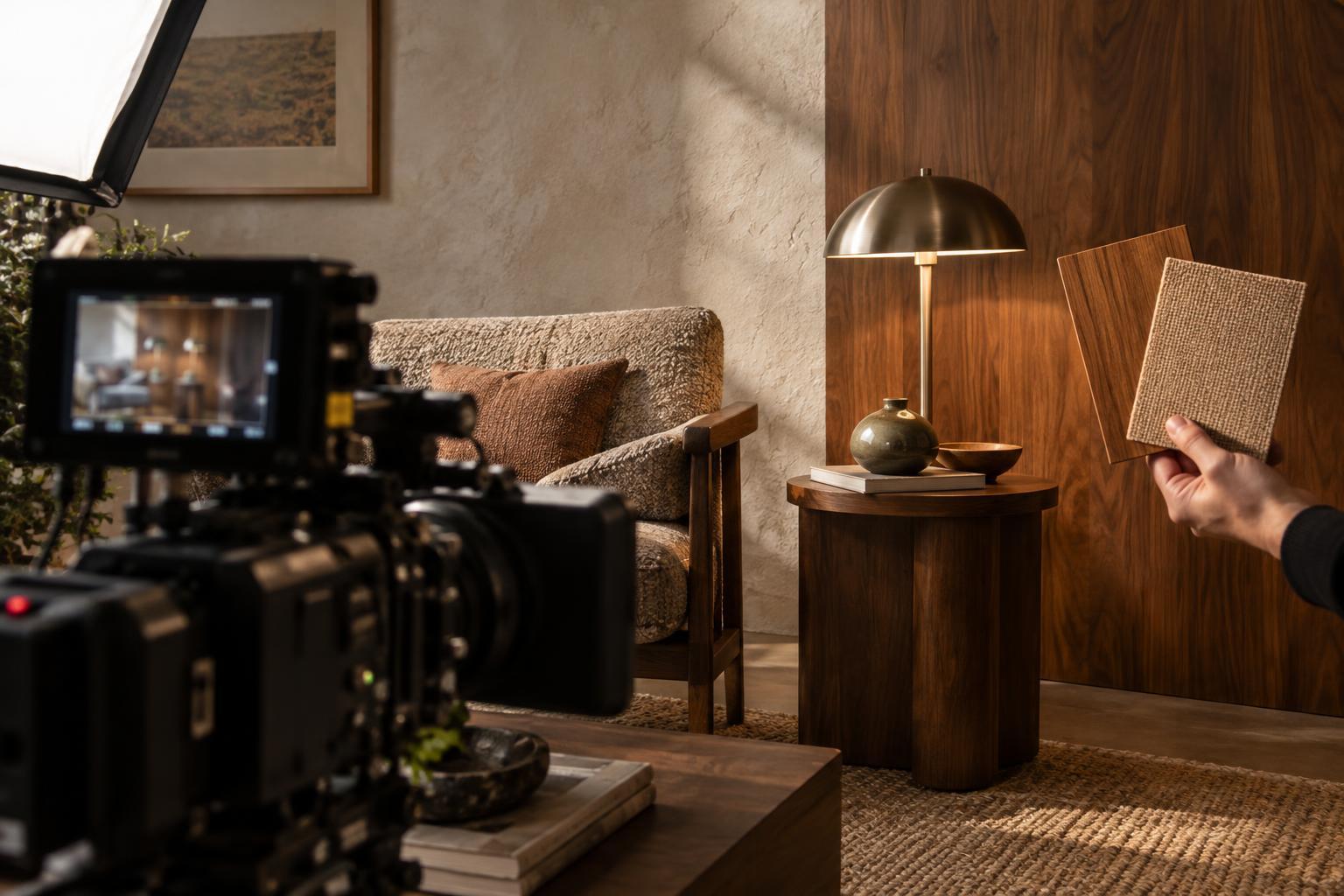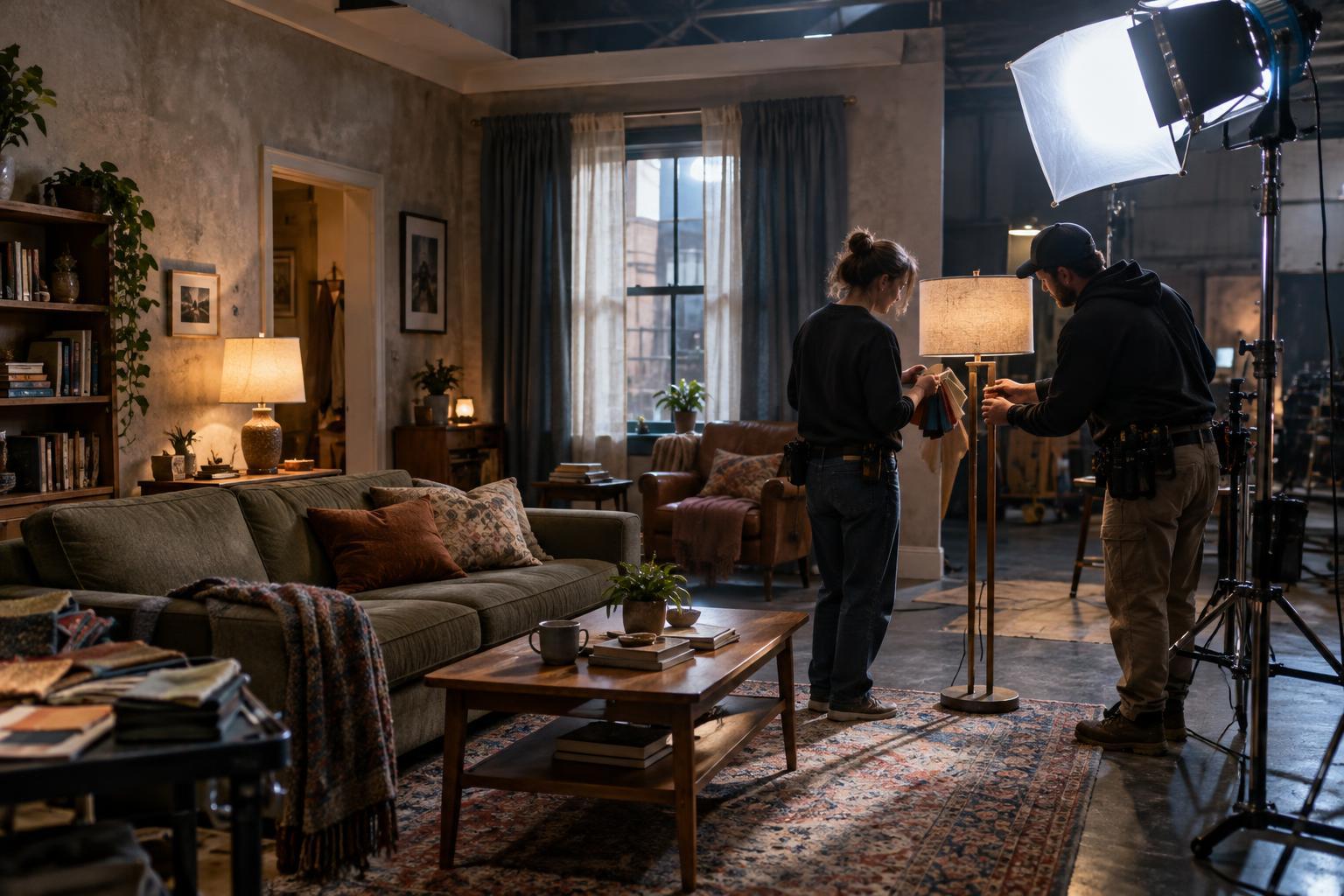
Start with the story’s version of the space
A room can be filmed out of story order. A conversation shot on Monday may continue in a close-up filmed on Thursday, after the set has hosted several other scenes. Prop and set-dressing continuity is the work of making those pieces fit together—or making a visible difference feel intentional. The aim is not to keep every object frozen. It is to know which version of the space belongs to each moment in the story.
Begin with a scene-by-scene breakdown. Note where characters are in the story, what they bring into the space, what they move, and what they leave behind. A table might need three distinct states: untouched before an argument, cluttered during it, and partly cleared afterward. Labeling those states is more useful than a single instruction to “match the table.” It also helps the art department, props team, script supervisor and director discuss the same moment, even when scenes are scheduled on different days.
Record positions and conditions, not just inventory
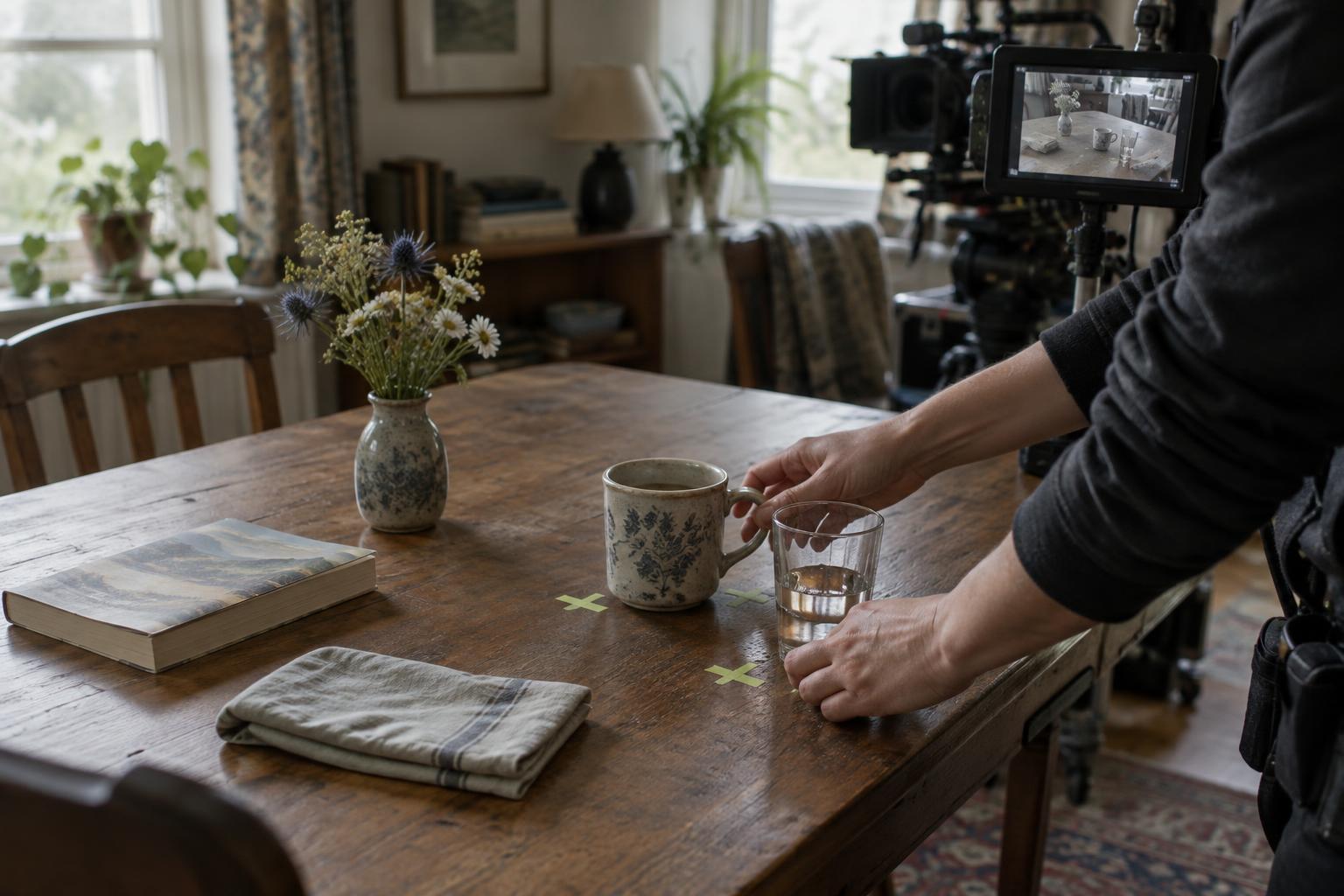
An inventory answers whether a lamp or mug belongs in the room. A continuity record answers which way the lamp faces, where the mug sits, how full it appears, and whether its handle points toward the performer. Start with a wide reference photograph of the set, then capture closer views of areas the camera or actors will use. Where useful, include a fixed landmark such as a table edge or window frame so an object’s position is easier to judge.
Written notes should cover details a photograph may not settle: which book is open, which side of a cushion is stained, whether a drawer is latched, or which duplicate prop was used. Give files and notes labels that identify the scene, story state and setup. A folder full of unlabeled images can create uncertainty rather than resolve it. If a prop is handled, record its starting and ending positions; both may matter when coverage is filmed later.
Build a reset that can survive a busy day
A useful reset can be performed quickly and checked by someone who was not present for the previous take. Group instructions by area or action: the desk surface, the doorway, the objects a performer handles. Put the most visible or easily disturbed details first. If permitted on the set, discreet marks or measurements can help restore furniture and dressing, but they should support the visual reference rather than replace it.
Plan for objects that change through use. Paper can crease, food can diminish, liquids can spill, and packaging can tear differently on each take. Decide which changes must match closely, prepare duplicates when practical, and photograph a clean starting state before the first take. After a setup wraps, note any condition that cannot simply be reset. That note may affect whether later coverage should begin from the same state or whether an additional matching prop is needed.
Make changes deliberate and easy to hand off
Continuity is a shared visual problem, but responsibilities should be clear. The props team may track an item an actor carries while set dressing maintains the surrounding room. An object can cross that boundary when someone picks it up from a shelf or puts it down on a desk. Before shooting, identify those handoffs and agree on who records the object’s position and condition at each point.
Changes during filming need a record, even when they improve the scene. A director may ask for a chair to move closer to the window, or a performer may find a natural way to handle a letter. The question is not whether the change is allowed; it is which shots now need to match it. Update the relevant photos and notes, and tell the people preparing later setups. A brief, specific handoff is more dependable than assuming everyone saw the adjustment.
Check for the cut, not only the room
A set can look consistent from a doorway and still produce a distracting jump in the edit. A bright object behind a character’s shoulder may appear in one angle and vanish in the reverse. A photograph on a side table may shift just enough to draw attention across a cut. When reviewing references, compare what each camera angle reveals, especially around faces, hands and strong shapes or colors.
Not every difference deserves the same effort. Prioritize objects a character touches, items important to the story, and dressing that occupies a prominent part of the frame. Minor background variations may be less noticeable, particularly when a scene changes viewpoint or time. The strongest continuity system is therefore selective as well as thorough: it preserves the details that help the audience follow the action while leaving room for intentional changes in the space.