Start with the question you need to answer
Screenwriting plans are not a ladder that every writer must climb in the same order. A treatment, an outline and a draft each make a different part of the story visible. The useful question is not “How much should I plan?” but “What am I unsure about right now?” If the central action is hard to explain, a treatment may help. If the middle feels shapeless, an outline can expose the missing turns. If characters seem convincing on paper but lifeless in conversation, it may be time to write scenes.
Choose the lightest tool that can answer your current question. Planning is useful when it helps you make decisions; it becomes a delay when you keep refining a document that cannot test the problem you actually face.
Use a treatment to test the whole story
A treatment tells the story in prose, generally in the order an audience would experience it. It describes the main characters, significant actions and ending without requiring screenplay formatting or finished dialogue. That distance makes it easier to see whether one event leads to the next and whether the protagonist’s choices drive the plot.
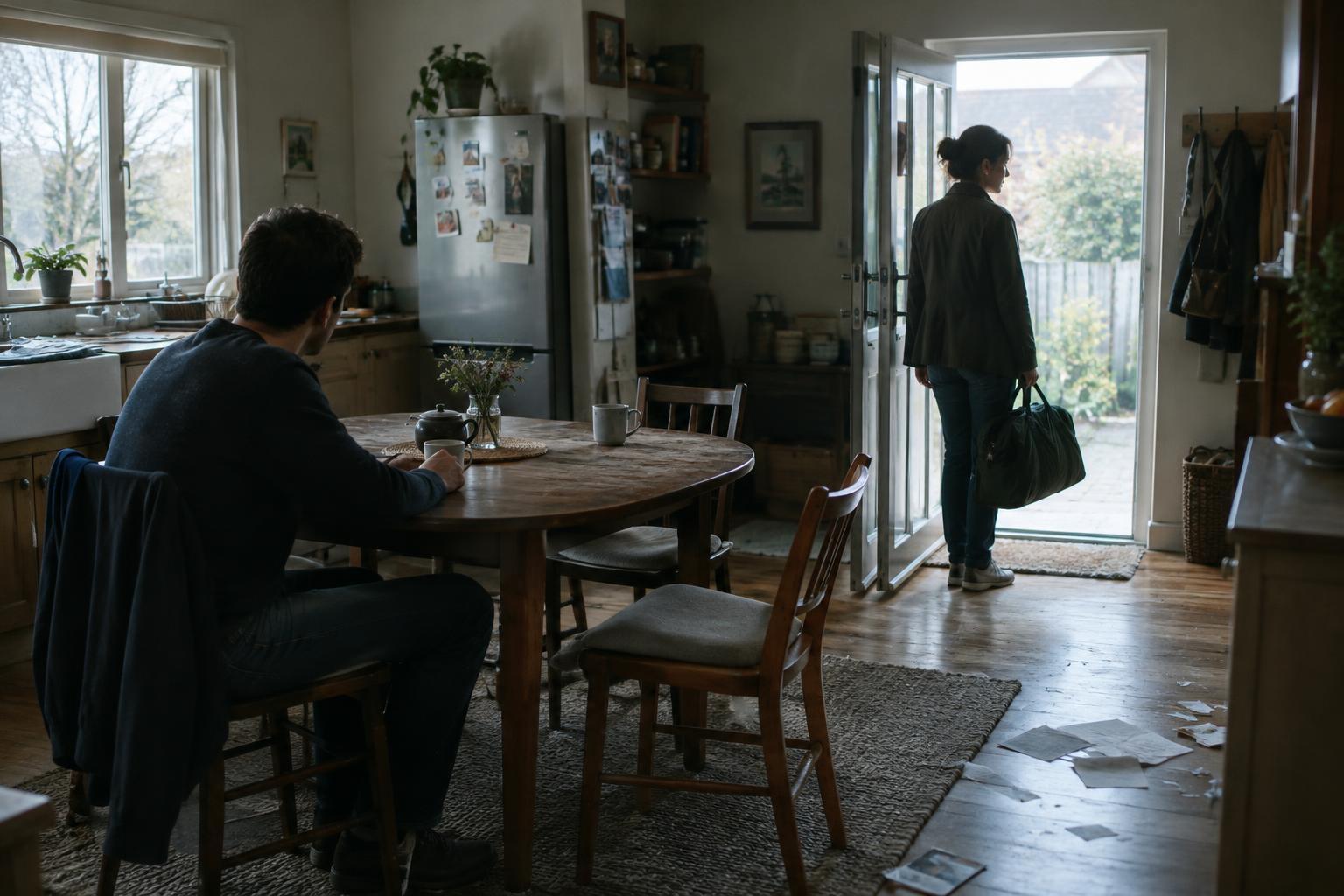
Suppose a character discovers that a friend has been secretly selling their shared work. A treatment can follow the discovery through confrontation, a failed attempt to recover control and a final choice about the friendship. If the ending depends on information the character never had a way to learn, that problem is easier to spot in a few pages of prose than after writing many scenes.
A treatment is particularly useful when you can imagine striking moments but cannot yet explain how they form a complete story. Keep it readable rather than exhaustive. It should reveal the dramatic path, not account for every entrance, gesture or line.
Use an outline to examine sequence and cause
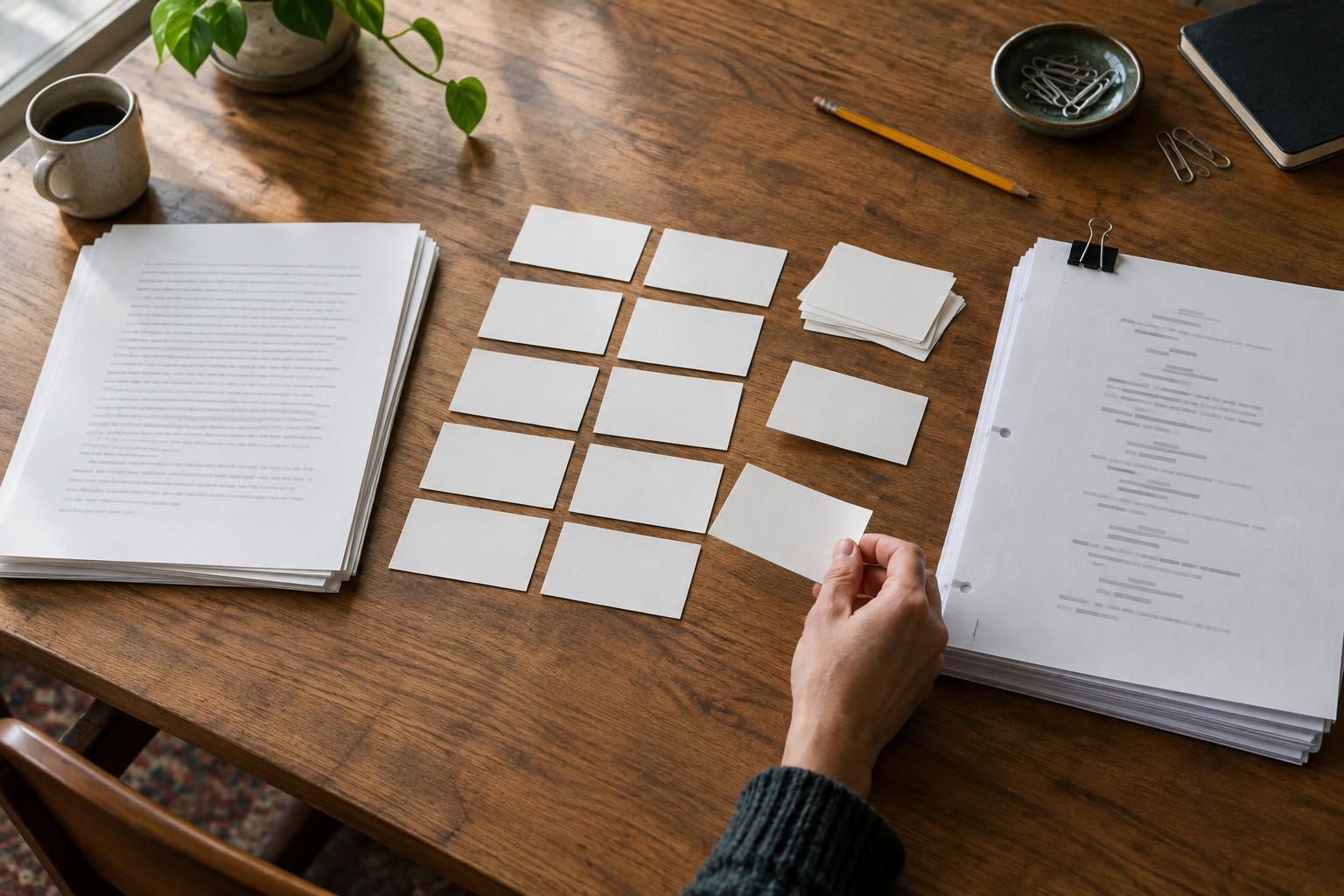
An outline breaks the story into smaller units, such as sequences or scenes. Each entry can state what happens, whose goal is at stake and what changes by the end. Unlike a treatment, an outline invites you to move pieces around. It can show that three scenes repeat the same conflict, or that a character changes their mind without an event that would prompt the change.
For the shared-work story, an outline might reveal that the protagonist confronts the friend twice and gets the same denial both times. Rather than polishing both conversations, the writer could give the second encounter a new consequence: a public accusation that threatens someone else’s livelihood. The question is no longer simply whether the friend will admit the truth; it is what the protagonist is willing to risk.
The level of detail should serve the decision at hand. A short list of sequences may be enough to test the overall progression. If a particular stretch still feels weak, expand that stretch into scene entries. You do not need to specify every scene before writing any of them.
Use a draft to discover what planning cannot
A draft puts the story into screenplay form, where action, image, dialogue and pacing must carry what prose can simply explain. A treatment can say a character feels betrayed. A scene has to make that betrayal legible through behavior: what the character notices, asks, avoids or decides to do. Writing the scene may reveal a more interesting response than the one in the plan.
Drafting also tests whether an idea is filmable. If an important turn exists only in a character’s private reasoning, consider what the audience can observe and what it can reasonably infer. That does not mean every thought needs to be spoken aloud. An unanswered call, a withheld document or a changed routine can carry meaning when the surrounding scenes establish why it matters.
Do not expect the first draft to prove that the plan was correct. Its job is to expose new possibilities and difficulties. When a scene takes an unexpected but convincing direction, revise the plan around what you have learned rather than forcing the scene back into an earlier outline.
Move between tools as the story changes
A practical workflow might begin with a brief treatment to establish the beginning, major turns and ending. From there, outline the sections where cause and effect are unclear, then draft enough scenes to test the characters’ behavior. If the draft reveals a structural problem, step back to a sequence outline. If the entire premise shifts, rewrite the treatment in plain prose before adjusting individual scenes.
Set a specific purpose for each pass. You might use one outline pass to check whether every major choice has a consequence, then use a draft pass to see whether the audience can understand those choices without explanatory dialogue. Leave room for discovery: an outline is a working map, not a promise to preserve every planned scene.
The right tool is the one that makes the next decision easier. Treatments help you see the story as a whole, outlines help you inspect its construction, and drafts show what actually happens when the story plays on the page.